

Russian LNG Tanker Arctic Metagaz Exposes Dangerous Shadow Fleet Risks After Mediterranean Blast
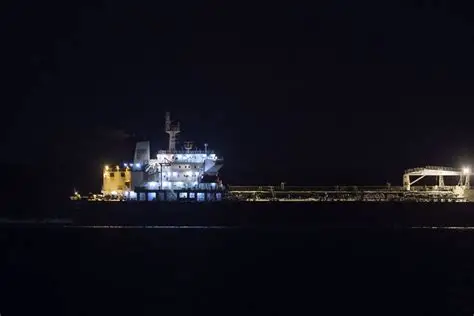
Russian LNG tanker Arctic Metagaz became a major maritime security warning after explosions and fire damaged the vessel in the Mediterranean between Libya and Malta, prompting Moscow to accuse Ukraine of a sea-drone attack and forcing regional authorities to manage a drifting energy carrier loaded with hazardous fuel.
The first reports from Libya said the tanker had sunk after “sudden explosions” and a massive fire about 240km off the Libyan city of Sirte. That early account quickly shaped headlines. Later updates, however, showed the story was more complicated. The Arctic Metagaz had not fully disappeared beneath the sea. It remained badly damaged, abandoned by its crew, drifting for weeks and threatening to become an environmental emergency before Libyan authorities moved to tow it toward a safer area.
All 30 crew members were rescued after abandoning ship. Malta’s armed forces said survivors were located in a lifeboat inside Libya’s search-and-rescue region. Russia said Ukrainian naval drones launched from Libya had struck the vessel. Ukraine did not claim responsibility, and Libyan authorities did not confirm the cause.
The Russian LNG tanker incident matters because it brings together several dangerous trends at once: the expansion of the Russia-Ukraine war into wider maritime zones, the vulnerability of energy shipping, the rise of naval drones, and the growing risks created by Russia’s sanctions-linked shadow fleet.
For wider context on how energy routes are being pulled into conflict, The News Ink has also covered Strait of Hormuz shipping tensions and how global markets react when oil and gas routes are threatened.
What happened to the Russian LNG tanker?
The Russian LNG tanker Arctic Metagaz was sailing from Murmansk toward Port Said in Egypt when it suffered explosions and fire in the Mediterranean. Reuters reported that Libya’s maritime rescue agency initially said the tanker had experienced sudden explosions followed by a massive fire, which “ultimately led to its complete sinking.”
That initial account later proved incomplete. AP reported that Libyan officials had mistakenly said the tanker sank. The vessel remained afloat, blackened by fire, listing on one side and drifting unmanned across the Mediterranean.
This correction matters. A sunken LNG carrier creates one set of risks: seabed contamination, cargo loss and navigational danger. A damaged but floating LNG carrier creates another: drifting into coastal waters, colliding with infrastructure, leaking fuel, releasing gas or becoming impossible to secure in bad weather.
The Russian LNG tanker was carrying liquefied natural gas, along with marine fuel on board. AP reported that Italian civil protection officials estimated it also carried 450 tonnes of heavy oil and 250 tonnes of diesel as fuel supplies. That made the vessel dangerous even if the LNG cargo tanks remained intact.
The incident was therefore not only a military or sanctions story. It was a maritime emergency.
Key facts at a glance
| Detail | Reported information |
|---|---|
| Vessel | Arctic Metagaz |
| Ship type | LNG carrier |
| Flag | Russia |
| Location of incident | Mediterranean Sea, between Libya and Malta |
| Approximate position | Around 240km north of Sirte, Libya, according to early Libyan reporting |
| Route | Murmansk to Port Said, Egypt |
| Crew | 30 people, all rescued |
| Cause | Russia blamed Ukrainian naval drones; Ukraine did not comment |
| Early status | Initially reported sunk by Libyan authorities |
| Later status | Remained afloat, drifted unmanned and was later towed by Libya |
| Main risks | LNG safety, fuel spill, gas release, collision and environmental damage |
This table shows why the Russian LNG tanker case became bigger than a single ship fire. It exposed the problems created when sanctioned, damaged and potentially hazardous vessels drift near busy Mediterranean routes.
Moscow blamed Ukrainian sea drones
Russia quickly described the incident as an attack. President Vladimir Putin called it a terrorist act, while Russia’s transport ministry said Ukrainian sea drones launched from the Libyan coast had hit the vessel. Moscow also accused European countries of creating the conditions for the incident through sanctions and support for Ukraine.
Ukraine did not claim responsibility. Reuters said the Security Service of Ukraine did not respond to a request for comment after Moscow’s accusation. AP also reported that Ukraine had not commented on the claim.
That silence matters because Ukraine has openly used naval drones in the Black Sea against Russian military and maritime targets, but this would represent a wider geographical escalation if confirmed. A strike against a Russian LNG tanker in the Mediterranean would show that the maritime war is no longer limited to the Black Sea or nearby Russian waters.
The Russian LNG tanker case therefore remains partly unresolved. The damage is real. The rescue is confirmed. The fire and explosions are confirmed. The exact cause remains disputed because Russia has blamed Ukraine, while Ukraine and Libya have not confirmed that version.
In conflict reporting, that distinction is essential. Moscow’s accusation should be reported as Moscow’s accusation, not as proven fact.
Why the Arctic Metagaz was sensitive
The Arctic Metagaz was not just any commercial vessel. AP described it as part of Russia’s so-called shadow fleet, a group of vessels used to move fossil fuels despite sanctions linked to Moscow’s war against Ukraine.
Shadow fleet ships often operate through obscure ownership structures, changing registries, limited transparency and unusual trading patterns. They are used to keep Russian energy exports moving even as Western governments try to restrict revenue that helps finance the war.
The Russian LNG tanker also carried a politically sensitive cargo. LNG is not ordinary freight. It is natural gas cooled to extremely low temperatures, loaded into specialised carriers and transported through complex safety systems. If a vessel carrying LNG is damaged by fire or explosion, the risk is not only commercial loss. It can become a public-safety and environmental concern.
That is why the Arctic Metagaz attracted attention from Italy, Malta, Libya and European officials. A damaged shadow fleet vessel is harder to manage than a normal commercial tanker with transparent ownership, reliable insurance and clear compliance records.
The News Ink’s coverage of depleting weapons stockpiles in the Iran conflict shows a similar pattern in another theatre: wars increasingly depend on supply chains, energy routes and industrial pressure as much as battlefield events.
Why LNG tanker damage is so dangerous
A Russian LNG tanker does not automatically explode just because it catches fire. Reuters explained in July that LNG itself does not burn in liquid form. The danger rises if LNG leaks, warms into gas, mixes with air in the right proportion and reaches an ignition source.
Modern LNG carriers are designed with multiple layers of protection. They use double hulls, insulated cryogenic tanks, gas detection systems, pressure-relief systems, emergency shutdown procedures and firefighting equipment. These safety systems are built precisely because LNG must be kept extremely cold and controlled.
That is the reassuring part.
The alarming part is that war damage can create unpredictable conditions. A fire in the engine room, a hull breach, loss of power, abandoned crew, drifting position and bad weather all make a vessel harder to stabilise. Even if the LNG cargo tanks are not breached, diesel, heavy fuel oil and other systems can leak or burn.
The Arctic Metagaz showed this risk clearly. AP reported that officials were worried about potential gas release, although no leaks had been detected at one stage. European states warned the damaged vessel could pose an “imminent and serious risk” of ecological disaster.
The Russian LNG tanker did not need to explode to become dangerous. Its drifting condition was enough.
The environmental risk in the Mediterranean
The Mediterranean is a busy and fragile sea. A damaged LNG carrier drifting between Libya, Malta and Italy creates several risks at once.
First, there is the risk of fuel leakage. Heavy oil and diesel can contaminate water, harm marine life and damage coastal areas if the vessel breaks apart or leaks.
Second, there is the risk of gas release. LNG vaporising into natural gas can create flammable conditions under specific circumstances, especially if trapped near ignition sources.
Third, there is the risk of collision. A drifting vessel can move unpredictably with wind and currents, threatening other ships or offshore installations.
Fourth, there is the problem of response authority. The vessel moved across search-and-rescue zones and near different coastal states. Italy monitored it. Malta was involved in rescue coordination. Libya eventually became responsible as the tanker entered its search-and-rescue region.
The Russian LNG tanker became a test of Mediterranean emergency coordination. AP reported that Italy, Spain, Malta, Greece and Cyprus asked the European Commission to activate the EU civil protection mechanism because of the threat posed by the damaged vessel.
This is why shadow fleet risks are not only Russia’s problem. When a dangerous vessel drifts, neighbours must respond.
Libya’s difficult rescue and towing role
Libya’s role became central because the Russian LNG tanker drifted toward its search-and-rescue zone. Libyan authorities, with support from energy and maritime partners, worked to move the vessel toward a safer area.
The operation was not simple. AP reported that one attempt to tow the tanker failed because of harsh weather and strong winds, leaving the vessel drifting out of control and prompting authorities to warn other ships to stay at least 10 nautical miles away.
Later, Libya’s coast guard began towing the damaged vessel toward a safe zone off Zuwara on the country’s western coast. Video released by Libyan authorities showed a tugboat pulling the listing tanker, its hull blackened from the fire.
The Russian LNG tanker therefore became an emergency for a country already facing political fragmentation, migration crises, energy challenges and limited maritime capacity. Libya did not cause the incident, but it had to manage the consequences once the vessel approached its waters.
That is a recurring feature of modern maritime conflict. The countries that suffer operational fallout are not always the countries fighting the war.
What the incident says about Russia’s shadow fleet
The Russian LNG tanker case strengthens concerns about the shadow fleet used by Moscow to move energy cargoes around sanctions. Western governments have targeted ships linked to Russian energy projects, especially those connected to Arctic LNG and oil exports. But sanctions do not remove vessels from the sea. They often push them into more opaque patterns.
That creates risk.
Vessels tied to shadow networks may have unclear insurance, complex ownership, ageing equipment or limited willingness to cooperate with Western authorities. If one catches fire, drifts or leaks, coastal states may struggle to identify who is responsible, who pays, and who has the legal authority to intervene.
AP described the Arctic Metagaz as part of Russia’s shadow fleet transporting fossil fuels in violation of international sanctions. Reuters also described the vessel as sanctioned and linked to Russia’s efforts to keep LNG moving despite Western restrictions.
The Russian LNG tanker incident therefore makes a wider policy point. Shadow fleets do not only undermine sanctions. They can also increase safety and environmental risks for everyone sharing the same sea lanes.
The maritime war is expanding
Ukraine has repeatedly targeted Russian energy infrastructure because energy revenue helps Moscow finance its war. Most Ukrainian maritime drone attacks have focused on the Black Sea, Crimea, Russian ports and vessels supporting military logistics.
The Arctic Metagaz case, if Moscow’s accusation is accurate, would be different because it would represent a strike on a Russian LNG carrier in the Mediterranean. Reuters said this would be the first Ukrainian attack on a Russian LNG tanker if confirmed.
That possibility raises major questions for shipping companies, insurers and governments.
If Russian energy vessels can be targeted far from the Black Sea, maritime risk spreads. Insurance premiums may rise. Routes may change. Ports may become more cautious. Coastal states may demand stronger tracking, inspection and emergency rules for sanctioned vessels.
The Russian LNG tanker incident also shows how naval drones have changed the geography of war. Uncrewed sea drones are relatively cheap compared with warships, but they can damage expensive vessels, disrupt energy markets and force international emergency responses.
The News Ink has also tracked how cyber warfare and drones are reshaping the Iran conflict, another example of how modern conflict now reaches beyond traditional battlefields.
Why the route mattered
The Arctic Metagaz had reportedly sailed from Murmansk and was bound for Port Said in Egypt. That route placed it through the Mediterranean, close to Malta, Libya and major commercial shipping lanes.
Port Said is strategically important because it sits near the northern entrance to the Suez Canal, one of the world’s most important maritime routes. Even a single damaged vessel near the wider Mediterranean-Suez corridor attracts attention because of how much trade moves through the region.
The Russian LNG tanker was not reported to have blocked any major choke point. But its presence still mattered because an unstable LNG carrier drifting through crowded waters can force warnings, exclusion zones and emergency planning.
Shipping risk is rarely isolated. A fire on one vessel can affect nearby ships. A spill can affect coastlines. A salvage operation can involve multiple countries. A sanctions-linked cargo can trigger legal complications over who is allowed to help, tow, repair, insure or unload it.
That is why the Arctic Metagaz story travelled quickly from maritime circles into geopolitics.
The sanctions angle
Sanctions are designed to make Russian energy exports harder, more expensive and less profitable. But the shadow fleet shows how difficult enforcement can be.
When a ship is sanctioned, it may still move if it can find buyers, ports, insurance substitutes, flag arrangements and service providers willing to take the risk. Russia has used such networks to keep oil and gas moving despite Western pressure.
The Russian LNG tanker case shows the consequence. A sanctioned vessel can become damaged in a conflict-linked incident, then drift across international waters while neighbouring states debate safety, environment and legal responsibility.
This is exactly the kind of scenario European countries have warned about. Shadow fleet vessels can create hazards even when they are not attacked. Ageing ships, unclear ownership and weak oversight can increase accident risk. Add drones and war damage, and the risk becomes far worse.
The policy challenge is hard. Stronger sanctions may squeeze Russia, but they may also push more shipping into opaque channels. Weaker enforcement may reduce some operational risk, but it leaves Moscow with more energy revenue.
The Arctic Metagaz sits at the centre of that dilemma.
What remains unverified
Several details in the Russian LNG tanker story should remain carefully worded.
The cause of the explosions has not been independently confirmed. Russia blamed Ukrainian naval drones launched from Libya. Ukraine did not comment. Libya said the fire’s cause was unclear in early reporting.
Video footage and social-media images also require caution. Unverified night-time clips appeared to show a vessel on fire. Ukrainian commentator Serhii Sternenko shared images claiming severe engine-room damage, but such material should not be treated as independent proof unless verified by maritime investigators or reputable news agencies.
The amount of LNG on board also varied slightly across reports, with figures around 61,000 to 62,000 tonnes. Those differences are not unusual in early maritime reporting, but they should not be overstated.
The most important correction is the vessel’s status. Early reports said the Arctic Metagaz had sunk. Later AP reporting said that was a mistaken report and confirmed it remained afloat, drifting and then being towed.
That is why this article treats “sinking” as an early claim and focuses on the confirmed later situation: severe damage, abandonment, drift, rescue, towing and environmental risk.
What this means for energy markets
The Arctic Metagaz did not by itself transform global LNG prices. But it added to a wider sense that energy shipping is becoming more vulnerable.
Reuters reported in July that a Qatari LNG tanker, Al Rekayyat, was damaged in an attack near the Strait of Hormuz, raising fresh concerns about LNG carrier safety. That article noted the Arctic Metagaz as the earlier war-related LNG tanker incident in 2026.
The pattern matters. LNG has become central to global energy security, especially after Europe reduced dependence on Russian pipeline gas. If LNG tankers are increasingly caught in conflict zones, buyers, insurers and governments will have to reassess risk.
The Russian LNG tanker incident also affects the psychology of markets. Traders may not panic over one vessel, but repeated attacks near key sea lanes can raise freight costs, insurance prices and supply-security concerns.
The News Ink’s report on EU airlines warning of a jet fuel crisis if Hormuz remained closed shows how quickly energy-route disruption can spread into transport and consumer costs.
Why coastal states are worried
Coastal states worry about shadow fleet tankers because they may inherit the emergency without benefiting from the cargo.
Malta helped locate the crew. Italy monitored the drifting vessel. Libya had to manage the tow. European countries asked for coordinated help. None of those governments caused the war in Ukraine or ordered the Arctic Metagaz to sail. Yet each faced potential consequences.
A damaged Russian LNG tanker can create:
- search-and-rescue duties;
- environmental cleanup costs;
- port-access questions;
- sanctions-compliance problems;
- diplomatic pressure from Russia and Ukraine;
- insurance and salvage disputes;
- public safety concerns if cargo leaks or catches fire.
This is why Mediterranean governments want stronger systems for dealing with dangerous vessels. Waiting until a tanker is drifting toward shore is not enough.
Could similar incidents happen again?
Yes. Similar incidents could happen again because the conditions remain in place.
Russia continues to move sanctioned energy cargoes. Ukraine continues to target Russian logistics and energy networks. Naval drones are becoming more capable. Shadow fleet vessels continue to operate across international waters. Mediterranean and Black Sea shipping routes remain politically sensitive.
The Russian LNG tanker Arctic Metagaz may therefore be a warning rather than an exception.
The next incident could involve oil instead of LNG. It could happen closer to a port. It could involve a larger spill. It could hit a vessel with less crew training or weaker safety systems. It could occur in a narrow shipping lane where salvage is harder.
That possibility explains why the Arctic Metagaz received attention beyond Russia and Ukraine. It showed that sanctions evasion, drone warfare and energy shipping can combine into a problem for the whole maritime system.
FAQ: Russian LNG tanker Arctic Metagaz
Did the Russian LNG tanker Arctic Metagaz sink?
Early Libyan reporting said the Russian LNG tanker had sunk after explosions and fire. Later AP reporting said that was mistaken and confirmed the vessel remained afloat, drifted unmanned and was later towed.
What caused the Arctic Metagaz explosions?
Russia blamed Ukrainian naval drones launched from Libya. Ukraine did not claim responsibility, and Libyan authorities did not independently confirm the cause.
Was the crew rescued?
Yes. All 30 crew members were reported safe after being located in a lifeboat inside Libya’s search-and-rescue region.
Why was the tanker considered risky?
The vessel carried LNG and also had heavy oil and diesel fuel supplies on board. Damage, fire, drifting and possible leaks created environmental and safety concerns.
What is Russia’s shadow fleet?
Russia’s shadow fleet refers to vessels used to move Russian fossil fuels despite sanctions. These ships often operate through opaque ownership, insurance and tracking arrangements, raising safety and enforcement concerns.
The bottom line
Russian LNG tanker Arctic Metagaz is a warning about how far the Russia-Ukraine war can reach and how dangerous the shadow fleet problem has become.
The vessel was first reported sunk after explosions and fire in the Mediterranean between Libya and Malta. Later reporting showed it had remained afloat, badly damaged and unmanned, before Libya moved to tow it away from coastal and environmental danger. All 30 crew members survived, but the incident left major questions about drone warfare, sanctions enforcement, LNG safety and maritime responsibility.
Moscow blamed Ukrainian naval drones. Kyiv did not comment. Libya did not confirm the cause. That means the attack claim should remain attributed, not treated as proven.
What is clear is that the Arctic Metagaz exposed a dangerous gap in global shipping security. A sanctioned Russian LNG tanker can be damaged in a suspected wartime attack, drift for weeks with hazardous cargo, trigger European environmental warnings and force coastal states to respond.
The war is no longer only being fought on land, in the air or in the Black Sea. It is reaching energy routes, insurance markets, ports and civilian seas.
Russian LNG tanker Arctic Metagaz may not be the last shadow fleet emergency. It may be the clearest warning yet.
For more Ukraine war, energy security and maritime-risk coverage, follow The News Ink on Threads.