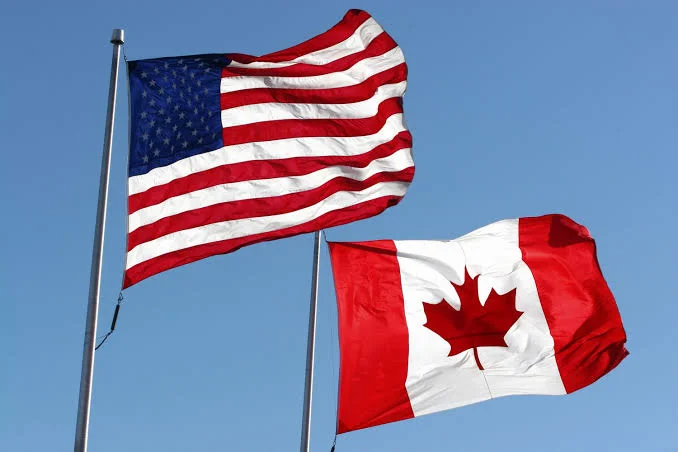
Canada US Trade Deal Nears Finish Line, but Key Details Remain Murky
The Canada US trade deal moved much closer on August 19, 2026, after President Donald Trump said Washington and Ottawa had reached an agreement and Prime Minister Mark Carney said the two countries were “moving towards” one. The breakthrough delayed new 50% U.S. tariffs on roughly $20 billion of Canadian goods for three days, but it did not produce a signed text, a full tariff schedule or a clear public account of what Canada has promised in return.
The White House has formally shifted the threatened tariffs from August 19 to 12:01 a.m. ET on August 22 while negotiators finish the documents. The Canada US trade deal is therefore not yet a signed, fully published settlement. Trump called the emerging agreement “very fair” and said American farmers and manufacturers would benefit. Carney was more cautious, saying substantial progress had been made but important work remained.
The biggest unanswered questions concern automobiles, steel and aluminum, dairy, alcohol, regional-content rules and whether the long-cancelled Keystone XL pipeline has any real place in the bargain. For businesses and workers on both sides of the border, the immediate relief is real. But until the Canada US trade deal is final, the most important economic terms remain provisional.
Canada US Trade Deal: Key Facts So Far
| Issue | What is known as of Aug. 19, 2026 | What remains unclear |
|---|---|---|
| New Section 338 tariffs | 50% duties on about $20 billion of Canadian goods delayed three days | Whether they will be cancelled after Aug. 21 |
| New deadline | 12:01 a.m. ET on Aug. 22 | Whether another extension is possible |
| Autos | Existing U.S. tariff is 25%; Canada seeks 10% and 15% has been discussed | Final rate, content deductions and vehicle coverage |
| Steel and aluminum | U.S. tariffs reach 50% on many products | Reported possible reduction to 25% is not final |
| Dairy | Washington says Canada will address discriminatory treatment | Canada says supply management remains intact |
| U.S. alcohol | Washington wants restrictions addressed | Provincial cooperation and timing are unresolved |
| Keystone XL | Trump suggested it could return | No confirmed role in the agreement |
| USMCA | Existing pact remains in force | Long-term extension and revised rules remain unsettled |
The table reflects the crucial distinction between confirmed government action and proposals still under negotiation. The tariff delay is official. Several of the sector-specific reductions now being discussed are not.
What Has Actually Been Confirmed
The clearest confirmed part of the Canada US trade deal process is the tariff pause.
In a formal presidential proclamation, the White House changed the effective date of three sets of additional duties from August 19 to August 22. The duties were imposed under Section 338 of the Tariff Act of 1930 and targeted Canadian goods connected to disputes over alcoholic beverages, dairy products and motor vehicles.
The White House said senior U.S. officials had been told that Canada had expressed a commitment to remove practices Washington considers discriminatory or unequal. It did not spell out the exact concessions, their implementation timetable or the tariff relief Canada would receive.
Carney’s official August 18 statement was carefully worded. He said the two sides had made “substantial progress” but that important work remained. U.S. Trade Representative Jamieson Greer sounded more confident the following day, saying negotiators had reached an agreement that would protect American workers and supply chains while strengthening the North American economy.
So the Canada US trade deal currently has three layers: a political understanding, a legally effective three-day tariff suspension and unfinished documents that still need to define the commercial bargain.
Why Trump Threatened New 50% Tariffs
The current Canada US trade deal negotiations are the latest stage in a confrontation that has changed legal forms several times.
On July 20, the Trump administration announced additional 50% duties on selected Canadian goods. The measures were justified under Section 338, a rarely used part of the Tariff Act of 1930 that permits tariffs of up to 50% when the president determines another country’s measures discriminate against U.S. commerce. The White House said affected products ranged from wine and hockey sticks to cement, while energy, potash and certain other goods were excluded.
Washington focused on three grievances: restrictions affecting U.S. alcoholic beverages, aspects of Canada’s dairy tariff-rate quota system and Canadian treatment of U.S. motor vehicles.
The legal route matters because the U.S. Supreme Court ruled in February 2026 against the administration’s use of the International Emergency Economic Powers Act for sweeping tariffs. Trump subsequently turned to other trade statutes.
The News Ink previously explained the aftermath in its coverage of Canada seeking trade talks after the Supreme Court tariff ruling and Trump’s new tariff approach after the ruling.
The threatened August duties were especially significant because qualifying under USMCA would not automatically have shielded the covered products, unlike some earlier tariff measures.
Autos May Be the Hardest Part of the Canada US Trade Deal
No sector better shows the complexity of the Canada US trade deal than automobiles.
The United States currently applies a 25% tariff to imported Canadian vehicles and parts under sectoral measures. Reuters reported that Canada is pushing to cut that rate to 10%, while the U.S. has offered 15%, according to auto executives familiar with the talks.
Even if the headline rate is settled, the calculation underneath it matters.
One unresolved question is how much regional content can be deducted before the tariff is calculated. Canada wants recognition of value created across North America. Another possibility is that only U.S.-made content would receive the deduction.
It is also unclear whether relief would cover medium- and heavy-duty vehicles or only passenger cars and light trucks. Canada wants the reductions to apply broadly, Reuters reported.
North American auto production is deeply integrated, with components often crossing borders more than once before a vehicle reaches a dealer. That means the Canada US trade deal cannot be judged by one headline percentage. Content rules and product coverage may be just as important as the nominal tariff.
Steel and Aluminum Relief Is Reported, Not Final
Canada has also made relief for steel and aluminum a priority.
U.S. tariffs on many steel and aluminum products currently stand at 50%. Current reporting says Washington is considering reducing those rates for Canada to 25%, alongside a possible reduction of the top-line auto tariff from 25% to 15%.
Those figures should not yet be presented as final Canada US trade deal terms. The Canada US trade deal still lacks an official sector-by-sector tariff schedule.
A steel quota may also be part of the discussion. Under a quota arrangement, a defined volume of Canadian steel could receive a lower tariff while shipments above that threshold face a higher rate. Aluminum may be treated differently.
This is one of the areas where readers should distinguish between a reported negotiating framework and an officially published agreement. The direction appears favorable for Canadian metal producers, but the final rates, quotas and exemptions remain capable of changing.
Dairy Produces the Biggest Public Contradiction
Dairy is where Washington and Ottawa appear hardest to reconcile.
Trump said U.S. farmers would see Canadian tariffs eliminated, while the White House says Canada has committed to address treatment it considers discriminatory. Canadian officials, however, say the country’s supply-management system will remain intact.
Supply management controls domestic production and uses tariff-rate quotas to manage imports. Some dairy products can enter at lower rates within agreed quantities, while much higher tariffs may apply above those limits.
Trade Minister Dominic LeBlanc said Canada’s agriculture sector would remain protected and expressed confidence that supply management would stay intact.
Both positions could theoretically coexist if the Canada US trade deal changes quota administration, alters access for certain American products or expands specific concessions without dismantling Canada’s overall supply-management system.
Until the legal documents are published, however, the exact compromise remains unknown.
Alcohol Adds a Provincial Complication
American alcohol has become another important bargaining point.
Several Canadian provinces restricted or removed U.S. alcohol from government-controlled retail systems in response to earlier U.S. tariffs and the wider political dispute. The White House treats those restrictions as discriminatory.
The scale is significant. The Associated Press reported that Ontario’s Liquor Control Board of Ontario sold nearly C$1 billion in U.S. products annually before taking them off its shelves. U.S. spirits exports to Canada have also fallen sharply during the dispute.
But Ottawa does not directly control every provincial liquor purchasing decision. Provincial governments have substantial authority over alcohol distribution and retail systems.
Any Canada US trade deal promising a rapid return of U.S. products may therefore require cooperation from the provinces. That provincial dimension could shape how quickly the Canada US trade deal is implemented.
Ontario is particularly focused on autos, Quebec has strong interests in dairy supply management and British Columbia is highly exposed to softwood lumber.
A deal negotiated in Washington and Ottawa may therefore still require politically difficult decisions elsewhere in Canada.
The Trade Relationship Is Too Large for Prolonged Uncertainty
The scale of Canada-U.S. commerce explains why both governments have an incentive to prevent another major tariff escalation.
According to the Office of the U.S. Trade Representative, U.S. goods trade with Canada totaled an estimated $719.5 billion in 2025. U.S. goods exports to Canada were $336.5 billion and imports from Canada were $383.0 billion, leaving a U.S. goods deficit of $46.4 billion.
When services are included, bilateral trade was even larger: U.S. goods and services trade with Canada totaled about $909.1 billion in 2024.
Canada remains heavily dependent on the American market. Statistics Canada reported that the U.S. received 71.7% of Canadian merchandise exports in 2025, down from 75.9% in 2024 as Canada’s export mix shifted toward other markets.
At the same time, Canada’s 2026 economic update estimates that roughly 85% of Canadian goods trade is tariff-free, while the average U.S. tariff on Canadian goods is about 5.2%, compared with an 11.4% average on goods globally.
| Trade indicator | Latest cited figure |
|---|---|
| U.S.-Canada goods trade, 2025 | $719.5 billion |
| U.S. goods exports to Canada, 2025 | $336.5 billion |
| U.S. goods imports from Canada, 2025 | $383.0 billion |
| U.S. goods deficit with Canada, 2025 | $46.4 billion |
| U.S.-Canada goods and services trade, 2024 | $909.1 billion |
| Canadian merchandise exports going to U.S., 2025 | 71.7% |
| Canadian goods trade Ottawa says is tariff-free | About 85% |
| Average U.S. tariff on Canadian goods, Canada estimate | 5.2% |
Those figures explain why tariff uncertainty can affect investment even when the goods directly targeted by one tariff package represent a relatively small share of total commerce.
The News Ink’s broader economy coverage examines how trade and financial shocks move through businesses and households, while our analysis of how Trump’s tariffs reshaped global trade provides wider context for the current negotiations.
What Could the Canada US Trade Deal Mean for Consumers?
Tariffs are collected from importers at the border. Companies then decide how much of the additional cost to absorb through lower margins and how much to pass on through prices.
A final Canada US trade deal that eliminates the threatened 50% duties would reduce the risk of sudden price increases on affected Canadian products entering the United States.
Broader relief on autos and metals could matter even more because steel and aluminum feed into vehicles, construction, machinery, appliances, packaging and industrial equipment.
Canada also maintains retaliatory tariffs on selected U.S. goods. Reciprocal reductions could help American exporters regain market access while lowering some costs for Canadian importers.
But the emerging agreement may not eliminate every tariff.
It could instead replace very high rates with lower sectoral tariffs, quotas and new market-access commitments. That would represent a major de-escalation without returning the relationship to the low-friction environment businesses once expected under USMCA.
For households, the ultimate impact depends less on the announcement of a “deal” and more on the tariff schedule eventually applied to the products moving across the border.
Keystone XL Is Not Yet a Confirmed Deal Term
Trump added another layer of uncertainty by suggesting Keystone XL “may be awoken from the grave.”
The original project was designed to move up to 830,000 barrels of crude oil per day from Canada toward U.S. refineries. It became a major political and environmental fight. President Joe Biden revoked a key permit in 2021, and the project was subsequently abandoned.
But there is no public evidence yet that revival of the original Keystone XL project is a binding condition of the Canada US trade deal.
Trump’s comment may signal a broader energy discussion. Reuters also noted that the company connected to the remaining Keystone XL assets is developing a different cross-border pipeline proposal using some existing infrastructure.
Until official documents say otherwise, Keystone XL should be treated as an unresolved possibility rather than a confirmed Canadian concession or U.S. commitment.
The Bigger Issue Is What Happens to USMCA
Even a completed Canada US trade deal will not settle the future of North American trade.
The United States, Canada and Mexico remain parties to the USMCA, which entered into force on July 1, 2020 and replaced NAFTA.
The agreement contains a 16-year term and a review mechanism. The United States declined to grant a long-term extension during the 2026 review process. That does not terminate USMCA now; instead, it leaves the agreement facing recurring review unless the parties later agree on an extension.
Washington has already been negotiating with Mexico over automotive content and other issues. Broader formal U.S.-Canada negotiations have been complicated by the immediate bilateral tariff confrontation.
A successful Canada US trade deal could remove the latest tariff threat and create room for those larger negotiations.
A failed settlement could push the countries back toward retaliation at precisely the moment manufacturers need clarity about which rules will govern factories, cross-border sourcing and investment for years to come.
Timeline: How the Standoff Reached This Point
| Date | Development |
|---|---|
| July 20, 2026 | White House announces new 50% Section 338 tariffs on selected Canadian goods |
| Aug. 6 | Canadian officials brief provinces as negotiations intensify |
| Aug. 14 | LeBlanc and chief negotiator Janice Charette update provincial and territorial officials |
| Aug. 18 | Carney says substantial progress has been made but important work remains |
| Late Aug. 18 | Trump announces a deal and a three-day tariff pause |
| Aug. 19 | Negotiators continue work; Carney says both sides are moving toward an agreement |
| Aug. 22, 12:01 a.m. ET | New tariff deadline if no final action is taken |
The July 20 tariff action and August 22 revised deadline are confirmed by the White House, while Canada’s government documented the intensified negotiations during August.
The final Canada US trade deal could still differ from the proposals now being reported. Any assessment should separate confirmed government actions from negotiating proposals.
Seven Questions That Still Need Answers
The emerging Canada US trade deal will become much easier to judge once seven points are settled:
- Will the threatened 50% Section 338 tariffs be cancelled permanently?
- What exact tariff rate will apply to Canadian vehicles and auto parts?
- How will U.S., Canadian and Mexican content be treated in auto calculations?
- Will steel and aluminum tariffs fall, and will steel face quotas?
- What has Canada actually promised on dairy and agricultural market access?
- How will provincial restrictions on U.S. alcohol be addressed?
- Is Keystone XL part of the agreement or a parallel political discussion?
Those are not minor technicalities. They determine which industries receive genuine tariff relief, what concessions Canada makes and whether companies can make long-term investment decisions with confidence.
Until those questions have documentary answers, calling the agreement fully completed would go beyond the public evidence available on August 19.
What Businesses Should Watch Next
First, watch the White House.
The current proclamation only postpones the new Section 338 duties until August 22. Another legal action will be needed if those tariffs are to remain suspended or be revoked beyond the current deadline.
Second, watch for an official Canadian explanation of what Ottawa has committed to, especially on dairy, alcohol and automobiles.
Third, manufacturers need the details behind any auto and metal tariff cuts. A change from 25% to 15% sounds straightforward, but the actual cost could depend heavily on content deductions, quotas and product coverage.
Finally, watch whether the Canada US trade deal leads to formal progress on USMCA. The long-term value of the Canada US trade deal will depend partly on whether it reduces uncertainty around the wider North American pact.
Businesses need more than a weekend reprieve. They need rules stable enough to justify factories, contracts, hiring and long-term investment.
Frequently Asked Questions
Has Canada and the United States signed a final trade deal?
Not yet, based on the public documents available on August 19, 2026. Trump says the countries have a deal subject to finalization of documents, while Carney says they are moving toward an agreement and important work remains.
When will the 50% U.S. tariffs on Canadian goods take effect?
The White House postponed their effective date to 12:01 a.m. ET on August 22, 2026. If the Canada US trade deal is finalized, the administration could take additional action to keep the duties suspended or revoke them before that deadline.
What is Canada asking for on automobiles?
Reuters reported that Canada wants the U.S. tariff on Canadian vehicles and parts reduced from 25% to 10%, while the U.S. has offered 15%. The final rate and calculation rules have not been officially announced.
Is Canada ending dairy supply management?
Canadian officials say no. LeBlanc has said supply management will remain intact. Washington says Canada has committed to address treatment it views as discriminatory, leaving the exact compromise unresolved.
Is Keystone XL being revived?
There is no confirmed revival in the published Canada US trade deal material. Trump has suggested the project could return, but no binding pipeline provision has been disclosed.
Conclusion
The Canada US trade deal has moved from brinkmanship to a serious negotiating breakthrough, but it has not reached the point where businesses can read the fine print and know exactly what changed.
The immediate achievement of the Canada US trade deal process is the three-day delay of 50% tariffs on roughly $20 billion of Canadian goods. That removes an abrupt shock that had been scheduled for August 19 and gives negotiators until the start of August 22 to complete their work.
Beyond that, the picture remains incomplete.
Canada is seeking lower U.S. tariffs on automobiles, steel and aluminum. Washington says Canada has committed to address disputes involving alcohol, dairy and motor vehicles. Ottawa insists its dairy supply-management system will remain intact. Reports indicate auto tariffs could fall to 15% and metal tariffs to 25%, but neither figure should be treated as final without official confirmation.
The economic stakes justify the urgency. The two countries exchanged $719.5 billion in goods in 2025, while nearly 72% of Canadian merchandise exports went to the United States.
The best description of the Canada US trade deal on August 19 is therefore neither “done” nor “failed.”
It is a framework strong enough to delay a major tariff escalation but unfinished enough that its details could still change the winners, losers and long-term consequences.
For continuing coverage of global business, tariffs and major economic developments, follow The News Ink on Threads.