Global Markets: Powerful 2026 Oil Shock Sparks Inflation Fear
Global markets have been shaken by the Iran war because investors are no longer watching only missiles, speeches and ceasefire statements. They are watching oil tankers, LNG cargoes, insurance prices, shipping routes, central-bank expectations and the Strait of Hormuz.
The first major shock came after U.S.-Israeli strikes on Iran at the end of February 2026. Energy prices jumped, stock markets sold off and traders rushed to price in the risk that one of the world’s most important fuel corridors could become unreliable. The Strait of Hormuz, the narrow waterway between Iran and Oman, suddenly became the centre of the financial world because so much oil and liquefied natural gas passes through it.
The story has since moved through several phases. March brought panic, gas-market stress and heavy equity losses. June brought a partial easing after a U.S.-Iran framework raised hopes that shipping could normalise. July then revived the danger after fresh U.S.-Iran strikes and new Iranian claims that the strait had again been closed.
That is why global markets remain difficult to read. Investors are not pricing one event. They are pricing a cycle of escalation, relief and renewed escalation. Until energy flows look secure, the Iran war will continue to affect inflation, interest rates and household costs far beyond the Middle East.
For readers following the wider economic impact, The News Ink’s economy coverage explains how energy shocks can quickly spread from commodity markets into prices, wages, government borrowing and central-bank policy.
Why global markets reacted so sharply
Global markets hate uncertainty, but they especially hate uncertainty around energy. Oil and gas are not ordinary commodities. They sit underneath transport, manufacturing, electricity, food production, shipping and household bills. When traders fear a fuel shortage, the impact spreads quickly.
That is what happened when the Iran war began to threaten the Strait of Hormuz. A local military crisis became a global price shock because the waterway is a chokepoint for oil and LNG shipments. If traffic slows, insurance costs rise. If insurance costs rise, freight costs rise. If freight costs rise, fuel and goods become more expensive. If goods become more expensive, inflation becomes harder to control.
This chain reaction explains why global markets sold off even in countries far from the battlefield. Investors were not only reacting to headlines about missiles. They were reacting to the possibility that higher fuel costs could delay interest rate cuts, damage company profits and squeeze households again.
The result was a familiar pattern: energy stocks gained, airlines and travel companies suffered, government bond yields rose, and central-bank rate-cut hopes faded.
The Strait of Hormuz is the real market trigger
The Strait of Hormuz matters because it is small on a map but huge in the world economy. Oil producers in the Gulf rely on it to move crude to global buyers. LNG exporters also rely on it, especially Qatar, whose gas cargoes are vital to Asian and European energy markets.
That is why global markets become nervous whenever Iran threatens ships or whenever U.S. forces respond militarily in the region. Even if some vessels continue moving, the risk premium rises. Tanker owners, insurers and commodity traders do not need a total closure before reacting. A credible threat is enough to lift costs.
Reuters later reported that after renewed July strikes, Iran said the Strait of Hormuz would remain closed until what it called the end of U.S. interference in the region. U.S. Central Command said commercial vessels were still transiting. That contradiction is exactly the kind of uncertainty global markets struggle to price.
The safe way to write this story is not to say the strait is permanently closed unless that is independently confirmed. The better wording is that Iran has declared restrictions or closure, while the U.S. says traffic continues, and shipping companies are assessing risk case by case.
Oil prices were the first warning sign
Oil prices reacted quickly because Brent crude is one of the world’s most watched economic signals. In early March, Brent jumped sharply after the first shock. Guardian reporting said Brent remained up nearly 6% at about $77 a barrel on March 2, then rose another 6% to nearly $83 a barrel on March 3.
Those moves mattered because oil affects transport, airlines, logistics, petrochemicals, farming and consumer prices. A single-day oil jump can be manageable. A sustained oil shock can change inflation forecasts.
Later, the oil picture became more complicated. After a June U.S.-Iran framework and increased Hormuz traffic, the U.S. Energy Information Administration lowered its Brent forecast and said prices had fallen from their April peak. But the July flare-up reminded traders that the risk had not disappeared.
That is why global markets are not treating the Iran war as a finished story. A peace statement can bring prices down. One tanker attack can push them back up. The market is trading the probability of disruption, not only the physical supply lost on one day.
Gas may be the bigger danger
Oil gets the headlines, but gas may be the more dangerous economic channel for Europe and Asia. The March shock showed why. QatarEnergy halted LNG production after attacks on facilities in Ras Laffan and Mesaieed, according to Guardian and Reuters reporting. Qatar is one of the world’s most important LNG exporters, and many Asian buyers depend heavily on Qatari cargoes.
When LNG supply is disrupted, buyers compete for replacement cargoes. That competition can push up prices in Asia and Europe at the same time. The UK may not buy all its gas directly from Qatar, but it is still exposed to global LNG pricing. If Asian demand pulls cargoes away from Europe, European and UK prices rise.
That is what made the March gas spike so alarming. Guardian reporting said UK day-ahead gas rose 40% to 110p per therm on March 2, while the month-ahead UK gas price jumped 30% to 148p per therm on March 3. Those figures show how quickly wholesale markets can move when traders fear supply shortages.
Global markets were therefore not reacting only to oil. They were reacting to the possibility of a wider gas shock that could hit household bills, industry and inflation at the same time.
Why Asian markets were especially exposed
Asian markets felt the pressure because many Asian economies depend heavily on Middle East energy imports. Japan, South Korea, China, India and several Southeast Asian economies all have major exposure to Gulf oil or LNG flows.
That dependence makes the Strait of Hormuz more than a regional shipping route. It is an economic artery for Asia. If LNG cargoes from Qatar slow, Asian utilities may need to buy replacement fuel at higher prices. If crude shipments become unreliable, refiners face tighter margins and consumers face higher fuel prices.
This helps explain why global markets in Asia were hit hard during the early shock and again during later flare-ups. In March, South Korea’s Kospi dropped sharply as investors fled risk. In July, Reuters reported that South Korea’s chip-heavy Kospi had slipped into bear-market territory after falling about 20% from a late-June record, with geopolitical pressure adding to a wider technology sell-off.
The lesson is that energy shocks rarely remain inside the energy sector. They hit exporters, importers, transport companies, manufacturers and technology-heavy markets when investors start reducing risk.
The UK faces a familiar inflation problem
The UK is especially sensitive to gas shocks because gas still plays a major role in electricity generation and household heating. Even after the energy crisis that followed Russia’s invasion of Ukraine in 2022, the UK remains exposed to global wholesale gas prices.
That is why global markets watching the Iran war are also watching the Bank of England. If energy prices stay high, inflation becomes harder to bring down. If inflation stays high, interest rate cuts become harder to justify. If rate cuts are delayed, mortgage costs, business borrowing and government debt servicing remain under pressure.
The House of Commons Library warned in March that higher energy prices from the Middle East conflict were expected to raise UK inflation, make household gas bills more likely to rise later in 2026, and reduce the chances of previously expected Bank of England interest rate cuts.
That is a major political problem for Chancellor Rachel Reeves. A government can plan for growth, investment and lower borrowing costs, but a global energy shock can quickly change the arithmetic.
The News Ink’s personal finance coverage is useful here because market volatility is not abstract for households. It can show up in bills, petrol prices, mortgage rates and savings decisions.
Why bond yields matter in this story
Stock market losses are visible, but bond markets often reveal the deeper fear. When investors expect inflation to stay high, government bond yields can rise. Higher yields mean governments pay more to borrow. They also feed through to mortgage and loan pricing.
During the March shock, UK government borrowing costs rose as traders priced in a greater risk that energy inflation would delay rate cuts. During the July flare-up, the Guardian reported that the 10-year UK gilt yield climbed as oil and gas prices rose again.
That bond-market reaction matters because it shows global markets were not only afraid of war. They were afraid of what the war would do to inflation policy.
Central banks can sometimes “look through” temporary energy spikes. But if fuel prices stay high long enough to influence wages, business costs and inflation expectations, central banks may become more cautious. That caution can keep interest rates higher for longer.
What happened to stocks
Equity markets responded unevenly. Energy producers often benefit when oil and gas prices rise. Airlines, travel companies, transport firms and energy-intensive manufacturers usually suffer. Banks may benefit from higher rates in some ways, but broad market weakness can still hurt them.
In March, the FTSE 100, European markets, Japan’s Nikkei and South Korea’s Kospi all fell sharply during the first wave of panic. Wall Street also declined as investors worried about higher energy costs and weaker growth.
The pattern changed during moments of relief. When traders believed a framework deal could reopen Hormuz and reduce energy disruption, global markets recovered. But the recovery remained fragile because the underlying military risk never fully disappeared.
That is the key point for readers: global markets are not simply going up or down because of one headline. They are adjusting every day to the perceived chance of a prolonged energy disruption.
Why shipping insurance became a hidden cost
One of the least visible but most important parts of the story is insurance. When ships pass through a war-risk area, insurers raise premiums. Those costs can be passed down through freight rates, fuel prices and ultimately consumer goods.
Even if tankers are not physically blocked, a war-risk premium can slow trade. Some shipowners may wait. Others may reroute. Some may demand naval escorts or higher compensation. Charterers may face delays and higher costs.
This is why global markets can react before a full closure happens. The market prices risk, not just damage. If the Strait of Hormuz becomes more dangerous, energy companies and shipping firms adapt immediately.
Those adaptations are expensive. They make fuel supply less efficient. They make delivery schedules less reliable. They make inflation more stubborn.
The QatarEnergy shock showed LNG vulnerability
QatarEnergy’s production halt was one of the most important developments in the early crisis because it showed that the issue was not only about ships moving through Hormuz. Energy infrastructure itself was at risk.
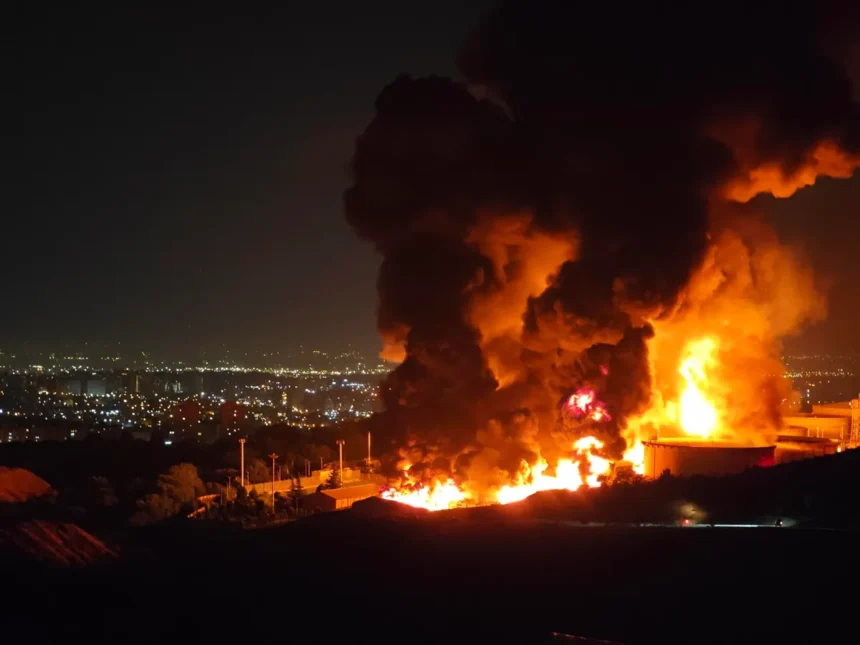
Reuters reported that QatarEnergy was set to declare force majeure on LNG shipments after attacks on facilities in the Ras Laffan complex, while drones also hit the Mesaieed industrial zone. Guardian reporting said QatarEnergy halted LNG production after attacks on Ras Laffan and Mesaieed.
That mattered because Qatar is a central supplier in the LNG market. If Qatari production drops, replacement supply cannot appear instantly. LNG projects take years to build. Shipping capacity is limited. Buyers with long-term contracts may still face delays if cargoes cannot be produced or loaded.
For global markets, LNG disruption is dangerous because gas feeds directly into electricity, heating, chemicals, fertiliser and manufacturing. A gas shock can therefore reach deeper into households and businesses than an oil move alone.
Inflation is the bridge from war to households
The Iran war affects households through inflation. Higher oil prices can raise petrol, diesel and transport costs. Higher gas prices can raise electricity and heating bills. Higher shipping costs can raise the price of imported goods. Higher fertiliser costs can push food prices upward.
That chain is why global markets quickly connect military escalation with central-bank policy. Investors are asking whether the war will create a short spike or a sustained inflation shock.
If prices fall quickly, central banks may still cut rates later. If prices stay high, rate cuts may be delayed or reversed. That is why the market reaction is so sharp: interest-rate expectations affect almost every asset class, from stocks and bonds to currencies and property.
The News Ink’s analysis of Trump’s global tariff strategy is relevant because tariffs and energy shocks can combine. Both raise costs. Both complicate central-bank decisions. Both make inflation harder to manage.
Why the 2026 shock is different from 2022
The Iran war energy shock has reminded investors of 2022, when Russia’s invasion of Ukraine sent gas prices soaring across Europe. But the two crises are not identical.
In 2022, Europe’s central vulnerability was pipeline gas from Russia. In 2026, the biggest fear is maritime energy flow through the Gulf and LNG supply from Qatar. The market structure is different, but the risk is similar: a geopolitical conflict threatens fuel supply, and consumers pay through higher prices.
The UK and Europe are better prepared than they were in 2022 in some ways. Storage, LNG infrastructure and energy-saving measures have improved. But the system is still vulnerable because gas is globally priced and competition for LNG can become intense.
That is why global markets remain nervous. The world has learned from the last crisis, but it has not eliminated energy dependence.
What the EIA update changed
The July EIA update offered some relief. After the June 18 U.S.-Iran MOU and increased traffic through the Strait of Hormuz, the EIA said it expected crude oil output and trade flows to return near pre-conflict levels by year end, with most shut-in production restored by early 2027. It also forecast Brent to average $74 a barrel in the third quarter of 2026, far below its earlier expectations.
That is important because it shows markets are not permanently locked into panic. Supply can recover. Forecasts can improve. Prices can fall when diplomacy and shipping flows improve.
But the EIA update also shows why renewed fighting matters. A forecast based on reopening and restored flow can change quickly if attacks resume and shipowners again see Hormuz as unsafe.
The strongest article should therefore avoid a single conclusion. It should say the energy shock eased after June, but fresh July escalation has revived the risk premium.
What investors are watching now
Investors are watching five signals.
First, they are watching actual tanker and LNG traffic through the Strait of Hormuz. Political claims matter, but shipping data matters more.
Second, they are watching QatarEnergy and other Gulf producers. If LNG output and loadings remain stable, gas panic may ease. If disruption returns, prices could rise again.
Third, they are watching Brent crude. A move above key levels can change inflation expectations quickly.
Fourth, they are watching bond yields. Higher yields show that investors expect central banks to stay tougher on inflation.
Fifth, they are watching diplomacy. A credible ceasefire can lower energy risk. A failed agreement can bring the risk premium back almost overnight.
This is why global markets can rally one week and sell off the next. The market is not confused. It is reacting to changing probabilities.
What this means for the UK economy
For the UK, the Iran war creates three main risks.
The first is household bills. If wholesale gas stays high, future price caps can rise. That would hurt consumers who are already sensitive to energy costs.
The second is inflation. Higher fuel and energy costs can push headline inflation up, making it harder for the Bank of England to cut rates.
The third is growth. Higher rates and higher bills reduce spending power. Businesses facing higher energy bills may delay investment or raise prices.
That combination is politically dangerous because it hits both voters and the government’s fiscal plans. A country can absorb a short shock. A long shock forces difficult choices.
The News Ink’s coverage of India and U.S. trade talks also shows how energy, trade and diplomacy now overlap. Countries dependent on imported fuel face harder choices when geopolitical shocks raise costs.
Why this story should stay updated
This article should not be treated as a finished one-day market report. The Iran war has already produced several different market phases: panic, partial relief, renewed tension and fresh uncertainty. Each phase changes prices, forecasts and policy expectations.
A useful version of the article should therefore be updated with a short note whenever one of these things changes: Brent crude moves sharply, QatarEnergy changes LNG output, the Strait of Hormuz traffic picture changes, the Bank of England updates its inflation outlook, or a ceasefire deal becomes credible.
That approach will make the article stronger for SEO because it gives readers an explainer they can return to, not just a snapshot from one trading session.
The News Ink’s report on mixed emotions in Iran during airstrikes helps connect the market story with the human and political pressure inside Iran. Financial markets move through prices, but those prices begin with real fear, real disruption and real conflict.
The final judgment
Global markets remain volatile because the Iran war has attacked investor confidence at its weakest point: energy security.
Oil matters. Gas may matter even more. The Strait of Hormuz matters most because it connects military risk to the daily movement of fuel across the world. As long as traders fear disruption there, every rally in stocks can look fragile and every fall in energy prices can look temporary.
The March shock showed how quickly prices can rise when LNG output, tanker traffic and military escalation collide. The June easing showed that diplomacy can lower the risk premium. The July flare-up showed that the danger can return just as quickly.
For households, the issue is not a chart on a trading screen. It is petrol, gas bills, food costs, mortgage rates and inflation. For governments, it is a test of economic resilience. For central banks, it is a reminder that inflation can come from outside their borders.
Global markets will likely calm only when ships can move safely, LNG production is secure, oil flows are predictable and diplomacy looks stronger than escalation. Until then, the Iran war will remain not just a geopolitical crisis, but a global economic risk.
For more economy and market analysis from The News Ink, follow The News Ink on X.