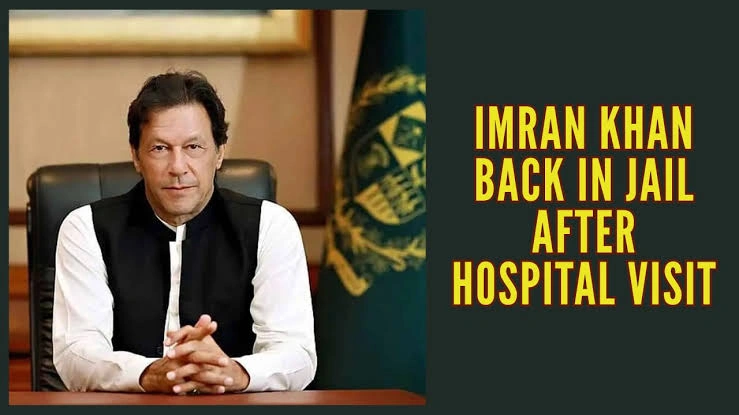
Imran Khan Returns to Jail After Brief Hospital Visit
Imran Khan returned to Rawalpindi’s Adiala jail before dawn on August 21, 2026, after spending only a few hours outside prison for a medical examination in Islamabad. The former Pakistani prime minister had been moved overnight following a Supreme Court order that called for treatment at Shifa International Hospital and access to a medical board including his personal physician. Instead, the government says he was examined at the state-run Pakistan Institute of Medical Sciences, or PIMS, and sent back to jail at about 5 a.m. after doctors declared him medically fit.
The brief Imran Khan hospital visit immediately became a legal and political dispute. Pakistan Tehreek-e-Insaf, or PTI, says the government failed to follow the Supreme Court’s directions because Khan was not examined at the specified private hospital and his personal physician, Dr Faisal Sultan, was not allowed to take part in the examination. The government says security concerns created by PTI workers forced the change of venue and that a qualified medical team completed the necessary checks.
The disagreement matters because the Supreme Court’s August 18 order was not simply a general instruction to provide medical care. It specifically directed authorities to transfer Imran Khan to Shifa International Hospital within two days, form a multidisciplinary medical board, associate his personal physician and sister with his treatment, facilitate family contact and submit his medical record to the court. The next hearing is scheduled for September 16.
For readers trying to understand what happened, the central facts are clear: Khan left Adiala jail overnight, underwent medical examinations, was returned to prison within hours, and is now at the centre of a new confrontation over whether the government complied with Pakistan’s highest court.
Imran Khan Hospital Visit: Key Facts
| Issue | Verified position as of Aug. 21, 2026 |
|---|---|
| Prison | Adiala jail, Rawalpindi |
| Court order | Transfer to Shifa International Hospital within two days |
| Actual examination venue, according to government | PIMS, Islamabad |
| Government’s reason for changing venue | Security concerns linked to PTI activity on the planned route |
| Doctors involved, according to information minister | Ophthalmologist, cardiologist and physician |
| Government’s assessment | Declared medically fit |
| Sister present | Uzma Khan |
| Personal physician present at examination | PTI says no |
| Return to prison | About 5 a.m. on Aug. 21 |
| Next Supreme Court hearing | Sept. 16 |
| PTI response | Says it will pursue contempt proceedings |
| Planned PTI march | Sept. 27 |
The Imran Khan hospital visit lasted far less time than many PTI leaders had expected. Reuters reported that senior party figures had anticipated Khan might remain under hospital supervision for weeks, while government officials had said admission would depend on what doctors found.
What the Supreme Court Ordered
The legal argument starts with the Supreme Court’s order of August 18.
A three-member bench headed by Justice Shahid Waheed, with Justices Naeem Akhtar Afghan and Ishtiaq Ibrahim, directed the government to move Imran Khan to Shifa International Hospital in Islamabad within two days. The order came after petitions from Khan, his family and PTI figures seeking hospitalisation, access to personal doctors, family contact and disclosure of medical records.
The court directed that a medical board include a physician, general surgeon, internal-medicine specialist, eye specialist and cardiologist. It also said Dr Faisal Sultan, Khan’s personal physician, and his sister Uzma could remain associated with the medical examination and treatment.
The court said incarceration does not remove a prisoner’s entitlement to humane treatment and necessary medical care. Authorities were also told to provide Khan’s medical record, facilitate weekly family meetings and allow Imran Khan to speak with his sons twice a week. The family and PTI, meanwhile, were told not to use his health information for political purposes or organise gatherings at the hospital.
Those details are now central because the argument is not simply about whether Khan saw doctors. It is about whether the arrangements ordered by the Supreme Court were actually implemented.
Why Imran Khan Was Taken to PIMS Instead of Shifa
The biggest factual controversy is the hospital itself.
Initial reports around the overnight transfer suggested Imran Khan was being moved toward Shifa International Hospital, where police had imposed heavy security and nearby roads had been cordoned off. The government’s later account, reflected in Reuters’ updated report and Dawn’s reporting, says the actual medical examination took place at PIMS.
Information Minister Attaullah Tarar said authorities changed the destination because of what he described as a security situation created by PTI workers on the route and around Shifa. He said doctors from Shifa were present at PIMS and that Khan was examined by an ophthalmologist, cardiologist and physician.
PTI rejects that justification.
Khan’s sister Uzma said she was taken to PIMS without being told why and expected her brother to be transferred to Shifa afterward. Dr Faisal Sultan said he was taken separately to Shifa International Hospital and waited there for roughly two to two-and-a-half hours before being told Khan probably would not arrive. The doctor said he and Uzma only learned later that they had been taken to different hospitals.
This difference between the court-ordered destination and the government’s actual route is why the Imran Khan hospital visit has moved so quickly from a medical event to a constitutional dispute.
What Doctors and the Government Said About His Health
Tarar said the team examining Imran Khan found him medically fit.
According to the information minister, the examination included specialists in ophthalmology and cardiology as well as a physician. After the process was completed, Khan was returned to Adiala jail at approximately 5 a.m.
Uzma’s account was more detailed but did not describe her brother as critically ill. She told reporters that his blood pressure was normal and his eyesight had improved, with only a small haemorrhage remaining. Reuters reported that she said Khan appeared stable and fit and had a patch over one eye.
That point is important because earlier political claims about his health had sometimes been more alarming.
Khan has been treated for right central retinal vein occlusion, or CRVO, an eye condition involving blockage of a retinal vein. Court records reported by Dawn said he had previously been examined at PIMS and that his vision had almost returned to normal after treatment by senior ophthalmologists.
The same records noted other concerns. On August 1, a PIMS doctor recorded complaints including fluctuating blood pressure, palpitations, headaches and restlessness and recommended a CT coronary angiography, changes to blood-pressure medication and measures to reduce stress. A medical board examining him on August 10 recommended daily walking, relaxation and more regular access to family, reading material and other normalising activities.
The latest Imran Khan hospital visit therefore did not begin from a blank medical record. It came after months of disputes over eye treatment, stress, blood pressure and access to independent doctors.
Torture Allegation Requires Careful Attribution
One of the most serious claims after the Imran Khan hospital visit came from his sister.
Uzma told reporters that Khan said he had been subjected to repeated cruelty and torture in prison and that extended isolation, limited human contact and lack of access to reading material and television had damaged his well-being. Reuters reported that there was no immediate response from the interior ministry, law ministry or jail authorities to requests for comment on the torture allegation.
That allegation should therefore be reported as an allegation, not as an established fact.
The government has disputed PTI claims that Khan is being denied appropriate medical care. Officials say he has been examined repeatedly and that the available medical evidence has not demonstrated an urgent condition requiring prolonged hospital treatment.
The dispute over prison conditions has become politically explosive because Khan remains one of Pakistan’s most influential opposition figures and has been largely unable to communicate directly with the public for extended periods.
Why PTI Says the Court Order Was Violated
PTI’s legal argument has two main parts.
First, the Supreme Court specifically named Shifa International Hospital. The government says it substituted PIMS for security reasons.
Second, the order said Khan’s personal physician could remain associated with his examination and treatment. Dr Faisal Sultan says he was sent to Shifa while Imran Khan was taken elsewhere.
PTI leaders therefore argue that even if Khan received competent medical care at PIMS, the government still failed to implement the actual terms ordered by the court.
Khyber Pakhtunkhwa Chief Minister Sohail Afridi, whose provincial government is led by PTI, called the episode contempt of the Supreme Court. PTI and allied opposition parties said they would approach the court seeking contempt proceedings.
The government disputes the idea that it acted unlawfully and points to security considerations and prison rules. That legal disagreement has not yet been resolved by the Supreme Court.
The question is no longer merely whether Imran Khan received a medical check-up. It is whether executive authorities were entitled to alter the court’s specified arrangements because of their security assessment.
Government Again Challenges the Hospital Order
The government had already objected to the Supreme Court order before the overnight transfer.
It filed a review petition arguing that directing a convict to a private hospital was discriminatory and inconsistent with prison rules. The Supreme Court registrar’s office returned that petition on August 20 because of procedural defects and said it could be resubmitted after the objections were corrected.
On August 21, the Islamabad chief commissioner again approached the Supreme Court challenging the order.
The government argues that Rule 197 of the Pakistan Prison Rules governs prisoner transfers and that private-hospital treatment could create unequal treatment for other inmates. PTI responds that those arguments cannot justify departing from a Supreme Court order while it remains in force. The Imran Khan hospital visit has therefore become an institutional dispute as well as a medical one.
Timeline: From Court Order to Return to Adiala Jail
| Date | Development |
|---|---|
| Aug. 18 | Supreme Court orders transfer to Shifa International Hospital within two days |
| Aug. 19 | Government files review petition challenging the order |
| Aug. 20 | Supreme Court registrar returns the review petition with procedural objections |
| Night of Aug. 20–21 | Khan leaves Adiala jail under heavy security |
| Early Aug. 21 | Government says examination occurs at PIMS rather than Shifa |
| About 5 a.m., Aug. 21 | Imran Khan returns to Adiala jail |
| Aug. 21 | PTI says it will pursue contempt proceedings |
| Aug. 21 | Islamabad chief commissioner again challenges hospital order |
| Sept. 16 | Supreme Court due to resume hearing |
| Sept. 27 | PTI plans nationwide protest march |
The speed of events helps explain why the story remains fluid. The Imran Khan hospital visit was completed before the legal dispute over the court’s hospital order had itself been settled.
Why Imran Khan Is Still in Prison
Imran Khan has been imprisoned since August 2023 and has faced more than 100 legal cases since losing office in a parliamentary no-confidence vote in April 2022.
Most of his major convictions have either been suspended or overturned, but one conviction continues to keep him in prison.
In January 2025, Khan and his wife Bushra Bibi were convicted in the Al-Qadir Trust corruption case. Prosecutors accused the couple of receiving land worth up to 7 billion Pakistani rupees from a property developer in exchange for a favour involving £190 million repatriated to Pakistan by Britain. Khan was sentenced to 14 years in prison.
He denies wrongdoing and says the cases against him are politically motivated. The government denies that the prosecutions are political.
Other major cases have had different outcomes. His state-secrets conviction was overturned. Sentences in the Toshakhana state-gifts cases were suspended pending appeal. He and Bushra Bibi were acquitted in the unlawful-marriage case. Khan also continues to face anti-terrorism proceedings connected to violence that followed his May 2023 arrest.
Because those proceedings are at different legal stages, it is inaccurate to describe every case against Imran Khan as either proven or dismissed. The surviving 14-year Al-Qadir sentence is the principal conviction keeping him incarcerated while appeals and other cases continue.
The Political Context Behind the Hospital Dispute
The Imran Khan hospital visit comes at an unusually sensitive moment in Pakistani politics.
PTI has spent years in confrontation with the government and the military establishment following Khan’s 2022 removal from office and his subsequent imprisonment. Khan has accused political and military actors of engineering his downfall and prosecutions. Those accusations have been denied by the government and military.
The News Ink previously examined the disputed diplomatic-cable claims surrounding Khan’s 2022 ouster. The link is relevant background, but the claims surrounding the cable remain politically contested and should not be treated as settled simply because they have been reported.
This week, close aide Zulfikar Bukhari told Reuters that Khan would not seek confrontation with army chief Field Marshal Asim Munir if released. Reuters noted that Khan himself has not publicly delivered that message. The hospital transfer had therefore been viewed by some analysts as a possible opening for easing tensions, but his rapid return to Adiala complicates that interpretation.
Rather than lowering political temperature, the Imran Khan hospital visit may have created another rallying point for PTI, particularly if the party succeeds in persuading the Supreme Court that its order was not followed.
September 27 Protest Now Carries More Weight
PTI says it will continue with a nationwide protest march planned for September 27.
Before the hospital episode, the party said the march would demand Khan’s release, access to him and faster hearings in his legal cases. After his return to prison, PTI leaders said preparations were accelerating.
Uzma said Khan sent a message urging KP Chief Minister Sohail Afridi to intensify the movement. PTI and allied opposition parties also said they would broaden public mobilisation.
Whether that produces large demonstrations remains uncertain.
Pakistan has experienced repeated confrontations between PTI supporters and security forces since 2022, including violence following Khan’s May 2023 arrest. Any future march is therefore likely to be viewed by authorities through a security lens, while PTI will continue framing restrictions as political repression.
That makes the legal handling of the Imran Khan hospital visit politically consequential far beyond healthcare.
The Court’s September 16 Hearing Is Now Crucial
The next scheduled Supreme Court hearing is September 16.
By then, several questions may require clarification.
Did the government comply with the substance of the medical-care order even though it changed hospitals?
Was the security justification sufficient to depart from an explicit judicial direction?
Should Khan have been kept under hospital observation for longer?
Was his personal physician improperly excluded?
What medical records will be submitted to the court?
And what effect will the government’s renewed review challenge have on the original order?
The court had warned both sides that non-compliance could have consequences. It also allowed either side to return with grievances concerning implementation.
PTI says it intends to do exactly that.
What This Episode Does and Does Not Prove
The Imran Khan hospital visit has produced strong political claims, but the confirmed evidence supports a narrower set of conclusions.
The confirmed record is that the Supreme Court ordered treatment at Shifa International Hospital; the government says Khan was examined at PIMS and declared medically fit; his sister said his eyesight had improved and his blood pressure was normal; his personal physician says he did not participate in the examination; and PTI intends to challenge the handling of the order in court.
What the episode does not independently prove is that Khan is being tortured, that his medical condition is being deliberately concealed, or that the government’s security explanation was fabricated. Those remain disputed political and legal claims requiring evidence and, where applicable, judicial consideration.
That distinction matters especially in a story where health, prison conditions and national politics have become inseparable.
Frequently Asked Questions
Why was Imran Khan taken to hospital?
The Supreme Court ordered that Imran Khan be transferred from Adiala jail for medical examination and treatment after petitions raised concerns about his health, particularly his eye condition, blood pressure and access to independent doctors.
Which hospital examined Imran Khan?
Although the Supreme Court named Shifa International Hospital, the government says the actual examination took place at PIMS in Islamabad because of security concerns. PTI says that switch violated the court order.
What did doctors say about his health?
Information Minister Attaullah Tarar said an ophthalmologist, cardiologist and physician examined Khan and declared him medically fit. His sister also said his blood pressure was normal and his eye condition had improved, although she said a small haemorrhage remained.
Why did he return to jail so quickly?
The government says doctors found no need for hospital admission and therefore returned him to Adiala jail at about 5 a.m. PTI expected a longer hospital stay and disputes whether the court order was properly implemented.
What happens next?
PTI says it will seek contempt proceedings. The government has again challenged the Supreme Court’s order, the court is due to resume the health-related matter on September 16, and PTI plans a nationwide protest march on September 27.
Conclusion
Imran Khan returned to Adiala jail only hours after leaving it, but the political and legal consequences of the trip are likely to last far longer than the medical examination itself.
The government says the former prime minister received a detailed examination at PIMS and was declared medically fit. His sister also described him as fit and said his blood pressure and eyesight had improved.
PTI’s objection is different. It argues that the Supreme Court ordered treatment at Shifa International Hospital with the participation of Khan’s personal physician, and that neither part was properly implemented.
That dispute will now return to the courts.
The government is again seeking review of the August 18 order. PTI says it will seek contempt proceedings. The Supreme Court is scheduled to hear the broader matter again on September 16, less than two weeks before the opposition’s planned September 27 march.
For that reason, the Imran Khan hospital visit should not be treated simply as a health update.
It has become another test of judicial authority, executive power, prisoner rights and the political confrontation that has shaped Pakistan since Khan’s removal from office in 2022.
The medical episode itself lasted only a few hours.
Its legal and political aftermath may be much longer.
Follow The News Ink
Stay connected with The News Ink for business, markets, technology, world news and major economic developments.
Follow us on X, Instagram and Threads, or read our longer-form analysis on Medium.