


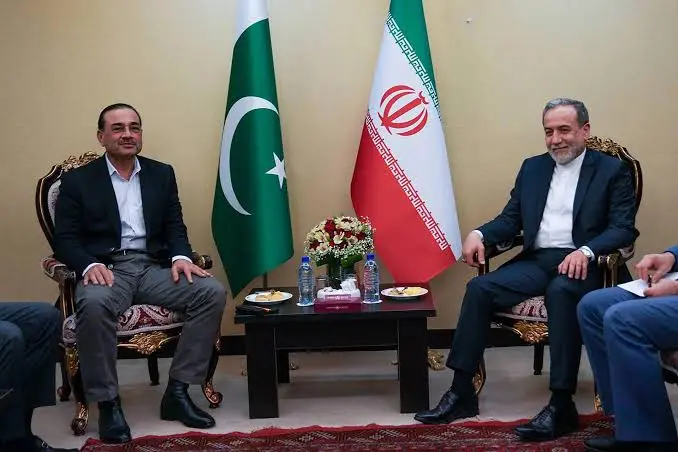
Asim Munir Tehran Visit: Why Pakistan Is Stepping Into the US-Iran Crisis
The Asim Munir Tehran visit places Pakistan back at the centre of one of the most dangerous diplomatic confrontations of 2026. Field Marshal Syed Asim Munir, Pakistan’s Chief of Defence Forces and Chief of Army Staff, is due in Tehran on August 24 for talks with senior Iranian officials as Islamabad tries to keep a stalled US-Iran peace process alive. The timing is unusually sensitive: Washington is preparing a new sanctions offensive against Iran, Tehran remains defiant, oil traffic through the Strait of Hormuz is severely disrupted, and the 60-day roadmap created under the Islamabad Memorandum of Understanding has passed without a final settlement.
The Asim Munir Tehran visit matters because Pakistan is one of the few countries that maintains working channels with Tehran while also enjoying a much warmer relationship with Washington than it did only a few years ago. That does not give Islamabad the power to impose a settlement. It does, however, give Pakistan something valuable in a crisis built on mistrust: access to both sides. Reuters has documented how Pakistan’s relationship with Washington improved sharply while Islamabad simultaneously positioned itself as a channel to Iran.
Iran’s Foreign Ministry said the trip is intended to strengthen bilateral cooperation and continue Pakistan’s “good offices” for regional peace and security. Two Pakistani government sources also confirmed the visit to Reuters. One source said the discussions would include the Islamabad peace framework, US President Donald Trump’s threat of tougher sanctions and wider regional security issues.
The Asim Munir Tehran visit is therefore not simply another bilateral military meeting. It is a test of whether Pakistan can preserve a diplomatic channel at a moment when economic pressure, the nuclear dispute, Hormuz and regional security are all moving in the wrong direction.
At publication time, the Asim Munir Tehran visit was still unfolding, and no final communiqué from the August 24 meetings had yet been publicly verified. Reliable reporting available at the time confirmed the mission and its broad objectives, but not a completed agreement or breakthrough.
Asim Munir Tehran Visit: Key Facts at a Glance
| Issue | Current position |
|---|---|
| Visit date | August 24, 2026 |
| Pakistani official | Field Marshal Syed Asim Munir |
| Current roles | Chief of Defence Forces and Chief of Army Staff |
| Host country | Iran |
| Main stated purpose | Bilateral cooperation and regional peace efforts |
| Pakistan’s wider role | Mediator between the United States and Iran |
| Existing framework | Islamabad Memorandum of Understanding |
| Formal follow-up | Pakistan-Qatar mediated talks in Switzerland |
| Original roadmap | Final-deal effort over a 60-day period |
| Current status | No final US-Iran settlement |
| Immediate pressure point | New US sanctions against Iran |
| Major global risk | Strait of Hormuz disruption |
| Pakistan-Iran trade ambition | Up to $10 billion in bilateral trade |
The Asim Munir Tehran visit comes after months of Pakistani mediation. Islamabad hosted and facilitated talks earlier in the conflict, helped produce the Islamabad MoU in June and then joined Qatar in mediating high-level and technical negotiations in Switzerland. Pakistan’s Foreign Ministry says the framework included work on the nuclear issue, sanctions and monitoring, as well as a communication line intended to reduce the risk of incidents involving commercial shipping in the Strait of Hormuz. Read the Pakistan-Qatar statement on the Islamabad MoU
Why Pakistan Has Become Important in the US-Iran Crisis
Pakistan’s role is unusual because it sits at the intersection of several relationships that rarely overlap comfortably.
Iran is Pakistan’s neighbour. The two countries have security concerns along their border, economic links, religious and cultural ties and a shared interest in preventing a wider regional war. At the same time, Pakistan has spent the last two years rebuilding its relationship with the United States.
The Asim Munir Tehran visit is particularly significant because Munir himself has become an important part of that diplomatic repositioning. Reuters reported earlier this year that repeated contacts between Pakistan’s civil-military leadership and the Trump administration helped Islamabad emerge as a more influential regional interlocutor. Munir has held direct discussions with senior US officials, while Prime Minister Shehbaz Sharif and Foreign Minister Ishaq Dar have maintained active channels with Washington, Tehran and important regional capitals. Reuters analysis of Pakistan’s mediator role
This matters because mediation requires more than neutrality on paper. A mediator needs to deliver messages that both sides believe are authentic, keep sensitive proposals confidential and understand where each party may have room to compromise.
Pakistan cannot guarantee those compromises. But the Asim Munir Tehran visit shows that Tehran still considers Islamabad useful enough to engage when diplomacy is under severe strain.
The Islamabad MoU Is the Foundation Pakistan Is Trying to Preserve
The biggest reason the Asim Munir Tehran visit matters is the Islamabad Memorandum of Understanding.
The MoU was signed in June after months of war and intermittent negotiations. Pakistan and Qatar then facilitated a high-level meeting in Switzerland involving representatives of the United States and Iran. Pakistan’s Foreign Ministry said the parties agreed on a roadmap aimed at reaching a final deal within 60 days.
The framework was not limited to vague promises of dialogue.
It created a High-Level Committee for political oversight. Negotiators were expected to work through nuclear, sanctions, monitoring and dispute-resolution issues. A direct communication line was established to reduce the danger of miscalculation around the Strait of Hormuz, and a de-confliction mechanism was also created for related military tensions.
That 60-day period has now passed without a final agreement.
Pakistan, however, has not declared the framework dead. In July, the Foreign Ministry said Islamabad was continuing efforts to bring both sides back to the MoU and argued that its basic logic remained relevant even when escalation had overtaken negotiation. Pakistan Foreign Ministry’s July update on the peace process
The Asim Munir Tehran visit is best understood as an attempt to preserve that framework rather than invent an entirely new peace plan.
A Short Timeline of Pakistan’s Mediation
| Date | Development | Why it mattered |
|---|---|---|
| February 2026 | US and Israeli strikes open a major conflict with Iran | Regional war creates urgent need for intermediaries |
| March-April | Pakistan intensifies diplomatic outreach | Islamabad begins emerging as a possible channel |
| April | High-level US-Iran talks take place in Islamabad | Pakistan becomes a direct facilitator |
| May | Munir and other Pakistani officials engage Iranian leaders | Mediation shifts into repeated shuttle diplomacy |
| June 17-18 | Islamabad MoU is signed | Creates a formal negotiating framework |
| June 21-22 | Pakistan and Qatar mediate talks in Switzerland | Nuclear, sanctions and monitoring tracks are organized |
| July | Negotiations stall as regional tensions return | Pakistan says the MoU remains relevant |
| August 17 | Original 60-day roadmap period passes | No comprehensive agreement is reached |
| August 24 | Munir’s scheduled Tehran mission | Pakistan tries to prevent diplomatic collapse |
The April negotiations were themselves important. Reuters reported that high-level US-Iran talks in Islamabad ended without a breakthrough but kept the door open to further diplomacy. That history explains why the Asim Munir Tehran visit is more than symbolic. Pakistan has already invested substantial political and diplomatic capital in the process.
If the framework collapses completely, Islamabad loses not only a potential peace agreement but also part of the diplomatic influence it has built during the crisis.
Trump’s New Sanctions Threat Raises the Stakes
The immediate backdrop to the Asim Munir Tehran visit is Washington’s decision to intensify economic pressure.
US Treasury Secretary Scott Bessent has said Washington is preparing an exceptionally aggressive new sanctions campaign. Trump has also threatened economic consequences for countries that provide Tehran with what he regards as a financial or commercial lifeline. Iran has rejected the pressure and argues that new sanctions will fail.
For Pakistan, that creates a direct dilemma.
Pakistan and Iran have discussed expanding bilateral trade to $10 billion. Reuters reported that informal trade is estimated at approximately $4 billion according to unofficial statistics, while the two countries have explored barter arrangements, border commerce and stronger formal economic links. Reuters overview of Iran’s trading partners and Pakistan exposure
The Asim Munir Tehran visit therefore takes place when diplomacy and economics are colliding. Pakistan wants better economic ties with Iran, but it also needs stable access to international financial markets and a functioning relationship with Washington.
This is one reason Pakistan has a strong incentive to prevent the conflict from becoming an open-ended sanctions confrontation.
The News Ink has been following the escalation through its coverage of US sanctions on Iran, including the growing risk that pressure on Tehran affects countries and companies maintaining economic links with Iran.
The Strait of Hormuz Makes This a Global Economic Crisis
The Asim Munir Tehran visit also matters because the dispute is no longer confined to Iran’s nuclear program.
The Strait of Hormuz has become one of the central pressure points.
Reuters reported that oil shipments through the waterway were at a virtual standstill as Tehran threatened action against tankers it considered unauthorized. The Strait of Hormuz is a critical route linking Persian Gulf energy producers with global markets.
Any prolonged disruption affects much more than Iran and the United States.
Oil prices can rise. Shipping insurance becomes more expensive. Gulf exporters face uncertainty. Asian energy importers become more exposed. Airlines, manufacturers and consumers can eventually feel the effect through fuel and transport costs.
The News Ink has followed this escalation in its report on Trump’s threats over the Strait of Hormuz.
The Asim Munir Tehran visit cannot reopen the strait by itself. But the Islamabad MoU already established a communications mechanism intended to reduce incidents and support safer commercial passage. Reviving that channel could be one of the most practical short-term gains available to mediators.
Why Tehran May Still Listen to Pakistan
Iran does not simply view Pakistan as an extension of Washington.
That distinction matters.
Pakistan has repeatedly called for dialogue and diplomacy while opposing further regional escalation. It has maintained direct political, military and economic contacts with Iran while also criticizing attacks threatening other regional states. Pakistan’s Foreign Ministry has consistently described negotiation as the viable path forward.
The Asim Munir Tehran visit is possible precisely because Islamabad has tried to preserve multiple relationships rather than adopt a simple pro-Iran or pro-US position.
Pakistan also shares immediate security interests with Iran. Instability on either side of their border, militant activity, smuggling, disrupted commerce and population movement can all create direct consequences for the other country.
For Tehran, Pakistan is therefore not only a mediator carrying messages from Washington. It is a neighbouring state with its own stake in avoiding regional collapse.
That does not mean Iranian leaders will accept Pakistani proposals. Iran’s positions on sanctions, the nuclear issue, security guarantees and Hormuz remain tied to Tehran’s own strategic calculations.
The Asim Munir Tehran visit gives Pakistan access, not control.
Why Washington May Take Munir Seriously
Pakistan’s ability to mediate would mean little if the United States did not consider its channel useful.
That is where Munir’s recent relationship with Washington becomes relevant.
Reuters has documented a striking improvement in Pakistan-US ties, including direct engagement between Munir and Trump and wider cooperation between the two governments. Pakistan’s leadership has used that opening to position the country as a bridge on Iran rather than merely a bystander.
The Asim Munir Tehran visit therefore has a second audience beyond Tehran.
Anything substantive that emerges from the discussions can potentially be carried through channels reaching Washington quickly.
This is an advantage that some Iranian partners do not have. Countries can be close to Tehran but lack influence in Washington. Others can have excellent access to Washington but little political trust in Tehran.
Pakistan is trying to occupy the narrow space between them.
Earlier in the conflict, The News Ink examined how Pakistan’s telephone diplomacy helped create space for US-Iran negotiations. The current mission shows Islamabad is still trying to use that access after the negotiating momentum weakened. The article is a verified published News Ink URL in the internal-link library.
Pakistan Is Not the Only Mediator
The Asim Munir Tehran visit should not be presented as if Pakistan alone controls the diplomatic process.
Qatar has formally worked alongside Pakistan under the Islamabad framework. Oman has a long history of quiet mediation between Iran and Western governments, and Oman’s foreign minister is also scheduled to visit Tehran on Tuesday for discussions involving the Strait of Hormuz.
Turkey, Saudi Arabia, Egypt and China have also been involved in regional diplomacy or de-escalation efforts.
That wider network can be a strength.
A difficult negotiation may need different intermediaries for different problems. Oman has experience in discreet US-Iran diplomacy. Qatar has built a role in high-risk negotiations. Turkey can speak to Western governments while maintaining important regional relationships. China has major economic leverage and remains Iran’s largest oil customer. Reuters estimated that more than 80% of Iran’s shipped oil has recently been destined for China.
Pakistan’s distinct contribution is its combination of proximity to Iran, ties with Gulf states and Turkey, strategic links with China and improved access to Washington.
The Asim Munir Tehran visit is one part of a wider diplomatic architecture, not a solo peace mission. That wider context also means the Asim Munir Tehran visit should be judged by whether it strengthens collective mediation rather than whether Pakistan claims sole credit.
The Nuclear Issue Remains the Hardest Problem
Even if the Asim Munir Tehran visit succeeds in lowering immediate tensions, the central nuclear dispute will remain.
Washington continues to demand major restrictions and guarantees concerning Iran’s nuclear capabilities, while Tehran maintains that its nuclear activities are peaceful and insists that its rights must be respected. Sanctions relief remains inseparable from that dispute.
Iran wants economic restrictions reduced. Washington wants concessions, monitoring and guarantees before providing major relief. Each side fears that making the first move could leave it weaker if the other does not follow through.
This is exactly the kind of sequencing problem mediators can sometimes help solve.
Pakistan and Qatar’s June framework created tracks dealing with nuclear matters, sanctions and monitoring. That structure is important because a durable agreement is unlikely to emerge from one dramatic political meeting. It requires technical verification, legal commitments, timelines and a process for resolving future disputes.
The Asim Munir Tehran visit can help restart political momentum. It cannot replace the technical negotiations needed for a final deal.
What Pakistan Stands to Gain
Pakistan’s mediation is not purely altruistic. A successful Asim Munir Tehran visit could advance several national interests.
Greater diplomatic relevance would strengthen Islamabad’s influence in Washington, the Gulf and international forums. A calmer Iran would also reduce risks along Pakistan’s western frontier and lower the possibility of a prolonged regional conflict spilling into trade, migration or security.
Pakistan is also vulnerable to global energy shocks. A more stable Strait of Hormuz would reduce one major source of imported inflation and shipping uncertainty. De-escalation could create greater room for formal Pakistan-Iran commerce and the two countries’ $10 billion trade ambition.
Pakistan also has deep security and economic relationships with Saudi Arabia and other Gulf states. Preventing a wider Iran confrontation serves those relationships as well.
The Asim Munir Tehran visit can support all of those goals if it produces even limited de-escalation.
But Pakistan Is Taking Real Risks
The diplomatic opportunity also carries serious dangers.
Pakistan could become caught between contradictory expectations. Washington may expect Islamabad to press Iran harder on nuclear and regional issues. Tehran may expect Pakistan to resist US economic pressure. Gulf partners will watch Pakistan’s dealings with Tehran closely, while China has a major interest in energy security and resistance to secondary sanctions.
There is also a reputational risk.
If Islamabad repeatedly presents itself as a central mediator but cannot produce movement, its influence could eventually be overstated. Analysts cited by Reuters have warned that Pakistan needs to manage the scope of its involvement carefully and avoid overplaying the mediator role.
The Asim Munir Tehran visit is therefore valuable only if Pakistan remains realistic about what it can deliver.
A mediator is not a guarantor.
Pakistan can transmit proposals, reduce misunderstandings, create negotiating formats and identify possible compromises. It cannot force either the White House or Iran’s leadership to accept terms they consider strategically unacceptable.
What Would Count as Success From the Tehran Visit?
The Asim Munir Tehran visit does not need to produce a peace treaty to matter.
Several smaller outcomes would still be significant:
- Iran agrees to resume formal technical negotiations under the Islamabad framework.
- Pakistan receives a clear Iranian position that can be relayed to Washington.
- Both parties preserve the direct communication mechanism created under the MoU.
- Talks reduce the immediate danger to commercial shipping around Hormuz.
- Pakistan and Iran clarify how bilateral trade can continue without creating unnecessary sanctions exposure.
- Tehran shows willingness to discuss nuclear verification or sequencing of sanctions relief.
- Wider regional disputes are kept from completely overwhelming the core US-Iran negotiating track.
Even one or two of those outcomes would give the Asim Munir Tehran visit practical value.
What Would Signal Failure?
The opposite signs would be equally clear.
If Iran rejects renewed talks, Washington escalates sanctions without leaving a diplomatic off-ramp, Hormuz restrictions worsen or regional military activity expands, Pakistan’s room for manoeuvre would narrow sharply.
A failure of the Asim Munir Tehran visit would not automatically mean Pakistani diplomacy was ineffective. Some disputes cannot be solved by a mediator when the primary parties believe coercion will produce a better outcome than compromise.
But it would show that the crisis had entered a more dangerous phase.
The News Ink previously covered US warships transiting Hormuz during US-Iran peace talks, illustrating how diplomacy and military pressure have repeatedly operated at the same time throughout the conflict. That page is a verified published internal article.
Frequently Asked Questions
Why is Asim Munir visiting Tehran?
The Asim Munir Tehran visit is part of Pakistan’s continuing effort to support regional de-escalation and revive the US-Iran diplomatic process. Iran says the mission will also cover bilateral cooperation and regional peace and security.
Is Pakistan officially mediating between the US and Iran?
Yes. Pakistan has formally acted as a mediator and facilitator, including through the Islamabad Memorandum of Understanding. Pakistan and Qatar also mediated follow-up high-level and technical negotiations in Switzerland.
Did the Islamabad MoU produce a final peace deal?
No. It created a negotiating structure and a 60-day roadmap toward a final agreement, but the period passed without a comprehensive settlement. Pakistan maintains that the framework remains useful for renewed talks.
Why is the Strait of Hormuz important to Munir’s visit?
Hormuz is central to the energy and security crisis. Disrupted oil traffic affects global markets, while the Islamabad framework included a communication mechanism intended to reduce incidents and miscalculation involving commercial vessels.
Can Pakistan force Iran and the US to reach an agreement?
No. Pakistan can facilitate negotiations, transmit proposals and reduce misunderstandings, but final decisions on nuclear limits, sanctions, security guarantees and regional issues belong to Washington and Tehran.
Why the Asim Munir Tehran Visit Matters Beyond One Meeting
The Asim Munir Tehran visit comes at a moment when diplomacy is in danger of being overtaken by economic confrontation.
The June framework has not produced a final agreement. The United States is preparing a much tougher sanctions campaign. Iran is warning against further pressure. Hormuz remains a source of global economic risk. Regional security disputes are becoming increasingly entangled with the original nuclear and sanctions negotiations.
Pakistan cannot solve all of those problems.
What it can do is keep channels open when the alternatives are becoming more dangerous.
That is why the Asim Munir Tehran visit matters.
Pakistan now has an unusual combination of relationships: direct access to Iran, improving ties with the United States, strong Gulf partnerships, close relations with Turkey and China and a formal role alongside Qatar in the peace framework.
Those relationships give Islamabad diplomatic opportunity, but they also impose limits. Pakistan must avoid appearing to take instructions from one side, protect its own economic interests and prevent mediation from pulling it deeper into a conflict it cannot control.
The most realistic measure of success will therefore not be a dramatic announcement from Tehran.
It will be whether the Asim Munir Tehran visit can create enough political space for formal US-Iran negotiations to restart, reduce the risk of miscalculation around Hormuz and keep the Islamabad MoU alive as a usable path back to diplomacy.
If it does, Pakistan will have strengthened its claim to a larger diplomatic role in the region. In that sense, the Asim Munir Tehran visit could become a marker of Pakistan’s growing diplomatic reach even without producing an immediate comprehensive accord.
If it does not, the next phase of the US-Iran crisis may be defined less by mediation and more by sanctions, economic retaliation and the risk of renewed military escalation.
Follow The News Ink
Stay connected with The News Ink for the latest world news, geopolitics, technology, business, sports and major global developments.
Follow The News Ink on X, Instagram, Threads, TikTok, Bluesky and Mastodon. Read longer analysis on Medium, Substack and Quora, and follow visual stories on Pinterest.