US Justice Department Releases Withheld Epstein Files Mentioning Donald Trump
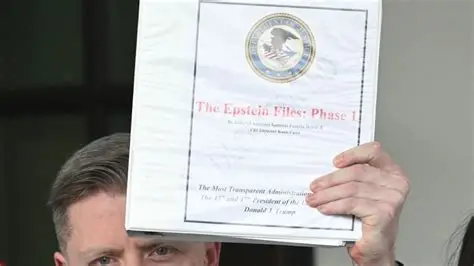
The Epstein files have returned to the centre of American politics after the U.S. Justice Department released additional records that had been missing from an earlier public disclosure. The newly released material includes FBI interview summaries involving uncorroborated allegations that mention President Donald Trump, along with explanations from the department that the documents were mistakenly withheld because they had been coded as duplicates during review.
The release is sensitive for several reasons. The records involve allegations of sexual assault, the claims remain unverified, and Trump has consistently denied wrongdoing related to Jeffrey Epstein. The documents also arrived during a wider political fight over whether the Justice Department handled the Epstein files transparently, protected survivors properly and complied fully with the Epstein Files Transparency Act.
According to CBS News, the Justice Department said the missing interview records were “incorrectly coded as duplicative” and were therefore not published with the earlier investigative materials. CBS also reported that the woman’s claims were uncorroborated, that the FBI interviewed her multiple times in 2019, and that agents later reported she declined to answer further questions and broke off contact.
That distinction is crucial. The release of the Epstein files does not mean the allegations were proven. It means records of the allegations became public after being left out of the initial release. A responsible article must therefore separate three things: what the documents say, what investigators confirmed, and what remains disputed or unsupported.
What Was Released
The new Epstein files include FBI summaries connected to interviews conducted in 2019, after Jeffrey Epstein’s arrest on federal sex-trafficking charges. The woman interviewed by the FBI made allegations involving Epstein and Trump, including claims about events she said took place when she was a minor. CBS/AP reported that the FBI spoke with her four times as agents assessed her account, but only one interview summary had been included in the earlier public release before the additional documents were published.
The Justice Department said it reviewed concerns raised after news organisations reported that files appeared to be missing. Once officials identified the issue, they said the documents were republished as part of the online Epstein Library.
The records are politically explosive because they mention a sitting president. They are legally delicate because they involve unverified accusations. They are also part of a much bigger public archive that includes millions of pages, images, videos, correspondence and investigative material connected to Epstein and Ghislaine Maxwell.
The Justice Department says its Epstein Library houses materials responsive under the Epstein Files Transparency Act and warns that some records contain descriptions of sexual assault. The department also said in January 2026 that it had published more than 3 million additional pages, bringing the total production to nearly 3.5 million pages at that time.
That scale helps explain why errors may occur. It does not end the scrutiny. When the missing documents involve a president, survivors, redactions and criminal-investigation material, the explanation of a duplicate-coding error is unlikely to satisfy lawmakers without further detail.
What the Documents Do Not Prove
The most important legal point is simple: the Epstein files do not prove the allegations against Trump. They record that allegations were made and that FBI agents documented interviews. Public records can include tips, witness statements, claims, contradictions, leads and unverified material. A document appearing in a federal file is not the same as a finding of fact.
CBS/AP reported that the woman’s account was one of several uncorroborated reports federal agents received from members of the public alleging misconduct by Trump and other well-known figures after Epstein’s arrest. CBS also reported that there was no indication Epstein ever lived in South Carolina, where part of the woman’s account placed events, and that it was unclear whether Trump and Epstein knew each other during the period described in the allegation.
That is why wording matters. It would be inaccurate to write that the released records “show Trump assaulted” anyone. The documents do not establish that. It is accurate to write that the Justice Department released previously withheld Epstein files that include FBI summaries of uncorroborated allegations involving Trump, who denies wrongdoing.
The White House rejected the claims strongly. Press Secretary Karoline Leavitt called the accusations baseless and said they lacked credible evidence, according to CBS/AP reporting. Trump has consistently denied wrongdoing connected to Epstein.
In legal and political reporting, careful language is not weakness. It is the difference between accountability and amplification. The public has a right to know what the government released and why documents were withheld, but unproven allegations must not be treated as proven facts.
A Short Timeline of the Latest Epstein Files Dispute
The Epstein files release has unfolded in stages rather than one clean disclosure. That staggered process is one reason the controversy has continued.
| Date | Development | Why it mattered |
|---|---|---|
| November 19, 2025 | Epstein Files Transparency Act signed into law | Required wider release of unclassified DOJ-held Epstein materials |
| January 30, 2026 | DOJ said it published more than 3 million additional responsive pages | The department said total production reached nearly 3.5 million pages |
| Early March 2026 | News outlets reported missing FBI interview summaries | Raised questions about whether key records had been withheld |
| March 5–6, 2026 | DOJ released additional files involving uncorroborated Trump allegations | Department said the records were mistakenly coded as duplicates |
| March 17, 2026 | House Oversight Chairman James Comer issued a subpoena to Attorney General Pam Bondi | Congressional scrutiny of DOJ handling intensified |
| May 29, 2026 | Former Attorney General Bondi appeared for a transcribed House interview | Lawmakers questioned the handling of the release and redaction errors |
| June 4, 2026 | House Oversight released additional Epstein investigation transcripts | Added more public material to the congressional record |
| July 2026 | New Mexico accused DOJ of delaying unredacted files for a Zorro Ranch probe | Showed that the records fight had expanded beyond Washington |
This timeline shows why the Epstein files are now about more than one set of allegations. The broader issue is whether the government can release an enormous archive while protecting survivors, preserving lawful redactions and maintaining public confidence.
Why the Duplicate-Coding Explanation Matters
The Justice Department’s explanation was that the missing records were incorrectly marked as duplicates. On its own, that may sound like a technical archive problem. In a normal document-production process, duplicate coding is common. Agencies often remove repeat copies so the same file is not published again and again.
The problem is the context. These were not routine records. They were FBI summaries involving allegations against the president, released under a law that was already politically sensitive. CBS/AP reported that only one of four interview summaries had appeared in the initial release, and the missing records were later published after outside scrutiny.
That creates several fair questions:
- Who coded the documents as duplicates?
- Was the error automated, manual or both?
- Were any other non-duplicate records wrongly excluded?
- Were politically sensitive names reviewed differently?
- Did DOJ conduct a full audit after the issue was raised?
- How did the department balance transparency with privacy protections?
The Justice Department has said it would review public concerns, correct errors and republish materials where needed. That process may be reasonable, but the public controversy shows how difficult trust becomes once a high-profile omission is discovered.
The News Ink has followed related Epstein scrutiny through its coverage of Hillary Clinton testimony, Bill Clinton testimony and the wider network around Ghislaine Maxwell. Those stories show why the files remain politically sensitive across party lines.
The Survivor-Privacy Problem
The Epstein files also raise a problem that has nothing to do with partisan politics: survivor privacy. Large releases of sexual-abuse investigation material can expose names, contact details, images or identifying clues that should not become public. Transparency can serve accountability, but careless disclosure can harm the very people the justice system failed to protect.
CBS/AP reported that critics accused the department of hiding documents, over-redacting material or not redacting enough, and that some files included identifying information or images involving possible victims. AP later reported that Epstein survivors gathered outside Bondi’s May 2026 House interview, demanding accountability over how the records were handled.
This is the hardest part of the Epstein files debate. Survivors and the public deserve answers about powerful people, investigative failures and institutional protection. But survivors also deserve privacy, dignity and control over their own identities.
A good release process should therefore meet two standards at once:
- disclose enough to allow public accountability;
- redact enough to protect victims, witnesses and legally sensitive material.
Failing either test damages trust. Too much secrecy can look like a cover-up. Too little care can become a second harm to survivors.
The legal and ethical challenge is especially serious because Epstein’s crimes involved trafficking, coercion and abuse of young women and girls. The records are not ordinary political documents. They contain human trauma.
Why Congress Is Still Pressing the Justice Department
Congressional scrutiny has become one of the main forces keeping the Epstein files story alive. The House Committee on Oversight and Government Reform voted to subpoena Attorney General Pam Bondi, and Chairman James Comer issued that subpoena on March 17, 2026. The committee said it wanted Bondi to appear for a deposition on DOJ’s handling of the Epstein investigation and compliance with the Epstein Files Transparency Act.
The committee later released the transcript from Bondi’s May 29 transcribed interview, along with other Epstein investigation transcripts. AP reported that Bondi refused to answer lawmakers’ questions about Trump’s involvement in the files release and said Deputy Attorney General Todd Blanche oversaw the publication process.
That matters because congressional investigators are not only looking at what Epstein did. They are looking at how the government handled evidence about Epstein, Maxwell and their network. The question is institutional: were files released properly, were survivors protected, were politically sensitive names treated consistently, and did DOJ follow the law Congress passed?
The issue has also crossed party lines at moments. CBS/AP reported that five Republicans joined Democrats in voting to subpoena Bondi. That bipartisan pressure is significant because the Epstein files controversy has often unsettled normal partisan loyalties. Some Trump allies have demanded full disclosure. Some Democrats have focused on Trump’s name in the records. Survivors have demanded answers from both sides.
Trump’s Position and the Political Stakes
Trump’s position has been consistent: he denies wrongdoing related to Epstein. The White House has dismissed the uncorroborated claims in the newly released Epstein files and argued that prior reviews did not lead to charges.
That is an important fact. Trump has not been charged based on these released interview summaries. The allegations described in the newly released records remain unverified. Public reporting has also noted that survivors who have spoken publicly about Epstein have not accused Trump of committing crimes in those accounts.
At the same time, the political stakes remain high because Trump’s name appears many times across Epstein-related material. Some references may be routine, indirect or part of correspondence involving Epstein’s circle. Others may appear in tips, allegations or communications from members of the public. Treating every mention as equally meaningful would be irresponsible. Ignoring every mention would also be irresponsible.
The right approach is document-by-document caution. A verified email is different from a public tip. A flight log is different from an accusation. A social photograph is different from evidence of a crime. A witness interview is different from a prosecution finding.
This article should therefore avoid both partisan exaggeration and defensive minimisation. The release is newsworthy because of what was withheld and who was named. It is not proof of criminal wrongdoing by Trump.
Why Epstein’s Network Still Drives Public Interest
Jeffrey Epstein’s case continues to attract scrutiny because it sits at the intersection of wealth, abuse, elite networks and institutional failure. Epstein died in jail in 2019 while awaiting trial on sex-trafficking charges. Ghislaine Maxwell was later convicted and sentenced for her role in recruiting and abusing girls.
The public question has never been only whether Epstein and Maxwell were guilty. It has been whether other powerful people enabled, ignored, benefited from or failed to stop the abuse. That is why documents mentioning politicians, royals, business figures, lawyers, academics and financiers draw attention even when the references do not prove wrongdoing.
The News Ink has covered several pieces of that wider network, including David Stern, Bill Gates and the political fallout around Pam Bondi. Internal linking matters here because readers often need context across multiple articles to understand why one document release connects to a wider accountability debate.
The New Mexico Zorro Ranch Fight Adds Another Layer
The Epstein files dispute is not limited to Washington. In July 2026, Reuters reported that New Mexico Attorney General Raúl Torrez accused the Justice Department of hindering the state’s investigation into Epstein’s former Zorro Ranch by withholding unredacted files. Torrez said the delay had lasted 130 days and that state investigators needed names of survivors, witnesses, co-conspirators and other individuals relevant to the probe.
The DOJ disputed the accusation and said it had responded to New Mexico’s request in June. The department also said it welcomed New Mexico’s investigation and stood ready to provide assistance if federal crimes were uncovered.
This matters because it shows the Epstein files are not only a public-information issue. They may affect active or reopened investigations. Redactions that protect privacy in a public release may also make it harder for state investigators to pursue leads unless unredacted information is shared through lawful channels.
That tension is real. Victims’ identities should not be casually released to the public. But legitimate investigators may need access to unredacted material to determine whether prosecutable crimes remain.
The Zorro Ranch dispute therefore strengthens the case for a transparent process, not necessarily for dumping every file online. The key question is whether the right people can access the right records under the right safeguards.
How Readers Should Understand the New Release
The safest way to read the latest Epstein files release is through layers.
First, there is the document fact: DOJ released additional records that had not been included in the earlier public archive.
Second, there is the allegation fact: some of those records summarise uncorroborated allegations involving Trump and Epstein.
Third, there is the investigative fact: public reporting says the FBI interviewed the woman multiple times, but the claims were not publicly shown to have been corroborated or pursued into charges against Trump.
Fourth, there is the political fact: the omission intensified criticism of the Justice Department’s handling of the files.
Fifth, there is the survivor fact: public disclosure must not expose victims or turn trauma into partisan spectacle.
These layers matter because the Epstein files are vulnerable to misuse. One side may treat unverified claims as proven because they are politically useful. Another side may dismiss the entire release because some claims are weak or uncorroborated. Both approaches fail readers.
A credible article should say clearly: the documents are newsworthy, the allegations are unproven, the withholding explanation requires scrutiny, and the survivor-protection issue remains central.
What Could Happen Next
Several questions remain open after the latest Epstein files release.
Congress may continue pressing Justice Department officials for more testimony about the review process. Acting Attorney General Todd Blanche may face further questioning because Bondi said he oversaw the publication process. Courts may also become involved if disputes arise over redactions, missing records or state access to unredacted files.
The public archive could change again. The Justice Department’s Epstein Library says it will be updated if additional documents are identified for release. That means reporters, lawmakers and the public may continue finding gaps, corrections or newly posted material.
New Mexico’s investigation may also become more important. If state officials obtain unredacted records and develop new leads around Zorro Ranch, the Epstein files story could shift from public transparency to possible prosecutorial review.
The central issue will remain the same: how to uncover the truth without harming survivors, misleading the public or turning unverified material into political ammunition.
The Bigger Lesson From the Epstein Files
The Epstein files controversy has exposed a deep trust problem. Many Americans do not believe powerful people are held to the same standards as ordinary defendants. Many survivors do not believe institutions protected them. Many lawmakers do not trust the Justice Department’s release process. Many citizens do not trust partisan interpretations of the same records.
That is why each document release matters so much. It becomes more than a file upload. It becomes a test of whether the government can handle evidence involving powerful people with consistency, honesty and care.
The newly released records involving Trump show the problem clearly. The documents should not be ignored because they mention a president. They should not be inflated because they mention a president. They should be reported accurately, with full context and careful legal language.
For The News Ink readers, the strongest takeaway is not that one file proves everything. It is that transparency must be disciplined. The public deserves to know why records were missing. Survivors deserve privacy. Accused people deserve due process. Investigators deserve access to usable evidence. Those goals are difficult to balance, but a serious justice system must attempt all of them.
The Bottom Line
The Justice Department’s release of withheld Epstein files mentioning Donald Trump has reopened one of the most politically sensitive questions in the Epstein case: whether the government has been fully transparent about records involving powerful figures.
The newly published FBI summaries include uncorroborated allegations that Trump denies. The records do not prove criminal wrongdoing by Trump. They do show that documents involving politically significant claims were missing from an earlier public release and later published after outside scrutiny. DOJ says the omission happened because the records were mistakenly coded as duplicates.
That explanation may be true, but it does not end the matter. Congress is still investigating how the files were handled. Survivors have raised concerns about privacy and accountability. New Mexico is pressing for unredacted records tied to Epstein’s former ranch. The Justice Department’s online library remains subject to further updates.
The Epstein files continue to matter because they are not only about the crimes of one man. They are about institutions, power, secrecy, survivors and public trust. Every new release should therefore be handled with caution, precision and respect for the people whose lives were affected.
For more coverage of U.S. politics and accountability investigations, readers can follow The News Ink on X.