Life in Tehran Under Fire as US-Israel Strikes Intensify in Iran
Tehran under fire is no longer only a headline about missiles, drones and military targets. It is a civilian story told through half-open windows, empty streets, nervous checkpoints, broken internet connections and families deciding whether it is safer to stay indoors or risk a trip for bread, petrol and medicine.
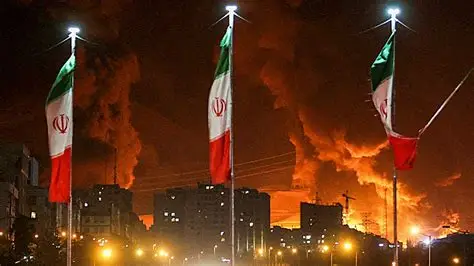
The war that began on 28 February 2026 with U.S. and Israeli strikes on Iran has changed the rhythm of the capital. Earlier reports from Tehran described a city shaken by explosions after the opening barrage, with residents saying whole neighbourhoods felt deserted and security forces were more visible on the streets. By July, renewed U.S.-Iran hostilities around the Strait of Hormuz had widened the anxiety again, even as the immediate centre of fighting shifted at times toward southern Iran and the Gulf.
That wider context matters. Tehran under fire does not mean every strike lands in the capital every night. It means the city is living inside a war system: air-raid fear, political uncertainty, digital isolation, price shocks, security warnings and the knowledge that another wave of strikes could arrive without much notice.
The original article correctly captured the fear residents described in early March. This updated version adds the confirmed later context: a rising civilian toll, international concern over the Minab school strike, an 88-day internet shutdown, renewed July attacks and warnings from humanitarian groups that civilians across the region are paying the highest price.
The First Shock: How the War Reached Tehran
Tehran under fire began as a sudden rupture in ordinary urban life. The first hours of the conflict were the moment Tehran under fire became real. The opening strikes targeted military and political sites, but the psychological effect spread far beyond official compounds. Residents reported explosions, broken glass, electricity and water disruptions, long queues and an atmosphere of shock.
Reuters described Tehran after the initial barrage as a city where fear had largely replaced public movement. The report cited residents who spoke of destruction, empty streets and a heavy security presence. It also noted that hopes in Washington and Jerusalem that the strikes might trigger an immediate uprising had not produced major street protests in the capital.
That absence of protest does not necessarily mean support for the authorities. In a city under bombardment, silence can mean fear, shock, exhaustion or calculation. Many residents may dislike the government and still fear being seen as disloyal during wartime. Others may blame outside powers for the destruction while also blaming Iranian leaders for the crisis that led to it.
This is the cruel ambiguity of life in a capital under attack. People are forced to decide what to say, where to stand and when to remain invisible.
The News Ink has followed the wider escalation from its early stages, including the report on US and Israel striking Iran, which explains how the opening military campaign reshaped the regional crisis.
What Daily Life Looks Like When a Capital Is Waiting
Tehran under fire is also a story of waiting. For many residents, Tehran under fire is defined less by one dramatic moment than by the waiting between moments. A family may wake up and check whether the power is working. A shopkeeper may decide whether to open for a few hours. A student may try to reach relatives through unstable messaging apps. A driver may join a petrol queue without knowing whether another warning will come.
The basics become strategic. Bread, water, medicine, phone charge, cash and fuel matter more than normal routines. Residents in early reports described some cash machines not working, shops closing and streets thinning out. Supermarkets and bakeries remained important because food access became one of the few reasons people risked going outside.
A city under pressure does not always collapse visibly. Sometimes it narrows. People travel shorter distances. They buy less. They delay appointments. They avoid squares, government buildings and anything that might attract security forces. Parents keep children close. Windows stay open during nearby blasts because closed glass can shatter inward.
This is why Tehran under fire must be covered through ordinary details, not only strategic maps. A battlefield report can show where missiles landed. It cannot fully show what it means to keep living inside the radius of fear.
The News Ink’s report on fear and shortages offers more context on how supplies, movement and household decisions changed as the strikes continued.
A Humanitarian Timeline of the Crisis
Tehran under fire has moved through several phases since late February.
| Date | Development | Why it mattered for civilians |
|---|---|---|
| 28 February 2026 | U.S. and Israeli strikes began in Iran | Tehran residents reported blasts, fear and heavy security |
| Early March 2026 | Reports emerged of major civilian casualties, including the Minab school strike | Civilian harm became central to international scrutiny |
| 6 March 2026 | Human Rights Watch warned that Iran’s internet shutdown was increasing civilian risk | Families, journalists and aid networks struggled to communicate |
| 17 March 2026 | The ICRC warned civilians in Iran were paying a heavy price | Humanitarian concerns moved beyond political debate |
| April 2026 | UN investigators said reported fatalities continued to rise | The war’s civilian toll became harder to verify but impossible to ignore |
| Late May 2026 | Reuters reported Iranians reconnecting after an 88-day blackout | Communication returned gradually, but trust and access remained damaged |
| July 2026 | U.S.-Iran hostilities resumed around the Gulf and Strait of Hormuz | Fear of wider regional escalation returned |
This timeline shows why Tehran under fire is not a single-day story. It is a prolonged civilian emergency shaped by military escalation, censorship, supply pressure and the uncertainty of what comes next.
The Minab School Strike Changed the Moral Debate
Tehran under fire cannot be separated from civilian harm elsewhere in Iran. The most devastating civilian incident reported in the opening phase was the strike on a school in Minab, in southern Iran. Although Minab is far from Tehran, the attack changed the emotional and political atmosphere across the country because it turned the war’s civilian cost into an image no government or military could easily explain away.
Amnesty International said a U.S. strike on the school killed 156 people, including 120 children, and called for accountability. Other investigations and reporting examined whether outdated intelligence, nearby military infrastructure or targeting failures contributed to the disaster.
The U.S. position has been that it does not deliberately target civilians. Reuters reported in July that U.S. senators demanded the Pentagon release findings from its investigation into the strike, while Pentagon officials said the probe was still ongoing. That means any responsible article must be precise: the incident has been widely reported and condemned, but the official U.S. investigative process had not been publicly completed at the time of the latest reports.
For Tehran residents, the school strike mattered because it sharpened a fear already present in the capital: if a military campaign can hit a school hundreds of kilometres away, what can any family assume about safety near ministries, bases, communications nodes or government buildings?
Tehran under fire is therefore also Tehran watching what happens elsewhere in Iran and wondering whether the next mistake could be closer to home.
Internet Blackouts Turn Fear Into Isolation
Tehran under fire has also been Tehran cut off. One of the most important parts of the crisis has not been visible in the sky. It has been the collapse of ordinary communication. Iran’s internet restrictions have made it harder for families to check on each other, for journalists to verify events and for residents to document civilian harm.
Human Rights Watch warned in March that Iran’s internet shutdown and communications restrictions placed civilians at greater risk. Reuters later reported that Iranians reconnected after an 88-day shutdown, with the blackout beginning after January protests, briefly easing, then returning after the 28 February strikes.
The technical picture is also serious. A 2026 academic study on Iran’s shutdown described nationwide disruptions enforced through network-level mechanisms and said the March blackout became one of the longest documented Iranian disruptions. For ordinary people, the mechanism matters less than the result: messages do not send, calls fail, money transfers stall, maps do not update and rumours fill the gap.
Tehran under fire becomes more frightening when residents cannot easily separate fact from warning, propaganda from eyewitness account or rumour from urgent instruction.
This is where the conflict overlaps with digital rights and cybersecurity. The News Ink’s report on cyber warfare explains why information control and network disruption have become part of modern conflict, not side effects.
Security Forces and the Politics of Silence
Tehran under fire is also Tehran under watch. Residents have also described a heavier security presence across Tehran, including checkpoints and warnings against protest. That is unsurprising in a country where authorities fear both external attack and internal unrest. The killing of Ali Khamenei in the opening strikes, confirmed by Iranian state media and reported internationally, created a leadership shock that made public order even more sensitive.
The result is a city where people must read the street carefully. A checkpoint may be about military security, protest prevention or both. A warning message may be intended to stop espionage, dissent or panic. A quiet street may mean residents feel safe indoors, or that they fear being stopped outside.
This is why Tehran under fire cannot be understood only as a U.S.-Israel-Iran military story. It is also a domestic-security story. Wartime gives states wider justification to monitor movement, restrict communication and frame dissent as collaboration with the enemy. For civilians, that can create two fears at once: fear of bombs and fear of the authorities who control the ground beneath them.
The News Ink’s coverage of UK embassy staff leaving Tehran shows how foreign governments also read the risk environment as the conflict escalated.
Prices, Fuel and the Quiet Pressure on Households
Tehran under fire reaches kitchens and wallets as much as streets and skies. Wars often appear first on television through explosions, but they settle into households through prices. Eggs, potatoes, bread, fuel and medicine become indicators of how deeply the crisis has entered daily life. When queues grow, cash becomes unreliable or shops close early, civilians feel the war before they fully understand the strategy behind it.
Tehran under fire is connected to the wider Iranian economy. Strikes, sanctions, port disruptions, oil-market pressure, insurance costs and uncertainty all feed into prices. The renewed fighting around the Strait of Hormuz in July increased concern because the strait is central to global energy flows.
The broader economic consequences reach far beyond Iran. The News Ink’s report on global markets explains how the conflict affected oil and gas prices, while our analysis of China’s economy looks at how Iran’s instability can unsettle major energy importers and regional strategy.
For ordinary Tehran families, those global shocks become local questions: Can we afford to stock up? Is petrol available? Will medicine be there next week? Should we leave the city if we can, or is the road more dangerous than home?
Why Leaving Is Not Simple
Tehran under fire raises the question of escape, but escape is not simple. When outsiders hear about Tehran under fire, they may ask why civilians do not simply leave. The answer is that leaving a wartime capital requires money, transport, information, family options and confidence that the destination is safer. Many people lack at least one of those things.
Roads may be crowded. Petrol may be limited. Relatives in other cities may also face shortages or strikes. Some families have elderly relatives who cannot travel easily. Others fear checkpoints, looting, scams or being stranded with children. Some people must remain because they work in hospitals, bakeries, transport, utilities or caregiving.
International travel is even harder. Flights can be cancelled, airspace can close and visas may be impossible to arrange quickly. The News Ink has already reported on Middle East flights being disrupted as the regional crisis spread.
For many families, Tehran under fire leaves no clean exit. This is the trap of civilian conflict. Staying feels dangerous. Leaving can be dangerous too. So many people do neither completely. They stay, prepare bags, check rumours, fill bottles, keep documents nearby and wait.
The Outside World Is Seeing Only Part of the Picture
Tehran under fire is difficult to document from the outside. Foreign reporting from inside Iran remains difficult. Visas are limited, movement is restricted and internet blackouts reduce the flow of verifiable evidence. That makes casualty figures, strike locations and resident accounts harder to confirm in real time.
This does not mean reports should be dismissed. It means they should be handled carefully. Human rights groups, satellite imagery, local witnesses, official statements, hospital data and open-source verification can all contribute pieces of the truth, but each has limits.
The ICRC warned in March that civilians in Iran were facing heavy strain, damaged homes and alarming loss of life. The UN Human Rights Office later said reported fatalities from the U.S. and Israeli strikes had continued to rise and included children and women. In July, the UN High Commissioner for Human Rights warned that renewed U.S.-Iran hostilities were a major setback for civilians across the Middle East.
Those warnings point to the same conclusion: the civilian story is not a side issue. It is the centre of the crisis.
The Military Logic Versus the Civilian Reality
Tehran under fire shows the gap between military language and civilian experience. Military officials often describe strikes through targets: missile sites, command centres, air defences, ports, bridges, launchers, depots. Civilians experience the same campaign through sound, smoke, blocked roads, hospital pressure, power failures and grief.
Both realities can exist at once. A strike may be aimed at a military site and still harm civilians. A government may use civilian areas to protect military infrastructure and still bear responsibility for endangering its people. A foreign military may claim precision and still make catastrophic mistakes. International humanitarian law exists because war does not become lawful simply by naming a target.
The debate over weapons stockpiles, escalation and military sustainability is also relevant. The News Ink’s analysis of depleting weapons stockpiles explains how prolonged campaigns create pressure on both strategy and resources. But for Tehran residents, the strategic question is more immediate: how long can a society keep absorbing shock before daily life breaks?
What to Watch Next
Tehran under fire remains an unfinished story. The next phase of Tehran under fire depends on several moving parts: whether U.S.-Iran hostilities continue to escalate, whether Israel re-enters direct operations at a higher level, whether Iran expands retaliation through the Gulf, and whether diplomacy can restore even a limited pause.
Key developments to watch include:
- the Pentagon’s public findings on the Minab school strike investigation;
- whether internet access remains open or returns to tiered restrictions;
- fuel, bread and medicine availability in Tehran and other major cities;
- the role of Iran’s post-Khamenei leadership in managing security;
- further disruption around the Strait of Hormuz;
- civilian casualty reporting from rights groups and hospitals;
- international mediation efforts involving Gulf states, Oman, Qatar, Turkey or the UN.
The risk is not only one dramatic escalation. It is the slow normalisation of emergency life. A city can adapt to fear in ways that look calm from the outside. That does not make the fear less real.
A Capital Living Between Shock and Routine
Tehran under fire is a story of contradiction. Bakeries may still open while families mourn. Security forces may patrol while residents quietly criticise both their own leaders and foreign attackers. A phone may reconnect after weeks of blackout, only for people to discover how much they missed. A street may look empty not because nothing is happening, but because everyone has learned to move less.
The war has turned ordinary choices into calculations. Open the shop or stay home. Queue for fuel or save the car. Send a message or wait for the network. Protest or remain silent. Leave the city or trust the walls. Believe official statements or believe the sound outside the window.
That is the reality behind the phrase Tehran under fire. Tehran under fire is not only a place description; it is a civilian condition. It is not only about explosions. It is about a capital where civilians must keep living while military powers, political factions and regional rivals decide how far the conflict will go.
For editors and readers, Tehran under fire should be handled with care. The strongest article on this story should therefore avoid both propaganda and detachment. It should name civilian suffering clearly, treat casualty claims carefully, acknowledge uncertainty and keep the focus on people who did not choose the battlefield but now have to live inside it.
For more coverage of the Iran conflict and its regional impact, readers can follow The News Ink on X.