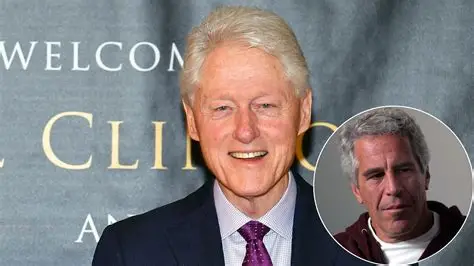
Bill Clinton Epstein Testimony: What His Stunning 2026 Denial Means
Bill Clinton Epstein testimony before the House Oversight Committee marked one of the most unusual moments in the long public reckoning over Jeffrey Epstein’s network. The former president sat for a closed-door deposition in Chappaqua, New York, on February 27, 2026, and denied knowing anything about Epstein’s crimes.
His central message was direct. Clinton said he “saw nothing” and “did nothing wrong” during his limited interactions with Epstein. He said that if he had known Epstein was abusing underage girls, he would have turned him in himself. That denial did not end the controversy, but it clarified the record Clinton wants the public to accept: he knew Epstein socially, flew on his plane, appeared in released photographs, but says he had no knowledge of sexual abuse, sex trafficking or misconduct.
The Bill Clinton Epstein testimony also changed the political stakes of the House investigation. It came one day after Hillary Clinton gave her own deposition, in which she said she had no knowledge of Epstein’s crimes and did not recall meeting him. Both Clintons had resisted subpoenas before agreeing to appear after the committee advanced contempt proceedings. Their testimony placed the House inquiry at the center of a much broader debate about transparency, survivor justice, Donald Trump’s own Epstein ties, and whether Congress is pursuing the full network or only selected political targets.
The Bill Clinton Epstein testimony now needs to be read as an updated legal-political record, not a simple breaking-news item. This article updates the original report with the confirmed deposition, the released committee video, the disputed photo questions, the Justice Department file releases and the continuing investigation.
What Bill Clinton said under oath
The main takeaway from the Bill Clinton Epstein testimony is that Clinton denied knowledge of Epstein’s criminal conduct. His prepared opening statement said his “brief acquaintance” with Epstein ended years before the crimes became publicly known. He said he saw nothing that gave him pause and insisted that he had not acted improperly.
That statement matters because Clinton’s name appears repeatedly in Epstein-related records, and he has long acknowledged taking trips on Epstein’s private aircraft after leaving office. Reuters reported that Clinton flew on Epstein’s plane several times in the early 2000s. Clinton has said those trips were connected to foundation work and that staff, Secret Service personnel and others were present.
The Bill Clinton Epstein testimony should be handled carefully. Clinton has not been charged with wrongdoing related to Epstein. Authorities have not accused him of criminal activity in connection with Epstein. AP reported that neither Bill nor Hillary Clinton has been accused of wrongdoing. That does not make every public question irrelevant, but it does mean responsible reporting must separate association, documentation, allegation and proof.
The House Oversight Committee released videos of the Clinton depositions on March 2, 2026. The committee said Hillary Clinton testified on February 26 and Bill Clinton testified on February 27. The public video release matters because it reduces the risk of selective summaries, although viewers still need to understand the broader record behind each question.
Why the hot-tub photo became a flashpoint
One of the most discussed parts of the Bill Clinton Epstein testimony involved a photograph released in the Epstein-related files. The image showed Clinton in a bubbling pool or hot tub near a woman whose face was redacted. Lawmakers asked Clinton about the image, including whether he knew the woman and whether there was any sexual relationship.
Clinton denied wrongdoing. He said he did not know who the redacted woman was and rejected any suggestion of a sexual relationship. For that reason, the Bill Clinton Epstein testimony turned one image into a major political flashpoint. The photo became politically explosive because images can travel faster than context. A still picture can imply intimacy, secrecy or misconduct even when it does not prove any of those things.
That is why the Bill Clinton Epstein testimony needs precise language. A photo in the Epstein files is not the same as evidence that Clinton knew about Epstein’s crimes. It is also not meaningless. It shows a connection that lawmakers and journalists can ask about. The public can reasonably want answers about why Epstein had access to powerful people and why those relationships continued as long as they did.
The fair standard is simple. The photograph deserves scrutiny, but it should not be treated as proof of a crime. Clinton’s answer should be reported. The limits of the evidence should be reported too.
The Hillary Clinton deposition shaped the context
The Bill Clinton Epstein testimony followed Hillary Clinton’s deposition one day earlier. She told lawmakers she had no information about Epstein’s crimes and did not recall ever meeting him. Reuters reported that she accused the Republican-led panel of trying to deflect attention from Trump’s Epstein ties, while Democrats questioned whether the Justice Department had withheld relevant files.
Bill Clinton used part of his opening statement to criticize the subpoena to his wife. He argued that Hillary Clinton had nothing to do with Epstein, had not traveled with him and had not visited his properties. That defense became part of the political story because Republicans framed the inquiry as broad accountability, while Democrats argued it was selective.
The News Ink previously covered that related deposition in our updated explainer on the Hillary Clinton Epstein case. Linking the two stories is useful for readers because the testimony happened on consecutive days, involved the same committee and fed the same dispute over congressional purpose.
The Bill Clinton Epstein testimony therefore cannot be read in isolation. Hillary Clinton’s appearance, Bill Clinton’s statement, Trump-related questions and the Justice Department’s document releases are all part of one ongoing political and legal fight.
Why Democrats brought Trump into the debate
Democrats used the Bill Clinton Epstein testimony to argue that the committee should also question Donald Trump. Reuters reported that Democratic members said Trump should be subpoenaed, while Chairman James Comer said that would not happen. Trump and Clinton both socialized with Epstein before Epstein’s 2008 conviction, and both have said they did not know about his criminal behavior.
Trump told reporters he liked Bill Clinton and did not like seeing him deposed, while adding that he had been targeted more harshly. Democrats argued that if a former president could be compelled to answer questions about Epstein, then the current president should face similar scrutiny. Comer and Republicans rejected that comparison.
This political fight is one reason the Bill Clinton Epstein testimony drew so much attention. It was not only about what Clinton knew. It became a test of whether Congress would apply the same standard to every powerful figure connected to Epstein.
The issue also connects with broader coverage of Trump’s political messaging and fact-checking, including The News Ink’s analysis of Trump’s longest congressional address and the updated article on Trump’s State of the Union speech. Those links help readers understand why Epstein file releases became part of the wider 2026 political battlefield. In that sense, the Bill Clinton Epstein testimony became part of a larger argument over equal scrutiny.
What the Justice Department files did and did not show
The Justice Department’s Epstein file releases are central to the Bill Clinton Epstein testimony. In January 2026, the DOJ said it had published 3.5 million responsive pages in compliance with the Epstein Files Transparency Act. The release included large volumes of documents, images and related materials.
The scale of the release created pressure on Congress. Names, photographs and travel references involving well-known people drew public attention. But file releases require caution. A person appearing in documents, photographs or logs does not automatically mean that person committed wrongdoing. AP and Reuters both made that distinction in their coverage of the Clinton testimony.
The Bill Clinton Epstein testimony focused partly on that distinction. Clinton’s side argues that photos and travel records show limited association, not knowledge of crimes. Critics argue that powerful people should explain how they came to be close enough to Epstein to appear in his records at all.
Both points can be true. The public has a right to scrutiny. The public also needs accurate standards of proof.
Epstein, Maxwell and the underlying crimes
The Bill Clinton Epstein testimony should not distract from the underlying crimes. Jeffrey Epstein was arrested in 2019 on federal sex-trafficking charges. The Justice Department said the indictment alleged he sexually exploited and abused dozens of underage girls between 2002 and 2005 in New York and Palm Beach. Epstein died in federal custody in August 2019 while awaiting trial; his death was ruled a suicide.
Ghislaine Maxwell was convicted and sentenced to 20 years in prison in 2022 for conspiring with Epstein to sexually abuse minors. The Justice Department said the sentence held Maxwell accountable for crimes against children and thanked victims for their courage.
Those facts are the foundation of the story. The Bill Clinton Epstein testimony, Trump questions, file releases and partisan clashes matter because they sit on top of a real abuse case involving real survivors. The most important people in this story are not the famous names in the records. They are the women and girls whose lives were harmed by Epstein and those who assisted him.
That point should guide every update. Political accountability matters, but survivor accountability matters more.
What the committee learned from Clinton
The committee did not announce a dramatic new finding immediately after the Bill Clinton Epstein testimony. Comer described Clinton as cooperative and said he answered questions or attempted to answer them. AP reported that the deposition ended after more than six hours, while lawmakers said he answered every question posed to him.
That outcome leaves the investigation in a familiar place. Clinton denied knowledge. Republicans said the questioning was legitimate. Democrats said the inquiry remains incomplete without Trump. Survivors and transparency advocates continued to press for a fuller public record.
The Bill Clinton Epstein testimony did establish one precedent: a former president was compelled to appear before Congress under subpoena in an Epstein-related inquiry. That matters institutionally, regardless of party. Future committees may cite it when deciding whether to pursue testimony from presidents, former presidents or senior officials.
But precedent is not the same as proof. Clinton’s appearance was historically unusual, yet the deposition did not by itself show that he knew about Epstein’s crimes. The value of the session depends on the full record, the committee’s follow-up and whether lawmakers pursue evidence consistently.
The investigation continued after the Clintons
The Bill Clinton Epstein testimony was not the final step in the House inquiry. AP reported in March that Darren Indyke, Epstein’s longtime personal attorney and a co-executor of his estate, also testified before the committee and denied knowing about Epstein’s abuse at the time it happened. AP said other associates, including Richard Kahn, Les Wexner and Bill Clinton, had also denied knowledge of Epstein’s abuse in sworn depositions.
That pattern has frustrated lawmakers. If every associate says they did not know, the committee faces the harder task of finding documents, communications and financial records that show who enabled Epstein, who ignored warning signs and who can still be held accountable.
This is where the Bill Clinton Epstein testimony fits into the larger inquiry. It is one piece of a bigger evidentiary puzzle. Congressional oversight can expose contradictions, but it cannot rely only on famous names and public pressure. It needs records, timelines, corroboration and survivor-centered evidence.
The same standard should apply to other prominent figures. The News Ink has also covered how public figures respond to Epstein-related scrutiny, including Bill Gates addressing his Epstein relationship. These stories need careful wording because association is not always misconduct, but unanswered questions can still matter.
Why survivor privacy remains essential
The Bill Clinton Epstein testimony also raised a difficult transparency problem. Many people want every Epstein-related file released. That demand is understandable. For years, survivors and the public have questioned whether Epstein’s wealthy connections protected him from full accountability.
But file releases can also expose private information about victims, witnesses and people who were minors at the time. Redactions can frustrate readers, yet some redactions are necessary to protect survivors from renewed harm. The question is not whether transparency matters. It does. The question is how to release information responsibly.
Congress and the Justice Department have to balance public accountability with privacy. If they hide too much, they protect powerful people. If they reveal too much, they risk harming survivors again. The Bill Clinton Epstein testimony sits inside that tension because the committee questioned a public figure using records that also involve private people.
That is why responsible coverage should avoid turning every redacted image into speculation. Report what is known. Explain what is unknown. Do not identify or guess the identity of private individuals in photos. Do not imply guilt without evidence.
What happens next
The next phase after the Bill Clinton Epstein testimony depends on three things.
First, the committee must decide whether to release more complete transcripts, additional videos or selected excerpts. If the public sees only curated moments, both parties will use the gaps to claim bias. A fuller record, with victim-protective redactions, would improve trust.
Second, lawmakers must decide whether the investigation will apply consistent standards to Trump, Clinton, Lutnick, Epstein estate figures and other powerful people named or photographed in released materials. Selective questioning may satisfy partisans, but it will not answer the public’s deeper questions.
Third, the Justice Department will remain under pressure over the completeness and handling of the files. Reuters reported in July 2026 that New Mexico’s attorney general accused the DOJ of hindering a renewed investigation into Epstein’s former Zorro Ranch by delaying unredacted documents. The DOJ said it had responded and was willing to assist. That dispute shows that the Epstein files debate did not end with the January release.
The Bill Clinton Epstein testimony may therefore become a reference point rather than a conclusion. It showed that Congress can compel major figures to answer questions. It did not settle who knew what, who enabled Epstein or how many records remain unresolved.
The careful takeaway
The Bill Clinton Epstein testimony produced a clear denial but not a final answer to every public question. Clinton said he saw nothing, did nothing wrong and would have reported Epstein if he had known about the abuse. He denied wrongdoing and rejected any suggestion that released photos proved criminal knowledge or misconduct.
At the same time, the deposition was significant. A former president was compelled to testify. Lawmakers questioned him about a disgraced financier whose network included many powerful people. Democrats pressed for Trump to appear. Republicans defended the inquiry as legitimate oversight. Survivors continued to demand accountability.
The fairest conclusion is that the Bill Clinton Epstein testimony should be covered neither as exoneration of every concern nor as proof of guilt. It is a sworn denial within a larger investigation. The record still matters. The files still matter. Survivor privacy still matters. And the public deserves transparency that is careful, complete and grounded in evidence.
For more political investigations, accountability reporting and public-interest updates, follow The News Ink on X.