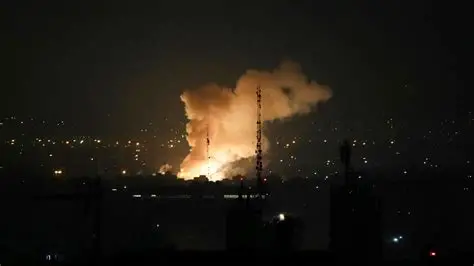
US and Israel Strike Iran: Why the Alarming 2026 Escalation Could Still Spread
US and Israel strike Iran is no longer a one-day breaking-news headline. It has become the starting point for a dangerous regional crisis that has moved from airstrikes inside Iran to retaliatory fire across the Gulf, threats around the Strait of Hormuz and a collapsing diplomatic track that once aimed to contain Tehran’s nuclear programme.
At its core, US and Israel strike Iran is a story about military force colliding with diplomacy. The original story focused on the immediate shock after Washington and Israel launched joint attacks on Iran on February 28, 2026. That was the right first angle at the time. But the story has since widened. Iran has continued to frame its response as self-defence. The United States says its campaign is aimed at reducing Iran’s missile, drone, naval and nuclear-related threats. Israel says it acted against what it calls an existential danger. Gulf states, meanwhile, are trying to avoid becoming permanent battlefields in a conflict they did not publicly choose.
Reuters reported on July 12 that U.S. and Iranian forces exchanged heavy missile and drone strikes after Tehran again said it had closed the Strait of Hormuz, the vital waterway that carried about one-fifth of global oil and LNG shipments before the war. AP reported that U.S. Central Command said it hit about 140 Iranian targets after an Iranian strike damaged a Cyprus-flagged container ship and forced its crew to abandon the vessel.
That means US and Israel strike Iran now carries consequences beyond the first night. The article can no longer be written as a short reaction piece. The stronger version is a war-risk explainer. US and Israel strike Iran remains the focus, but the central question is whether military pressure, economic damage and retaliation can be contained.
What happened when US and Israel strike Iran
To understand why US and Israel strike Iran still dominates the regional agenda, start with the first day. The joint assault began on February 28, 2026. The United States and Israel described the operation as a response to Iran’s missiles, navy, proxy network and nuclear ambitions. The White House later framed the campaign, known as Operation Epic Fury, around several objectives: destroying Iran’s missile and drone capabilities, weakening its navy, disrupting support for allied armed groups and ensuring Iran does not obtain a nuclear weapon.
Israel’s public position was similar but more existential. Prime Minister Benjamin Netanyahu said Iran’s leadership could not be allowed to arm itself with nuclear weapons. The Israeli government argued that the strikes were intended to remove a long-term threat to Israel and create conditions for Iranians to challenge their own government.
Iran rejected that framing. Foreign Minister Abbas Araghchi told the United Nations that the U.S. and Israeli attacks were an act of aggression and said Tehran would continue to exercise what it called its lawful right of self-defence under Article 51 of the UN Charter. He warned that hostile bases, facilities and assets in the region could be treated as military targets within Iran’s response.
That early exchange explains the conflict’s core divide. Washington and Jerusalem called the campaign defensive; Tehran called it a sovereignty violation; Gulf states feared their bases, ports and airspace could be pulled in.
Why the original article needed updating
For SEO and reader value, US and Israel strike Iran needs a full update rather than a light rewrite. The first version of this story captured the opening phase: U.S.-Israeli strikes, Iran’s promise of retaliation and quick international calls for restraint. But several important facts have changed.
First, US and Israel strike Iran did not stop at the opening wave. The conflict did not stop after the first wave. It expanded into a months-long cycle of strikes, counterstrikes, ceasefire claims, maritime confrontation and attacks involving Gulf states.
Second, the Strait of Hormuz has become central. Iran’s threats and actions around the waterway have turned the crisis into a global energy story as well as a military one. For readers following the wider economic fallout, The News Ink’s economy coverage helps explain why oil, shipping and inflation shocks can quickly affect households far from the Middle East.
Third, nuclear safety became a major concern. The International Atomic Energy Agency said in March that it was monitoring possible radiological consequences, urged maximum restraint and said diplomacy remained essential.
Fourth, the political stakes have grown. Trump faces midterm pressure, Israel faces threats on several fronts, and Gulf monarchies are trying to protect energy exports, airspace and U.S. security ties.
This is why US and Israel strike Iran now needs deeper context. The story is not only who fired first. It is what the conflict has become.
The latest flashpoint: the Strait of Hormuz
The July escalation around the Strait of Hormuz may be the most dangerous phase so far. The strait is narrow, heavily monitored and essential to global energy flows. A sustained disruption can raise oil and LNG prices, increase shipping insurance costs, delay cargo movements and worsen inflation.
Reuters reported that Iran’s Revolutionary Guards said the strait would remain closed until what they called the end of U.S. interference in the region. U.S. Central Command disputed the idea that Iran had fully shut the waterway and said commercial vessels were still moving through it. AP reported that Iran said one vessel had ignored its instructions and was hit by what Tehran described as a warning shot.
Those competing claims are dangerous. In practical terms, US and Israel strike Iran has turned a shipping corridor into a military pressure point. If Iran says a route is closed and Washington says traffic can continue, every ship movement becomes a potential test.
US and Israel strike Iran began with military and nuclear arguments, but the Strait of Hormuz has turned the conflict into a global market risk. That is why even countries not directly involved are calling for restraint. A war over Iran’s military programme can become an energy crisis for Asia, Europe and Africa within days.
How Iran is trying to widen the cost
Iran’s response shows why US and Israel strike Iran could pull in states that tried to stay at the edge of the conflict. Iran’s response has not been limited to Israeli or American territory. Tehran has threatened facilities linked to hostile forces and has launched or claimed attacks involving U.S.-allied states in the Gulf. AP reported missile alerts in Bahrain and Kuwait, interceptions in Qatar and drone strikes in Oman. Reuters reported that Qatar said three people, including a child, were injured by falling shrapnel.
Iran’s message is strategic. It wants Washington’s regional partners to fear that support for U.S. operations could bring direct consequences. That is why Araghchi’s warnings to Gulf foreign ministers were politically significant. He urged regional governments not to allow their territories or facilities to be used for attacks on Iran.
For Gulf states, this creates a narrow path. Many host U.S. forces or have close security relations with Washington. At the same time, they share geography, energy infrastructure and sometimes economic ties with Iran. They do not want Iranian missiles over their cities, but they also do not want to abandon their defence relationships.
This is one reason US and Israel strike Iran could still spread. A Gulf state may not want war, but if its airspace, base or port becomes part of the conflict, it can be treated as a participant by one side and a victim by the other.
What Washington says it is trying to achieve
Washington’s own language shows why US and Israel strike Iran cannot be judged only by the first battle damage reports. The Trump administration has described its campaign as a decisive operation to reduce Iran’s ability to threaten U.S. forces, regional allies and commercial shipping. The White House said the objectives include eliminating missile threats, destroying naval capabilities, weakening proxy support and preventing Iran from acquiring a nuclear weapon.
Those aims are broad. They are also hard to measure. A missile launcher can be destroyed, but a missile programme can be rebuilt. A ship can be sunk, but naval mines, drones and small boats can still threaten shipping. A nuclear facility can be damaged, but inspectors still need access to verify the status of material and activities.
Military success and strategic success are not the same thing. US and Israel strike Iran can degrade targets, but it cannot automatically produce stability if Iran keeps firing, Gulf states remain exposed and nuclear monitoring stays limited.
This was the concern raised by many analysts after the initial attack. The Council on Foreign Relations warned that bombing alone is unlikely to guarantee political change in Iran and could deepen the cycle of escalation. That does not mean Washington’s concerns about Iran are imaginary. It means air power has limits, especially when the political objective is larger than the immediate military target.
Nuclear safety is now a central issue
The nuclear question is why US and Israel strike Iran was defended by Washington and Jerusalem in the first place. The nuclear issue has always been part of the conflict, but it has become more complicated since the strikes. The IAEA said on March 2 that it was following the military attacks with concern and that its Incident and Emergency Centre was collecting information while communications were limited. At that time, it said no elevation of radiation above usual background levels had been detected in countries bordering Iran.
The agency also warned that armed attacks on nuclear facilities can cause radioactive releases with consequences beyond the attacked state. It urged all parties to exercise maximum restraint and return to diplomacy. In a later March statement, IAEA Director General Rafael Mariano Grossi said Iran had not provided required reports or access regarding affected facilities and associated nuclear material, leaving the agency unable to provide full assurances.
That makes the situation more dangerous. US and Israel strike Iran was partly justified by nuclear concerns, yet the fighting can also make nuclear verification harder. If inspectors cannot safely access facilities, the world knows less, not more, about the status of Iran’s nuclear material.
The long-term answer cannot be only military. A durable solution requires inspections, reporting, technical verification and political agreement.
The regional reaction is divided but anxious
International reaction also shows why US and Israel strike Iran remains divisive. The international response has been mixed. Russia condemned the U.S. and Israeli strikes and accused Washington and Jerusalem of violating international law. European governments have generally urged restraint while still expressing concern about Iran’s nuclear programme and regional activity. The E3 statement at the IAEA said France, Germany and the UK did not participate in the strikes but condemned Iranian attacks on countries in the region and called for a diplomatic solution that addresses nuclear and regional concerns.
The European Union’s public line has focused on de-escalation, civilian protection and international law. Italy and Australia have also framed their responses around a combination of concern for Iranian civilians, opposition to nuclear proliferation and calls for restraint. The UK has said it does not want a broader regional war while reserving the right to protect national interests.
These reactions show the diplomatic problem. Many governments distrust Iran’s nuclear and regional policies, but many also fear that US and Israel strike Iran could produce an open-ended conflict.
That concern also runs through The News Ink’s coverage of Israel-Hezbollah ceasefire pressure and earlier warnings about U.S.-Iran ceasefire strain. The region has too many overlapping flashpoints for one conflict to remain isolated for long.
What civilians are facing inside Iran
Another reason US and Israel strike Iran needs careful coverage is the civilian cost. Military maps can hide the civilian cost. Inside Iran, residents have faced fear, shortages, disruption and uncertainty as strikes hit military, communications, infrastructure and security-related targets. Families are trying to decide whether to leave cities, stay near relatives, stock up on fuel or keep children indoors during alerts.
The danger is not only direct impact from missiles or drones. War affects hospitals, electricity, transport, banking, internet access and food supply chains.
The News Ink’s reporting on life in Tehran under fire gives readers a more human angle on the conflict. US and Israel strike Iran is a geopolitical story, but for ordinary people it is also a question of whether schools open, pharmacies have supplies and families can contact one another.
That human cost should not be treated as background. It is central to whether any side can claim to be acting responsibly.
Why markets are watching every strike
The market reaction proves that US and Israel strike Iran is not only a military story. The conflict has already affected energy expectations, shipping risk and inflation fears. When the Strait of Hormuz is threatened, traders immediately price in danger. Oil tankers, LNG carriers, insurers, refiners and governments all have to plan for delays or disruptions.
This matters politically for Trump because higher gasoline prices can hurt a president before midterm elections. It matters for Europe because energy markets remain sensitive after years of war-related volatility. It matters for Asia because major importers rely heavily on Gulf energy supplies. And it matters for poorer economies because fuel and food costs can rise together.
US and Israel strike Iran therefore has an economic shadow. The military action may be measured in targets and missiles, but its impact can be felt in petrol stations, electricity bills and shipping invoices. Readers can follow related household-level effects through The News Ink’s personal finance coverage, because global energy shocks often become family-budget shocks.
| Risk area | Why it matters |
|---|---|
| Strait of Hormuz | A major route for oil and LNG shipments |
| Gulf bases | U.S.-linked facilities can become Iranian targets |
| Nuclear sites | Any damage or blocked inspection raises safety and verification concerns |
| Shipping insurance | War-risk premiums can raise transport costs |
| Civilian infrastructure | Power, health, communications and supply chains can be disrupted |
| Domestic politics | U.S., Israeli and Iranian leaders all face internal pressure |
What could stop the escalation
Even after months of fighting, US and Israel strike Iran does not have to end in an uncontrolled regional war. There are still possible off-ramps. Oman has played a role in diplomatic contacts around maritime passage. Qatar has often acted as a mediator in regional crises, though attacks near or on Qatari territory make that role harder. European states, the IAEA and the United Nations can push for a return to technical talks.
The first practical step would be a maritime de-escalation arrangement around the Strait of Hormuz. Ships need safe passage, clear routes and reliable communication channels.
The second step would be a pause in attacks on regional bases and shipping. If Iran keeps targeting Gulf-linked facilities and the United States keeps expanding strike lists, escalation becomes self-reinforcing.
The third step would be nuclear transparency. Iran would need to restore access and reporting for the IAEA, while the United States and Israel would need to avoid actions that create radiological risks or make verification impossible.
The fourth step would be political realism. US and Israel strike Iran may have been launched with ambitious aims, but ending a war usually requires narrower, verifiable steps: stop firing, protect civilians, reopen channels, clarify red lines and create inspection mechanisms.
The careful takeaway
US and Israel strike Iran was the beginning of one of the most dangerous Middle East escalations of 2026. The story now includes Iranian retaliation, Gulf state vulnerability, Strait of Hormuz disruption, nuclear-safety concerns and global economic risk.
The original article was right to highlight Iran’s vow of a military response. But the updated story must go further. Iran has acted on that threat. The United States has expanded strikes. The Gulf has become more exposed. Diplomacy has not disappeared, but it is under severe pressure.
The strongest conclusion is not that a wider war is inevitable. It is that the conditions for one are now dangerously visible. Every strike, every intercepted missile, every damaged ship and every unanswered diplomatic message can move the region closer to a larger conflict.
US and Israel strike Iran remains the key phrase because it marks the moment the crisis entered a new phase. What happens next will depend on whether leaders treat escalation as leverage or as a trap.
For continuing updates on geopolitics, conflict and public-interest reporting, join The News Ink on WhatsApp.