


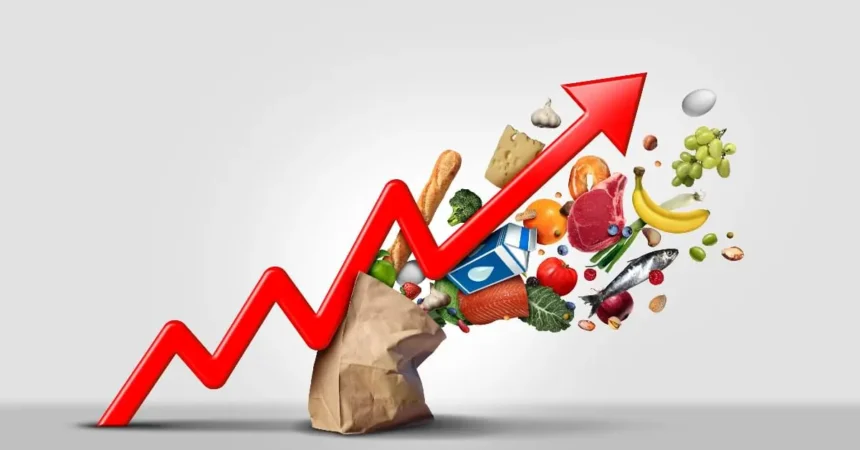
How the Economy Works: Inflation, Interest Rates and Recessions Explained
The economy can feel invisible until something changes.
A grocery bill becomes noticeably more expensive. A bank raises the cost of a loan. A business pauses hiring. Rent increases. Fuel prices move sharply. News headlines begin discussing inflation, interest rates, economic slowdown or recession.
These changes may appear disconnected, but they are often related.
The economy is the system through which people, businesses, governments and institutions produce goods, provide services, earn income, spend money, save, borrow, invest and trade. It affects ordinary life because it shapes the cost of living, the availability of jobs, the confidence of businesses and the choices available to households.
Understanding the economy does not require a degree in economics.
It begins with a few important ideas.
Why do prices rise? What is inflation? Why do central banks change interest rates? What does GDP actually measure? Why can a growing economy still feel difficult for ordinary people? What causes a recession? Why do some businesses struggle even when national statistics appear positive?
This article explains the economy clearly from the beginning.
It covers economic growth, GDP, inflation, interest rates, unemployment, recessions, fiscal policy, monetary policy, trade and the practical effects of economic change.
The goal is not to predict the next crisis.
The goal is to make economic news easier to understand.
What the Economy Really Means
The economy is the network of activity through which resources, money, goods and services move.
Everyday decisions contribute to it.
When a family buys food, a business hires an employee, a farmer sells crops, a bank provides a loan or a government builds a road, economic activity takes place.
The economy can be examined at different levels.
| Level | What it covers |
|---|---|
| Household economy | Income, bills, savings, debt and spending |
| Local economy | Shops, services, jobs and businesses within a town or city |
| National economy | Production, inflation, unemployment, trade and public finances |
| Global economy | Connections between countries through trade, finance, energy and supply chains |
The International Monetary Fund explains that macroeconomics examines the big picture, including employment, gross domestic product and inflation. Microeconomics focuses more closely on the decisions and interactions taking place within individual markets.
Both perspectives matter.
A national economy may show growth while a particular industry is struggling. A household may experience financial pressure even when unemployment remains relatively low. A business may raise prices because its own costs increased, even when national inflation begins to slow.
The economy is not one number.
It is a collection of connected systems.
Twelve Essential Ideas Behind the Economy
The following table provides a foundation.
| Economic idea | What it means simply |
|---|---|
| 1. GDP | Measures the value of goods and services produced |
| 2. Economic growth | Means inflation-adjusted output is increasing |
| 3. Inflation | Measures how quickly prices rise |
| 4. Cost of living | Reflects how expensive everyday needs feel |
| 5. Interest rates | Affect the cost of borrowing and the reward for saving |
| 6. Central banks | Influence financial conditions through monetary policy |
| 7. Employment | Shows how strongly the economy creates and supports jobs |
| 8. Business cycle | Describes periods of expansion and slowdown |
| 9. Recession | Refers to a broad economic downturn |
| 10. Fiscal policy | Uses government spending and taxation to influence the economy |
| 11. Trade | Connects the domestic economy with global markets |
| 12. Confidence | Influences whether households and businesses spend, save or invest |
These ideas appear repeatedly in business news.
Learning how they connect makes economic headlines less confusing.
GDP Explained: Measuring the Size of an Economy
GDP stands for gross domestic product.
The IMF GDP explainer defines GDP as the monetary value of final goods and services produced within a country during a specified period, such as a quarter or a year.
The word final matters.
Suppose a farmer sells wheat to a bakery. The bakery turns the wheat into bread and sells the bread to customers. Economists avoid counting the same value repeatedly. GDP focuses on the value added across production and the final goods and services produced.
GDP includes activity across many areas:
| Part of the economy | Examples |
|---|---|
| Manufacturing | Clothing, cars, machinery and electronics |
| Agriculture | Crops, livestock and food production |
| Services | Healthcare, education, transport, banking and retail |
| Construction | Homes, offices, roads and infrastructure |
| Government services | Public administration and selected services |
| Technology | Software, cloud services and digital platforms |
GDP can be measured over a quarter or a year.
When news reports say an economy grew by a certain percentage, they are usually discussing changes in real GDP.
Nominal GDP vs Real GDP
Nominal GDP uses current prices.
Real GDP adjusts for inflation.
| Measurement | Why it matters |
|---|---|
| Nominal GDP | Shows the value of output at current prices |
| Real GDP | Helps reveal whether actual production increased after accounting for price changes |
Imagine a country produces the same number of goods this year as last year, but prices rise sharply.
Nominal GDP may increase.
Real GDP may show little or no growth.
Real GDP is especially useful when examining whether the economy genuinely expanded.
GDP Per Capita
GDP per capita divides GDP by the population.
This provides a rough measure of output per person.
The World Bank explains that GDP per capita offers an indirect indicator of average income and that sustained economic growth is strongly connected with poverty reduction.
However, GDP per capita remains an average.
It does not reveal how income is distributed.
A country can have a high GDP per capita while many people struggle financially.
Economic Growth: Why Expansion Matters
Economic growth usually means real GDP is increasing.
Growth matters because it can support:
- Employment
- Business investment
- Income
- Government revenue
- Infrastructure
- Living standards
- Poverty reduction
- Opportunities for young workers
A growing economy generally produces more goods and services than before.
That does not automatically mean every household benefits equally.
The quality of growth matters.
| Type of growth question | Why it matters |
|---|---|
| Is employment increasing? | Growth should create opportunities |
| Are wages rising? | Income affects households directly |
| Is inflation reducing purchasing power? | Higher prices can weaken gains |
| Which industries are expanding? | Growth may be uneven |
| Is productivity improving? | Efficiency supports longer-term progress |
| Is the growth sustainable? | Temporary boosts may not last |
| Are public services improving? | GDP does not capture every outcome |
| Is inequality increasing? | Average figures can hide pressure |
Economic growth can slow without disappearing.
Suppose GDP grows by 1% after growing by 4% previously.
The economy is still expanding.
It is simply growing more slowly.
This distinction matters when reading headlines.
A slowdown is not automatically a recession.
The News Ink has reported on a US economic slowdown, showing how consumer spending, government activity and trade patterns can affect overall growth.
Inflation Explained: Why Prices Rise
Inflation refers to the rate at which prices increase over time.
The IMF inflation explainer describes inflation as the rate of increase in prices over a given period, commonly a year.
Inflation does not mean every product becomes more expensive at the same speed.
Some prices may rise sharply.
Others may remain stable.
A few may fall.
Inflation measures a broader pattern.
A Simple Inflation Example
Suppose a basket of common household goods costs 100 one year and 105 the next year.
The approximate inflation rate is 5%.
| Year | Cost of basket |
|---|---|
| Year 1 | 100 |
| Year 2 | 105 |
The same amount of money buys slightly less than before.
This is why inflation is often described as a decline in purchasing power.
Low Inflation vs High Inflation
A small and predictable level of inflation is different from rapid, unstable price increases.
| Inflation pattern | Possible effect |
|---|---|
| Low and stable inflation | Makes planning easier |
| Rising inflation | Reduces purchasing power |
| High inflation | Creates serious pressure on households and businesses |
| Unpredictable inflation | Makes pricing, saving and planning more difficult |
| Falling inflation rate | Prices may still rise, but more slowly |
| Deflation | General prices decline, creating a different set of risks |
One of the most important economic lessons is this:
Lower inflation does not necessarily mean prices return to their old levels.
It may simply mean prices are increasing more slowly.
If inflation falls from 10% to 3%, the cost of living may still remain much higher than it was before the earlier increases.
What Causes Inflation?
Inflation can develop for several reasons.
It is not always caused by one factor.
Demand-Pull Inflation
Demand-pull inflation can occur when spending grows faster than the economy’s ability to supply goods and services.
Imagine many buyers competing for a limited number of products.
Businesses may raise prices because demand is strong.
Cost-Push Inflation
Cost-push inflation can occur when the cost of production rises.
Examples include:
- Higher energy prices
- More expensive raw materials
- Rising transport costs
- Wage pressure
- Supply-chain disruption
- Currency weakness
- Food shortages
- Conflict affecting trade routes
Businesses may raise prices to cover higher costs.
Supply Shocks
A supply shock is a sudden disruption affecting the availability or price of important goods.
| Supply shock | Possible effect |
|---|---|
| Energy-price spike | Raises fuel, transport and production costs |
| Crop failure | Pushes food prices higher |
| Shipping disruption | Delays goods and raises transport costs |
| Conflict | Affects energy, trade and confidence |
| Pandemic | Disrupts production and movement |
| Natural disaster | Damages infrastructure and supply |
| Shortage of key components | Slows manufacturing |
The Bank of England explains that recent periods of high inflation in the UK were heavily influenced by cost pressures such as supply shortages and energy shocks. Interest rates cannot produce more fuel or shipping containers, but they can reduce the risk that higher costs become embedded more broadly through repeated price and wage increases.
Expectations Matter
If households and businesses expect prices to rise quickly, behavior may change.
Workers may request higher wages.
Businesses may raise prices earlier.
Consumers may bring purchases forward.
Inflation expectations can influence actual inflation.
Central banks pay attention to expectations because stable prices make planning easier.
Cost of Living vs Inflation
Inflation and the cost of living are related but not identical.
Inflation measures average price changes across a selected basket of goods and services.
The cost of living reflects the expenses faced by a particular household.
| Household | Why inflation may feel different |
|---|---|
| Family with children | Food, school and housing costs matter heavily |
| Person renting a home | Rent changes may dominate |
| Homeowner with a loan | Interest-rate changes may matter more |
| Commuter | Fuel and transport costs may matter greatly |
| Older adult | Healthcare and energy may be especially important |
| Student | Tuition, rent and food may dominate |
| Small-business owner | Input costs and loan rates matter |
Two households can live in the same economy and experience inflation differently.
Official inflation statistics remain important.
They provide a broad measure.
However, personal experience depends on the items a household buys most frequently.
Your personal-finance article explains how households can build a realistic budget, track expenses and prepare for changing costs.
How Inflation Is Measured
Countries commonly measure consumer-price inflation using an index.
A consumer-price index tracks changes in the price of a representative basket of goods and services.
The basket may include:
- Food
- Housing-related costs
- Clothing
- Transport
- Energy
- Healthcare
- Communication
- Education
- Recreation
- Services
Different countries calculate inflation using their own statistical methods and baskets.
Headline Inflation and Core Inflation
| Measure | What it usually covers |
|---|---|
| Headline inflation | Broad price changes across the full basket |
| Core inflation | Excludes selected volatile categories, often food and energy |
| Food inflation | Focuses specifically on food prices |
| Producer prices | Tracks prices faced earlier in the production chain |
Headline inflation matters because people buy food and energy.
Core inflation also matters because it may reveal whether price pressures are spreading more persistently across the economy.
No single number tells the full story.
Interest Rates Explained
An interest rate is the cost of borrowing money or the return received for saving or lending money.
The World Bank glossary describes an interest rate as an amount charged as a percentage of the principal over a period of time.
Suppose someone borrows 1,000 at an annual interest rate of 10%.
The interest cost will depend on the product, repayment schedule and terms.
A saver may also receive interest when keeping money in certain accounts.
Why Interest Rates Matter
Interest rates influence:
| Area | Possible effect |
|---|---|
| Loans | Higher rates increase borrowing costs |
| Mortgages | Payments may rise for some borrowers |
| Business investment | Higher costs may delay expansion |
| Savings | Higher rates may reward savers |
| Consumer spending | Borrowing becomes less attractive |
| Housing market | Affordability can change |
| Currency | Rate differences may influence capital flows |
| Inflation | Higher rates can reduce demand pressure |
| Employment | Slower demand can affect hiring |
Interest rates are not only abstract figures discussed by economists.
They influence ordinary choices.
A family may postpone buying a car.
A business may delay opening a second location.
A first-time homebuyer may struggle with affordability.
A saver may receive a better return.
The effect is not identical for everyone.
Why Central Banks Change Interest Rates
Central banks use monetary policy to influence the economy.
The IMF monetary-policy explainer explains that monetary policy generally involves adjusting the supply and cost of money to support price stability and economic activity.
Different central banks have different mandates.
For example, the Federal Reserve is tasked with promoting maximum employment, stable prices and moderate long-term interest rates.
The European Central Bank explains that higher rates can cool the economy and bring inflation down, while lower rates can make credit cheaper and support spending and investment when inflation is too low.
Raising Interest Rates
A central bank may raise rates when inflation is too high.
| Effect of higher rates | How it works |
|---|---|
| Borrowing becomes more expensive | Households and businesses may reduce spending |
| Saving becomes more attractive | Some people delay purchases |
| Investment may slow | Businesses reconsider expansion |
| Housing demand may soften | Loans become less affordable |
| Overall demand cools | Businesses face less pressure to raise prices |
| Inflation may gradually slow | Price growth becomes more manageable |
The word gradually matters.
Interest rates do not change the economy instantly.
The full effect can take time.
Lowering Interest Rates
A central bank may lower rates when the economy is weak or inflation is too low.
| Effect of lower rates | How it works |
|---|---|
| Borrowing becomes cheaper | Households may spend more |
| Business investment becomes easier | Companies may expand |
| Saving becomes less rewarding | Spending may become more attractive |
| Housing demand may increase | Loans become more affordable |
| Economic activity may strengthen | More demand supports growth |
| Inflation may rise gradually | Price pressure may recover |
Central banks must balance risks.
Rates that remain too high for too long can weaken the economy.
Rates that remain too low for too long can contribute to inflation or financial imbalances.
Policy Rates, Loan Rates and Savings Rates
The interest rate announced by a central bank is not necessarily the exact rate households receive.
It influences other rates across the economy.
| Interest rate | What it means |
|---|---|
| Policy rate | Benchmark set by a central bank |
| Loan rate | Rate charged to borrowers |
| Mortgage rate | Rate applied to housing loans |
| Savings rate | Return offered on selected deposits |
| Bond yield | Return associated with a bond |
| Credit-card rate | Cost of borrowing through a credit card |
| Real interest rate | Interest rate adjusted for inflation |
Banks consider many factors when setting customer rates:
- Central-bank policy
- Funding costs
- Competition
- Borrower risk
- Loan duration
- Inflation
- Market expectations
- Regulations
- Deposit conditions
A central-bank rate cut may not pass through to every customer immediately or fully.
The economy contains several layers.
Nominal Interest Rates and Real Interest Rates
The nominal interest rate is the stated rate.
The real interest rate adjusts for inflation.
A simplified calculation is:
Real interest rate ≈ Nominal interest rate − Inflation rate
Suppose a savings account pays 5% while inflation is 7%.
The approximate real return is negative 2%.
| Nominal return | Inflation | Approximate real return |
|---|---|---|
| 5% | 7% | -2% |
| 8% | 5% | 3% |
| 3% | 2% | 1% |
This shows why inflation matters for savers.
The number in an account may increase while purchasing power still declines.
The calculation is simplified, but the lesson is useful.
Economic decisions should consider both nominal and real values.
Employment and the Economy
Jobs are among the most important ways people experience the economy.
An economy can grow while some workers remain unemployed or underemployed.
The International Labour Organization defines the unemployment rate as the share of unemployed people within the labor force. Under the standard definition, unemployed people are without work, available for work and actively seeking work.
The labor force includes employed and unemployed people.
It does not include everyone in the population.
Employment Measures
| Measure | What it reveals |
|---|---|
| Unemployment rate | Share of the labor force seeking work without employment |
| Employment level | Number of people working |
| Labor-force participation | Share of working-age people participating in the labor market |
| Job vacancies | Open roles employers want to fill |
| Wage growth | Changes in worker pay |
| Underemployment | People working less than desired or below their capacity |
| Informal work | Activity outside formal employment structures |
A low unemployment rate can be positive.
However, it does not reveal everything.
People may leave the labor force because they stopped searching for work. Jobs may be unstable or poorly paid. Young workers may struggle to find suitable opportunities. Wage growth may fail to keep pace with inflation.
The economy needs more than jobs.
It needs productive, sustainable opportunities.
The Business Cycle Explained
The economy does not grow at the same speed forever.
Periods of expansion are followed by slower periods. Sometimes the economy contracts.
This pattern is called the business cycle.
| Phase | What commonly happens |
|---|---|
| Expansion | Production, spending and employment generally increase |
| Peak | Economic activity reaches a high point |
| Slowdown | Growth weakens |
| Recession | Activity declines across the economy |
| Trough | Economic activity reaches a low point |
| Recovery | Activity begins improving |
| New expansion | Growth becomes more established |
The timing is difficult to predict.
Economies are influenced by many forces:
- Interest rates
- Inflation
- Consumer confidence
- Business investment
- Trade
- Energy prices
- Government policy
- Conflict
- Technology
- Financial markets
- Housing
- Natural disasters
- Public-health emergencies
The economy is dynamic.
No single indicator predicts everything perfectly.
Recession Explained: More Than Two Falling Quarters
A recession is a period of broad economic decline.
A common shortcut says a recession occurs when real GDP falls for two consecutive quarters.
This can be a useful rule of thumb.
It is not a universal definition.
The National Bureau of Economic Research explains that a recession involves a significant decline in economic activity spread across the economy and lasting more than a few months. It examines depth, diffusion and duration.
The IMF recession explainer also notes that the two-quarter GDP rule is useful but incomplete.
What Happens During a Recession?
A recession may involve:
| Recession effect | What it means |
|---|---|
| Falling output | Businesses produce less |
| Lower investment | Companies delay expansion |
| Reduced hiring | Job opportunities weaken |
| Rising unemployment | More people struggle to find work |
| Weaker consumer spending | Households become cautious |
| Lower business confidence | Companies delay decisions |
| Falling trade | Imports and exports may decline |
| Financial pressure | Debt becomes harder to manage |
| Lower inflation in some cases | Demand weakens |
| Government response | Support measures may increase |
Not every recession looks identical.
A recession caused by a banking crisis may feel different from one linked to a pandemic, energy shock or interest-rate tightening cycle.
Recession vs Depression
A depression is not simply another word for recession.
The term is generally used for an unusually severe or prolonged economic downturn.
There is no single universally applied definition.
Use the term carefully.
Most slowdowns do not become depressions.
What Is an Economic Slowdown?
An economic slowdown means growth is weakening.
The economy may still expand.
| Situation | Meaning |
|---|---|
| Growth falls from 5% to 2% | Economy is growing more slowly |
| GDP is unchanged | Economy is stagnant |
| GDP declines briefly | Economy contracts |
| Activity falls broadly for a sustained period | Recession may be occurring |
News headlines can make every slowdown sound like a crisis.
Read the details.
Ask:
- Is GDP still growing?
- Is employment still increasing?
- Is inflation rising or falling?
- Are wages keeping up with prices?
- Which industries are struggling?
- Is the change temporary or sustained?
An economy can feel weak before a recession begins.
It can also recover without entering one.
Fiscal Policy: Government Spending and Taxation
Governments influence the economy through fiscal policy.
The IMF fiscal-policy explainer defines fiscal policy as the use of government spending and taxation to influence economic conditions.
Fiscal policy may affect:
- Infrastructure
- Healthcare
- Education
- Social protection
- Business support
- Defense
- Public employment
- Taxes
- Transfers
- Borrowing
Expansionary Fiscal Policy
A government may increase spending or reduce taxes to support the economy during a downturn.
Examples include:
- Infrastructure projects
- Temporary household support
- Business assistance
- Unemployment support
- Public investment
- Tax relief
The goal is to strengthen demand.
Contractionary Fiscal Policy
A government may reduce spending or raise taxes when trying to improve public finances or reduce excess demand.
The effects depend on timing, design and economic conditions.
Government Debt
Governments borrow for many reasons.
Borrowing can support investment or emergency measures.
However, debt creates future obligations.
| Debt question | Why it matters |
|---|---|
| What is the borrowing used for? | Productive investment differs from waste |
| How expensive is the debt? | Interest costs matter |
| Can the economy grow faster than the burden? | Growth supports sustainability |
| Is the currency stable? | Foreign-currency debt can create risk |
| Are institutions credible? | Trust affects borrowing costs |
| Is the borrowing temporary or persistent? | Long-term patterns matter |
Government finances are more complicated than household budgets.
A country can raise taxes, issue debt and influence the wider economy.
However, governments still face limits.
Monetary Policy vs Fiscal Policy
Monetary and fiscal policy are related but different.
| Monetary policy | Fiscal policy |
|---|---|
| Usually managed by a central bank | Managed by the government |
| Uses interest rates and other tools | Uses taxes, spending and borrowing |
| Influences borrowing and demand | Directly changes public spending or taxation |
| Often focuses heavily on price stability | May pursue growth, support and public services |
| Can affect the economy gradually | Can target specific groups or sectors |
| Must consider inflation risks | Must consider debt and budget pressures |
A weak economy may require both.
Central banks can lower rates.
Governments can provide targeted support or invest in infrastructure.
The correct balance depends on the cause of the problem.
Stagflation: When Inflation and Weak Growth Appear Together
Stagflation refers to a difficult combination:
- Slow or stagnant economic growth
- High inflation
- Often weak employment conditions
This creates a challenge.
When inflation is high, central banks may want tighter monetary policy.
When growth is weak, the economy may need support.
These goals can conflict.
| Problem | Typical policy pressure |
|---|---|
| High inflation | Raise rates or reduce demand |
| Weak growth | Lower rates or support spending |
| Rising unemployment | Encourage economic activity |
| Energy shock | Address costs while limiting wider inflation |
Stagflation can be especially painful for households.
Prices rise while incomes and job opportunities come under pressure.
This is why policymakers pay close attention to supply shocks and inflation expectations.
Trade, Tariffs and the Economy
Countries do not operate in isolation.
They import and export goods, services, energy, technology and raw materials.
Trade affects prices, jobs and business decisions.
| Trade factor | Possible effect |
|---|---|
| Imports | Give consumers and businesses access to foreign goods |
| Exports | Support domestic industries selling abroad |
| Tariffs | Raise the cost of selected imported goods |
| Exchange rates | Affect import and export prices |
| Shipping costs | Influence final prices |
| Supply-chain disruption | Delays production |
| Trade agreements | Change access to markets |
| Conflict | Creates uncertainty and shortages |
Tariffs are taxes on imported goods.
They may protect selected domestic industries or respond to political goals.
They can also raise costs for businesses and consumers.
The outcome depends on the product, country, supply chain and policy design.
Economic news should avoid simplistic claims.
Trade policy creates winners, losers and unintended effects.
Exchange Rates and Everyday Prices
An exchange rate shows the value of one currency relative to another.
Exchange rates matter because countries buy goods and services internationally.
Suppose a country’s currency weakens significantly.
Imported products may become more expensive.
These could include:
- Fuel
- Machinery
- Electronics
- Medicine
- Food
- Raw materials
- Business software
- Vehicle parts
A weaker currency may help exporters because foreign buyers can find their products more affordable.
However, the effect depends on the wider economy.
| Currency movement | Possible effect |
|---|---|
| Currency weakens | Imports may become more expensive |
| Currency strengthens | Imports may become cheaper |
| Export prices become more competitive | Exporters may benefit |
| Foreign debt becomes harder to repay | Borrowers may face pressure |
| Travel costs change | International trips become cheaper or more expensive |
| Inflation changes | Import prices affect households |
Exchange rates can move for many reasons:
- Interest-rate differences
- Inflation
- Trade balances
- Investor confidence
- Political conditions
- Global risk
- Economic growth
- Central-bank decisions
The relationship is not simple.
Confidence: The Economic Force That Is Hard to Measure
Confidence influences decisions.
A household worried about job security may delay a major purchase.
A business uncertain about future demand may postpone hiring.
An investor may become more cautious.
A bank may lend less freely.
These decisions can slow the economy.
| Confidence level | Possible household response | Possible business response |
|---|---|---|
| Strong confidence | Spend more freely | Hire and invest |
| Moderate confidence | Balance spending and saving | Expand cautiously |
| Weak confidence | Save more and delay purchases | Pause investment |
| Crisis conditions | Reduce spending sharply | Protect cash and cut costs |
Confidence is not always rational.
Headlines, rumors and social-media posts can create fear.
The economy is affected by facts and expectations.
This is why clear communication matters.
How Inflation and Interest Rates Affect Households
Economic policy becomes real at the household level.
| Economic change | Possible household effect |
|---|---|
| Food inflation rises | Grocery budget becomes tighter |
| Energy prices rise | Electricity, fuel or heating costs increase |
| Interest rates rise | Loan payments may increase |
| Savings rates rise | Some deposit accounts become more rewarding |
| Rent rises | Housing budget becomes harder to manage |
| Currency weakens | Imported goods become more expensive |
| Job market weakens | Income security becomes more important |
| Recession risk increases | Emergency savings matter more |
Households cannot control the entire economy.
They can improve financial resilience.
Your personal-finance pillar explains the practical foundations:
- Track spending
- Create a realistic budget
- Build emergency savings
- Understand debt
- Protect accounts
- Avoid scams
- Learn investing basics carefully
Economic uncertainty is not a reason to panic.
It is a reason to prepare.
How the Economy Affects Businesses
Businesses face economic pressure from several directions.
| Economic factor | Possible business effect |
|---|---|
| Higher interest rates | Borrowing becomes more expensive |
| Inflation | Input costs rise |
| Wage pressure | Payroll costs increase |
| Weak consumer demand | Sales slow |
| Currency changes | Imported supplies become more expensive |
| Trade disruption | Inventory becomes harder to manage |
| Energy costs | Production and transport costs rise |
| Recession | Expansion plans may be delayed |
| Strong growth | Demand may increase |
| Lower rates | Financing can become easier |
A business may respond by:
- Raising prices
- Reducing costs
- Renegotiating supplier terms
- Holding more cash
- Delaying investment
- Improving efficiency
- Changing products
- Exploring new markets
- Hiring more cautiously
- Reducing inventory risk
Economic pressure does not affect every company equally.
A luxury business may respond differently from a supermarket.
A technology company may face different risks from a manufacturer.
A small business with expensive debt may struggle more than a larger competitor with strong cash reserves.
Climate Change and the Economy
Climate change is also an economic issue.
Extreme weather, heatwaves, flooding, drought and environmental damage can affect:
- Agriculture
- Food prices
- Infrastructure
- Insurance
- Productivity
- Energy demand
- Health systems
- Tourism
- Transport
- Public budgets
Your climate-change pillar explains how warming oceans, rising temperatures and extreme weather place pressure on communities.
A flood is not only an environmental story.
It can also damage roads, disrupt businesses, raise food prices and require major public spending.
Economic planning increasingly needs to consider climate risk.
Economic Scams Become More Dangerous During Uncertainty
Periods of economic pressure can create opportunities for scammers.
People may feel anxious about income, inflation or investment losses.
Fraudsters exploit that fear.
Common scam claims include:
| Scam claim | Why it is dangerous |
|---|---|
| Guaranteed profit | Real investments carry risk |
| Secret recession-proof opportunity | Creates false urgency |
| Immediate debt relief | May target vulnerable people |
| Fake bank message | Tries to steal login details |
| Government-support impersonation | Exploits confusion |
| Cryptocurrency guarantee | Hides volatility and fraud risk |
| Celebrity investment endorsement | May be fake or manipulated |
| Urgent transfer request | Prevents careful checking |
The News Ink has explored how scammers are becoming smarter and how digital fraud losses can place pressure on regulators.
Your cybersecurity guide explains practical habits for protecting accounts.
Never make an investment decision because someone demands immediate action.
Pause.
Verify.
How to Read Economic News More Carefully
Economic news can become confusing because one headline rarely tells the whole story.
Use a simple checklist.
| Headline says | Ask this question |
|---|---|
| Inflation fell | Are prices falling or rising more slowly? |
| GDP increased | Is growth strong enough to affect households positively? |
| Unemployment fell | Did more people find work, or did participation change? |
| Interest rates rose | How will loans, savings and business investment respond? |
| Economy slowed | Is GDP still growing? |
| Recession risk increased | What evidence supports the claim? |
| Currency weakened | Which imports may become more expensive? |
| Government announced support | Who receives it, and how is it funded? |
| Markets rose | Does that reflect the entire economy? |
| Confidence improved | Is the improvement broad or temporary? |
Do Not Treat the Stock Market as the Entire Economy
Stock markets matter.
They are not identical to the economy.
A stock market may rise because investors expect future improvement.
It may fall because traders fear future risks.
Large companies may perform well while households struggle.
The economy includes workers, small businesses, public services, consumers and industries far beyond listed companies.
Look for the Time Period
A statistic may be:
- Monthly
- Quarterly
- Annual
- Year-on-year
- Adjusted for inflation
- Not adjusted for inflation
- Revised later
Read carefully.
A number without context can mislead.
Common Economy Myths
| Myth | Reality |
|---|---|
| Falling inflation means prices are falling | Prices may still rise, just more slowly |
| Two quarters of falling GDP are the only definition of recession | It is a useful shortcut, but broader definitions examine several indicators |
| GDP growth means everyone is doing well | Growth can be uneven |
| Higher interest rates hurt everyone equally | Borrowers and savers may experience different effects |
| Lower rates always solve economic problems | They can help demand but may create inflation or other risks |
| Every price increase is caused by one government decision | Inflation can have several causes |
| A strong stock market proves the economy is healthy | Markets and the economy are related but not identical |
| A weak currency is entirely bad | Exporters may benefit, while importers face higher costs |
| Government debt is identical to household debt | They differ, although sustainability still matters |
| One statistic proves a recession | Economists examine a range of evidence |
| Economic forecasts are guarantees | Forecasts are informed estimates |
| Inflation affects every household identically | Spending patterns differ |
| A recession means every business will fail | Effects vary by industry and financial strength |
| Economic headlines should cause immediate financial decisions | Calm planning is usually better |
The economy rewards context.
A Practical Household Economy Checklist
Use this table during periods of uncertainty.
| Question | Why it matters |
|---|---|
| Do I understand my essential monthly costs? | Protects the budget |
| Is my emergency fund growing gradually? | Creates resilience |
| Do I know which debts have variable rates? | Rate changes may affect payments |
| Are my savings accounts suitable? | Rates and protections matter |
| Have food and transport costs changed? | Budget assumptions may need revision |
| Is my income stable? | Determines the size of the buffer needed |
| Do I verify financial messages carefully? | Reduces scam risk |
| Do I avoid rushed investments? | Protects against fear-driven decisions |
| Do I read economic headlines critically? | Prevents overreaction |
| Have I reviewed my goals recently? | Keeps the plan realistic |
Do not redesign your entire financial life after one headline.
Review the evidence.
Make measured decisions.
Related Articles From The News Ink
The News Ink already has several articles that connect naturally with the economy.
| Related article | Why it is useful |
|---|---|
| Personal finance | Helps households manage budgets, savings and debt |
| US economic slowdown | Shows how spending, government activity and trade affect growth |
| Digital fraud losses | Explores financial-security risks |
| Global fraud | Examines increasingly sophisticated scams |
| Cybersecurity guide | Helps protect financial and personal accounts |
| Climate change | Explains environmental pressures that increasingly affect economies |
| Smart travel | Includes travel budgeting and scam awareness |
Future supporting articles should link back to this pillar page using short anchors such as economy, economic growth, inflation explained or interest rates.
Frequently Asked Questions About the Economy
What is the economy?
The economy is the system through which people, businesses and governments produce goods, provide services, earn income, spend money, save, borrow, invest and trade.
What is GDP?
GDP stands for gross domestic product. It measures the monetary value of final goods and services produced within a country during a particular period.
What is economic growth?
Economic growth usually means real GDP is increasing after accounting for inflation.
What is inflation?
Inflation is the rate at which prices rise over time.
Does lower inflation mean prices are falling?
Not necessarily. Prices may continue rising, but at a slower rate.
What causes inflation?
Inflation can result from strong demand, rising production costs, supply shocks, currency weakness, energy-price changes and expectations.
What is an interest rate?
An interest rate is the cost of borrowing money or the return received for saving or lending money.
Why do central banks raise interest rates?
Central banks may raise interest rates to reduce demand and bring high inflation under control.
Why do central banks lower interest rates?
Central banks may lower rates when the economy is weak or inflation is too low. Lower borrowing costs can support spending and investment.
What is a recession?
A recession is a broad decline in economic activity. The common two-quarter GDP rule is useful, but economists also consider factors such as depth, duration and how widely the decline spreads.
What is a technical recession?
A technical recession commonly refers to two consecutive quarters of falling real GDP.
What is an economic slowdown?
A slowdown means economic growth is weakening. The economy may still be expanding.
What is unemployment?
The unemployment rate measures the share of the labor force without work, available for work and actively seeking work.
What is fiscal policy?
Fiscal policy refers to government decisions involving taxation, spending and borrowing.
What is monetary policy?
Monetary policy refers to central-bank actions that influence financial conditions, commonly through interest rates and other tools.
What is stagflation?
Stagflation is a difficult combination of weak economic growth, high inflation and often poor employment conditions.
Does a rising stock market mean the economy is healthy?
Not necessarily. Financial markets and the wider economy are connected, but they are not identical.
How does a weak currency affect households?
A weaker currency can raise the cost of imported products, including fuel, electronics and selected food or medical goods.
Can economic forecasts be trusted completely?
No. Forecasts help explain possible outcomes, but they are not guarantees.
What should households do during economic uncertainty?
Focus on practical steps: understand spending, review debt, build emergency savings gradually, protect financial accounts and avoid rushed investment decisions.
Understanding the Economy Helps You Make Better Decisions
The economy can feel complicated because so many forces interact at the same time.
Prices rise.
Interest rates change.
Businesses respond.
Households adjust.
Governments introduce policies.
Central banks react to inflation.
Workers look for better opportunities.
Global events affect supply chains.
Exchange rates influence imports.
Confidence shifts.
No single statistic explains everything.
GDP measures production, but it does not reveal every household experience.
Inflation measures average price changes, but each family feels the cost of living differently.
Interest rates influence spending and saving, but borrowers and savers respond in different ways.
A slowdown is not automatically a recession.
A recession is not automatically a depression.
A market rally is not the entire economy.
Understanding the economy does not allow anyone to predict the future perfectly.
It does something more useful.
It helps people ask better questions.
Is inflation falling, or are prices actually falling?
Is growth slowing, or has the economy contracted?
Are interest rates affecting demand?
Are households under pressure because wages failed to keep pace with prices?
Is a policy designed for short-term relief or long-term growth?
Which people benefit?
Which people carry the cost?
The economy shapes everyday life.
Understanding it makes economic news less intimidating and personal decisions more thoughtful.
Follow The News Ink for More Business Articles
Explore more economic explainers, financial stories and practical articles in our Business section. Follow The News Ink on Medium for new articles, clear explanations and useful perspectives.