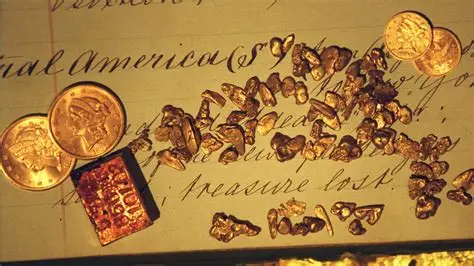
Treasure Hunter Released After 10 Years as Mystery of 500 Missing Gold Coins Remains Unsolved
A treasure hunter who made one of the most extraordinary underwater discoveries in American history is finally out of federal prison, but the mystery that helped keep him behind bars remains unsolved.
Tommy Thompson, 73, was released from federal custody on March 4, 2026, after roughly a decade behind bars following his arrest in 2015. The Ohio-born engineer and treasure hunter became internationally famous after his team located the wreck of the SS Central America, the legendary “Ship of Gold,” in the Atlantic Ocean in the late 1980s.
Decades later, however, his remarkable discovery became the centre of lawsuits, investor disputes, a federal manhunt and one of the most unusual contempt-of-court cases in recent American legal history.
At the heart of the dispute are about 500 gold coins connected to the recovered treasure.
Their whereabouts remain unknown.
The Associated Press reported after Thompson’s release that he had maintained the coins were transferred to a trust in Belize and that he did not know their current location. Courts repeatedly demanded information and cooperation from him, while Thompson insisted he could not provide what they wanted.
The treasure hunter is now free, but the SS Central America story remains far from an ordinary tale of sunken riches.
It spans the California Gold Rush, one of America’s deadliest maritime disasters, the Panic of 1857, groundbreaking deep-sea technology, tens of millions of dollars in recovered treasure and a legal fight that lasted for decades.
Treasure Hunter Tommy Thompson Is Finally Free
The most important update to the original developing story is exactly how Thompson’s imprisonment ended.
It is tempting to say that a judge simply ended the treasure hunter’s civil contempt sentence and released him. The legal timeline was more complicated.
U.S. District Judge Algenon Marbley eventually concluded that continuing to imprison Thompson for civil contempt was no longer likely to force him to cooperate. The coercive purpose of civil contempt is generally to pressure someone into obeying a court order rather than to punish them indefinitely.
But ending the civil contempt did not immediately make Thompson a free man.
According to the Associated Press, after Marbley ended the civil-contempt confinement, Thompson still had to serve a separate two-year criminal sentence connected to his failure to appear at a court hearing in 2012. He ultimately completed his federal custody and was released on March 4, 2026.
That distinction is important.
The treasure hunter spent most of his extraordinary period behind bars because of the continuing civil contempt order, but part of the final period of imprisonment came from a separate criminal sentence.
| Key event | What happened |
|---|---|
| 1988 | Thompson’s team conclusively identifies the SS Central America wreck |
| 1989 onward | Major recovery operations bring gold and artifacts to the surface |
| 2000 | Much of the recovered treasure is sold in a deal worth about $50 million |
| 2005 | Investors begin major litigation over money from the venture |
| 2012 | Thompson fails to appear in court and disappears |
| January 2015 | U.S. Marshals locate and arrest him in Florida |
| December 2015 | Court orders indefinite civil-contempt confinement until compliance |
| 2019 | Appeals court rejects his argument that an 18-month statutory limit required release |
| 2025 | Judge ends the civil-contempt incarceration after concluding more confinement would not produce cooperation |
| March 4, 2026 | Thompson completes remaining federal sentence and is released |
| 2026 | About 500 disputed gold coins remain unaccounted for |
The treasure hunter’s release therefore closes a remarkable chapter, but it does not resolve the dispute that created it.
What Was the SS Central America?
Long before Tommy Thompson became involved, the SS Central America had already secured a dramatic place in American history.
The steamship was travelling toward New York in September 1857 carrying passengers, mail and a huge shipment of gold from California when it encountered a powerful hurricane.
The vessel sank on September 12, 1857.
The Smithsonian’s National Postal Museum says the disaster killed about 425 people and sent a major shipment of California gold to the bottom of the Atlantic. The loss of so much money arriving at a moment of financial instability helped intensify the Panic of 1857.
The National Park Service similarly notes that the vessel was transporting roughly $2 million worth of California gold in 1857 dollars and that the sinking contributed to the economic panic gripping the United States.
That historical connection makes the wreck much more than a treasure hunter story.
It is also a story about nineteenth-century banking, transportation, technology and the extraordinary financial importance of California Gold Rush wealth.
Readers interested in stories where travel, exploration and history intersect can also explore The News Ink’s Historical Travel guide, which looks at how historic places and journeys continue to shape the way people understand the past.
How Much Gold Was on the Ship?
The precise amount is often described differently because historical accounts distinguish between registered commercial shipments, private passenger gold, coins, bars and other valuables.
Modern reporting frequently refers to roughly 30,000 pounds of gold being lost with the vessel.
The Associated Press cited about 30,000 pounds of federal gold connected to the California Gold Rush, while historical institutions describe millions of dollars in gold at 1857 values.
What is certain is that the loss was enormous.
In today’s terms, the historical, numismatic and collectible value of individual coins and bars can be dramatically higher than their raw gold content.
That helps explain why finding the SS Central America became one of the ultimate prizes for a modern treasure hunter.
How Tommy Thompson Found the “Ship of Gold”
Thompson was not simply a hobbyist who happened to stumble across a wreck.
He was an engineer and researcher who approached the search as a major scientific and technological project.
His Columbus-America Discovery Group raised substantial private investment and used advanced sonar, remotely operated vehicles and mathematical search techniques to look for the ship.
The original group of 161 investors contributed about $12.7 million toward finding the wreck, according to historical reporting on the venture.
The search area covered a vast section of the Atlantic.
The wreck was eventually located in extremely deep water, roughly 160 miles off the Carolina coast. Sources describe the site as being around 8,000 feet below the surface, illustrating why a normal diving expedition would have been impossible.
In September 1988, Thompson’s team conclusively identified the SS Central America.
The treasure hunter had achieved something many people believed might never happen.
A Technological Breakthrough Under the Atlantic
The recovery operation was remarkable because of its depth.
Humans could not simply descend to the wreck, pick up the gold and return to the surface. Thompson’s team relied heavily on remotely operated technology designed for deep-ocean work.
An ROV could search the wreck, manipulate objects and bring historically valuable material to the surface.
For its time, the project demonstrated how advances in engineering were transforming underwater exploration.
The treasure hunter’s achievement therefore deserves to be separated from the legal controversy that later surrounded him.
Whatever happened afterward, locating and accessing the SS Central America was a major technical accomplishment.
The discovery eventually produced thousands of coins, bars, ingots and artifacts.
The Treasure Was Worth Tens of Millions
A large portion of the recovered gold was eventually sold around 2000.
Contemporary and later reporting puts one major transaction at approximately $50 million.
Some broader estimates have placed the total recovered treasure’s potential value far higher, sometimes reaching hundreds of millions of dollars when rarity and collector value are considered.
Those numbers need careful handling.
Claims that the treasure was simply “worth $400 million” can give the impression that Thompson personally received $400 million in cash. That is not what the records establish.
The better-supported figure for a major sale of recovered material is about $50 million.
The much larger figures generally refer to estimates of the overall value of gold, rare coins, artifacts or the wider treasure recovery.
Investors Expected Their Share
The treasure hunter did not finance the search entirely with his own money.
The original 161 investors had provided approximately $12.7 million to fund the venture. Their willingness to take an enormous financial risk helped make the expedition possible.
When gold was finally recovered and substantial amounts were sold, investors expected returns.
Disputes followed instead.
Investors alleged that they had not received money they believed they were owed from the venture.
The legal conflict intensified in 2005, when investors sued Thompson and related companies seeking an accounting and compensation.
This transformed the public image of the treasure hunter.
The man once celebrated for solving a century-old maritime mystery was increasingly appearing in court records over questions about what happened to the proceeds.
A Jury Later Awarded Investors $19.4 Million
The investor dispute did eventually produce a significant civil judgment.
In 2018, a jury awarded a combined $19.4 million in compensatory damages.
The award included $3.2 million for the Dispatch Printing Company and $16.2 million for a court-appointed receiver representing other investor interests. Historical archive material from Indiana University also records the $19.4 million judgment.
This is another area where precise wording is essential.
It is better to say that investors accused Thompson of withholding returns and that a jury later awarded millions in damages than simply to describe every disputed allegation as proven criminal fraud.
The investor litigation was largely civil, while Thompson’s later criminal and contempt proceedings involved separate questions including his failure to appear and refusal to comply with court requirements.
Tommy Thompson Disappeared in 2012
As legal pressure increased, Thompson vanished.
A federal judge issued an arrest warrant after he failed to appear at a 2012 court hearing.
For years, authorities could not locate him.
The treasure hunter and his longtime companion, Alison Antekeier, were eventually found by U.S. Marshals in Florida in January 2015.
Investigators said they had been staying in a hotel in the Boca Raton area.
Reports from the time described a carefully controlled lifestyle involving cash, public transport and taxis, behaviour that helped Thompson avoid leaving a conventional financial trail.
The search for a man famous for finding something hidden under thousands of feet of ocean had become a treasure hunt of a very different kind.
Authorities were now searching for him.
Why Were 500 Gold Coins So Important?
The case eventually focused intensely on approximately 500 gold coins associated with the recovered treasure.
Thompson entered into a plea agreement that required him to assist interested parties in identifying and recovering assets, including answering questions connected to the coins.
The Sixth Circuit Court of Appeals later described how the dispute unfolded.
Court records show Thompson was ordered to participate in debtor examinations and provide information. The parties also sought his cooperation in examining a Belizean trust that they believed could be connected to the missing assets.
Thompson did not provide the cooperation the court demanded.
Eventually, the district judge found the treasure hunter in civil contempt and ordered him jailed until he complied.
This is where the story became legally unusual.
Why Could a Civil Contempt Sentence Last So Long?
Civil contempt is fundamentally different from an ordinary fixed criminal sentence.
A court can use civil contempt to compel a person to obey an order. In theory, the person has the ability to end the confinement by complying.
That principle is sometimes described by saying that a contemnor “carries the keys of his prison in his own pocket.”
Thompson argued, in effect, that he did not have those keys because he could not provide information he claimed not to possess.
At one hearing he told Judge Marbley that he did not know the whereabouts of the gold and felt he did not have the keys to his own freedom, according to the Associated Press.
The legal battle over how long the treasure hunter could remain incarcerated eventually reached the federal appeals court.
Why the 18-Month Argument Did Not Free Him
Federal law contains an 18-month limit in certain cases involving recalcitrant witnesses who refuse to testify or provide information.
Thompson argued that this limit should apply to him.
The Sixth Circuit rejected that argument in 2019.
The appeals court reasoned that Thompson’s obligations were broader than simply answering questions. His plea agreement also required him to help identify and recover assets through non-testimonial acts.
One example involved signing a limited power of attorney that would allow parties to investigate the Belizean trust.
The court’s published decision explains that Thompson refused to execute the document despite being ordered to do so.
That meant the normal 18-month argument did not automatically require his release.
For readers interested in the broader reality of long-term incarceration, The News Ink has also examined some of the world’s most notorious prisons, although Thompson’s federal contempt case was legally very different from the criminal sentences discussed there. The site inventory confirms that feature is currently published.
Did Thompson Ever Say Where the Coins Went?
Thompson offered an explanation, but it did not resolve the dispute.
He maintained that the coins had been transferred to a trust in Belize.
At the same time, he said he did not know where the gold currently was and could not provide the information being demanded.
That left the parties at an impasse.
The court wanted meaningful cooperation that could help recover the assets.
The treasure hunter said he could not provide the answer that would secure his release.
Years passed.
Why the Judge Eventually Ended Civil Contempt
Civil contempt is supposed to be coercive, not purely punitive.
The logic is straightforward: incarceration may be justified if there is a realistic possibility that continuing it will cause the person to comply.
But if years of confinement have produced no cooperation, a court eventually has to consider whether the punishment still has a coercive purpose.
Judge Marbley ultimately decided the long incarceration was no longer likely to produce an answer about the missing treasure.
According to the Associated Press, the judge ended the civil-contempt sentence after concluding that keeping Thompson imprisoned was no longer likely to force compliance.
University of Florida law professor Ryan Scott, who worked to secure Thompson’s release, described a civil contempt confinement lasting around a decade as highly unusual.
That legal point is one of the most important parts of the treasure hunter story.
The case was no longer only about where gold might be hidden. It had also become a debate over how long the judicial system can imprison someone in an effort to force cooperation.
Why Thompson Was Still Not Immediately Released
Ending the civil contempt did not erase Thompson’s separate criminal sentence.
He had previously pleaded guilty after failing to appear for the 2012 court proceedings.
Once the civil-contempt confinement ended, he began serving the remaining two-year criminal sentence associated with that conduct.
Only after completing that sentence did the treasure hunter leave federal custody in March 2026.
This corrects one of the most important oversimplifications in the earlier version of the story.
The judge’s decision to abandon further civil coercion was a major turning point, but it was not the moment Thompson simply walked out of prison.
The Gold Mystery Is Still Unresolved
Thompson’s release does not answer the question that fascinated courts, investors and the public for years.
Where are the 500 coins?
There is still no publicly verified answer.
Thompson has maintained that he does not know their present location.
The Associated Press reported at the time of his release that the coins remained unaccounted for and noted that they had previously been valued at about $2.5 million.
Their current collector value could depend on exactly what they are, provenance, condition and the market, so it would be misleading to assign them a new speculative valuation without knowing precisely which coins remain missing.
The mystery has therefore survived the treasure hunter’s incarceration.
The SS Central America Story Did Not End With Thompson
Another fascinating part of the story is that the wreck continued to yield treasure after Thompson was no longer controlling the expedition.
A court-appointed receiver later arranged additional recovery work at the SS Central America site.
Thousands more gold and silver coins, bars, nuggets and artifacts were eventually recovered during later expeditions.
That means the story is bigger than one treasure hunter.
It includes investors, engineers, historians, numismatists, archaeologists, lawyers, collectors and multiple salvage expeditions.
It also raises a larger question about historic wrecks.
Should underwater archaeological sites be treated primarily as commercial treasure, cultural heritage or some combination of the two?
Smithsonian reporting has explored the tension between professional archaeology and commercial treasure recovery, using Thompson’s SS Central America project as one example of the complicated relationship between preservation and profit.
That makes the wreck particularly suitable for readers interested in historical travel and heritage, where physical locations often connect modern visitors with stories far larger than the objects themselves.
Why the Ship of Gold Still Fascinates People
Sunken treasure stories have an obvious appeal.
They combine danger, history, enormous wealth and the possibility that something believed lost forever can suddenly be found.
But the SS Central America adds several additional layers.
It was linked to the California Gold Rush.
Its sinking killed hundreds of people.
Its lost cargo worsened an already fragile financial environment.
Its discovery required pioneering technology.
Its recovery produced extraordinary rare coins and gold bars.
Then the treasure itself created legal battles lasting decades.
Few shipwreck stories contain so many separate chapters.
The News Ink’s collection of strange places and unusual stories examines the same human fascination with mysteries that sit somewhere between history, exploration and the unexplained.
Frequently Asked Questions
Who is treasure hunter Tommy Thompson?
Tommy Thompson is an American engineer and deep-sea explorer best known for leading the expedition that found the SS Central America, a steamship that sank with a major shipment of California Gold Rush treasure in 1857.
When was Tommy Thompson released from prison?
The treasure hunter was released from federal custody on March 4, 2026, according to federal prison records reviewed by the Associated Press.
Why was Tommy Thompson in prison for so long?
Much of Thompson’s confinement resulted from civil contempt after he failed to provide the court with the cooperation required to identify and recover assets connected to about 500 gold coins. He also had a separate criminal sentence for failing to appear in court.
Where are the 500 missing gold coins?
Their current location remains publicly unknown. Thompson has said the coins were transferred to a Belizean trust but has maintained that he does not know where the gold is now.
How much were the missing coins worth?
The approximately 500 coins were previously valued at about $2.5 million. Their exact present value would depend on the individual coins, provenance and collector demand.
How much money did investors put into the expedition?
The original group of 161 investors contributed approximately $12.7 million to the treasure hunt.
How much was the recovered SS Central America gold sold for?
A major portion of the recovered treasure was sold around 2000 in a deal valued at approximately $50 million. Broader estimates of the treasure’s total collectible value have sometimes been substantially higher.
Did the SS Central America contribute to the Panic of 1857?
Yes, historical sources including the Smithsonian and National Park Service say the loss of its large shipment of California gold contributed to the financial panic, although the shipwreck was one factor within a much broader economic crisis.
A Treasure Found, but a Mystery Still Missing
Tommy Thompson achieved something remarkable when he helped locate the SS Central America.
The treasure hunter and his team solved a maritime mystery more than a century old and used pioneering deep-sea technology to recover a fortune from thousands of feet beneath the Atlantic.
But finding the Ship of Gold was only the beginning.
The recovery led to disputes over money. Investors went to court. Thompson disappeared. U.S. Marshals eventually found him. A plea agreement required cooperation over disputed assets. His refusal to comply fully resulted in an exceptionally long civil-contempt confinement.
Eventually, even the judge who had kept him incarcerated concluded that more time behind bars was unlikely to produce the missing information.
The treasure hunter finally walked free on March 4, 2026.
The 500 coins did not walk out with him.
Nearly four decades after the SS Central America discovery made Tommy Thompson famous, the central mystery has changed. People no longer ask whether the legendary ship can be found.
They ask where part of its treasure went.
And for now, no publicly verified answer exists.
For more history, investigations and unusual stories, follow The News Ink on X and The News Ink on Instagram.