Israeli Forces and the Tammun Shooting: What Happened to the Bani Odeh Family
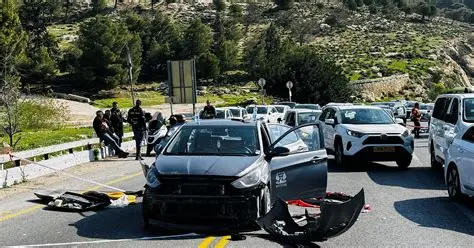
Israeli forces opened fire on a car carrying a Palestinian family in the northern occupied West Bank town of Tammun on March 15, 2026, killing a husband, his wife and two of their young children. Two older children who were also inside the vehicle survived.
The deaths of Ali Bani Odeh, his wife Waad Bani Odeh, and their sons Mohammed and Othman quickly raised serious questions because Israeli authorities and Palestinian accounts offered sharply different descriptions of what happened immediately before the shooting.
Israeli authorities said Israeli forces and Border Police were conducting an operation in Tammun when the family’s vehicle accelerated towards security personnel. They said troops believed they faced an immediate threat and opened fire.
Palestinian officials, relatives and the surviving children disputed the suggestion that the family posed a threat. The Palestine Red Crescent Society also said its emergency crews were initially prevented from reaching the vehicle.
The basic facts of the tragedy are clear. Four members of one family died after Israeli forces fired on their car. What remains contested is why the shooting happened, whether adequate warnings were given, whether the use of lethal force was justified and whether the investigation that followed has provided sufficient accountability.
What Happened in Tammun?
The shooting took place in Tammun, a Palestinian town southeast of Tubas in the northern West Bank.
According to Palestinian officials, the Bani Odeh family had been travelling together when they encountered Israeli forces operating in the area.
The victims were identified as:
| Family member | Age | Relationship |
|---|---|---|
| Ali Bani Odeh | 37 | Father |
| Waad Bani Odeh | 35 | Mother |
| Mohammed Bani Odeh | 5 | Son |
| Othman Bani Odeh | 7 | Son |
Two other children were in the vehicle and survived.
Palestinian authorities identified the surviving sons as Khaled and Mustafa. They were treated for injuries following the shooting.
International reporting, including a detailed account from Reuters, confirmed that Israeli forces killed the four members of the family while operating in the area.
The Israeli military and police acknowledged that their personnel had opened fire.
Where the accounts diverge is over why.
What Israeli Authorities Said About the Shooting
Israeli authorities said security personnel were carrying out a joint operation targeting suspects in Tammun.
According to the Israeli account, the Bani Odeh family’s vehicle accelerated towards the forces.
Personnel believed the vehicle presented a danger and responded by firing at it.
Israeli reporting said Border Police maintained that officers had attempted to signal the vehicle before opening fire.
The central argument from Israeli authorities was therefore that Israeli forces did not deliberately target a family they knew to be civilians. They said personnel reacted to what they believed was an immediate threat during an active security operation.
That explanation is significant, but it does not by itself settle the case.
Important details remain necessary when assessing the use of lethal force.
Investigators would need to establish how quickly the car was moving, the distance between the vehicle and Israeli forces, what warnings were given, whether those warnings were visible or understandable to the occupants and how much time personnel had to decide whether the vehicle represented a genuine threat.
Israeli authorities initially said the circumstances would be investigated.
Palestinian Accounts Tell a Different Story
Palestinian accounts challenged the Israeli explanation.
Local officials said the Bani Odeh family was not involved in the operation Israeli forces were conducting in Tammun.
The surviving children also provided an account suggesting their family did not realise they were approaching a deadly confrontation.
A later report focused on the testimony of one of the surviving sons. The News Ink has covered that account separately in its report on the Palestinian child who survived the West Bank family shooting.
His testimony offers an important first-person description of what happened inside and immediately around the vehicle.
However, as with all testimony in a disputed shooting, it should be identified as the survivor’s account rather than treated as an independently verified reconstruction of every second of the incident.
The difference between the accounts is central to the case.
Israeli forces said they perceived a vehicle-related threat.
The Palestinian family and local accounts described civilians who unexpectedly came under fire.
A credible investigation would have to examine physical evidence, video where available, witness testimony, weapons use, vehicle movement and the actions taken by personnel before shots were fired.
Two Children Survived the Shooting
One of the most disturbing aspects of the incident is that two children survived inside the vehicle while their parents and two brothers were killed.
They reportedly suffered injuries caused by fragments or shrapnel.
Beyond their physical injuries, the surviving children witnessed the deaths of members of their immediate family.
That gives the case a human dimension that can be lost when the West Bank conflict is described only through casualty statistics or competing political statements.
Ali and Waad were parents travelling with four children.
By the end of the incident, two of those children had lost both parents and two brothers.
Whatever conclusion investigators eventually reach about the decisions made by Israeli forces, that outcome is not disputed.
Palestinian Red Crescent Says Medics Were Initially Blocked
Another important part of the incident concerns emergency medical access.
The Palestine Red Crescent Society said its ambulance teams attempted to reach the family after the shooting but were initially prevented from approaching the vehicle by Israeli forces.
According to Palestinian reports, emergency personnel were told to leave the area before eventually being allowed to return.
The crews later recovered the dead and treated the surviving children.
The allegations raise a separate question from the decision to open fire.
Security forces operating during raids can restrict access to an area when they believe fighting is continuing or personnel remain at risk. But delaying emergency medical access can have serious humanitarian consequences, particularly when people may still be alive and require urgent treatment.
The Palestine Red Crescent has repeatedly reported difficulties faced by its medical crews during Israeli military operations in the West Bank.
The organisation documents its humanitarian and emergency work through the Palestine Red Crescent Society and has repeatedly called for medical personnel to receive safe access to injured people.
Whether earlier medical access could have changed the outcome for members of the Bani Odeh family has not been publicly established.
But the reported delay remains one of the questions surrounding the case.
Was the Family Car Carrying Out an Attack?
There is no publicly established evidence in the material reviewed for this article showing that the Bani Odeh family had planned a vehicle attack.
That distinction is important.
Israeli forces saying they believed a vehicle posed an immediate threat is not the same as proving that the people inside deliberately attempted to carry out an attack.
At the same time, the fact that the family were civilians does not automatically establish what Israeli personnel could reasonably perceive in the seconds before they fired.
Both points matter.
The central investigative question is not simply whether the family had militant connections.
It is whether the actions of Israeli forces were reasonable, necessary and proportionate based on what personnel could see and understand at the time.
That requires evidence.
Without a transparent final investigation, definitive claims about intent should be avoided.
What Happened to the Israeli Investigation?
Israeli authorities announced after the incident that the circumstances surrounding the shooting would be examined.
But subsequent reporting raised questions about how quickly that investigation was progressing.
More than a week after the shooting, Israeli media reported that the Border Police personnel involved had not yet been summoned for questioning.
The Times of Israel reported on March 23 that nine days after the incident, the officers involved had reportedly still not been formally questioned.
That does not prove that Israeli forces acted unlawfully.
It does, however, raise legitimate questions about how allegations involving civilian deaths are investigated and how quickly evidence is secured.
A meaningful investigation would be expected to establish several facts.
These include:
- which personnel fired;
- how many rounds were discharged;
- where Israeli forces were positioned;
- the speed and direction of the family’s vehicle;
- what warnings were issued;
- whether body-camera, drone or surveillance footage exists;
- what the surviving children witnessed;
- why medical crews were reportedly delayed;
- and whether applicable rules governing the use of force were followed.
Public reporting reviewed for this updated article has not identified a final investigation that provides a comprehensive answer to all of these questions.
That unresolved status should be made clear.
Rights Groups Called for Accountability
Human-rights organisations also raised concerns following the shooting.
Amnesty International called for an effective investigation and said the deaths came amid what it described as increasing use of lethal force against Palestinians in the occupied West Bank.
Such assessments represent the conclusions and concerns of rights organisations rather than a judicial ruling about the individual personnel involved.
That distinction is important.
Human-rights groups can document incidents and call for investigations, but determining criminal responsibility requires an appropriate legal process and evidence concerning the actions of specific individuals.
Still, the concern about accountability extends far beyond this single incident.
Israeli and international rights organisations have repeatedly questioned the effectiveness and independence of investigations into cases in which Israeli forces kill Palestinians.
Israeli authorities, meanwhile, maintain that mechanisms exist to investigate alleged misconduct by soldiers and police.
The Tammun case has become another test of whether those mechanisms can provide a clear and publicly understandable conclusion.
The Shooting Happened During a Wider West Bank Crisis
The deaths came during an already dangerous period across the occupied West Bank.
Israeli forces have conducted frequent raids and arrest operations, particularly in the northern West Bank.
Israel says many of those operations are necessary to disrupt militant groups, arrest suspects, seize weapons and prevent attacks on Israelis.
Palestinians experience the operations very differently.
Raids can involve road closures, arrests, damage to homes and infrastructure, restrictions on movement and armed confrontations in densely populated communities.
At the same time, attacks by Palestinians have killed and injured Israelis, while violence involving Israeli settlers has also become a major source of international concern.
The News Ink reported earlier on calls from European governments concerning rising settler violence in the West Bank.
The Tammun incident is separate from settler violence, but both stories sit within the wider deterioration of security and civilian protection across the territory.
West Bank Violence Continued After the Tammun Shooting
The situation did not stabilise after March.
The UN Office for the Coordination of Humanitarian Affairs continued documenting Palestinian and Israeli casualties, military raids, displacement, demolitions, settler attacks and movement restrictions throughout the West Bank.
By the summer of 2026, UN reporting showed that dozens of Palestinians had been killed during the year, including children.
The United Nations also documented hundreds of injuries and a growing number of settler-related incidents.
In an August assessment, UN officials warned that conditions in the West Bank had reached an increasingly dangerous point.
Those statistics provide important context, but they should not be used to treat every death as identical.
Some Palestinians have been killed during armed confrontations with Israeli forces.
Others have been killed during raids, protests, alleged attacks, disputed shootings or incidents involving settlers.
Israelis have also been killed in Palestinian attacks.
Each case needs to be examined according to its own evidence.
The Bani Odeh shooting is particularly sensitive because four members of the same civilian family were killed inside one vehicle while two children survived.
Why the Occupied West Bank Context Matters
The West Bank has been under Israeli occupation since 1967.
The United Nations refers to the West Bank, including East Jerusalem, as occupied Palestinian territory.
Israel disputes some of the political and legal interpretations applied internationally to the territory, while maintaining extensive military and administrative control over large areas.
The broader political dispute does not automatically determine whether the conduct of Israeli forces in Tammun was lawful.
The use of lethal force must be assessed according to the circumstances of the individual incident and the applicable legal framework.
That requires asking whether Israeli personnel faced an imminent threat and whether the amount of force used was necessary.
The deaths of children make the demand for a thorough investigation especially important.
Confirmed Facts Versus Disputed Claims
The Tammun case demonstrates why conflict reporting must clearly separate confirmed information from disputed claims.
| Issue | Current Status |
|---|---|
| Israeli forces fired on the family vehicle | Confirmed |
| Ali and Waad Bani Odeh were killed | Confirmed |
| Mohammed and Othman were killed | Confirmed |
| Two other children survived | Confirmed |
| Israeli personnel were conducting a security operation | Confirmed by Israeli authorities |
| The car accelerated towards Israeli forces | Israeli official account |
| The family intended to attack security personnel | Not publicly established |
| Israeli forces attempted to warn the vehicle | Claimed by Israeli authorities |
| Palestinian medics were initially prevented from reaching the vehicle | Reported by the Palestine Red Crescent |
| A surviving child alleged mistreatment after the shooting | Survivor testimony |
| Israeli forces deliberately targeted the family because they were civilians | Not established |
| An investigation was announced | Confirmed |
| A final comprehensive public investigation has resolved all disputed facts | Not established in the public reporting reviewed |
This is the safest and most accurate way to describe the case.
It avoids treating an Israeli security claim as proven intent while also avoiding an unsupported accusation that personnel deliberately murdered a civilian family.
Why Independent Evidence Matters
Incidents involving Israeli forces and Palestinian civilians often produce competing narratives within hours.
The first statements usually come from military authorities, local witnesses, Palestinian officials, emergency services or relatives.
Those accounts can contain important information, but each comes from a different perspective.
Physical and digital evidence can therefore become decisive.
Video footage, vehicle examination, bullet trajectories, operational communications, body cameras and medical evidence could help determine what happened in Tammun.
If such evidence exists, releasing enough of it to explain the investigation’s conclusions could help establish public confidence.
Without that evidence, the two central narratives remain difficult to reconcile.
Israeli forces say their personnel reacted to a vehicle they believed threatened them.
The surviving family and Palestinian accounts reject the suggestion that the car represented a deliberate attack.
A credible investigation should be capable of testing both accounts.
Civilian Protection Remains the Central Issue
Whatever the wider political context, the Bani Odeh case ultimately concerns civilian protection.
Military and police personnel working in a dangerous environment may face situations in which they have only seconds to determine whether a vehicle or individual presents an immediate threat.
That reality cannot be ignored.
But civilians travelling through an area where a security operation is under way also have a right to protection.
When a threat assessment results in the deaths of four family members, including two small children, the decision-making process deserves rigorous scrutiny.
This is particularly true when the people killed were not publicly identified as targets of the operation.
The purpose of an investigation should therefore go beyond determining whether personnel subjectively felt threatened.
It should assess whether procedures, warnings, positioning and the amount of force used complied with applicable standards.
Questions That Remain Unanswered
Several important questions surrounding the actions of Israeli forces remain unresolved publicly.
How fast was the Bani Odeh vehicle travelling?
How far away were Israeli forces when shooting began?
Could the occupants clearly identify the people ahead as Israeli security personnel?
Were the forces uniformed or operating undercover?
What warning was given?
How much time passed between any warning and the first shots?
How many officers opened fire?
How many rounds were discharged?
What did the surviving children tell investigators?
Was video footage recovered?
Why were Red Crescent personnel reportedly prevented from reaching the victims immediately?
Did the investigation find that personnel followed the relevant rules on the use of lethal force?
These questions matter because they determine the difference between a tragic but legally justified threat response, a catastrophic operational mistake and potentially unlawful conduct.
Until reliable evidence answers them, reporting should resist declaring any one of those possibilities established.
The Human Cost Behind the Political Dispute
The competing Israeli and Palestinian narratives can make the case sound abstract.
For the surviving children, it is anything but abstract.
They entered the family vehicle with their parents and siblings.
They survived without four members of their immediate family.
That reality should remain at the centre of the story.
Conflict reporting can easily reduce people to casualty figures, especially during periods when deaths occur almost every day.
But Ali, Waad, Mohammed and Othman were members of one family.
Two children survived to live with the consequences.
That human loss remains true regardless of how the investigation ultimately assesses the conduct of Israeli forces.
Why the Tammun Case Still Matters
The Bani Odeh shooting is significant because it brings together several of the most contested issues surrounding Israeli operations in the West Bank.
There is the security argument made by Israel.
There is the question of civilian protection.
There is survivor testimony.
There are allegations involving access for Palestinian medical responders.
There are questions about the speed and transparency of investigations.
And there is the wider reality of escalating violence throughout the occupied West Bank.
None of these issues should be simplified into a political slogan.
Israeli forces have a responsibility to protect personnel and civilians from genuine attacks.
They also have a responsibility to ensure lethal force is not used unnecessarily against people who do not pose an imminent threat.
Palestinian armed groups and individuals have carried out deadly attacks on Israelis, creating real security risks.
That reality does not remove the requirement to investigate civilian deaths thoroughly.
Both principles can be true at the same time.
A Tragedy Still Waiting for a Clear Public Answer
The facts that can be established are devastating enough.
Israeli forces opened fire on the Bani Odeh family’s car in Tammun.
Ali Bani Odeh was killed.
Waad Bani Odeh was killed.
Their sons Mohammed and Othman were killed.
Two older children survived.
Israeli authorities said the vehicle accelerated towards security personnel during an operation and was perceived as a threat.
Palestinian accounts dispute that explanation, while the Palestine Red Crescent said its emergency crews were initially prevented from accessing the scene.
An investigation was announced.
What remains missing from the public record is a comprehensive conclusion that answers the central questions surrounding the shooting.
That is why the Tammun incident remains more than another casualty report from the West Bank.
It is a test of whether disputed civilian deaths involving Israeli forces can be investigated transparently enough for the evidence, rather than competing political narratives, to determine what happened.
Until that occurs, the Bani Odeh family shooting remains both an immense personal tragedy and an unresolved accountability case in one of the world’s most contested territories.
For continuing coverage of the Middle East, international affairs and major global developments, follow The News Ink on X.