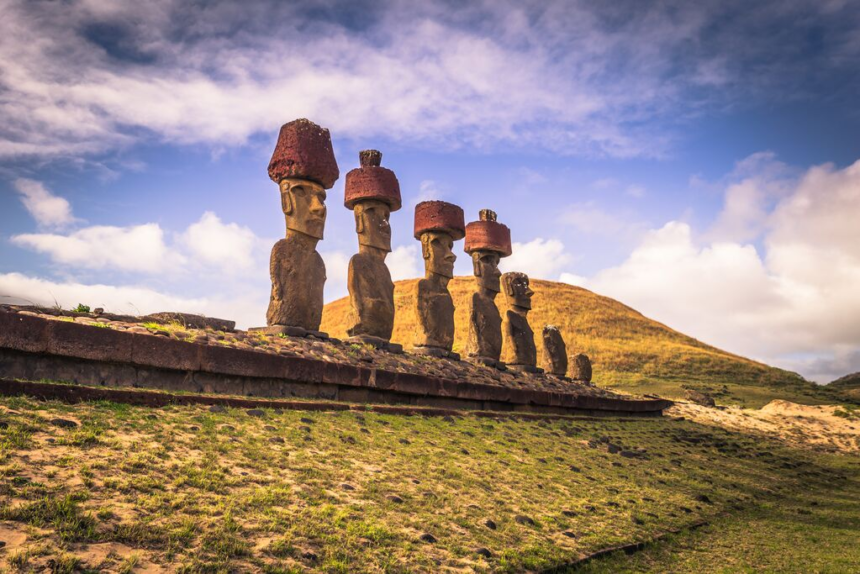
Strange Places: 17 Fascinating Mysteries and Unusual Stories
The world is filled with strange places that seem to challenge ordinary expectations. Some are shaped by geology, weather or isolation. Others are connected to ancient cultures, unanswered historical questions or stories that have grown more dramatic with every retelling. A few mysteries remain genuinely unresolved. Many others become even more interesting once the science behind them is understood.
That distinction matters.
A mysterious story does not need to involve ghosts, aliens or impossible explanations to be fascinating. Rocks that appear to move across a desert floor can be explained by a rare combination of ice, water and wind. Thousands of basalt columns on a coastline can be traced to volcanic activity while still inspiring legends about giants. A remote point in the Pacific Ocean can feel almost unreal because the nearest land lies thousands of kilometres away.
Strange places often capture attention because they bring together two different experiences. The first is curiosity. People want to understand what happened, how a landscape formed or why a story remains incomplete. The second is imagination. When information is limited, theories multiply. A missing ship becomes a ghost ship. An unusual signal becomes evidence of extraterrestrial life. An abandoned settlement becomes a puzzle that continues for centuries.
This article explores strange places, historical mysteries and unusual stories from around the world. It includes natural wonders, ancient monuments, scientific puzzles and unresolved events. It also separates credible evidence from exaggerated claims.
Some of the places in this article can be visited responsibly. Others are better explored through museums, official records, photographs or research. Anyone planning a journey should begin with practical smart travel advice and remember that unusual destinations often require more preparation than ordinary tourist attractions.
The purpose is not to remove the mystery from the world. It is to appreciate strange places without replacing evidence with sensationalism.
Why Strange Places Continue to Fascinate Us
Strange places attract attention because they interrupt the familiar. A desert floor covered with enormous drawings feels different from a conventional archaeological site. An island filled with unusual plant life seems almost fictional. A manuscript written in an unreadable script invites questions even before anyone understands its history.
Human beings naturally search for patterns. When a story contains missing information, the mind tries to complete it. This can lead to careful investigation, but it can also lead to overconfident theories.
Several qualities make strange places especially compelling:
- Visual impact: Some landscapes look so unusual that photographs spread quickly online.
- Isolation: Remote locations create an atmosphere of uncertainty because fewer people can visit or verify claims.
- Incomplete records: Historical mysteries often survive because written evidence is limited, damaged or missing.
- Scientific complexity: A natural explanation may require several conditions to occur at the same time.
- Cultural meaning: Legends can become part of a place even when geology or archaeology provides a clearer explanation.
- Media repetition: Films, television programmes, social posts and online videos can transform a modest mystery into a dramatic narrative.
- The possibility of discovery: New research may change how people understand an old question.
These qualities do not make every theory equally plausible. However, they explain why strange places remain popular across travel writing, history, science and entertainment.
Readers interested in ancient ruins, cultural landscapes and heritage tourism can also explore The News Ink’s pillar on historical travel. Many of the locations below are not simply curiosities. They are important places connected to human history and natural heritage.
Strange Places Need Evidence, Not Exaggeration
A useful article about unusual stories should not pretend that every mystery is unsolved.
Some questions have strong scientific explanations. Some remain open because the surviving evidence is incomplete. Others have become larger online than the facts justify.
The Bermuda Triangle is a useful example. Stories about unexplained disappearances have circulated for decades. However, the National Ocean Service states that there is no evidence mysterious disappearances occur more frequently in the region than in other large, heavily travelled areas of ocean. Severe weather, navigation difficulties, human error and the Gulf Stream can all contribute to real dangers without requiring a supernatural explanation.
That does not make the subject boring. It makes the story more accurate.
The same principle applies to moving rocks in Death Valley, mysterious sounds in the ocean and ancient structures. Strange places can inspire legends while still being studied carefully.
A sensible approach is to divide unusual stories into three broad groups.
| Type of mystery | What it means | Examples |
|---|---|---|
| Strongly explained | Evidence supports a convincing natural or historical explanation | Racetrack Playa rocks, Giant’s Causeway columns, the Bloop sound |
| Partly explained | Research provides a plausible explanation, but some uncertainty remains | Dyatlov Pass incident, purpose of Stonehenge |
| Genuinely unresolved | Important evidence remains missing or incomplete | Mary Celeste, D.B. Cooper, Voynich Manuscript |
The difference matters because an entertaining theory should never be presented as a confirmed fact.
17 Strange Places, Mysteries and Unusual Stories Worth Exploring
The following strange places and stories are not identical. Some are destinations. Some are historical events. Others are scientific puzzles connected to locations. Together, they show how mystery can emerge from nature, archaeology, incomplete evidence and human imagination.
1. Racetrack Playa: The Desert Where Rocks Appear to Move
Racetrack Playa in Death Valley National Park is one of the most famous strange places in the United States.
The playa is a flat, dry lakebed surrounded by mountains. Across its surface, rocks leave long tracks in the ground. For years, visitors could see the trails but rarely observe the movement itself. The result was a perfect mystery: stones appeared to travel across the desert without an obvious force pushing them.
The explanation is unusual but natural.
According to the National Park Service, rocks on the playa can leave trails that extend for remarkable distances. Research publicised by the park describes how thin sheets of ice can form under suitable conditions. As the ice breaks and light winds move the floating sheets, rocks can slowly slide across the wet surface.
The mystery became interesting precisely because the required conditions are uncommon. Water, freezing temperatures, ice, wind and a smooth playa surface must work together.
Racetrack Playa is also a reminder that strange places need protection. Driving onto the playa is illegal and can leave scars that take years to repair. Visitors should admire the tracks without disturbing the landscape or removing rocks.
2. Giant’s Causeway: A Coastline Built From Basalt Columns
On the coast of Northern Ireland, thousands of basalt columns form one of Europe’s most recognisable natural landscapes.
The Giant’s Causeway is a UNESCO World Heritage Site. Many of its columns appear almost geometric, creating the impression that someone constructed a vast stone pathway towards the sea.
Legends offered one explanation. Stories connected the causeway to the Irish giant Fionn mac Cumhaill, also known as Finn McCool. In popular versions of the tale, the stones formed part of a route connected to Scotland and a confrontation with another giant.
Geology provides a different answer.
The columns formed through volcanic activity and the cooling of lava. As the material cooled and contracted, it fractured into the striking shapes visible today.
The scientific explanation does not diminish the legend. Giant’s Causeway belongs among strange places because nature created a landscape that looks almost architectural. It shows why myths often develop around unusual geology: people encounter a remarkable sight and build a story capable of matching it.
3. Socotra: The Island That Looks Like Another World
Socotra is often described as one of the most unusual islands on Earth.
Located in the northwest Indian Ocean, the archipelago is known for distinctive plant life, including the dragon’s blood tree. Its spreading branches and dense crown create a shape that looks unlike an ordinary tree. Photographs of the landscape can resemble concept art for a science-fiction film.
The unusual appearance is not an illusion. It reflects long isolation and exceptional biodiversity.
According to UNESCO, a significant proportion of Socotra’s plant species, reptiles and land snails are endemic. That means they are found nowhere else.
Socotra demonstrates that strange places do not always need a mystery. Sometimes the real story is evolution. Geographic isolation can allow species to develop in ways that make a landscape feel unfamiliar even though every feature is part of the natural world.
The island also raises an important question about travel. Increased attention can bring economic opportunities, but fragile ecosystems require care. Unusual destinations should not be treated merely as backdrops for social-media photos.
4. Cappadocia: A Landscape of Rock Formations and Underground Cities
Cappadocia in Türkiye is one of the most visually distinctive cultural landscapes in the world.
The region is famous for rock formations often called fairy chimneys, along with cave dwellings, churches and underground spaces. Its landscape was shaped by natural processes and transformed by human activity over long periods.
UNESCO’s page for Göreme National Park and the Rock Sites of Cappadocia describes rock-hewn sanctuaries, troglodyte villages and underground cities within an eroded landscape.
Cappadocia belongs among strange places because the boundary between geology and architecture feels unusually thin. People adapted the landscape rather than simply building on top of it.
The result can appear mysterious to visitors encountering it for the first time. However, the deeper story is one of human ingenuity. Communities responded to the material around them, creating spaces for shelter, worship and protection.
Visitors should approach the region as a cultural landscape rather than an attraction designed only for photographs. A responsible trip should account for local rules, preservation needs and seasonal conditions.
5. Pamukkale: White Terraces Formed by Thermal Water
Pamukkale in Türkiye looks like a frozen waterfall from a distance.
Its bright white terraces descend across the landscape, creating pools and curved formations that appear almost artificial. However, the appearance is the result of natural processes.
The UNESCO World Heritage listing explains that mineral-rich thermal waters created the travertine terraces. The site is connected to the ancient spa city of Hierapolis, making it both a natural wonder and a historical destination.
Pamukkale shows why strange places often attract misleading descriptions online. A photograph may be presented as a “cotton castle,” a frozen landscape or an impossible geological formation without proper context.
The real explanation is more useful. Water, minerals and time created a landscape that appears sculpted.
This combination of natural beauty and historical importance makes Pamukkale a strong example of why unusual destinations should be visited carefully. Foot traffic, tourism pressure and water management can affect fragile sites.
6. Point Nemo: The Most Remote Place in the Ocean
Some strange places are remarkable because almost nothing appears to be there.
Point Nemo is known as the oceanic pole of inaccessibility. It is the point in the ocean farthest from land. According to the National Ocean Service, it lies approximately 2,688 kilometres from the nearest land.
The location has become part of popular imagination because of its isolation. It is sometimes described as a place where astronauts aboard the International Space Station may be closer than people standing on land.
Point Nemo is not a conventional destination. Travelling there requires expertise, planning and the right vessel. There is no island, visitor centre or landmark waiting in the water.
Its appeal comes from the idea of remoteness itself.
Among strange places, Point Nemo offers a different kind of mystery. It reminds people how much of the planet is ocean and how distant some parts of Earth remain from ordinary human activity.
Readers interested in exploration beyond familiar environments can also visit The News Ink’s pillar on space and astronomy. Point Nemo often feels like a bridge between ocean exploration and the human fascination with deep space.
7. Nazca Lines: Enormous Drawings Across a Desert
The Nazca Lines in Peru are among the world’s most famous archaeological mysteries.
Across an arid landscape, ancient people created geoglyphs by removing darker surface material and revealing lighter ground below. Some designs form lines and geometric patterns. Others depict animals and plants.
UNESCO’s listing for the Lines and Geoglyphs of Nasca and Palpa describes an extraordinary group of geoglyphs created over many centuries. Their scale, quantity and variety continue to raise questions about their purpose.
The mystery is not whether people made them. The mystery is why.
Researchers have proposed ceremonial, astronomical, social and landscape-related interpretations. Some popular explanations go much further, involving aliens or impossible technologies. These theories attract attention but are not required to understand the achievement.
The Nazca Lines belong among strange places because they demonstrate how human communities can shape a landscape in ways that remain visible long after the original meaning becomes difficult to reconstruct.
The better question is not whether ancient people were capable of creating the designs. They clearly were. The better question is what the geoglyphs meant within their own world.
8. Göbekli Tepe: Monumental Structures From a Distant Past
Göbekli Tepe in Türkiye changed public conversations about early monumental architecture.
The site contains large stone structures associated with hunter-gatherer communities. Its carved T-shaped pillars include images of animals and other motifs.
According to UNESCO, monumental structures at Göbekli Tepe were erected between approximately 9600 and 8200 BCE.
This timeline matters because it challenges overly simple assumptions about the development of complex communal spaces. The people connected to the site were capable of organising labour, shaping stone and creating meaningful structures long before many familiar ancient civilisations appeared.
Göbekli Tepe is one of the most important strange places for readers interested in archaeology. Its significance does not come from a sensational theory. It comes from the way evidence changes historical understanding.
Mystery should encourage research rather than replace it.
9. Stonehenge: A Famous Monument With Unanswered Questions
Stonehenge may be one of the most recognisable strange places in the world.
The stone circle in southern England has inspired centuries of speculation. People have suggested astronomical, ceremonial, religious and social functions. Some theories are more credible than others, but the site continues to raise questions.
English Heritage explains that Stonehenge developed in stages over a long period. The first henge monument dates back around 5,000 years, while the stone circle was erected later during the Neolithic period.
What was it for?
The organisation’s discussion of understanding Stonehenge notes that the monument had no obvious practical function. Evidence suggests that spiritual or ceremonial meaning played an important role.
Stonehenge demonstrates how a place can be well studied and still remain mysterious. Researchers know a great deal about its construction, landscape and chronology. However, they cannot interview the people who built it.
That gap between evidence and certainty is where responsible curiosity belongs.
10. Bermuda Triangle: A Mystery Larger Than the Evidence
The Bermuda Triangle is one of the best-known mystery stories in modern popular culture.
The loosely defined region of the Atlantic is often associated with ships and aircraft disappearing under unexplained circumstances. Stories have involved magnetic anomalies, time distortions, alien activity and supernatural forces.
However, the official evidence does not support the most dramatic claims.
The National Ocean Service explains that no evidence shows mysterious disappearances occur more frequently in the Bermuda Triangle than in other large, heavily travelled parts of the ocean.
Real dangers exist. Weather can change quickly. Navigation errors happen. Mechanical failures occur. The Gulf Stream can affect debris and complicate searches.
The Bermuda Triangle belongs in an article about strange places because it shows how stories grow. A location becomes famous not only because of what happened there, but because books, documentaries and repeated retellings create a powerful identity around it.
A mystery can be culturally important even when the most supernatural explanations lack evidence.
11. Mary Celeste: The Ship Found Without Its Crew
In December 1872, the Mary Celeste was discovered abandoned in the Atlantic Ocean.
The ship was not a wreck in the ordinary sense. It remained afloat, but the people aboard were missing. The fate of the crew and passengers has never been established with certainty.
The story became one of history’s most famous maritime mysteries.
According to Britannica, the vessel was found roughly 400 nautical miles from the Azores. Ten people had been aboard.
Over time, theories have included piracy, mutiny, sea monsters, fraud and supernatural intervention. More grounded ideas consider weather, concerns about cargo fumes or a decision to abandon ship temporarily.
The absence of a confirmed answer keeps the story alive.
The Mary Celeste illustrates an important rule for unusual stories: a gap in evidence does not prove the most dramatic theory. It means the conclusion remains uncertain.
Unlike some strange places that can be examined directly, the central evidence in this case is historical and incomplete. That makes careful wording especially important.
12. D.B. Cooper: The Hijacker Who Disappeared
In 1971, a man using the name Dan Cooper hijacked a commercial aircraft in the United States, received ransom money and parachuted from the plane.
He was never definitively identified.
The case became widely known as the mystery of D.B. Cooper, partly because of a media naming error. Decades later, the story remains part of American popular culture.
The FBI’s case history describes the hijacking and the unresolved questions surrounding the man’s fate. In a later investigation update, the FBI explained that no tip had produced a definitive identification and resources were being redirected.
Did Cooper survive the jump? Was the name connected to his real identity? Where did the remaining money go?
The story is unusual because it feels almost cinematic. However, the unanswered questions are real.
This is one reason strange places and mysteries frequently become entertainment. A remote landscape creates atmosphere, but a disappearing person creates a narrative people want to complete.
13. Voynich Manuscript: A Book No One Has Fully Decoded
The Voynich Manuscript is one of the most famous unreadable books in the world.
Its pages contain an unfamiliar script, illustrations of plants, diagrams and other unusual imagery. Scholars, codebreakers and amateur investigators have tried to understand it for generations.
The Beinecke Rare Book and Manuscript Library at Yale describes the manuscript as a mysterious and unique puzzle. Yale also provides digital access for readers who want to examine the pages themselves.
The unanswered questions are numerous.
Is the text written in a real language? Is it encoded? Is it a constructed script? Does it contain meaningful information, or is it an elaborate deception?
Claims of a final solution appear regularly, but none has achieved universal acceptance.
The Voynich Manuscript belongs in a discussion of strange places because places are not always geographical. A book can become an intellectual landscape: a space people revisit, map and interpret without reaching a final destination.
14. Roanoke: The Lost Colony and the Meaning of Croatoan
The Lost Colony of Roanoke remains one of the most discussed historical mysteries in the United States.
A group of English colonists settled on Roanoke Island in the late sixteenth century. When John White returned after a delayed journey, the settlement had been abandoned.
The National Park Service presents the history through Fort Raleigh National Historic Site. It also explores major theories involving relocation, famine, conflict and other possibilities.
The most famous clue was the word “CROATOAN” carved at the abandoned site.
Popular retellings sometimes present the colony as if every person vanished without leaving any indication. The real story is more complicated. The carving suggests that relocation may have been involved, but researchers still lack definitive proof explaining the fate of every colonist.
Roanoke belongs among strange places because incomplete evidence allows dramatic versions of the story to spread easily. Historical context makes the mystery more meaningful, not less.
15. Dyatlov Pass: A Tragedy With a Plausible Scientific Explanation
In 1959, a group of hikers died in the northern Ural Mountains in the Soviet Union.
The Dyatlov Pass incident became one of the most discussed modern mysteries because of the circumstances surrounding the tragedy. The hikers left their tent under severe conditions, and later accounts often emphasised confusing or disturbing details.
Over the years, explanations ranged from military activity and unusual weather to supernatural forces.
Research published in Communications Earth & Environment proposed a plausible slab-avalanche mechanism. A later follow-up study discussed further observations and expeditions.
The careful word is plausible.
A strong scientific explanation can address important parts of a mystery without pretending every detail has been reconstructed perfectly. Remote conditions, delayed searches and incomplete records can make absolute certainty difficult.
Dyatlov Pass is one of the strange places where responsible writing matters most. The event involved real people and real loss. Sensational claims should never erase that human reality.
16. The Wow! Signal: A Brief Radio Mystery From Space
In 1977, a strong narrowband radio signal attracted attention during observations associated with Ohio State University’s Big Ear radio telescope.
The signal became known as the Wow! signal because astronomer Jerry Ehman wrote “Wow!” beside the recorded data.
The Ohio State University College of Arts and Sciences has discussed the signal and its continuing place in scientific curiosity.
The signal has often been connected to extraterrestrial speculation. However, an intriguing detection is not the same as confirmed evidence of alien life.
The real story is valuable because it shows how science handles uncertainty. A notable observation can remain interesting without being exaggerated into a final answer.
The Wow! signal belongs beside strange places because it expands the idea of location. The mystery is not tied to a cave, island or monument. It points outward, towards the enormous distances discussed in The News Ink’s overview of space and astronomy.
17. Tunguska: The Explosion That Flattened a Forest
On June 30, 1908, a powerful explosion occurred over a remote region of Siberia.
The Tunguska event flattened a vast area of forest. For years, its scale and remote location encouraged speculation.
NASA’s account of the Tunguska event explains that an asteroid entered the atmosphere and exploded above the region.
The absence of a conventional impact crater contributed to the mystery. However, an airburst can release enormous energy before an object reaches the ground.
Tunguska remains one of the most dramatic unusual stories connected to space and Earth. It also provides a useful reminder: strange places can become understandable through patient scientific investigation.
The event may sound like science fiction, but it belongs to documented history.
When Strange Places Receive Scientific Explanations
Not every mystery should remain a mystery forever.
In some cases, scientific research provides an explanation that is more interesting than speculation. This does not mean every question disappears. It means the main mechanism becomes clearer.
| Mystery or unusual place | Earlier impression | Evidence-based explanation |
|---|---|---|
| Racetrack Playa | Rocks move across the desert without assistance | Thin ice, water and wind can move rocks across the playa |
| Giant’s Causeway | A stone pathway linked to giants | Cooling volcanic material formed basalt columns |
| Pamukkale | A frozen or artificial white landscape | Thermal waters deposited minerals over time |
| Tunguska | A huge explosion without a normal crater | An asteroid airburst occurred above Siberia |
| The Bloop | A mysterious underwater sound | Ice-related activity produced the sound |
| Bermuda Triangle | Disappearances occur at an abnormal rate | No evidence supports an unusual frequency of mysterious losses |
The Bloop is a particularly useful example.
In 1997, a powerful underwater sound was detected in the Pacific Ocean. Its unusual characteristics inspired theories involving enormous sea creatures or unknown phenomena.
The National Ocean Service explains that the sound was consistent with ice-related activity, such as an iceberg cracking or breaking away.
The explanation does not make the story disappointing. It reveals how dynamic the planet can be.
This is one of the most important lessons from strange places: understanding nature often makes the world feel more remarkable, not less.
How Strange Places Become Bigger Stories Online
The internet makes strange places easier to discover. It also makes exaggeration easier to spread.
A dramatic image can circulate without context. A natural rock formation may be described as evidence of an ancient lost civilisation. A photograph from one country may be presented as a discovery from somewhere else. A historical mystery may be turned into a confident conspiracy theory through selective editing.
Artificial intelligence adds another layer of difficulty.
Images can be generated, modified or removed from their original context. Videos can be edited persuasively. Audio can be manipulated. A confident narrator may present speculation as fact.
The News Ink has explored why deepfake doubts are becoming more serious and how AI deepfakes can be used in wider misinformation campaigns.
When a claim about strange places appears online, pause before sharing it.
Use This Seven-Step Verification Method
- Check the original source.
Look for an official park service, heritage organisation, university, museum, research paper or government agency. - Read beyond the headline.
A headline may use the words “mystery solved” even when the evidence is tentative. - Check the date.
Old photographs and stories often return during new events. - Look for location evidence.
A photograph may be real but connected to a different country or landscape. - Separate evidence from interpretation.
A carved symbol is evidence. A confident explanation of its meaning may still be a theory. - Search for independent confirmation.
One viral post should not be treated as a reliable source. - Avoid suspicious links.
Mystery content can be used to attract clicks towards unsafe pages, misleading downloads or fraudulent websites.
The last point is easy to overlook. Curiosity can make people click quickly. The News Ink’s cybersecurity guide explains practical habits for safer browsing, while our discussion of online privacy explores the wider challenge of protecting personal information.
Strange places should inspire curiosity, not careless browsing.
How to Visit Strange Places Responsibly
Several strange places in this article are major visitor destinations. Others are remote, fragile or unsuitable for casual tourism.
A responsible journey begins with the understanding that unusual landscapes are not props. They may be protected ecosystems, archaeological sites, sacred spaces or places connected to tragedy.
1. Check Official Guidance
Before visiting a site, review the official website for:
- Opening hours
- Weather warnings
- Access restrictions
- Entry requirements
- Photography rules
- Guided-tour options
- Seasonal conditions
- Safety advice
- Conservation requirements
A viral post may omit important information.
2. Respect Physical Boundaries
Do not cross barriers, drive off approved roads or remove objects.
At Racetrack Playa, for example, vehicle damage can leave long-lasting marks. At archaeological sites, even small actions can affect preservation.
3. Avoid Treating Every Site as Entertainment
Some strange places are connected to human loss, cultural identity or spiritual meaning.
Dyatlov Pass is not merely a spooky story. Roanoke is not simply a mystery game. Ancient landscapes should not be reduced to social-media backgrounds.
4. Prepare for Remote Conditions
Isolation creates real risks.
Before visiting a remote location:
- Check weather conditions.
- Carry sufficient water.
- Inform someone about your route.
- Download offline maps.
- Use appropriate footwear.
- Bring required medication.
- Avoid relying entirely on mobile signals.
- Confirm local transport arrangements.
- Follow guidance from park authorities or experienced guides.
The News Ink’s smart travel pillar offers additional advice for safer planning.
5. Consider Environmental Pressure
Some unusual destinations are vulnerable to climate change, erosion, waste and excessive tourism.
Readers interested in the wider environmental context can explore our pillar on climate change.
Travel should not damage the qualities that made a place worth visiting.
Strange Places Can Teach Better Critical Thinking
The appeal of mysteries is not limited to entertainment. Strange places can improve the way readers evaluate information.
A good mystery encourages questions:
- What do we know?
- Who recorded the evidence?
- What remains uncertain?
- Has the claim changed through retelling?
- Is the source reliable?
- Does a natural explanation exist?
- Are experts disagreeing about the main facts or only the details?
- Is a theory possible, probable or confirmed?
These questions are useful far beyond travel stories.
The internet rewards confident claims. Careful research often sounds less dramatic because it includes words such as “likely,” “plausible,” “uncertain” and “evidence suggests.” Those words do not weaken an article. They make it more trustworthy.
Strange places offer an enjoyable way to practise this habit.
You can appreciate the legend of Giant’s Causeway while understanding basalt columns. You can be fascinated by Stonehenge without pretending its purpose is fully known. You can discuss the Bermuda Triangle while recognising that official evidence does not support exaggerated claims. You can examine the Wow! signal without presenting it as confirmed extraterrestrial contact.
Curiosity and critical thinking belong together.
A Quick Comparison of the 17 Strange Places and Stories
| Strange place or story | Country or region | Main category | Current understanding |
|---|---|---|---|
| Racetrack Playa | United States | Natural phenomenon | Strong scientific explanation |
| Giant’s Causeway | Northern Ireland | Geology and folklore | Strong geological explanation |
| Socotra | Yemen | Biodiversity | Explained through isolation and evolution |
| Cappadocia | Türkiye | Landscape and history | Natural formations shaped by human use |
| Pamukkale | Türkiye | Thermal geology | Strong natural explanation |
| Point Nemo | Pacific Ocean | Geography | Clearly defined remote location |
| Nazca Lines | Peru | Archaeology | Construction understood; purpose still debated |
| Göbekli Tepe | Türkiye | Archaeology | Well documented; significance still studied |
| Stonehenge | England | Archaeology | Chronology studied; full purpose uncertain |
| Bermuda Triangle | Atlantic Ocean | Popular mystery | Claims often exaggerated |
| Mary Celeste | Atlantic Ocean | Maritime history | Crew’s fate unresolved |
| D.B. Cooper | United States | Crime history | Identity and fate unresolved |
| Voynich Manuscript | Yale University collection | Manuscript mystery | Script remains undecoded |
| Roanoke | United States | Colonial history | Several theories; no definitive conclusion |
| Dyatlov Pass | Russia | Historical tragedy | Plausible avalanche explanation |
| Wow! signal | Space observation | Astronomy | Interesting signal; origin uncertain |
| Tunguska | Siberia | Astronomy and Earth science | Asteroid airburst explanation |
The table reveals an important pattern. Strange places are not interesting only when they remain unsolved. Several become more meaningful when evidence clarifies their story.
How to Build a Strange Places Travel List
A good travel list should not consist only of dramatic photographs.
Start by thinking about the experience you want.
Choose Natural Wonders When You Enjoy Landscapes
Consider places such as:
- Giant’s Causeway
- Pamukkale
- Cappadocia
- Socotra
- Racetrack Playa
These locations reward travellers interested in geology, biodiversity and photography.
Choose Archaeological Sites When You Enjoy History
Consider:
- Nazca Lines
- Göbekli Tepe
- Stonehenge
- Cappadocia
These destinations work best when visitors learn about the cultural context before arriving.
Explore Remote Stories From Home
Some places are better understood through research rather than direct travel.
Point Nemo is extremely remote. Dyatlov Pass requires serious preparation. The Bermuda Triangle is a broad ocean region, not a single attraction. Tunguska is connected to a remote historical event.
A responsible interest in strange places does not require visiting every location personally.
Create a Balanced List
A practical list may include:
- One natural wonder
- One archaeological site
- One destination connected to local legends
- One place near your own region
- One museum or digital collection
- One story to research from official sources
The Voynich Manuscript, for example, can be explored through Yale’s digital collection without travelling. The same principle applies to many historical mysteries.
Frequently Asked Questions About Strange Places
What are strange places?
Strange places are locations that appear unusual because of their geology, history, isolation, cultural meaning or connection to unanswered questions. Some have scientific explanations, while others remain partly or fully unresolved.
Why are strange places so popular online?
Strange places combine visual impact with curiosity. Dramatic photographs and incomplete stories are easy to share. However, online posts may remove context or exaggerate the evidence.
Are all mysterious places unexplained?
No. Many mysterious places have strong explanations. Racetrack Playa, Giant’s Causeway and Pamukkale may look unusual, but scientific evidence explains their main features.
Is the Bermuda Triangle genuinely more dangerous than other ocean regions?
The National Ocean Service states that there is no evidence mysterious disappearances occur more frequently there than in other large, heavily travelled areas of ocean.
What caused the moving rocks at Racetrack Playa?
Under suitable conditions, thin ice, water and wind can move rocks across the playa surface and leave visible trails.
What is unusual about Socotra?
Socotra has exceptional biodiversity and many endemic species. Its distinctive dragon’s blood trees contribute to its otherworldly appearance.
Why are the Nazca Lines mysterious?
Researchers understand how the geoglyphs were made, but their full purpose remains debated. The scale and variety of the designs continue to attract attention.
What is the mystery of Stonehenge?
Stonehenge was built in stages over thousands of years. Researchers know much about its construction and landscape, but its complete purpose cannot be stated with certainty.
Was the Bloop caused by a sea monster?
No evidence supports that theory. The National Ocean Service explains that the sound was consistent with ice-related activity.
Was the Wow! signal proof of alien life?
No. It was an intriguing radio signal, but it did not prove extraterrestrial contact.
Has the Voynich Manuscript been decoded?
Many people have proposed interpretations, but no universally accepted solution has decoded the full manuscript.
What happened to the Roanoke colonists?
Several theories exist, including relocation. The “CROATOAN” carving is an important clue, but researchers have not definitively established the fate of every colonist.
Is Dyatlov Pass still unexplained?
Research has proposed a plausible avalanche mechanism. Some discussion continues because reconstructing every detail of a remote historical tragedy is difficult.
Can tourists visit strange places safely?
Many can be visited safely with planning. However, travellers should check official guidance, respect boundaries and prepare properly for remote conditions.
How can I verify stories about mysterious places online?
Look for official sources, check dates, compare independent reports and distinguish evidence from speculation. Avoid treating viral videos as proof.
Strange Places Remind Us That Curiosity Still Matters
The world has not run out of wonder.
Strange places appear in deserts, oceans, forests, coastlines, manuscripts and historical records. Some mysteries become clearer through geology, archaeology or astronomy. Others remain open because the evidence is incomplete.
The most interesting approach is neither blind belief nor automatic dismissal.
Curiosity should lead towards better questions.
Why do rocks move across a dry lakebed? How did ancient communities create enormous desert geoglyphs? What did Stonehenge mean to the people who built it? Why did the crew leave the Mary Celeste? What produced a brief radio signal detected in 1977?
Each question deserves evidence.
Strange places do not need exaggerated claims to be memorable. Their real stories are already remarkable.
For more travel ideas, unusual stories and carefully researched explainers, follow The News Ink on Instagram.