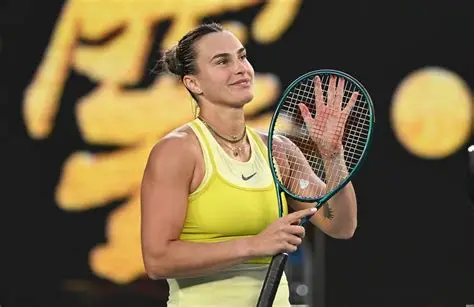
Sabalenka Defeats Osaka as Indian Wells Win Starts a Title Run
Sabalenka defeats Osaka, 6-2, 6-4, in one of the most anticipated matches of the 2026 BNP Paribas Open, but the straight-sets score did not tell the whole story. Aryna Sabalenka beat Naomi Osaka in 80 minutes on 10 March, combining a nearly untouchable serve with more variety than the familiar image of relentless baseline power suggests.
The round-of-16 victory mattered for more than a place in the quarter-finals. It reversed the outcome of the pair’s only previous tour-level meeting, strengthened Sabalenka’s remarkable run of consistency and became an important step towards her first Indian Wells singles title. By the end of the tournament, Sabalenka had defeated Victoria Mboko, Linda Noskova and Elena Rybakina to finally lift the trophy after losing two earlier finals in the California desert.
For Osaka, the defeat was a reminder of how small the margins become against the world number one. She produced flashes of the first-strike tennis that made her a four-time Grand Slam champion, yet Sabalenka denied her the sustained pressure needed to turn those moments into a genuine contest. Sabalenka defeats Osaka therefore works best as more than a short match report: it is a study in serving, tactical evolution and the different stages of two elite careers.
Sabalenka Defeats Osaka: Confirmed Match Details
The match took place on the hard courts of the Indian Wells Tennis Garden during the women’s round of 16. The official WTA scorecard confirms a 6-2, 6-4 victory completed in one hour and 20 minutes.
| Match detail | Confirmed information |
|---|---|
| Tournament | 2026 BNP Paribas Open |
| Level | WTA 1000 |
| Round | Round of 16 |
| Date | 10 March 2026 |
| Venue | Indian Wells Tennis Garden, California |
| Result | Aryna Sabalenka defeated Naomi Osaka 6-2, 6-4 |
| Match duration | 1 hour 20 minutes |
| Aces | Sabalenka 8, Osaka 4 |
| Double faults | Sabalenka 0, Osaka 4 |
| Break points converted | Sabalenka 3 of 9, Osaka 0 of 2 |
Those figures explain why Sabalenka defeats Osaka was built around control rather than simply heavier hitting. Sabalenka won 39 of 56 service points, saved both break points she faced and did not surrender a service game. Osaka, by contrast, faced nine break points and was broken three times.
The original report correctly identified Sabalenka’s authority and the 80-minute duration. Sabalenka defeats Osaka by controlling the decisive service and return moments, not by running away with every game. However, the second set did not turn with a break for 4-2. The players were level at 3-3 before Sabalenka broke to lead 4-3, then protected that advantage. Correcting that sequence matters because Osaka remained competitive deeper into the second set than the earlier account suggested.
A First Set Decided by Pressure on Osaka’s Serve
Osaka opened the match with a 118mph ace and held after saving a break point. That beginning offered a glimpse of the serving aggression she needed. Sabalenka immediately answered with a comfortable hold, then applied pressure in Osaka’s next service game.
Three double faults in that third game damaged Osaka’s position. Sabalenka did not need to produce a spectacular return winner on every point; she needed to keep enough balls in play for the pressure to accumulate. Once the break arrived, the world number one moved ahead 2-1 and began controlling the geometry of the rallies.
Sabalenka defeats Osaka became increasingly likely because Sabalenka was not allowing the match to settle into a simple exchange of flat power. She varied the height and pace of the ball, moved Osaka laterally and used the drop shot to force her opponent forward. According to the WTA’s match analysis, Sabalenka later said that making Osaka guess and changing the rhythm had been central to her plan.
That tactical variety was important. Osaka remains one of the cleanest ball-strikers in the women’s game when she can establish her feet and attack from a balanced position. Sabalenka repeatedly denied her that comfort. Deep returns pushed Osaka backwards, while shorter balls and sudden changes of direction prevented her from locking into one rally pattern.
A second break moved Sabalenka to 5-2. She then served out the set with an ace, completing a disciplined opening stretch in which her aggression was backed by excellent shot selection. Sabalenka defeats Osaka in the opening set because her pressure is continuous even when the rallies look balanced.
Why Sabalenka’s Serve Controlled the Contest
The most decisive element was Sabalenka’s serve. She landed 75% of her first serves, won more than 76% of the points behind them and finished with eight aces against no double faults. She also won half of her second-serve points, enough to prevent Osaka from attacking consistently.
Sabalenka defeats Osaka was therefore not a match in which the favourite survived repeated danger. Osaka created only two break-point opportunities and converted neither. Sabalenka saved both, maintaining the scoreboard pressure that forced Osaka to take greater risks in her own service games.
The contrast was severe. Osaka struck four aces, but four double faults undermined that advantage. Sabalenka defeats Osaka partly because her own delivery remains dependable while Osaka’s fluctuates under return pressure. Osaka’s first-serve percentage was lower, and she won only 58.1% of first-serve points. Against a returner who was reading direction well and making regular contact, that left too many neutral or defensive openings.
Sabalenka’s serving performance also carried historical weight within her season. The win sent her to a 14th consecutive tour-level quarter-final, excluding the WTA Finals, making her the first woman since Justine Henin’s long run from 2006 to 2008 to reach that many successive quarter-finals. Sabalenka defeats Osaka was not an isolated peak; it reflected a level of week-to-week reliability that had become one of her defining strengths.
That consistency also provides context for The News Ink’s later report on Sabalenka’s Indian Wells progress. The tournament did not depend on one dazzling afternoon. Sabalenka kept producing controlled, high-pressure tennis against different opponents and styles.
The Second Set Was Closer Than the Scoreline Felt
Osaka stabilised in the second set. Her service games became cleaner, she stayed level through six games and she found more opportunities to redirect Sabalenka’s pace. At 3-3, the match had reached the point at which one loose game could either reopen the contest or settle it.
Sabalenka defeats Osaka turned decisively in the seventh game. Sabalenka created space with her movement and finished a forceful forehand to secure the break for 4-3. The advantage was only one game, but it carried extra value because Osaka had not seriously threatened Sabalenka’s serve for long stretches.
Sabalenka did not retreat after moving ahead. She continued serving to clear targets and avoided the double faults that can occasionally appear when she becomes tense. Osaka held once more, forcing Sabalenka to serve for the match at 5-4, but the world number one closed the contest without allowing the finish to become complicated.
This is where the 6-4 score can be misleading. Osaka was competitive enough to stay within one break, yet she never established control of Sabalenka’s service games. Sabalenka defeats Osaka because she was better in the points that created or erased danger: break points, first strikes after the serve and rallies in which the initial attack did not produce an immediate winner.
Her mobility also separated the two players. Sabalenka defeats Osaka by extending points that Osaka expected to finish and then taking control of the next ball. Sabalenka defended the corners well enough to turn Osaka’s promising attacks into additional shots. Once a rally continued beyond the first exchange, Sabalenka often found the sharper angle or the better moment to change direction.
Eight Years After Their US Open Meeting
The Indian Wells encounter was their first tour-level meeting since the fourth round of the 2018 US Open. Osaka won that earlier match in three sets during the tournament that delivered her first Grand Slam title. Both players were 20 at the time, and neither could have known exactly how their careers would develop.
Osaka’s major success arrived first. She won the US Open in 2018 and 2020, and the Australian Open in 2019 and 2021. Sabalenka’s singles breakthrough at the majors came later, beginning with the 2023 Australian Open and developing into a prolonged period near the top of the rankings.
Sabalenka defeats Osaka: the result naturally invited a revenge narrative, but Sabalenka said she tried not to carry that history onto the court. Sabalenka defeats Osaka through present-day discipline rather than an emotional attempt to rewrite 2018. Her comments after the match stressed focus on the game plan rather than repayment for a defeat eight years earlier. That approach was visible in the performance: there was intensity, but little tactical impatience.
The matchup was also a meeting between two different comeback stories. Sabalenka arrived in Indian Wells as the established number one after missing the Middle East swing. Osaka had rebuilt her career after returning from childbirth in 2024, reaching notable finals and making another deep US Open run. The WTA preview captured the sense that the contest connected their shared past with a much-changed present.
Sabalenka Defeats Osaka, Then Completes the Indian Wells Mission
At the time of the victory, Sabalenka’s next opponent had not yet been confirmed. The original article correctly listed Victoria Mboko or Amanda Anisimova as the possibilities. Mboko subsequently defeated Anisimova 6-4, 6-1, setting up a quarter-final against the top seed.
Sabalenka beat Mboko 7-6(0), 6-4. The Canadian pushed the opening set to a tiebreak, but Sabalenka won all seven points in the breaker and saved every break point she faced during the match. The official quarter-final report showed that her ability to protect serve under pressure remained central.
Linda Noskova followed in the semi-final. Sabalenka won 6-3, 6-4 to reach a third Indian Wells final in four years. She had finished runner-up to Elena Rybakina in 2023 and Mirra Andreeva in 2025, so another final represented both an achievement and an unresolved challenge.
The title match brought Rybakina back across the net. Sabalenka lost the opening set and fell behind early in the second, but she recovered to win 3-6, 6-3, 7-6(6), saving a championship point before taking the deciding tiebreak. Reuters reported that the victory delivered her first Indian Wells singles crown and the 23rd tour title of her career at that moment.
Seen from the end of the week, Sabalenka defeats Osaka marked the first major test in a title run defined by increasingly difficult situations. Sabalenka defeats Osaka in straight sets, but the value of the win grows because it launches the toughest part of her championship path. Osaka presented first-strike power, Mboko brought athletic defence and youthful confidence, Noskova tested Sabalenka’s control, and Rybakina forced her to recover from a set down. The champion found a different answer each time.
The result also completed a long relationship with the tournament. The WTA’s Indian Wells overview describes an outdoor WTA 1000 event staged in the Coachella Valley at one of the sport’s largest tennis complexes. For Sabalenka, winning there removed one of the most conspicuous gaps from an already decorated hard-court record.
What the Defeat Said About Osaka’s Return
It would be easy to describe the defeat as evidence that Osaka remained far from the elite. The wider 2026 season made that conclusion too simple. At Indian Wells, she had reached the second week and earned the opportunity to face the number one after advancing through a demanding draw.
Her problem against Sabalenka was not a lack of weapons. Osaka still possessed a serve capable of producing free points, a backhand that could absorb and redirect pace, and the confidence to strike early. The problem was sustaining those strengths while under constant return pressure.
Sabalenka defeats Osaka highlighted three areas that decided the match:
- Osaka’s second serve became vulnerable when her first-serve percentage dropped.
- Double faults surrendered initiative at the start of important games.
- Sabalenka’s movement and variation prevented Osaka from dictating through pace alone.
Those are correctable competitive issues rather than signs that the comeback had failed. Sabalenka defeats Osaka on the day, but the underlying contest still contains enough quality to become a meaningful modern rivalry. Osaka’s progress could also be viewed beside the struggles of other returning or rebuilding players, including Emma Raducanu’s admission that she had a long way to go at Indian Wells and her later attempt to reconnect with a more natural playing style.
Most importantly, Indian Wells did not become the last word in the Sabalenka-Osaka rivalry. Sabalenka won their next meetings on clay in Madrid and at Roland Garros, but Osaka reversed the pattern at Wimbledon in July, beating the world number one 6-2, 7-6(2) to reach her first quarter-final at the tournament. The official Wimbledon report showed how quickly the balance could change on another surface and another day.
That later result gives the Indian Wells match greater perspective. Sabalenka defeats Osaka in California because she executed the better plan and served with exceptional control, not because the matchup had become permanently one-sided.
Talia Gibson’s Breakthrough Completed a Strong Day of Women’s Tennis
The original article also noted Talia Gibson’s 7-5, 2-6, 6-1 victory over Jasmine Paolini. That achievement deserves to remain, although it should be placed in the completed tournament story rather than presented as an unfinished development.
Gibson, an Australian qualifier, recorded the first top-10 win of her career and reached her first WTA quarter-final. The WTA match report confirmed that she became the first qualifier to reach the Indian Wells women’s quarter-finals since Lesia Tsurenko in 2015.
Her run ended against Noskova, who won 6-2, 4-6, 6-2. Even so, Gibson’s progress was one of the tournament’s most valuable supporting stories, giving the event a breakthrough narrative alongside Sabalenka’s title quest and Osaka’s return to a major stage.
Indian Wells produced similarly dramatic stories in the men’s competition. The News Ink covered Jack Draper’s comeback against Novak Djokovic and the later hindrance controversy, illustrating how quickly momentum and interpretation can reshape a tournament.
Why This Victory Mattered Beyond One Round
Sabalenka defeats Osaka mattered because it displayed the fuller version of Sabalenka’s game. Her power remained obvious, but power alone did not create eight aces, no double faults, clean break-point saves and the variety required to disrupt another elite ball-striker.
The match also captured a broader shift in women’s tennis. Sabalenka defeats Osaka with a flexible plan that reflects how the leading players now have to combine power with adjustment. A leading player can no longer depend on one dominant pattern through every major event. The best opponents return too well, defend too quickly and study tendencies too closely. Sabalenka’s use of height, pace, angles and drop shots showed why her game had become more sustainable.
There was also a psychological layer. Sabalenka had lost the only previous meeting, had twice fallen short in Indian Wells finals and was returning after a break in her schedule. None of those details produced visible hesitation. She played the score, not the story around it.
For Osaka, the loss became one stage in a season that continued to evolve. Her later Wimbledon victory proved that the competitive gap seen in California was neither fixed nor universal. Surface, serving rhythm, confidence and first-strike execution all changed the equation.
Sabalenka defeats Osaka, and the result should be remembered as a high-level tactical performance that opened the decisive phase of Sabalenka’s first Indian Wells championship. It was not the tournament’s final match, but it revealed the qualities that eventually won the title: reliable serving, controlled aggression, improved movement and the patience to solve different opponents without abandoning her identity.
A Statement Win That Became Part of a Championship
By the time Sabalenka lifted the trophy five days later, the 6-2, 6-4 victory looked even more significant. Sabalenka defeats Osaka without losing serve, then survives a tighter test from Mboko, controls Noskova and recovers against Rybakina in the final. The path became harder with every round, but the performance standard established against Osaka never disappeared.
Osaka left Indian Wells with clear work to do on serve and under return pressure, yet her season soon supplied evidence of continued progress. Sabalenka left with the title she had pursued through two previous final defeats and another demonstration of why she occupied the top ranking.
Sabalenka defeats Osaka, but the result remains one chapter rather than a final verdict on their rivalry. The most accurate conclusion is not that one champion had moved permanently beyond the other. It is that Sabalenka defeats Osaka on this day because she combined her greatest weapon with the tactical maturity to stop Osaka from using hers.
For more tennis reports, tournament analysis and major sports stories, follow The News Ink on Instagram and explore our continuing coverage of the biggest events.