Indian Wells 2026: Sabalenka and Sinner Win After a Dramatic Week
Indian Wells 2026 produced one of the most revealing weeks of the tennis season. Aryna Sabalenka survived a fearless challenge from Victoria Mboko, Iga Swiatek was knocked out by Elina Svitolina, Alexander Zverev completed a rare Masters 1000 milestone, and Jannik Sinner ultimately left California with the men’s title.
The original version of this story was written after the quarter-finals, when the tournament was still open. The completed results now make the picture much clearer. Sabalenka did not merely advance; she went on to win her first Indian Wells trophy. Sinner beat Zverev in the semi-finals and then defeated Daniil Medvedev in two tie-break sets to claim his first title in the California desert.
That makes the 2026 edition more than a collection of upset results. Indian Wells became a snapshot of several forces shaping modern tennis: Sabalenka’s ability to survive pressure, Mboko’s rapid rise, Swiatek’s vulnerability against an experienced counterpuncher, Zverev’s consistency across the Masters series, and Sinner’s growing control of hard-court events.
Sabalenka’s Mboko Test Became the Turning Point
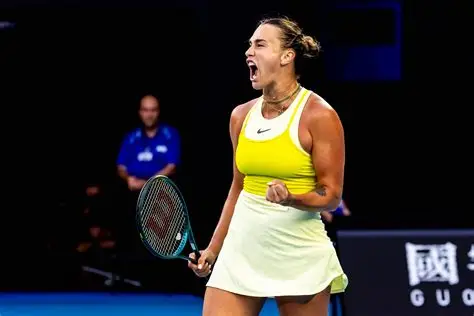
Aryna Sabalenka entered the quarter-finals as the top seed and world No. 1, but 19-year-old Victoria Mboko made her work for a 7-6(0), 6-4 victory.
The first set was much closer than the tie-break score suggests. Mboko created opportunities, hit nine aces and repeatedly matched Sabalenka’s pace. She could not convert any of her five break points, while Sabalenka stayed composed in the biggest moments and swept the tie-break 7-0.
The decisive break came in the second set when Mboko lost serve at 2-2. Sabalenka protected that advantage and closed the match in one hour and 49 minutes. Official WTA match statistics showed that Mboko struck nine aces but also made eight double faults and failed to convert her break opportunities.
Sabalenka’s reaction was almost as important as the score. She praised Mboko’s aggression, passion and refusal to give up and described her as a “future Grand Slam champion, for sure.” The praise was not empty. Mboko had climbed dramatically over the previous year and was already showing that she could compete with the strongest players on tour.
For Sabalenka, the quarter-final was the sort of match champions often need. She was not at her most dominant for every minute, but she prevented an ambitious younger opponent from turning pressure into control.
Mboko Left California With More Than a Quarter-Final
Losing to the No. 1 player rarely feels like a breakthrough, but Mboko’s run was one of the most important stories of the tournament.
She defeated Amanda Anisimova 6-4, 6-1 to reach the quarter-finals and then pushed Sabalenka harder than the final score suggested. Her serve was already a major weapon, and her willingness to attack from the baseline gave Sabalenka very little room to relax.
The Canadian teenager also showed why results against elite players matter differently for developing stars. A close defeat can reveal whether a player’s game survives at the highest pace. Mboko’s did.
The next few months strengthened that impression. By May, she was openly discussing a goal of winning a Grand Slam and had risen into the WTA top 10. Her Indian Wells performance no longer looked like a surprising isolated run; it looked like part of a rapid climb toward the top of the women’s game.
For readers interested in how elite athletes develop, The News Ink’s sports training technology guide explains how performance data, recovery work and technical coaching increasingly shape modern sport.
Sabalenka Then Took Control of the Women’s Draw
The quarter-final against Mboko proved to be Sabalenka’s toughest match before the final. In the semi-finals, she defeated Linda Noskova 6-3, 6-4 in one hour and 28 minutes.
Sabalenka struck 11 aces and converted three of 10 break points. Noskova had already ended qualifier Talia Gibson’s extraordinary run, but she could not consistently withstand Sabalenka’s first-strike tennis.
That victory sent Sabalenka into a final against Elena Rybakina, who had beaten Elina Svitolina 7-5, 6-4 in the other semi-final.
The championship became one of the defining matches of the 2026 tournament. Rybakina took the opening set 6-3 and broke early in the second. Sabalenka responded by increasing her intensity, taking the second set 6-3 and forcing a decider.
The final eventually came down to a third-set tie-break. Rybakina reached championship point, but Sabalenka survived it and won the last three points to take the title 3-6, 6-3, 7-6(6).
It was Sabalenka’s first Indian Wells championship after losing two previous finals. The victory turned the Mboko quarter-final from a difficult escape into an important early chapter of a title-winning run.
Swiatek’s Exit Opened the Bottom Half
Iga Swiatek had won Indian Wells twice and entered the quarter-finals as the second seed, but Elina Svitolina produced one of the tournament’s biggest upsets.
Svitolina won 6-2, 4-6, 6-4. She attacked Swiatek’s second serve, stayed patient through long exchanges and recovered after losing the second set.
Swiatek’s double faults contributed to the pressure, particularly in the opening set. She improved enough to force a decider, but Svitolina secured the crucial break in the third and protected it to reach her first Indian Wells semi-final in seven years.
The result was a reminder that even the best players can be pushed outside their preferred patterns. Swiatek remains one of the most complete competitors in women’s tennis, but Svitolina’s defence and experience prevented her from controlling enough of the match.
Svitolina’s run ended one match later when Rybakina defeated her 7-5, 6-4. Still, reaching the final four after defeating Swiatek gave the Ukrainian one of her strongest California results.
Rybakina Quietly Built a Final Run
Elena Rybakina received less attention than Sabalenka and Swiatek early in Indian Wells, but her route through the second week was remarkably controlled.
She defeated Jessica Pegula 6-1, 7-6(4) in the quarter-finals and then handled Svitolina in straight sets. Her serve remained the foundation of her game, but her return positioning and early ball striking also prevented opponents from extending enough rallies.
Rybakina’s run ensured she would move above Swiatek in the rankings after the tournament. More importantly, it created another major final against Sabalenka, continuing one of the strongest rivalries in women’s tennis.
The final showed how small the gap was. Rybakina was only one point from the title before Sabalenka turned the deciding tie-break around.
Indian Wells therefore ended with Rybakina as runner-up, but her performance confirmed that she remained one of the players most capable of disrupting Sabalenka’s power game.
Talia Gibson Produced the Surprise Run of the Women’s Event
Talia Gibson began the tournament as a qualifier ranked No. 112. She finished it as one of the biggest stories of the fortnight.
The 21-year-old Australian defeated Ann Li, Ekaterina Alexandrova, Clara Tauson and Jasmine Paolini before reaching the quarter-finals. Her win over Paolini was the first top-10 victory of her career.
Gibson became the first qualifier to reach the Indian Wells women’s quarter-finals since Lesia Tsurenko in 2015. It was also Gibson’s first WTA 1000 main draw.
Linda Noskova ended the run 6-2, 4-6, 6-2. Gibson fought back strongly in the second set, but Noskova regained control in the third and broke twice.
Even in defeat, the week changed Gibson’s trajectory. She entered with a goal of reaching the top 100 and left projected comfortably inside it.
The California tournament has a long history of giving emerging players a major stage before the wider public fully knows them. Gibson’s run fit that tradition perfectly.
Zverev Joined an Elite Masters 1000 Group
On the men’s side, Alexander Zverev’s 6-2, 6-3 quarter-final victory over Arthur Fils produced a significant historical milestone.
By reaching his first Indian Wells semi-final, Zverev became only the fifth man since the Masters 1000 series began in 1990 to reach the last four at all nine events in the category.
He joined Rafael Nadal, Novak Djokovic, Roger Federer and Andy Murray. Jannik Sinner later became the sixth man to complete the same set at Madrid in April.
That achievement reflected durability as much as peak level. The nine Masters 1000 tournaments are played across hard courts and clay, in different climates and at different stages of the season. Reaching the semi-finals at every one requires a game capable of travelling.
One factual correction from the original draft is important. At the time of Indian Wells, Zverev was already a seven-time Masters 1000 champion, not a five-time champion.
The original article also described him as a player without a Grand Slam title. That was accurate in March 2026, but it is no longer accurate. Zverev later defeated Flavio Cobolli at Roland Garros in June to win his first major championship.
That later breakthrough gives his California milestone additional context. His 2026 season eventually answered the largest question that had followed his career.
Sinner Ended Zverev’s Run With Authority
Zverev’s reward for reaching the semi-finals was a meeting with Jannik Sinner.
Sinner had needed only 66 minutes to beat Learner Tien 6-1, 6-2 in the quarter-finals. Against Zverev, he was nearly as efficient.
The Italian won 6-2, 6-4 in one hour and 23 minutes. He controlled the baseline, protected his serve and forced Zverev to play too many defensive points from uncomfortable positions.
The victory gave Sinner his first Indian Wells final after consecutive semi-final appearances in previous years.
At the time, Indian Wells was also the only hard-court Masters 1000 tournament Sinner had not won. He had already captured the other five trophies available on hard courts at that level.
By beating Zverev, he moved within one match of completing the collection.
Medvedev Stopped Alcaraz’s Perfect Start
The other men’s semi-final produced an even bigger surprise.
Carlos Alcaraz arrived at Indian Wells unbeaten in 2026 and carried a 16-0 record into his meeting with Daniil Medvedev. He had beaten Cameron Norrie 6-3, 6-4 in the quarter-finals and appeared capable of extending a perfect start to the season.
Medvedev ended the run 6-3, 7-6(3).
The Russian served accurately, redirected Alcaraz’s pace and prevented the world No. 1 from turning defence into attack as easily as he normally does.
Alcaraz created opportunities, but Medvedev stayed disciplined through the closing stages of the second set and dominated the tie-break.
The victory sent Medvedev into his 11th Masters 1000 final and denied fans a Sinner-Alcaraz championship match.
For Medvedev, the result reinforced a familiar point: his unusually deep return position and flat groundstrokes remain dangerous on hard courts when his timing is sharp.
Sinner Finished Indian Wells Without Dropping a Set
The men’s final became a battle of control rather than dramatic momentum swings.
Sinner defeated Medvedev 7-6(6), 7-6(4) to claim his first Indian Wells title. He did not lose a set during the tournament.
The first set reached a tie-break without either player breaking serve. Sinner produced the cleaner points late in the breaker and took it 8-6.
Medvedev then moved 4-0 ahead in the second-set tie-break and appeared ready to force a deciding set.
Sinner responded by winning seven consecutive points.
The comeback sealed his sixth Masters 1000 title at the time and completed his collection of all six hard-court Masters 1000 championships. Roger Federer and Novak Djokovic were the only previous men to achieve that particular set.
Indian Wells also became part of a much larger run. Sinner had won Paris at the end of 2025 and followed his California triumph by winning Miami, completing the Sunshine Double.
For readers interested in how quickly fortunes can change at major tournaments, The News Ink has also covered Emma Raducanu’s Indian Wells struggles, where the focus was on rebuilding consistency against elite opposition.
The Quarter-Finals Told Only Half the Story
The original article correctly identified the quarter-finals as a major turning point, but the completed tournament changed how several results should now be understood.
| Quarter-final development | What happened next |
|---|---|
| Sabalenka beat Mboko 7-6(0), 6-4 | Sabalenka defeated Noskova and Rybakina to win the women’s title |
| Svitolina upset Swiatek 6-2, 4-6, 6-4 | Rybakina defeated Svitolina in the semi-finals |
| Rybakina beat Pegula 6-1, 7-6(4) | Rybakina reached the final and held championship point |
| Zverev beat Fils 6-2, 6-3 | Sinner stopped Zverev in the semi-finals |
| Sinner beat Tien 6-1, 6-2 | Sinner beat Zverev and Medvedev to win the men’s title |
| Alcaraz beat Norrie 6-3, 6-4 | Medvedev ended Alcaraz’s 16-0 start to the season |
This is why updating live sports articles matters for both readers and search accuracy. A quarter-final report can remain useful, but someone arriving months later should not be left with previews of matches that have already finished.
What Indian Wells Revealed About the 2026 Season
Several broader conclusions emerged from Indian Wells.
First, Sabalenka showed that her position at the top of women’s tennis was not only about overpowering opponents. Her matches against Mboko and Rybakina demanded problem-solving under pressure.
Second, the next generation was arriving quickly. Mboko and Gibson left without trophies, but both produced results that changed expectations around them.
Third, Rybakina remained one of Sabalenka’s most dangerous rivals. Their championship match came down to only a handful of points.
Fourth, Sinner’s hard-court consistency reached another level. Winning Indian Wells without dropping a set and completing his hard-court Masters collection gave the week historical weight.
Finally, Zverev’s Masters milestone and later Roland Garros triumph showed how years of elite consistency can eventually lead to the one achievement that had previously remained missing.
Indian Wells 2026 Results at a Glance
Women’s Final
Aryna Sabalenka defeated Elena Rybakina 3-6, 6-3, 7-6(6).
Men’s Final
Jannik Sinner defeated Daniil Medvedev 7-6(6), 7-6(4).
Women’s Semi-Finals
Aryna Sabalenka defeated Linda Noskova 6-3, 6-4.
Elena Rybakina defeated Elina Svitolina 7-5, 6-4.
Men’s Semi-Finals
Jannik Sinner defeated Alexander Zverev 6-2, 6-4.
Daniil Medvedev defeated Carlos Alcaraz 6-3, 7-6(3).
Those results turned what looked like an open second week into two landmark championship runs.
The Bottom Line
Indian Wells began its quarter-final stage with Sabalenka trying to survive an ambitious teenager, Swiatek attempting to add another California title, Zverev chasing a Masters milestone and Alcaraz protecting a perfect start to the season.
By the end, the tournament belonged to Sabalenka and Sinner.
Sabalenka beat Mboko, Noskova and Rybakina to win her first Indian Wells trophy, saving a championship point in a dramatic final. Sinner beat Tien, Zverev and Medvedev without dropping a set, completing his collection of all six hard-court Masters 1000 titles.
The supporting stories were just as revealing. Mboko looked capable of becoming a future major champion. Gibson produced a breakthrough run from qualifying. Svitolina eliminated Swiatek. Zverev joined one of the most exclusive consistency clubs in Masters history, and Medvedev ended Alcaraz’s undefeated start to 2026.
Indian Wells 2026 ultimately became a tournament about established champions holding off challengers while new contenders forced their way into the conversation.
For more tennis and major sports coverage, follow The News Ink on X.