Israeli Strike Hits Beirut City Centre Hotel as Conflict Expands
An Israeli strike hit a hotel in central Beirut during the early hours of 8 March 2026, killing four people and injuring 10 as the expanding conflict between Israel, Hezbollah and Iran reached the Lebanese capital’s seafront centre.
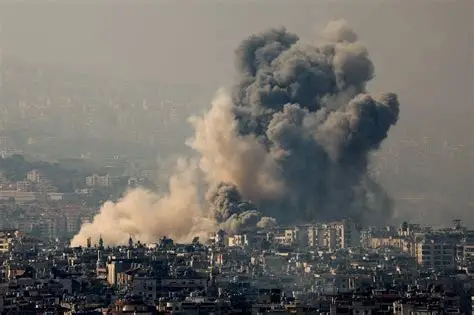
The attack struck a fourth-floor corner room at the Ramada Plaza hotel in Raouche, a district better known for its waterfront, restaurants and tourist accommodation than for Hezbollah’s military presence. Residents described a powerful explosion that shook nearby buildings, shattered windows and sent people in surrounding streets searching for cover.
Israel said the Israeli strike targeted senior members of Iran’s Islamic Revolutionary Guard Corps’ Quds Force who were meeting inside the hotel. Iran rejected that account and later told the United Nations that four Iranian diplomats had been assassinated.
Lebanon’s Health Ministry reported four deaths and 10 injuries. Israel, however, claimed five Quds Force figures were killed. The competing casualty figures and descriptions of the victims have not been independently reconciled.
What is clear is that the Israeli strike represented a significant geographical escalation. Reuters described it as the first attack inside Beirut’s city limits since the latest Israel-Hezbollah hostilities began. Previous bombardment had concentrated mainly on the capital’s southern suburbs, southern Lebanon and the Bekaa Valley.
The Israeli Strike That Changed Beirut’s Risk Map
The Israeli strike hit the Ramada Plaza in Raouche before dawn, damaging a limited section of the hotel rather than destroying the entire building.
A Reuters journalist at the scene reported that the windows of a corner suite on the fourth floor had been shattered and the surrounding facade blackened. Photographs showed emergency workers examining a concentrated impact area, with damaged vehicles and glass scattered nearby.
The precision of the visible damage suggested that the Israeli strike was directed at a particular room or suite. However, the blast wave travelled well beyond the hotel.
Three children sleeping in a building across the road were injured by the force of the explosion and required surgery, their father told Reuters. The family had already been displaced from another area earlier in the conflict and had moved to Raouche in search of safety.
That detail captured the wider danger facing civilians in Lebanon. Families leaving heavily bombarded areas had moved into hotels, schools, public buildings and apartments in parts of Beirut they considered safer. The Israeli strike showed that even those temporary refuges could fall within the conflict’s expanding target map.
The News Ink’s coverage of Middle East flight cancellations has documented how quickly the regional conflict disrupted places previously considered removed from direct combat. Raouche became another example of that shrinking distance between military operations and civilian life.
A Late-Night District Filled With Civilians
Raouche is one of Beirut’s most recognisable seafront neighbourhoods. Its hotels, cafes and restaurants overlook the Mediterranean and the famous Pigeon Rocks. The area normally attracts residents, tourists and business travellers.
The district was also busy during the Ramadan period. People remained outside later at night, gathering for meals and socialising after fasting hours. Displaced families had entered the area as attacks intensified elsewhere in Lebanon.
AP described Raouche as a major tourist district with no notable Hezbollah presence. The Ramada hotel was popular with travellers and had also accommodated people displaced by the fighting.
When the Israeli strike landed, the explosion was therefore not confined to an empty commercial district. Residents were sleeping nearby, workers remained on duty and late-night crowds were still present on surrounding streets.
Witnesses described people rushing toward windows and balconies before quickly seeking cover. Others went outside to locate relatives or inspect damage. Emergency responders sealed off the immediate area while ambulances transported the injured.
The Israeli strike brought the sensory reality of the war into central Beirut: a sudden blast, shaking buildings, shattered glass and the uncertainty of whether another attack would follow.
One Strike, Three Competing Accounts
The aftermath produced three distinct narratives.
| Source | Account of the Beirut hotel strike |
|---|---|
| Lebanon’s Health Ministry | Four people were killed and 10 injured |
| Israeli military | Five senior Quds Force-linked figures were killed |
| Iran’s UN representative | Four Iranian diplomats were killed |
Lebanese authorities provided the official casualty count but did not initially identify those killed. The Israeli military said the targets belonged to the Quds Force’s Lebanon and Palestine branches and were involved in intelligence, finance and support for Hezbollah and Hamas.
Israel later named five people it said had died. Its list included officials allegedly responsible for intelligence gathering, transferring Iranian funds to allied groups and coordinating activity involving Hezbollah and Hamas.
Two days after the Israeli strike, Iran’s UN ambassador, Amir Saeid Iravani, said four Iranian diplomats had been killed. Iranian officials described the incident as a deliberate assassination carried out on Lebanese territory. Reuters reported Iran’s statement but said the identities and precise circumstances were not detailed in the announcement.
The descriptions are not necessarily mutually exclusive because an official could hold diplomatic status while allegedly working with a security organisation. However, neither Israel’s classification nor Iran’s diplomatic description has been independently proven through publicly available evidence.
Responsible reporting should therefore keep the claims separate. It should not automatically call all those killed diplomats, nor should it present every Israeli allegation about Quds Force roles as an established fact.
Israel’s Account of the Targets
Israel said the Israeli strike was aimed at commanders operating through the Quds Force, the external operations branch of the IRGC.
An Israeli military source told Reuters that five senior members were targeted, including intelligence and finance personnel. The military alleged that the group supported attacks against Israel while working simultaneously for the IRGC and its Lebanese networks.
The Israeli military later identified the alleged targets as:
- Majid Hassini, described as a senior finance official responsible for transferring money to Hezbollah and Hamas;
- Ali Reza Bi-Azar, described as an intelligence chief in the Quds Force’s Lebanon branch;
- Ahmad Rasouli, described as an intelligence chief linked to its Palestine operations;
- Hossein Ahmadlou, described as an intelligence operative;
- a person identified as Abu Muhammad Ali, described as a Hezbollah representative.
These identities and roles came from the Israeli military and require attribution. Iran did not accept Israel’s account.
Israel argued that the men were using civilian accommodation to conceal military activity. The military said it would continue targeting Iranian personnel wherever it believed they were operating against Israel.
That policy raises difficult questions for Lebanon, where Iranian officials, Hezbollah members, civilians, displaced families and foreign visitors may occupy the same densely populated urban spaces.
Iran’s Diplomatic Assassination Claim
Iran presented the Israeli strike as an attack on its diplomatic personnel and an infringement of Lebanese sovereignty.
Its UN ambassador said four diplomats were killed at the Ramada hotel. Tehran accused Israel of deliberately assassinating officials who were protected by diplomatic status.
Iran did not publicly explain why the officials were meeting at the hotel, what positions they held or how its count of four related to Israel’s claim that five people were killed.
The diplomatic claim carries legal and political significance. Diplomats receive special protection under international law, while intelligence personnel operating under diplomatic cover can create more complex disputes. There is currently insufficient independent evidence to determine which description best reflects the status and activities of those killed.
The disagreement is part of the wider information war surrounding the conflict. Israel routinely describes Iranian and Hezbollah figures as operational commanders. Iran often presents its overseas personnel as advisers, officials or diplomats.
The Israeli strike therefore became not only a military event but a battle over the identity of the victims.
Why a Hotel Can Become a Military Target
Hotels are ordinarily civilian objects. They are used for accommodation, employment, meetings and temporary shelter. International humanitarian law prohibits attacks directed against civilian objects.
A civilian building can lose protection from direct attack if it is being used in a way that makes an effective contribution to military action and its destruction offers a definite military advantage. The presence of military commanders planning operations could potentially affect that legal status.
However, that does not end the legal assessment.
An attacking force must still verify the target, consider the expected civilian harm, comply with proportionality and take feasible precautions. The presence of displaced families, hotel employees, neighbouring residents and late-night pedestrians would be relevant to that analysis.
The International Committee of the Red Cross explains that attacks must distinguish between civilian and military objectives and must not be expected to cause civilian harm excessive in relation to the anticipated military advantage.
The relatively concentrated damage from the Israeli strike may indicate that a limited weapon was selected to reduce destruction. Nevertheless, the 10 injuries and harm to children across the street demonstrate that precision does not remove civilian risk.
Precision describes where a weapon is directed. It does not automatically establish that the intelligence was correct, the target lawful or the expected collateral harm proportionate.
The First Attack Inside Beirut Since Fighting Resumed
The location made the Israeli strike particularly significant. Israel had already conducted heavy attacks in Beirut’s southern suburbs, an area with a strong Hezbollah presence, but Raouche lies within the capital’s central coastal district.
Reuters reported that the hotel attack was the first inside Beirut city limits since Hezbollah and Israel resumed open hostilities days earlier.
A separate Israeli attack had previously hit the Comfort Hotel in Hazmieh, a predominantly Christian suburb east of central Beirut. The Ramada Plaza attack moved the campaign farther into the city’s commercial and tourist landscape.
For Beirut residents, that change mattered psychologically. People who had assumed strikes would remain concentrated in southern areas could no longer rely on geography as protection.
Hotels, embassies, offices and apartments in central districts now carried a new question: could Israel believe that Iranian or Hezbollah personnel were using them?
The News Ink’s report on missile debris falling into Doha homes highlighted a similar regional reality. Military actions directed at strategic targets can rapidly endanger civilians living or working nearby.
How Lebanon Was Pulled Into the Regional War
The confrontation in Lebanon was part of the wider war triggered by joint US and Israeli attacks on Iran on 28 February 2026.
Hezbollah entered the fighting days later by firing missiles and drones toward northern Israel. Israel responded with extensive attacks across southern and eastern Lebanon and Beirut’s southern suburbs.
The News Ink’s background report on why the US and Israel attacked Iran explains how the initial campaign expanded through Iranian retaliation and the activity of allied armed groups.
By 8 March, Lebanon’s Health Ministry said 394 people had been killed since the renewed fighting began, including at least 83 children and 42 women. The ministry did not provide a complete distinction between civilians and combatants. Israel said it had killed around 200 Hezbollah fighters, a figure Hezbollah had not independently confirmed.
The Israeli strike on the hotel occurred as fighting was already intensifying elsewhere. Heavy bombardment damaged homes across southern Lebanon, while two Israeli soldiers were killed during operations near the border.
The hotel attack was therefore part of a rapidly escalating campaign rather than an isolated operation.
Displaced Families Found Fewer Safe Places
The humanitarian consequences grew quickly. On 10 March, UNHCR reported that almost 700,000 people had been displaced across Lebanon within approximately one week.
More than 78,000 Syrians and 7,700 Lebanese citizens had crossed into Syria, while many others moved toward Beirut, northern districts, Mount Lebanon and overcrowded collective shelters.
The Israeli strike on the Ramada Plaza showed why movement did not always produce safety. Raouche had become a destination for some families fleeing attacks elsewhere. One displaced father living across from the hotel saw three of his children injured by the blast.
By late March, UNHCR said the number displaced inside and from Lebanon had passed one million. Families were sleeping in classrooms, public buildings, unfinished apartments, hotels and with relatives.
The scale of displacement increased pressure on a country already suffering from a long financial crisis, weakened public services and widespread poverty.
The News Ink has also examined how the Iran conflict disrupted regional travel and civilian movement. In Lebanon, displacement was not merely a transport problem. It became a repeated search for somewhere beyond the next target zone.
The Lebanese Government’s Growing Confrontation With Iran
The Israeli strike also occurred during a widening dispute over Iran’s role inside Lebanon.
Israel had warned Iranian representatives to leave the country and had struck an area near Iran’s embassy earlier in the week. Dozens of Iranian citizens reportedly departed, including relatives of embassy personnel and members of an Iranian school community.
Lebanese authorities announced that Revolutionary Guard personnel found operating inside Lebanon could be arrested or deported. Senior Hezbollah figures denied that Iranian forces were present on the ground.
The dispute placed Lebanon’s government in an extremely difficult position. Israel argued that Iranian operatives were directing or supporting attacks from Lebanese territory. Hezbollah rejected attempts to separate its military activity from its alliance with Iran. Lebanese officials faced demands to restore state authority while Israeli attacks continued inside the country.
The Israeli strike in Raouche intensified that challenge. If the people in the hotel were Quds Force commanders, the incident would support claims that Iranian security personnel were operating from civilian spaces in Beirut. If they were diplomats, the attack would reinforce accusations that Israel was striking protected officials in a sovereign country.
Without independent verification, both political interpretations remained in circulation.
The Effect on Beirut’s Tourism and Economy
The hotel attack carried another symbolic cost. Raouche is tied to Beirut’s tourism identity and the city’s attempt to preserve commercial life during repeated crises.
Lebanon had already endured banking collapse, currency devaluation, the 2020 Beirut port explosion, political paralysis and previous rounds of Israeli-Hezbollah conflict. Hotels and restaurants that survived those shocks were now operating amid displacement and airstrikes.
An Israeli strike on a recognised international hotel damages more than one building. It creates fear among employees, guests, investors and airlines. It increases insurance risk and discourages visitors. It also makes other hotels question whether hosting particular officials could expose entire properties to attack.
The wider war was already affecting energy prices and financial markets. The News Ink’s report on global market volatility explains how regional escalation pushed costs and uncertainty far beyond the immediate battlefield.
For Lebanon, those pressures arrived while the economy remained deeply fragile.
The Human Experience Beyond the Target List
Military statements reduce an operation to targets, ranks and strategic purpose. Residents experience it differently.
A hotel worker may know nothing about the people occupying one room. A family across the road has no control over who schedules a meeting nearby. A child sleeping in temporary accommodation cannot assess whether an adjacent building has become a military objective.
The Israeli strike affected people who were not part of the alleged meeting. Cars were damaged, surrounding windows broke and residents were injured in their beds.
That does not prove the attack was unlawful. It does demonstrate why urban targeting carries unavoidable risks, especially when armed or intelligence figures operate among civilians.
The same pattern has appeared throughout the regional conflict. The News Ink documented residents sheltering from explosions in Dubai and families struggling through strikes in Tehran.
In each case, the distance between military strategy and civilian survival became dangerously small.
The Questions That Remain Unanswered
Several important questions were unresolved after the Israeli strike:
- Why were the Iranian officials meeting at the Ramada Plaza?
- Were they serving as diplomats, Quds Force commanders or both?
- Why did Israel report five deaths while Lebanon and Iran reported four?
- What intelligence did Israel use to confirm the identities of those present?
- Was the presence of displaced families and nearby Ramadan crowds included in the civilian-harm assessment?
- What weapon was used, and from which platform was it launched?
- Did Lebanese authorities know that the meeting was taking place?
- Were any hotel employees or guests warned before the attack?
- Could the targets have been detained or confronted through another method?
- Will evidence supporting either side’s claims be made public?
Until those questions are answered, definitive language should be avoided.
The strongest verified account is that Israel attacked a particular hotel room, Lebanon reported four deaths and 10 injuries, Israel said it targeted five Quds Force figures, and Iran said four diplomats had been killed.
Why the Beirut Hotel Strike Matters
The Israeli strike mattered for three reasons.
First, it widened the geographical scope of the conflict into central Beirut.
Second, it demonstrated Israel’s willingness to target alleged Iranian personnel inside civilian commercial accommodation.
Third, it reduced the number of places displaced people could reasonably consider safe.
The incident also showed how quickly urban warfare produces competing narratives. Israel described a precise operation against military and intelligence figures. Iran described the assassination of diplomats. Lebanon documented deaths, injuries and physical damage without resolving the victims’ roles.
All three narratives shaped public understanding, but none alone provided the complete picture.
The Israeli strike should therefore be understood as both a targeted operation and a warning about escalation. A weapon may hit one room, yet its political and humanitarian effects can spread across an entire city.
The Bottom Line
An Israeli strike hit the Ramada Plaza hotel in Beirut’s Raouche district during the early hours of 8 March 2026, killing four people and injuring 10 according to Lebanon’s Health Ministry.
Israel said it targeted five senior figures linked to the Quds Force and accused them of supporting Hezbollah and Hamas through intelligence, finance and operational coordination. Iran rejected that account and later told the United Nations that four diplomats were killed.
Those claims remain disputed. The publicly confirmed evidence shows concentrated damage to a fourth-floor corner room, injuries among people in nearby buildings and a significant expansion of Israel’s campaign into central Beirut.
The Israeli strike also exposed the vulnerability of displaced families. Some people staying in Raouche had already fled attacks elsewhere, only to find the conflict following them into a hotel and tourist district.
With almost 700,000 people displaced across Lebanon during the first week of renewed fighting, the definition of a safe area was disappearing rapidly.
Whether the dead were commanders, diplomats or officials serving in overlapping roles, the attack marked a dangerous escalation. It brought the war into the centre of Beirut and reinforced a grim reality for civilians: when military and political actors operate inside densely populated cities, one targeted room can place an entire neighbourhood at risk.
For more Lebanon, Iran and Middle East coverage, readers can follow The News Ink on X.