Iran Conflict: Alarming 2026 War Warning After US-Israel Strikes
US and Israel attacked Iran on 28 February 2026, but the Iran conflict can no longer be understood as a short strike campaign or a five-day military exchange. The Iran conflict has become a regional war shaped by nuclear fears, leadership assassinations, missile retaliation, Gulf base attacks, civilian casualties, maritime disruption and a failed attempt at diplomacy.
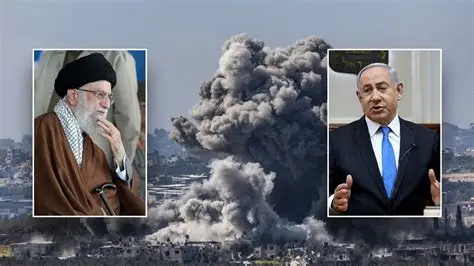
The opening strikes killed Iran’s Supreme Leader, Ayatollah Ali Khamenei, and hit military, missile, drone, naval and nuclear-linked targets across Iran. Washington and Israel argued that the operation was designed to stop Iran from moving closer to a nuclear weapon, weaken its missile and drone network, disrupt support for allied armed groups and remove senior leadership figures they saw as central to the threat. Iran called the strikes illegal and unprovoked, then responded with missiles and drones against Israel, U.S. facilities and Gulf states hosting American forces.
That is why the original question still matters. Why US and Israel attacked Iran, and how long could the conflict last? The first answer is military and political: Washington and Jerusalem said they were acting before Iran’s nuclear and missile capabilities became harder to stop. The second answer is more dangerous: the Iran conflict has already lasted far longer than early officials suggested, and it may continue in cycles of attack, pause, negotiation and renewed escalation.
The latest fighting around the Strait of Hormuz shows that the Iran conflict has entered a new phase. The issue is no longer only Iran’s leadership or nuclear infrastructure. It is also control of one of the world’s most important oil and gas routes.
For readers tracking the economic consequences, The News Ink’s analysis of global markets during the Iran war explains how the Iran conflict moved quickly into oil prices, LNG flows, inflation and central-bank pressure.
The Iran conflict and the stated reasons behind the strikes
US and Israel attacked Iran because both governments claimed Tehran was approaching a point where its nuclear, missile and drone capabilities could no longer be contained by sanctions, covert action or diplomacy alone. Israel described the operation as pre-emptive. The United States argued that Iran’s leadership and military networks had posed a long-running threat to Americans, Israelis and regional allies.
The nuclear issue was the central public justification. Trump later said Iran would have had a nuclear weapon within two weeks if the U.S. had not acted, although Reuters reported that sources said this claim was not supported by U.S. intelligence assessments. That gap is important. A government may believe a nuclear programme is dangerous without every political claim about timing being independently proven.
The missile issue was also central. Iran had built one of the region’s largest ballistic missile and drone arsenals and had used allied groups across the Middle East to pressure Israel, the United States and Gulf partners. U.S. and Israeli officials said the campaign targeted missile sites, drone facilities, command centres, naval assets and senior IRGC figures.
That does not settle the legality of the strikes. Iran and many critics described the campaign as an unlawful attack on a sovereign state. Supporters framed it as preventive self-defence against a threat they believed was becoming irreversible. The legal argument will remain disputed, but the strategic motive is clear: US and Israel attacked Iran to degrade capabilities they believed were too dangerous to leave intact.
Khamenei’s death changed the Iran conflict immediately
The death of Ali Khamenei changed the conflict from a military operation into a regime-level crisis. Khamenei had been Iran’s supreme leader since 1989. He controlled the armed forces, shaped foreign policy, influenced the judiciary and served as the highest authority in the Islamic Republic.
US and Israel attacked Iran with a campaign that killed the man at the centre of that system. That created shock inside Iran, but it did not automatically collapse the state. The Islamic Republic still had the Revolutionary Guard, intelligence bodies, clerical institutions, security forces and state media. It also had loyalists who viewed Khamenei’s death as martyrdom and demanded revenge.
The News Ink’s report on shock and relief in Iran explains why reactions inside the country were divided. Some Iranians saw the death as the end of a ruler they blamed for repression and isolation. Others saw it as foreign aggression against Iran itself. Many people simply feared what would come next.
This division matters because war aims become harder when the target is not only infrastructure but political authority. Killing a leader can weaken a system, but it can also create martyrdom, revenge pressure and a more unpredictable succession.
The Iran conflict expanded beyond Iran and Israel
The war widened quickly because Iran did not restrict its retaliation to Israeli territory. It fired missiles and drones toward U.S.-linked facilities and allied states across the Gulf. Bahrain, Kuwait, Qatar, the UAE, Jordan and Oman all became part of the security map because they host or support American military operations in different ways.
This was not accidental. Iran wanted to show that U.S. bases in the region were vulnerable. It also wanted Gulf governments to feel the cost of hosting American forces. That strategy widened the danger because military sites often sit near airports, ports, residential areas and commercial districts.
The News Ink’s coverage of Iran retaliatory strikes across Dubai and Gulf bases shows how quickly the war reached civilian and commercial spaces. Damage to airports, hotels, ports or shipping routes is not only a local problem. It affects tourism, insurance, aviation, trade and global confidence.
US and Israel attacked Iran to reduce Iran’s ability to threaten the region. Iran’s response was to prove that the region could not stay insulated from the cost of that attack.
Civilian casualties became the moral centre of the war
Civilian casualties have become one of the defining issues of the Iran conflict. Iran has reported heavy losses from the opening strikes and subsequent attacks, while independent and semi-independent monitors have offered different figures. A UK government country bulletin citing a U.S.-registered human rights monitor said at least 1,369 civilian deaths, including 207 children, had been confirmed in Iran between 28 February and 18 March, with hundreds more deaths still under review.
The school strike in Minab became the most painful case. Early Iranian reports said a girls’ school had been hit. Later Reuters reporting said U.S. military investigators believed U.S. forces were likely responsible, although a final public Pentagon conclusion had not been released at that time. The attack killed scores of children and pushed the war into a deeper legal and moral crisis.
The News Ink’s detailed report on the Iranian school strike explains why that incident changed the accountability debate. Even if a military facility was nearby, a functioning school is a civilian site. The attacking force must verify targets, reduce civilian risk and explain mistakes when civilians are killed.
This is where the explanation for why US and Israel attacked Iran becomes less persuasive to many observers. A state may claim it is preventing a greater threat, but civilian deaths can weaken the political and moral case for continuing the campaign.
The Strait of Hormuz turned the Iran conflict global
The Strait of Hormuz has become one of the main battlegrounds because it carries about a fifth of global oil and liquefied natural gas shipments. When Iran threatens the waterway, attacks ships, or claims the right to manage traffic, the world economy reacts, making the Iran conflict a global economic risk.
The latest July exchanges show why the Iran conflict could last. Iran says it has the right to control or regulate traffic through the strait. The United States rejects that claim and says freedom of navigation must be protected. U.S. forces have struck Iranian air defences, coastal radar sites, missile and drone equipment, small boats and naval assets. Iran has retaliated against U.S. military facilities across the Gulf.
That transforms the Iran conflict into a maritime and energy crisis. Oil prices rise. Shipping companies pause or reroute vessels. Insurance costs climb. Gulf states fear more attacks. The United States cannot easily walk away because the strait is too important to global energy markets.
This is why US and Israel attacked Iran may become the opening line of a much longer story. The first phase focused on leadership, nuclear and missile sites. The later phase is increasingly about whether Iran can use geography to force concessions.
The failed ceasefire shows why the Iran conflict may continue
There was an attempt to slow the Iran conflict. An interim U.S.-Iran memorandum of understanding was meant to create a 60-day window for talks on a more permanent settlement and to reopen the Strait of Hormuz. Pakistan, Qatar, Egypt and other mediators were involved in efforts to keep negotiations alive.
That effort has weakened badly. Trump said on July 8 that the interim accord was “over” after talks failed to make progress and after new attacks on tankers and U.S. targets. Reuters reported that the United States revoked a licence that had allowed Iranian crude and petrochemical sales under the temporary arrangement.
The Iran conflict breakdown matters because it shows that neither side has found a face-saving exit. Iran wants control, revenue and recognition of its position around the strait. The United States wants freedom of navigation, limits on Iran’s nuclear programme and protection of its bases and allies. Israel wants Iran’s strategic threat reduced further. Gulf states want the war to stop spreading into their territory.
Those goals overlap only slightly. That is why the Iran conflict may not end with one agreement.
How long could the Iran conflict last?
The conflict has already lasted longer than the early “fifth day” framing. It began on 28 February and was still producing major exchanges in July. That does not mean every day has had the same intensity. The war has moved through phases: initial shock, retaliation, diplomatic pause, renewed maritime confrontation and fresh U.S.-Iran exchanges.
For the Iran conflict, the most realistic answer is that the conflict could last months more in a stop-start pattern unless one side accepts a limited deal. A full battlefield victory is unlikely because none of the core actors can easily achieve all their goals. Iran cannot force the United States out of the Gulf quickly. The United States cannot remove Iran’s geography. Israel cannot eliminate every Iranian missile, drone, proxy or nuclear-related concern through airstrikes alone.
There are three broad scenarios:
| Scenario | What it would look like | Likely impact |
|---|---|---|
| Limited de-escalation | A new deal reopens Hormuz, pauses major strikes and restarts nuclear talks | Energy prices ease, but the conflict remains unresolved |
| Managed attrition | Strikes, ship attacks and base alerts continue at intervals | The Iran conflict drags on for months and keeps markets nervous |
| Wider regional war | A major civilian casualty incident or deadly hit on U.S. forces triggers larger retaliation | Gulf states, Lebanon, Iraq, Syria and shipping lanes face deeper instability |
The middle scenario currently looks the most plausible because both sides still have incentives to pressure each other without accepting the cost of an all-out regional war. But the danger is that one mistake can push the conflict into the third scenario.
Why neither side can easily stop
US and Israel attacked Iran to change the Iran conflict and Tehran’s strategic calculation. If they stop too soon without a clear agreement, critics in both countries will argue that Iran absorbed the strikes and kept its leverage. If they continue too long, civilian deaths, energy prices, military risk and diplomatic backlash grow.
Iran faces a similar trap. If it stops retaliation, hardliners may say it failed to avenge Khamenei and failed to defend sovereignty. If it escalates too far, it risks heavier U.S. strikes, deeper economic isolation and broader regional retaliation.
Gulf states are trapped in a different way. They rely on U.S. protection but do not want to become targets. They need open shipping routes but cannot control the U.S.-Iran confrontation. They want diplomacy but also have to protect airports, ports, energy facilities and civilians.
This is why wars that begin with decisive language often become messy and prolonged. Every actor wants to look strong. Every concession can look like weakness. Every retaliation creates pressure for another retaliation.
Weapons and endurance may shape the next Iran conflict phase
The Iran conflict is also a test of endurance. Air-defence interceptors, drones, missiles, precision munitions, naval assets and spare parts all matter. The side that can sustain attacks and defence longer may gain leverage, even without achieving a clear victory.
The News Ink’s analysis of weapons stockpiles in the Iran conflict is relevant because modern wars can be limited by production capacity as much as political will. Missile defence is expensive. Drone attacks can be cheaper. Precision strikes require intelligence and munitions. Naval protection around Hormuz requires constant presence.
If stockpiles in the Iran conflict become strained, leaders may be pushed toward negotiation. If they believe their opponent is running low first, they may prolong the fight.
That makes the Iran conflict timeline hard to predict. The war may last not because leaders want endless conflict, but because each believes time may improve its bargaining position.
The nuclear issue remains unresolved
In the Iran conflict, the nuclear issue is still the central reason the war cannot easily end. Washington and Israel said they acted to stop Iran from getting closer to nuclear weapons capability. Iran says its nuclear programme is peaceful and that the attacks prove it cannot trust Western promises.
If inspectors cannot verify the status of Iran’s programme, the United States and Israel may argue that further pressure is needed. If Iran believes negotiations only invite more attacks, it may reduce cooperation and harden its position. That dynamic is dangerous because uncertainty becomes a reason for more military action.
A durable settlement would likely need limits on enrichment, inspection access, missile restraints, sanctions relief, rules for Hormuz traffic and guarantees against renewed strikes. That is a very large package. It is hard to negotiate during active warfare and leadership transition.
That is why the answer to how long the Iran conflict could last depends heavily on whether the nuclear file becomes diplomatic again or remains military.
The final judgment
US and Israel attacked Iran because they believed Iran’s nuclear, missile, drone and leadership networks had reached a danger point that could no longer be managed through pressure alone. Iran saw the attack as illegal aggression and responded by widening the war across Israel, U.S. bases, Gulf states and maritime routes.
The Iran conflict has already moved far beyond the original fifth-day question. Khamenei is dead. Iran’s succession remains politically sensitive. Civilian casualties have damaged the moral claims of the campaign. The Minab school strike remains a major accountability issue. Gulf states have been pulled into the line of fire. The Strait of Hormuz has turned the war into a global energy risk.
How long could it last? For the Iran conflict, the safest answer is that it can continue for months in cycles unless diplomacy produces a limited settlement. A quick end is unlikely while Iran, the United States and Israel all believe they still need leverage. A total victory is also unlikely because the conflict is now spread across politics, geography, oil routes, nuclear fears and regional alliances.
The Iran conflict began with the question of why US and Israel attacked Iran. It may end only when all sides decide the cost of continuing is greater than the cost of compromise.
For more world politics and conflict analysis from The News Ink, follow The News Ink on X.