Dubai Missile Explosions: Why the Alarming 2026 Gulf Attack Still Matters
Dubai missile explosions turned one of the world’s most carefully managed cities into a symbol of how quickly the Iran conflict could reach places once seen as insulated from regional war. The blasts heard over Dubai during Iranian missile and drone attacks were not only moments of fear for residents. They were a warning that air defences, tourism hubs, airports, hotels and shipping routes had all become part of the same security crisis.
The original article focused on immediate panic: residents rushing for shelter, sirens sounding, smoke near Palm Jumeirah and reports of injuries after a fire broke out near a luxury hotel. That remains the human centre of the story. But the updated article needs a wider frame. Dubai missile explosions were not an isolated scare. They were part of a chain of Iranian retaliatory attacks after U.S. and Israeli strikes on Iran, followed by later rounds of interceptions, airspace disruption and continuing warnings across Gulf aviation routes.
Reuters reported on February 28 that Iran fired missiles at several Gulf cities, including in the United Arab Emirates, after U.S. and Israeli strikes on Iranian territory. The agency reported one death in Abu Dhabi, fires in Dubai, residents taking shelter and air defence activity over several Gulf states. Euronews later reported that booms from intercepts were again heard above Dubai on May 4, when UAE authorities warned residents to seek shelter and said Iranian missiles and drones had targeted civilian sites and facilities.
That is why Dubai missile explosions still matter months later. They exposed the vulnerability of a city built around confidence: confidence in safety, aviation, tourism, trade, luxury hospitality and global connectivity. Even when air defences succeed, falling debris, alerts, airport disruption and fear can change how residents and visitors experience the city.
For The News Ink readers following the wider conflict, this story connects directly with our coverage of how the U.S. and Israel struck Iran, how Iran later claimed attacks on a U.S. base in Bahrain, and why the Strait of Hormuz remains the region’s most dangerous pressure point.
What happened during the Dubai missile explosions
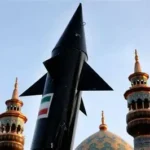
Dubai missile explosions were heard as Iran launched missiles and drones across several Gulf states in retaliation for U.S. and Israeli attacks on Iran. The blasts were widely understood to be connected mainly to air defence interceptions, though some fires and damage were reported after debris fell or threats reached sensitive areas.
Reuters described five large blasts in Dubai late in the afternoon on February 28. It also reported a fire near a hotel on Dubai’s Palm Islands and said missile trails were visible over several cities. Residents sheltered in windowless rooms, bathrooms and closets, a scene almost unimaginable in a city whose modern identity is tied to safety, order and luxury.
Other reports focused on Palm Jumeirah. The Guardian reported that a fire broke out near a major hotel during the Iranian attack, with social media videos showing flames and smoke. Early reporting differed on whether the fire was caused by a direct impact, intercepted debris or drone debris, which is why careful wording matters. The safest conclusion is that the fire happened during the Iranian attack and was linked in reporting to the missile and drone escalation, but the exact technical cause should not be overstated unless confirmed by UAE authorities.
Dubai missile explosions also affected daily life beyond the immediate blast sites. Delivery delays, panic-buying concerns and shelter alerts showed that even a short attack can disrupt a city that depends on constant movement. Dubai’s strength is its speed: airports, ports, hotels, roads and delivery networks operate almost continuously. A missile alert interrupts that rhythm immediately.
Why Dubai became part of the conflict
Dubai missile explosions were shocking partly because the city is not normally imagined as a battlefield. Dubai is a commercial hub, tourism destination and aviation centre. It is associated with airports, skyscrapers, beaches, business districts and global events rather than missile alerts.
But the UAE sits in a region where geography matters. It is close to Iran, near the Strait of Hormuz, linked to Western security structures, and deeply connected to global energy and shipping routes. Even if Dubai is not the primary military target, the UAE can still be affected by missiles, drones, debris, airspace closures and wider escalation.
Iran’s retaliation after U.S.-Israeli strikes was designed to send a message across the Gulf. Kuwait, Qatar, Bahrain, Jordan and the UAE all reported interceptions or alerts in different phases of the conflict. Some of those countries host U.S. military facilities. Others sit along strategic routes. All are part of the regional system Iran wanted to pressure.
That is why Dubai missile explosions were not only about Dubai. They were part of Iran’s attempt to show that its enemies and their partners could not keep the conflict safely inside Iran, Israel or military zones. Gulf cities that had built reputations for stability suddenly had to manage war-risk messaging, air defence activity and civilian anxiety.
What UAE authorities had to manage after Dubai missile explosions
UAE authorities sought to project control. After the attacks, officials said emergency teams responded, air defence systems intercepted threats, and essential services remained stable. Reuters reported that the UAE government urged the public not to panic-buy and said food supplies and strategic reserves were strong. Euronews later reported that UAE authorities sent mobile phone alerts telling residents to seek secure buildings during missile threats, then issued follow-up messages when conditions were safe.
That sequence matters. A modern Gulf city does not rely only on interceptors. It also needs public communication. People need to know whether to stay indoors, avoid windows, stop driving, delay flights or continue normal activity. Confusing alerts can spread panic, but silence can be worse.
Dubai missile explosions tested that system. Residents heard booms before many understood exactly what was happening. Videos moved faster than official statements. Rumours travelled across WhatsApp, X, TikTok and Telegram. In those moments, a clear government message becomes part of civil defence.
The UAE also had to balance reassurance with honesty. If officials sound too calm, residents may think risks are being hidden. If officials sound too alarmed, panic spreads. The challenge is to say what is known, what is still being assessed, and what people should do next.
The Palm Jumeirah fire showed why Dubai missile explosions debris still matters
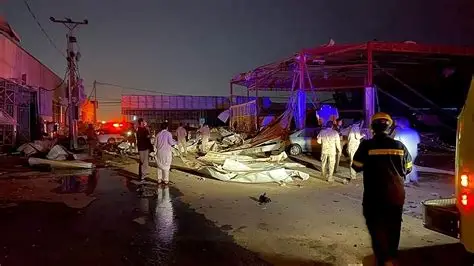
The most visible Dubai image involved fire and smoke near Palm Jumeirah. The original article described a blaze near the entrance of Fairmont The Palm and said four people were injured. Several international and social-video reports linked the fire to Iranian missile or drone debris. Reuters more generally reported fires in Dubai’s Palm Islands during the attack, while the Guardian reported a fire near a major hotel and early reports of injuries.
The exact cause and injury details should be phrased carefully. In fast-moving missile attacks, early descriptions can shift. A “missile hit” may later become “debris from an interception.” A hotel name may be repeated before official confirmation. A fire near a hotel may be described as damage to the hotel itself even if the main structure remains intact.
That does not mean the incident was minor. Dubai missile explosions were frightening because even successful interceptions can create danger on the ground. Falling fragments can break glass, start fires, damage vehicles or injure people. A missile does not need to land intact to disrupt a city.
The Palm Jumeirah incident therefore became a symbol of a larger point: air defence can reduce damage, but it cannot make a city feel untouched.
Abu Dhabi showed the civilian risk
Dubai missile explosions drew global attention because of the city’s profile, but Abu Dhabi showed the human risk more sharply. Reuters reported that UAE state media said one person was killed in Abu Dhabi during the February 28 attacks. Witnesses reported loud booms across the capital, smoke offshore and alerts telling people to shelter in secure buildings away from windows.
That fatality matters for how the Dubai story should be written. The UAE was not simply experiencing distant interceptions in the sky. The attacks and falling debris created real danger. Regional air defence systems may stop many missiles and drones, but debris still has to fall somewhere.
This is why officials across Gulf states warned residents not to touch fragments. Missile and drone debris can contain explosive material, fuel residue, sharp metal and hazardous components. Curious residents filming or collecting fragments can put themselves at risk and interfere with emergency teams.
Dubai missile explosions should therefore be covered as both a security story and a public-safety story. The most useful reporting does not only describe the blasts. It tells people why shelter alerts matter, why debris should be avoided, and why official emergency instructions need to be followed.
Airspace disruption became a major consequence of Dubai missile explosions
Dubai missile explosions also raised immediate aviation concerns. The UAE is one of the world’s most important aviation hubs, with Dubai International Airport and Abu Dhabi’s Zayed International Airport connecting passengers across Europe, Asia, Africa and the Americas. Any missile or drone activity near UAE airspace can trigger delays, diversions and temporary restrictions.
Safe Airspace, which tracks flight risks, says UAE airspace closed and reopened several times between February and June 2026 during the Iran conflict, with routing restrictions and managed corridors remaining in place. It also noted the continuing risk from missile and drone activity linked to the Iran conflict and reported GPS spoofing across the Emirates flight information region.
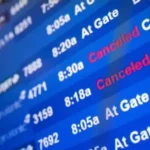
That makes Dubai missile explosions a travel story as well as a military one. Travellers may see delayed departures, rerouted flights, longer journeys or sudden schedule changes even if no airport terminal is directly hit. Airlines must account for missile trajectories, air defence activity, NOTAMs, insurance rules and crew safety.
For readers planning travel, The News Ink’s smart travel coverage is relevant because geopolitical risk can affect even premium, highly organised destinations. A hotel booking may look normal, but airspace alerts can still change the journey.
Why the Strait of Hormuz keeps pulling Dubai into danger
The Strait of Hormuz is the reason Dubai missile explosions cannot be understood only as a city incident. The strait is one of the world’s most important energy routes, and the wider Iran war has repeatedly centred on whether ships can pass safely.
Reuters and AP have reported that the conflict has repeatedly disrupted negotiations around the strait and raised fears about oil and LNG flows. AP said about a fifth of traded oil and natural gas passed through the waterway before the war. Iran has used threats around the strait as leverage, while the United States has launched strikes it says are aimed at weakening Iran’s ability to threaten civilian shipping.
Dubai is not on the strait itself, but its economy depends on the same Gulf confidence. Shipping, aviation, tourism, finance and real estate all assume that the region remains open and connected. If Hormuz becomes unsafe, Dubai feels the pressure through markets, routes, insurance and investor sentiment.
That is why Dubai missile explosions matter beyond the smoke and sirens. They show how a maritime conflict can spill into urban life. A fight over shipping lanes can become a missile alert for families in apartments, tourists in hotels and passengers at airports.
How residents experienced the blasts
The human side of Dubai missile explosions was fear and confusion. Residents described children crying, people moving away from windows, and families trying to decide whether to shelter, pack bags or keep watching official alerts. Some people continued normal routines in quieter districts, while others heard repeated blasts and saw trails in the sky.
That unevenness is common in large-city attacks. One neighbourhood may hear a deafening explosion while another sees only social media posts. One family may be near falling debris while another only receives an alert. This can make public reaction complicated: some people feel panic, others minimise the event, and misinformation fills the gap.
Dubai’s expatriate population adds another layer. Many residents are foreign workers, professionals, business owners or tourists who may not be familiar with regional military alerts. They may not know which official channels to trust or what a shelter instruction means in a high-rise building.
This is why Dubai missile explosions should push authorities, employers and hotels to improve emergency communication. People need simple guidance in multiple languages: move away from windows, enter an interior room, avoid balconies, do not film from exposed areas, do not touch debris, and wait for official all-clear messages.
What Dubai missile explosions mean for the city’s image
Dubai missile explosions struck at one of the city’s most valuable assets: its image of safety. Dubai’s global brand depends on predictability. Visitors expect secure hotels, smooth airports, reliable roads and a controlled environment. Investors expect stability. Airlines expect a dependable hub.
A single attack does not erase that image. Dubai has strong emergency systems, modern infrastructure and major state capacity. But the psychological shift is real. Once residents and tourists hear air defence booms over the city, the idea of total insulation is gone.
This does not mean Dubai suddenly becomes unsafe in the same way as active war zones. It means Dubai is now visibly exposed to regional spillover. That is a different kind of risk, but it still matters.
The tourism sector will likely stress resilience and rapid recovery. Hotels will keep operating. Airlines will adjust routes. Authorities will highlight readiness. But guests and companies may ask more questions about insurance, evacuation plans, airspace alerts and contingency procedures.
How Dubai missile explosions connect to oil prices and global markets
Dubai missile explosions also have economic meaning. When missiles fly over Gulf cities, markets look at energy, shipping and insurance risk. Even if Dubai itself is not an oil-export hub like some neighbours, the UAE is part of the wider Gulf economic system. Abu Dhabi is an energy power, Dubai is a financial and trade hub, and both depend on regional stability.
Conflict around Iran and the Strait of Hormuz can raise oil prices, push up freight costs and increase inflation pressure. It can also affect airline fuel planning, tourism confidence and commercial insurance premiums.
That is why The News Ink’s coverage of oil prices and the wider economy connects naturally to this story. A missile intercepted over Dubai may become a market signal in London, Mumbai, Singapore or New York. Investors do not only ask what was hit. They ask what could be hit next.
Dubai missile explosions therefore belong in world news, travel, energy and economics at the same time.
The later May and July context for Dubai missile explosions
The February attacks were not the end of the risk. Euronews reported on May 4 that Dubai residents again took shelter after booms from air defence intercepts were heard above the city, while UAE authorities said Iranian missile and drone attacks had targeted civilian sites and facilities. The report said three Indian nationals were injured and that residents received mobile alerts warning of potential missile threats.
By July, AP reported another round of heavy U.S.-Iran violence around the Strait of Hormuz, with Iran attacking several Gulf Arab states hosting U.S. forces. In that most recent round, AP said sirens sounded in the UAE, but the government said missiles did not cross into UAE borders and the country had not been targeted in that phase.
That distinction is important. Dubai missile explosions were a major February and May experience, but the latest July escalation did not mean Dubai was again directly struck. The risk remains regional, but each incident must be reported according to what actually happened on that date.
This is the difference between good updating and fear-driven rewriting. The story should explain the continuing threat without implying that every new Gulf missile alert means Dubai has been hit again.
What residents and visitors should know after Dubai missile explosions
During missile or drone alerts, residents and visitors should follow official UAE instructions and avoid relying on rumours. In general, people should move inside the nearest secure building, stay away from windows and balconies, avoid filming from exposed areas, and wait for official all-clear messages.
Hotel guests should follow staff instructions and identify interior corridors or protected areas away from glass. Drivers should avoid stopping on exposed roads to film interceptions. Parents should prepare children calmly rather than letting them follow dramatic social media clips in real time. No one should touch debris.
Dubai missile explosions also show why travellers should monitor airline messages, airport updates and official government alerts. During regional escalation, flights can be delayed or rerouted quickly.
The UAE’s emergency response capacity is strong, but individual behaviour still matters. Air defence systems protect the sky. Public discipline reduces harm on the ground.
The careful takeaway
Dubai missile explosions were a turning point in how the Gulf experienced the 2026 Iran conflict. The February attacks brought blasts, smoke, shelter alerts and fear to a city normally associated with security and luxury. Later warnings and intercepts showed that the risk did not vanish after one day.
The most accurate updated framing is cautious but serious. Dubai was affected by Iranian missile and drone escalation, with blasts heard over the city and fires reported during the February attacks. Abu Dhabi recorded a fatality. Later incidents brought renewed shelter alerts and injuries. The latest July round kept the Gulf on edge, though AP reported that missiles did not cross into UAE borders during that phase.
Dubai missile explosions matter because they show how regional war can reach global cities without turning them into conventional battlefields. Interceptions, debris, airspace restrictions and fear are enough to disrupt daily life.
For Dubai, the lesson is resilience. For the Gulf, it is de-escalation. For the rest of the world, it is a reminder that conflicts around Iran, U.S. bases and the Strait of Hormuz can shake far more than military targets.
For more world news, conflict analysis and public-interest reporting, follow The News Ink on Medium.