Intercepted Missile Falls in Doha: The Alarming Civilian Risk Behind Qatar’s Air Defence Success
Intercepted missile falls in Doha is the phrase now defining one of the most dangerous realities of the Gulf crisis: even when air defence systems stop a missile from reaching its target, civilians can still be injured by falling debris.
The incident involved debris from intercepted Iranian missiles falling into a residential area of Qatar’s capital region. Qatar’s Ministry of Interior, through the Qatar News Agency, said security authorities responded after fragments fell on a citizen’s home in the Muraikh area. Four people suffered moderate injuries, including a Qatari child, and emergency teams transferred the injured for medical care.
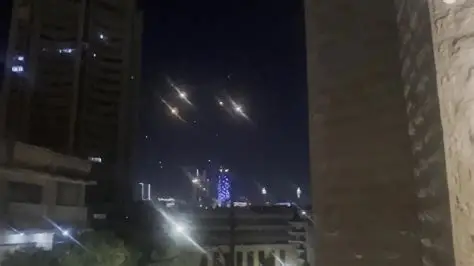
Mobile-phone footage circulating online appeared to show an object dropping rapidly from the sky before a loud explosion, dust and smoke followed. Residents could be heard reacting in shock. As with all conflict footage, the video should be treated carefully unless independently verified, but the official account confirms the core risk: debris from intercepted missiles can still hit civilian areas.
That is why intercepted missile falls in Doha is more than a dramatic headline. It shows the hidden danger behind successful air defence. A missile may be stopped before reaching a military or strategic target, but the broken pieces still have to land somewhere.
For wider context on how the conflict has disrupted ordinary life and travel, The News Ink has also covered UK Middle East flights cancelled as Dubai and Doha airports halt operations and Iran’s retaliatory strikes across the Gulf.
Why intercepted missile falls in Doha is a serious warning
Intercepted missile falls in Doha should be read as a warning because interception does not remove every danger. Air defence systems are designed to destroy or disable incoming missiles before they reach their intended targets. That can save lives and prevent catastrophic damage. But an interception can scatter fragments across wide areas.
Those fragments may include pieces of the attacking missile, parts of the interceptor, fuel components, metal casing or other debris. Depending on altitude, speed, weight and where the missile breaks apart, debris can land on roads, homes, vehicles, open spaces or industrial sites.
The Qatar incident shows why authorities repeatedly tell residents to stay indoors during alerts. A person standing outside to film an interception may feel far away from the target, but falling shrapnel can still travel unpredictably. A roof, wall or reinforced structure offers more protection than an open street.
Intercepted missile falls in Doha also matters because Qatar is not only a small Gulf state. It hosts major civilian infrastructure, global businesses, energy assets and the Al Udeid Air Base, a major US military facility. Any missile exchange involving Qatar can therefore affect residents, expatriates, travellers, airlines and regional security at the same time.
What officials confirmed about the Muraikh incident
Qatar’s official account gives the safest confirmed basis for the story. The Qatar News Agency reported that the Ministry of Interior said security authorities responded to an incident caused by the interception of Iranian missiles by Qatari air defences. The interception led to debris falling on a citizen’s home in Muraikh.
The ministry said four people suffered moderate injuries, including a Qatari child. It also said specialised teams immediately handled the cases and transferred the injured to receive necessary medical care. Limited material damage was reported at the site.
That official confirmation changes the article from a video-based claim into a documented public-safety incident. Intercepted missile falls in Doha is no longer only about footage shared online. It is about a confirmed example of how residents can be hurt even when a missile does not reach its intended target.
The Ministry of Interior also urged people to avoid gathering at incident sites, avoid filming dangerous areas, allow ambulances and security patrols to work, and report unknown objects or debris through the emergency number 999.
Key facts at a glance
| Issue | Confirmed or reported detail |
|---|---|
| Location | Muraikh area, Doha region |
| Cause | Debris from Iranian missiles intercepted by Qatari air defences |
| Injuries | Four moderate injuries, including a Qatari child |
| Damage | Limited material damage reported by Qatar’s Ministry of Interior |
| Official response | Security, ambulance and civil defence teams attended |
| Public warning | Avoid debris, do not gather or film at incident sites, call 999 |
| Wider context | Regional missile exchanges after US and Israeli strikes on Iran |
| Main civilian risk | Falling debris after air defence interceptions |
This table shows why intercepted missile falls in Doha is both a local incident and a regional warning.
The wider missile barrage over Qatar
Intercepted missile falls in Doha also fits into a wider pattern of missile interceptions over Qatar. Al Jazeera reported that 16 people were injured in Qatar after missile shrapnel landed in multiple locations following a barrage of Iranian missiles. A Ministry of Interior official said 66 missiles were fired at Qatar and that authorities received 114 reports of falling shrapnel.
Those numbers are important. They show that the danger is not limited to one fragment, one neighbourhood or one night. When dozens of missiles are intercepted, the debris problem multiplies. Each interception may prevent a larger disaster, but each also creates a new field of falling fragments.
The same Al Jazeera report said Qatar’s Ministry of Interior warned the public to remain indoors, stay away from military sites, avoid unidentified debris and follow official instructions. Qatar’s Ministry of Defence said a second wave of attacks had been intercepted before reaching the country’s territory.
Intercepted missile falls in Doha is therefore part of a broader air-defence environment where residents may hear explosions overhead, see flashes in the sky and still face danger after the immediate interception appears successful.
Why falling debris can be deadly
Falling debris is dangerous because it is fast, heavy and unpredictable. A missile fragment does not need to remain intact to injure someone. A small piece of metal falling from height can penetrate roofs, damage vehicles, spark fires or cause serious wounds.
The danger increases in urban areas. Doha has residential districts, highways, towers, compounds, schools, malls, hotels and construction sites. If debris falls in an empty desert area, the risk may be limited. If it falls in a neighbourhood, the same fragment can hit a home, street or parked car.
That is why intercepted missile falls in Doha is not just a military story. It is a civilian-protection story.
The UK Foreign Office’s Qatar travel advice makes the point clearly. It says the situation remains unpredictable and that attacks could resume at short notice. It also says that if people are advised to take shelter, they should stay indoors or find the nearest safe building, ideally an interior stairwell or a room with as few external walls or windows as possible, because the greatest risk may come from falling debris caused by intercepts.
That guidance is directly relevant to this incident. During interceptions, the safest place is not a balcony, rooftop or open street. It is inside a secure structure.
Why filming can increase the danger
Intercepted missile falls in Doha has spread partly because mobile-phone footage captured the frightening moment. Such videos can help document events, but filming during an active missile alert can also put people at risk.
When residents hear explosions, sirens or alerts, the instinct to look outside is understandable. People want to know what is happening. They want evidence. They want to warn others. But stepping onto balconies, rooftops or streets during interceptions can expose people to shrapnel, falling debris, broken glass or secondary blasts.
Qatar’s Ministry of Interior specifically urged people not to gather at incident sites or film dangerous areas. That warning is practical, not symbolic. Crowds can block ambulances. Curious residents can approach unexploded debris. People filming may move closer to danger without realising it.
Intercepted missile falls in Doha should therefore be used as a reminder for residents and visitors: if an alert is active, safety comes before footage.
For digital and travel-safety habits in crisis situations, The News Ink’s public Wi-Fi safety travel guide covers why preparation matters before emergencies unfold.
Qatar’s air defence success still leaves a civilian challenge
Qatar’s air defence systems appear to have prevented worse damage by intercepting missiles before they reached targets. That matters. Without interception, a missile could strike a military facility, airport, energy site or crowded area directly.
But intercepted missile falls in Doha shows the civilian challenge that remains after a defensive success. Air defence is not a forcefield. It reduces risk; it does not eliminate it.
This distinction is important for public understanding. When authorities say missiles were intercepted, many people may assume the danger is over. In reality, the danger may shift from a direct missile strike to falling fragments. That is why official alerts often continue after explosions in the sky.
Residents should wait for all-clear messages from authorities, not assume that a visible interception means it is safe to go outside. Debris may still be falling, unexploded pieces may remain on the ground, and emergency teams may need to secure the area.
Regional escalation behind the incident
Intercepted missile falls in Doha happened against the background of a wider Middle East escalation. The conflict intensified after US and Israeli strikes on Iran, followed by Iranian missile and drone attacks targeting US-linked facilities and allied sites across the Gulf.
Reuters reported that Qatar had intercepted Iranian attacks targeting civilian infrastructure, including the international airport, according to Qatari foreign ministry spokesperson Majed Al Ansari. He said such attacks could not remain unanswered.
That context matters because Doha is both a civilian capital and a strategic hub. Qatar’s airport is a major global transit point. Its energy exports are central to global liquefied natural gas markets. Its diplomatic role has made it a mediator in conflicts. Its territory also hosts US military assets.
This mix makes Qatar vulnerable during regional escalation. A missile aimed at a military or strategic site can still send debris into civilian areas if intercepted overhead.
The News Ink has also explained how missile explosions in Dubai sent residents rushing to shelters and how Iran claimed a strike on a US base in Bahrain, showing how the risk has spread across Gulf cities.
What residents should do during a missile alert
Intercepted missile falls in Doha gives residents and visitors a clear lesson: the safest response is to follow official instructions quickly and calmly.
| If an alert is issued | Why it matters |
|---|---|
| Go indoors immediately | Reduces exposure to falling shrapnel |
| Move away from windows | Glass can break from blast pressure or nearby impact |
| Use an interior room or stairwell | Fewer external walls offer better protection |
| Avoid balconies and rooftops | These are exposed to falling fragments |
| Do not film outside | Filming can delay movement to safety |
| Do not touch debris | Fragments may be hot, sharp or dangerous |
| Call 999 for unknown objects | Qatar authorities asked residents to report debris |
| Wait for official updates | The danger may continue after the first explosion |
This guidance is not meant to create panic. It is meant to prevent injuries. Intercepted missile falls in Doha shows why those instructions matter.
Why travellers should pay attention
Qatar remains a major destination and transit point, especially through Doha’s Hamad International Airport. Many passengers travelling between the UK, South Asia, Southeast Asia, Africa and Australia pass through Doha without intending to stay in Qatar.
Intercepted missile falls in Doha matters to those travellers because regional escalation can affect flights, airport operations, hotel stays and emergency instructions. A passenger stuck overnight due to disruption may suddenly need to understand shelter guidance. A tourist may not know where the nearest safe interior space is. A business traveller may not have local emergency numbers saved.
The UK Foreign Office says travellers should monitor local and international media, follow local authority advice, stay away from security or military facilities, and keep departure plans under review. Australia’s Smartraveller advice also tells citizens to reconsider travel to Qatar because of the unpredictable regional security situation.
That does not mean every traveller is in immediate danger. It means Qatar should be approached as a destination affected by a volatile regional conflict, not as a normal stopover where missile alerts can be ignored.
The News Ink’s broader report on Middle East flight disruption explains how quickly the conflict has affected aviation schedules.
The psychological impact on civilians
The physical danger from falling debris is only one part of the story. Intercepted missile falls in Doha also shows the psychological toll of living under missile alerts.
Residents hear booms, see flashes in the sky and receive emergency messages on their phones. Children may be frightened. Families may argue over whether to leave or stay. Workers may continue normal routines while quietly checking news alerts. Expatriates may worry about relatives abroad seeing dramatic videos before they can confirm they are safe.
The shock is especially sharp in places that many residents have long associated with stability. Qatar is wealthy, highly developed and usually seen as secure. A missile-debris incident in a residential area breaks that sense of insulation.
That psychological effect can linger. Even after the street is cleaned and damaged property is repaired, residents may listen differently when aircraft pass overhead or alerts sound on phones.
Why official information matters
During missile incidents, rumours spread quickly. One clip may be labelled as Doha when it was filmed elsewhere. An old explosion may be posted as new. Casualty figures may be exaggerated. Claims about targets may come from political accounts rather than verified sources.
That is why intercepted missile falls in Doha should be reported with official confirmation and clear attribution. The Qatar Ministry of Interior confirmed injuries and damage in Muraikh. Other social-media claims should remain described as footage, reports or unverified clips unless independent evidence confirms them.
The Ministry of Interior also urged people to obtain information only from official sources and avoid spreading rumours. That is not only about public image. False information can send people toward danger, create panic, block emergency routes or encourage unsafe behaviour around debris.
For publishers, this means careful wording is essential. “Appears to show,” “officials said,” “according to Qatar News Agency,” and “authorities have not confirmed” are not weak phrases. They are necessary in a conflict zone.
The airspace and airport angle
Intercepted missile falls in Doha also connects to aviation safety. During regional missile attacks, airports and airspace may close, flights may divert, and airlines may delay departures.
Doha is one of the world’s most important aviation hubs. Any missile risk near Qatar can affect far more than local passengers. Routes connecting Europe, Asia, Africa and Australia may be delayed or rerouted if airspace is restricted.
This is why the incident should not be treated as a neighbourhood-only event. A missile intercepted over or near Doha affects public safety, aviation confidence, diplomatic calculations and airline planning.
When a missile or debris falls into a residential area, airlines and governments reassess risk. Even if airport operations continue, passengers may face longer routes, late cancellations or security instructions.
What Qatar’s response tells us
Qatar’s response focused on emergency handling, medical transfer, public warnings and information control. That is typical for missile-debris incidents, where authorities must secure the area, treat the injured, prevent crowds and collect dangerous fragments.
The Ministry of Interior said relevant authorities were operating under approved response plans, handling incidents quickly and containing their effects to improve public safety. That language suggests Qatar has been preparing for the possibility of falling debris during interceptions.
Intercepted missile falls in Doha shows why such plans are needed. Missile defence is not only about radar and interceptors. It is also about ambulances, fire teams, police cordons, public alerts, hospital readiness and communication.
The more missiles are fired, the more important those local response systems become.
Could this happen again?
The honest answer is yes. Intercepted missile falls in Doha could happen again if regional missile attacks resume. Interceptions are designed to protect people, but they cannot control every fragment after a missile breaks apart.
The risk depends on several factors: how many missiles are fired, where they are aimed, at what altitude they are intercepted, weather conditions, the type of missile, the type of interceptor and how close the interception is to populated areas.
GOV.UK says the situation remains unpredictable and attacks could resume at short notice. That warning should be taken seriously. The April ceasefire and later diplomatic efforts may reduce risk, but they do not erase it.
Residents should therefore keep emergency contacts saved, know where to shelter, follow official alerts and avoid assuming that Qatar’s air defences make public spaces safe during an attack.
FAQ: intercepted missile falls in Doha
What happened when an intercepted missile falls in Doha?
Debris from intercepted Iranian missiles fell on a citizen’s home in the Muraikh area, according to Qatar’s Ministry of Interior. Four people suffered moderate injuries, including a Qatari child.
Was the missile itself intercepted?
Qatar’s official account said the incident resulted from Iranian missiles being intercepted by Qatari air defences. The danger came from debris falling after interception.
Why is falling missile debris dangerous?
Falling missile debris can be heavy, sharp, hot or explosive. It can damage homes, vehicles and roads, and it can injure people even when the original missile is successfully intercepted.
What should residents do during missile alerts?
Residents should stay indoors, move away from windows, use interior rooms or stairwells where possible, avoid filming outside, and follow official instructions from Qatar’s authorities.
Should people touch missile debris?
No. Qatar’s Ministry of Interior warned the public not to approach unknown objects or debris and to report them immediately through the emergency number 999.
The bottom line
Intercepted missile falls in Doha is a powerful reminder that air defence success does not mean civilians face no danger. Qatar’s systems may stop missiles from reaching their intended targets, but falling fragments can still hit homes, streets and neighbourhoods.
The confirmed Muraikh incident injured four people, including a child, and caused limited material damage. Earlier barrages produced many more reports of falling shrapnel. Those facts show why residents are told to shelter indoors, avoid windows, stay away from incident sites and never touch debris.
The wider lesson is simple. In a missile crisis, the danger is not only where the missile is aimed. It is also where the pieces fall.
Intercepted missile falls in Doha should therefore be reported not as spectacle, but as a civilian-safety warning. For residents, the priority is shelter. For travellers, the priority is preparation. For governments, the priority is clear communication. For newsrooms, the priority is verified facts over viral footage.
As Gulf tensions remain unpredictable, Doha’s experience shows how quickly a distant regional conflict can land in an ordinary residential street.
For more Middle East crisis updates and travel-safety coverage, join The News Ink on WhatsApp.