Inside Formula 1: Teams, Rules and Race Weekends Explained
Formula 1 is one of the fastest, most technical and most dramatic sports in the world. Drivers race at extraordinary speeds, but the competition is about much more than pressing the accelerator. Every Grand Prix brings together engineering, tyre management, teamwork, strategy, mental focus and split-second decision-making.
A Formula 1 car may appear to be an individual machine controlled by one driver. In reality, every performance depends on hundreds of people. Engineers study data. Mechanics prepare the car. Strategists calculate pit-stop windows. Designers improve aerodynamics. Drivers manage tyres, energy and pressure while racing wheel-to-wheel.
This Formula 1 guide explains how the sport works from the beginning. It covers the teams, cars, championships, race-weekend structure, qualifying sessions, Sprint format, points system, tyres, pit stops, flags, penalties and common terms that new fans hear during broadcasts.
Formula 1 entered a major new era in 2026. The grid expanded to 11 teams after Cadillac joined the championship. Cars became lighter and more compact. Active aerodynamics, Overtake Mode and a greater electrical contribution from the hybrid power unit changed the way drivers attack, defend and manage energy.
The details can seem complicated at first. However, the sport becomes much easier to follow when each part is explained clearly.
What Is Formula 1?
Formula 1 is the highest category of international single-seater motor racing governed by the FIA.
Each race is known as a Grand Prix. Drivers compete across a global calendar, earning points according to their finishing positions. Those points contribute to two major championships:
| Championship | What it rewards |
|---|---|
| Drivers’ Championship | The individual driver who earns the most points across the season |
| Teams’ Championship | The team whose cars collectively earn the most points |
Formula 1 is a team sport built around individual competition. A driver wants to beat every rival, including a teammate. At the same time, both drivers contribute points to the team.
The official Formula 1 beginner guide explains that each team fields two cars. In 2026, 11 teams and 22 drivers compete across a 24-round calendar.
Formula 1 has existed as a World Championship since 1950. The sport has evolved significantly since then. Cars are safer, faster and more technologically advanced. The calendar has expanded across continents. Teams now analyze an enormous amount of information during every race weekend.
Despite those changes, the central challenge remains simple: reach the finish line before everyone else.
The Formula 1 Teams on the Grid
A Formula 1 team is responsible for designing, building, preparing and operating its cars.
Some teams have decades of history. Others are newer. Ferrari has competed continuously since the inaugural World Championship season in 1950. McLaren and Williams are also among the sport’s best-known names. Cadillac joined the Formula 1 grid in 2026, increasing the number of teams from 10 to 11.
The official Formula 1 teams page provides updated profiles, drivers, points and results.
| Formula 1 team | Useful beginner context |
|---|---|
| McLaren | Historic British team with a long record of success |
| Mercedes | Major manufacturer team that dominated much of the hybrid era |
| Red Bull Racing | Championship-winning team known for aggressive performance |
| Ferrari | Formula 1’s longest-standing and most famous team |
| Williams | Historic team with a strong legacy in the sport |
| Aston Martin | Manufacturer-backed team with ambitious development plans |
| Alpine | Team representing Renault’s performance brand |
| Haas F1 Team | American team that entered Formula 1 in 2016 |
| Racing Bulls | Team connected to the Red Bull structure |
| Audi | Manufacturer-backed team competing under the Audi name |
| Cadillac | New American team entering the grid in 2026 |
The competitive order can change. A team that dominates one season may struggle after new regulations arrive. A midfield team may develop quickly. A new driver may outperform expectations. Formula 1 rewards constant improvement.
The 2026 regulations created uncertainty because every team had to respond to a major technical reset. Your website has already explored the new Formula 1 era and the questions surrounding the new hybrid regulations.
Formula 1 Cars: Built for Speed and Control
A Formula 1 car is designed for performance rather than comfort.
It is a single-seater, open-wheel racing machine built to corner quickly, accelerate powerfully and respond precisely. The tyres sit outside the main bodywork, and the driver sits low inside the cockpit.
Formula 1 cars generate downforce. Downforce pushes the car toward the track, increasing grip through corners. The faster the car moves, the more the aerodynamic surfaces influence performance.
Engineers constantly balance several competing needs:
- Downforce for cornering grip
- Low drag for straight-line speed
- Tyre performance
- Cooling
- Mechanical reliability
- Energy deployment
- Driver confidence
- Track characteristics
A car set up for Monaco may not use the same configuration as a car racing at Monza. Monaco has tight streets and lower speeds. Monza rewards straight-line efficiency. Silverstone includes fast corners. Singapore places different demands on drivers and machinery.
A Formula 1 setup is always a compromise.
The 2026 Formula 1 Changes
The official 2026 regulations guide outlines a major technical reset.
The new cars are lighter and more compact than the previous generation. The maximum wheelbase was shortened, floor width was reduced and tyres became narrower. The minimum car weight also fell.
The power-unit balance changed as well. Roughly half of the power now comes from the electrical side of the hybrid system and half from internal combustion. Advanced Sustainable Fuels form part of the new approach.
Formula 1 also introduced active aerodynamics. The front and rear wings can adjust according to the part of the circuit being driven.
| Mode | Basic purpose |
|---|---|
| Straight Mode | Opens aerodynamic elements to reduce drag on straights |
| Corner Mode | Closes elements to preserve downforce and grip through corners |
| Recharge | Helps recover electrical energy |
| Boost | Allows a driver to manage energy deployment when attacking or defending |
| Overtake Mode | Gives an eligible chasing car additional electrical performance for overtaking |
The official Formula 1 explanation of the 2026 rules explains that Overtake Mode replaces the older DRS-style advantage. If a chasing car is within the required gap at a designated detection point, the driver can use additional electrical performance on the following lap.
The technical details are complex, but the purpose is easier to understand: Formula 1 wants cars that can race closely and create more opportunities for drivers to attack.
How a Formula 1 Season Works
The Formula 1 season is a championship made up of individual Grands Prix.
Each race offers points. The driver with the highest total at the end of the season wins the Drivers’ Championship. The team with the highest combined points total wins the Teams’ Championship.
The official Drivers’ Championship guide explains that Formula 1 has no end-of-season play-offs. Every point earned across the calendar matters.
In 2026, the official calendar features 24 Grand Prix weekends from March through December. Six of those events use the Sprint format.
A season is not decided by one race.
A championship contender needs:
- Speed
- Reliability
- Consistency
- Strong qualifying performances
- Good race strategy
- Effective pit stops
- Smart decision-making
- Calm responses to pressure
- A competitive teammate contribution for the team title
One retirement can be costly. Several poor weekends can transform the championship. A driver who regularly finishes near the front may outperform a rival who wins occasionally but loses points through mistakes.
Formula 1 rewards sustained performance.
Inside a Standard Formula 1 Race Weekend
A standard Formula 1 weekend usually runs across three days.
The official Formula 1 weekend guide explains the familiar structure.
| Day | Main sessions |
|---|---|
| Friday | Free Practice 1 and Free Practice 2 |
| Saturday | Free Practice 3 and Qualifying |
| Sunday | Grand Prix |
Las Vegas is a notable exception because its schedule runs across Thursday, Friday and Saturday locally. However, the basic three-day structure remains recognizable.
Friday: Learning the Circuit
Friday usually includes two practice sessions.
Teams use practice to understand how the car behaves under real conditions. Engineers study tyre performance, fuel loads, balance and track evolution. Drivers learn braking points, test setup changes and report problems.
Practice times can be misleading.
A driver who finishes first in practice is not automatically the favorite for the race. Teams may run different fuel levels, tyre compounds and programmes. One team may focus on qualifying speed. Another may prioritize long-run performance.
A practice session provides clues, not final answers.
Saturday: Final Preparation and Qualifying
Saturday begins with a final practice session on a standard weekend.
Later, Qualifying decides the Grand Prix starting order.
Grid position matters because overtaking is not equally easy at every circuit. A strong car starting near the front may control the race more effectively. A fast driver starting lower down must fight through traffic, manage tyres and take additional risks.
Sunday: The Grand Prix
The Grand Prix is the main event.
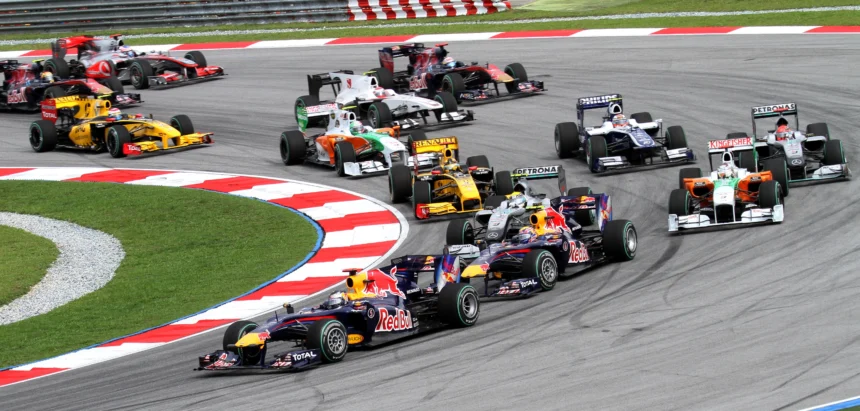
Drivers line up on the grid according to the qualifying results, subject to any penalties. After the formation lap, the cars return to their positions. Five red lights illuminate one by one before going out to begin the race.
The first corner can be critical.
Drivers want to gain positions without damaging the car. A poor start can undo a strong qualifying result. An overly aggressive move can cause a collision and end the race within seconds.
Formula 1 races commonly last between approximately one and a half and two hours, although incidents, weather and red flags can affect the duration.
Formula 1 Qualifying Explained
Qualifying determines the starting grid for the Grand Prix.
The 2026 grid includes 22 cars, so the elimination pattern changed slightly after Cadillac joined Formula 1.
Qualifying is divided into three sections:
| Session | Duration | What happens |
|---|---|---|
| Q1 | 18 minutes | All 22 cars participate; the six slowest are eliminated |
| Q2 | 15 minutes | The remaining 16 cars compete; the six slowest are eliminated |
| Q3 | 13 minutes | The fastest 10 cars compete for pole position |
Pole position means starting first.
Qualifying is intense because drivers may have only a small number of opportunities to produce a clean lap. Traffic, track limits, tyre preparation, weather and small mistakes can change the result.
A driver needs to push close to the limit without losing control.
Why the Track Becomes Faster
Track conditions often improve as more cars complete laps.
Rubber builds on the racing line, improving grip. Drivers learn the circuit more precisely. Teams adjust tyre preparation.
This creates a strategic question: should a driver attempt an early lap for safety or wait for the best possible track conditions?
Waiting can be risky.
A red flag, yellow flag, traffic problem or mistake can ruin the final attempt.
What Is Pole Position?
Pole position is the first starting place on the grid.
It is especially valuable at circuits where overtaking is difficult. At tracks with long straights and more overtaking opportunities, race strategy may reduce the advantage slightly.
However, starting at the front remains valuable because the pole-sitter usually has cleaner air and avoids some of the chaos deeper in the pack.
Formula 1 Sprint Weekends Explained
Formula 1 uses Sprint weekends at selected Grands Prix.
The Sprint is a shorter race that adds competitive action before the main Grand Prix.
The official Sprint guide explains that a Sprint covers approximately 100 kilometers and typically lasts around 30 minutes. There is no mandatory pit stop.
A Sprint weekend has a different structure:
| Day | Sprint-weekend sessions |
|---|---|
| Friday | Free Practice 1 and Sprint Qualifying |
| Saturday | Sprint and Grand Prix Qualifying |
| Sunday | Grand Prix |
Teams receive much less practice time.
That creates pressure because drivers and engineers need to understand the car quickly.
Sprint Qualifying
Sprint Qualifying sets the grid for the Sprint race.
| Session | Duration |
|---|---|
| SQ1 | 12 minutes |
| SQ2 | 10 minutes |
| SQ3 | 8 minutes |
The structure resembles standard Qualifying, but the sessions are shorter.
Sprint Points
The first eight drivers receive points:
| Sprint finishing position | Points |
|---|---|
| 1st | 8 |
| 2nd | 7 |
| 3rd | 6 |
| 4th | 5 |
| 5th | 4 |
| 6th | 3 |
| 7th | 2 |
| 8th | 1 |
The Grand Prix remains the main event.
The 2026 Sprint calendar includes China, Miami, Canada, Great Britain, the Netherlands and Singapore. The official Sprint calendar announcement provides the complete list.
The Formula 1 Points System
Formula 1 points determine the championships.
The top 10 finishers in a Grand Prix receive points.
| Grand Prix finishing position | Points |
|---|---|
| 1st | 25 |
| 2nd | 18 |
| 3rd | 15 |
| 4th | 12 |
| 5th | 10 |
| 6th | 8 |
| 7th | 6 |
| 8th | 4 |
| 9th | 2 |
| 10th | 1 |
Every point matters.
A driver fighting for eighth place may not appear on the podium, but those points can change the standings. For a smaller team, a handful of points may affect its final championship position significantly.
Drivers’ Championship
Each driver earns points individually.
The highest total wins the Drivers’ Championship.
Teams’ Championship
Each team adds the points earned by both cars.
A team with two consistently strong drivers can outperform a rival relying heavily on one star performer.
Formula 1 therefore creates two parallel stories:
- Which driver is best?
- Which team is strongest overall?
Both championships matter.
Formula 1 Tyres Explained
Tyres are central to Formula 1 strategy.
A car may have excellent speed, but poor tyre management can destroy a race. Drivers must protect grip while remaining competitive.
The official Formula 1 tyre guide explains the visible colour coding.
| Tyre | Colour | General purpose |
|---|---|---|
| Soft | Red | Greater grip but usually shorter life |
| Medium | Yellow | Balance between speed and durability |
| Hard | White | More durable but often slower to warm up |
| Intermediate | Green | Damp or changing conditions |
| Full wet | Blue | Heavy rain conditions |
The exact tyre compounds selected for a race weekend vary by circuit.
Why Softer Tyres Are Faster
A softer tyre usually offers more grip.
That can help a driver complete faster laps, especially in Qualifying. However, softer tyres may degrade more quickly.
A harder tyre may last longer but require careful warm-up.
This creates strategic choices.
Should a driver push aggressively on a softer tyre and pit earlier? Should the team use a harder tyre for a longer stint? Will rain arrive? Is a Safety Car likely? Can the driver protect the tyres while remaining close enough to attack later?
Formula 1 strategy develops from these questions.
What Is Tyre Degradation?
Tyre degradation means performance declines as the tyre wears or overheats.
A driver may lose grip gradually. Lap times may slow. The car may slide more often.
Tyre management is not simply driving slowly. The driver needs to preserve performance without giving away unnecessary time.
The best drivers understand when to push and when to protect the tyres.
Pit Stops: Formula 1 Teamwork Under Pressure
A pit stop can change a race in seconds.
The car enters the pit lane, stops precisely inside the team’s box and receives fresh tyres. Mechanics work around the car in a carefully rehearsed sequence.
The official Formula 1 feature on the anatomy of a pit stop explains how crews prepare, lift the car, remove wheels, install replacements and release the driver safely.
Fast stops can take only a little more than two seconds while the car remains stationary.
However, the total time lost is much greater because the driver must slow down, enter the pit lane, stop and accelerate back onto the track.
Why Drivers Pit
Drivers may pit because:
- Tyres are worn
- Weather conditions change
- A different strategy becomes attractive
- Damage needs attention
- A Safety Car creates an opportunity
- A penalty must be served
The decision is strategic.
A team may stop earlier than a rival to benefit from fresh tyres. This is called an undercut.
A team may stay out longer, hoping to use clean air, tyre life or track conditions. This can contribute to an overcut.
The Undercut
The undercut occurs when a driver pits before a rival, uses fresher tyres to complete faster laps and emerges ahead after the rival eventually stops.
The Overcut
The overcut occurs when staying out longer creates an advantage.
This may work when the driver has good pace on older tyres, the new tyres take time to warm up or traffic slows the rival after a pit stop.
Formula 1 races are often decided through these invisible battles.
Flags and Safety Signals in Formula 1
Drivers must understand trackside signals immediately.
The official Formula 1 flags guide explains the main meanings.
| Flag | Meaning |
|---|---|
| Green | Track is clear |
| Yellow | Danger ahead; reduce speed and do not overtake |
| Double yellow | Significant danger; reduce speed substantially and be prepared to stop |
| Red | Session or race stopped |
| Blue | A faster car is approaching or a lapped car must allow passage |
| Black and white chequered | Session or race has ended |
| Yellow and red stripes | Reduced grip ahead, often due to water or oil |
| White | Slower vehicle ahead |
| Black | Driver must return to the pits, often after disqualification |
| Black and orange | Car has a mechanical issue requiring attention |
Flags matter because safety comes before competition.
Safety Car
The Safety Car may be deployed when an incident creates danger but the race does not need to stop completely.
Drivers follow the Safety Car at a controlled speed. The field closes up, and overtaking is restricted.
This can transform strategy.
A pit stop under Safety Car conditions often costs less time relative to rivals because the field is moving more slowly.
Virtual Safety Car
A Virtual Safety Car, commonly called a VSC, requires drivers to slow according to a controlled delta time without physically bunching behind a Safety Car.
The aim is to reduce speed while preserving gaps more effectively.
Red Flag
A red flag stops the session or race.
Drivers return slowly according to official instructions. A red flag may result from a serious incident, dangerous weather or unsafe track conditions.
Formula 1 can restart after the situation is resolved.
Formula 1 Rules and Penalties
Formula 1 has detailed sporting and technical regulations.
The FIA publishes the official Formula 1 regulations. Those regulations can evolve, especially when a new technical era begins.
Drivers and teams may receive penalties for breaking the rules.
The official Formula 1 penalties guide explains that offences can occur on or off the track.
Common penalties include:
| Penalty | Effect |
|---|---|
| Warning | Formal indication that conduct needs attention |
| Reprimand | Official disciplinary mark |
| Time penalty | Adds seconds to a driver’s race time or must be served during a stop |
| Drive-through penalty | Driver passes through the pit lane without stopping |
| Stop-go penalty | Driver stops in the pit lane for a set period |
| Grid penalty | Driver starts lower than the qualifying position |
| Disqualification | Driver or car removed from the result |
| Penalty points | Added to a driver’s Super Licence record |
Track Limits
Track limits define the usable racing surface.
Drivers must generally keep at least part of the car within the permitted boundaries. Repeated violations can lead to lap deletions or penalties.
Track limits become especially important in Qualifying, where one deleted lap may eliminate a driver.
Causing a Collision
Stewards may investigate whether one driver caused avoidable contact.
Racing incidents are not always simple. Drivers fight for the same space at high speed. Stewards consider the circumstances before reaching a decision.
Unsafe Release
A team must release a car safely from the pit box.
If a driver is released into the path of another car, the team or driver may receive a penalty.
Speeding in the Pit Lane
Drivers must respect the pit-lane speed limit.
A small error can create a penalty.
Formula 1 rules are detailed because the sport combines speed with risk. Fairness and safety require clear standards.
The Role of Race Strategy
A Formula 1 strategist tries to predict what happens next.
The strategist considers:
- Tyre performance
- Pit-stop windows
- Weather
- Traffic
- Rival decisions
- Safety Car probability
- Track position
- Energy deployment
- Driver pace
- Remaining laps
A strategy that looks correct before the race may need to change quickly.
Rain may arrive earlier than expected. A crash may create a Safety Car. A rival may pit unexpectedly. A driver may damage a front wing. Tyres may degrade faster than predicted.
Formula 1 strategy is a live problem.
Track Position vs Fresh Tyres
A driver may stay on older tyres to preserve track position.
Another driver may stop for fresh tyres and attempt to overtake later.
Neither choice is automatically correct.
The best decision depends on the circuit, traffic, tyre difference and remaining laps.
Clean Air
A car running without another car immediately ahead benefits from cleaner aerodynamic conditions.
Following another car can make cornering more difficult because turbulent air affects grip.
Clean air can help a driver build a gap or extend a stint.
Dirty Air
Dirty air is the disturbed airflow behind another car.
It can reduce downforce and make it harder to follow closely through corners.
The 2026 Formula 1 rules aim to improve close racing partly by addressing aerodynamic effects.
Formula 1 Circuits: Why Every Race Feels Different
Formula 1 races on a wide variety of circuits.
Some are permanent race tracks. Others use public roads transformed into temporary street circuits.
| Circuit type | Characteristics |
|---|---|
| Permanent circuit | Purpose-built racing venue |
| Street circuit | Public roads adapted for racing |
| Hybrid circuit | Mix of permanent and temporary elements |
Monaco is famous for narrow streets and limited overtaking space. Monza emphasizes straight-line speed. Silverstone rewards high-speed cornering confidence. Singapore challenges drivers physically with heat, humidity and walls close to the track.
The official Formula 1 guide notes that the 2026 calendar includes 24 races across 21 countries and five continents. Madrid also joined as a new circuit for the Spanish Grand Prix.
A driver must adapt quickly.
The car setup, tyre demands and overtaking opportunities change from one weekend to the next.
The People Behind a Formula 1 Team
A Formula 1 team is much larger than the two drivers shown on television.
| Role | Main responsibility |
|---|---|
| Driver | Races the car and provides feedback |
| Team principal | Leads the team |
| Race engineer | Communicates directly with the driver |
| Performance engineer | Studies data and car performance |
| Strategist | Plans and adjusts race strategy |
| Mechanics | Prepare, repair and operate the car |
| Pit crew | Complete tyre changes and adjustments |
| Designers | Develop the car |
| Aerodynamicists | Improve airflow and downforce |
| Power-unit specialists | Manage engine and hybrid performance |
| Data analysts | Interpret performance information |
| Medical and fitness staff | Support driver and crew performance |
Formula 1 is a technology-driven sport, but human coordination remains essential.
Your sports training guide explains how data, recovery and athlete monitoring support elite performance. Your article on sports technology provides wider context about tools changing modern competition.
Driver Fitness and Mental Performance
Formula 1 drivers need significant physical preparation.
They experience high g-forces under braking and through corners. Cockpit temperatures can become demanding. Drivers must remain focused while controlling a complex machine at extreme speed.
Training may include:
- Neck strength
- Core strength
- Cardiovascular fitness
- Reaction work
- Heat preparation
- Mobility
- Mental routines
- Recovery
- Nutrition
- Sleep
A Formula 1 driver also needs mental stamina.
One small mistake can ruin a race. A driver must respond to radio messages, manage tyres, monitor energy and race opponents while maintaining concentration.
Your article on athlete performance helps explain why preparation extends far beyond the visible competition.
Technology and Data in Formula 1
Formula 1 is one of the clearest examples of sport and technology working together.
Teams collect data from the car during sessions. Engineers interpret that information to improve performance, identify problems and guide strategy.
Data may relate to:
- Tyre temperatures
- Brake performance
- Energy deployment
- Speed
- Gear changes
- Aerodynamic balance
- Fuel use
- Car behaviour
- Driver inputs
- Reliability
Data does not replace the driver.
A driver may feel something that numbers do not immediately explain. Engineers combine telemetry with feedback.
Artificial intelligence and advanced analysis also play a growing role across sport. Your article about AI in sports explores the wider trend.
How to Watch Formula 1 More Carefully
Formula 1 becomes more interesting when you look beyond the race leader.
Watch the Tyres
Ask:
- Which tyre compound is each driver using?
- How old are the tyres?
- Is the driver losing grip?
- Will the team attempt an undercut?
- Is rain likely?
Watch the Gaps
A timing screen shows the intervals between cars.
Small gaps may create pit-stop pressure. A driver may want to build enough time to stop without losing a position.
Watch the Teammates
Teammates drive similar machinery.
Comparing them helps reveal how well each driver is performing.
Watch the Pit Windows
A team does not always pit at the first opportunity.
Strategists consider traffic, tyre life and rival decisions.
Watch Energy Deployment
The 2026 Formula 1 rules make electrical-energy management especially important.
Drivers decide when to recharge and when to use additional power for attack or defense.
Watch the Midfield
The fight for eighth or ninth place can matter enormously.
Smaller teams may need every point.
A battle outside the podium positions can affect the Teams’ Championship significantly.
Common Formula 1 Terms Explained
| Term | Simple meaning |
|---|---|
| Grand Prix | A Formula 1 race event |
| Pole position | First place on the starting grid |
| Grid | The starting order |
| Stint | A period of racing on one set of tyres |
| Pit stop | A visit to the team’s pit box |
| Undercut | Pitting earlier to use fresh tyres and gain position |
| Overcut | Staying out longer to gain an advantage |
| Dirty air | Disturbed airflow behind another car |
| Clean air | Less disturbed airflow when no car is immediately ahead |
| Apex | Inside point of a corner |
| Chicane | Sequence of corners designed to slow cars |
| Kerb | Raised edge near a track boundary |
| Lock-up | Tyre stops rotating under braking |
| Oversteer | Rear of the car loses grip |
| Understeer | Front tyres lose grip and car turns less than intended |
| Formation lap | Lap before the race start |
| Safety Car | Physical car used to slow the field during danger |
| VSC | Virtual Safety Car speed-control system |
| Overtake Mode | 2026 system supporting eligible overtaking attempts |
| Boost | Driver-managed electrical deployment |
| Recharge | Energy-recovery mode |
| Active Aero | Adjustable wing elements used under the 2026 regulations |
| Parc fermé | Period when setup changes become restricted |
| DNF | Did not finish |
| DNS | Did not start |
Learning the language helps new fans understand commentary and strategy discussions.
Formula 1 Beginner Checklist
Before watching a Grand Prix, check:
| Question | Why it matters |
|---|---|
| Is this a standard or Sprint weekend? | The schedule changes |
| Which team appears strongest? | Competitive order can shift |
| Who qualified on pole? | Starting position matters |
| What tyres are available? | Strategy depends on compounds |
| Is rain expected? | Weather can transform a race |
| Is overtaking difficult at this track? | Track position becomes more valuable |
| Which drivers have penalties? | Grid positions may change |
| How close are the championship standings? | Every point may matter |
During the race, watch tyres, gaps, pit stops, flags and radio messages.
After the race, look beyond the winner.
Ask which team improved, which driver recovered positions, whether strategy worked and how the result changed the championships.
Formula 1 Stories From The News Ink
The News Ink already covers Formula 1 developments and major sports stories.
| Related article | Why it is useful |
|---|---|
| New Formula 1 era | Explores the major regulation reset |
| Hybrid-era debate | Examines how drivers responded to the new rules |
| Antonelli’s rise | Covers an important young-driver storyline |
| Piastri’s early pace | Highlights an opening-weekend performance |
| Hamilton and an African Grand Prix | Explores the sport’s global calendar |
| Sports technology | Places Formula 1 innovation in a wider context |
| Sports training guide | Explains preparation, data and recovery |
These articles should link back to this Formula 1 guide where the connection feels natural.
Frequently Asked Questions About Formula 1
What is Formula 1?
Formula 1 is the highest category of FIA-regulated international single-seater motor racing.
How many Formula 1 teams compete in 2026?
The 2026 grid contains 11 teams and 22 cars after Cadillac joined the championship.
How many drivers does each Formula 1 team have?
Each team fields two cars, normally driven by two race drivers.
How many races are in the 2026 Formula 1 season?
The official 2026 calendar contains 24 Grand Prix weekends.
What is a Grand Prix?
A Grand Prix is a Formula 1 race event.
How does Formula 1 Qualifying work?
Qualifying is divided into Q1, Q2 and Q3. Drivers are eliminated after the first two sections, and the remaining 10 compete for pole position in Q3.
What is pole position?
Pole position is first place on the starting grid.
What is an F1 Sprint?
The Sprint is a shorter race of approximately 100 kilometers held at selected weekends. It offers points to the top eight finishers.
How many Sprint weekends are in the 2026 season?
Six Formula 1 weekends use the Sprint format in 2026.
How many points does a Formula 1 winner receive?
A Grand Prix winner receives 25 points.
What is Overtake Mode?
Overtake Mode is a 2026 system that gives an eligible chasing car additional electrical performance when the required gap conditions are met.
Did Overtake Mode replace DRS?
Yes. Under the 2026 rules, Overtake Mode replaces the older DRS-style advantage, while active aerodynamics operate more broadly.
Why do Formula 1 drivers change tyres?
Drivers change tyres because compounds wear, weather changes or strategy creates an opportunity.
What is an undercut?
An undercut occurs when a driver pits before a rival, uses fresher tyres to gain time and attempts to move ahead after the rival stops.
What is a Safety Car?
The Safety Car slows the field during dangerous situations while allowing the race to continue under controlled conditions.
What is a red flag?
A red flag stops a session or race because conditions are unsafe.
What is dirty air?
Dirty air is disturbed airflow behind another car. It can make following through corners more difficult.
What is the difference between the Drivers’ and Teams’ Championships?
The Drivers’ Championship rewards the highest-scoring individual driver. The Teams’ Championship combines points scored by both cars.
Why Formula 1 Captivates Fans
Formula 1 combines many forms of competition at once.
Drivers fight for position. Teams race to develop faster cars. Strategists attempt to predict the future. Mechanics perform under pressure. Engineers search for improvements measured in tiny fractions of a second.
A Formula 1 race can be won through raw speed, tyre management, a brilliant start, a perfectly timed pit stop or a calm decision during chaos.
The sport is technical, but it is not cold.
Behind the numbers are human stories: confidence, rivalry, risk, teamwork, mistakes and recovery.
Start with the basics.
Learn the teams. Understand the weekend. Watch Qualifying. Follow the tyres. Notice the gaps. Pay attention to pit stops and flags. Compare teammates. Observe how strategy changes after a Safety Car.
The more carefully you watch Formula 1, the more the sport reveals.
Follow The News Ink for More Sports Guides
Explore more explainers, major stories and analysis in our Sports section. Join The News Ink on our WhatsApp channel for new articles and important updates.