


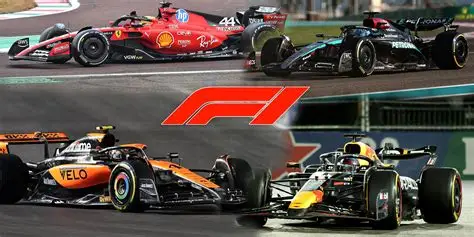
New F1 Era Began in Australia With Huge Rule Changes and a Mercedes Statement
New F1 era headlines arrived immediately at the 2026 Australian Grand Prix, where Formula One’s biggest technical reset in decades produced a dramatic opening race, a Mercedes 1-2 and the first real answers about how the new cars would race.
The season began at Albert Park in Melbourne on 8 March with almost everything changed beneath the bodywork. The cars looked familiar at first glance, but the sport had entered a different technical world: smaller and lighter chassis, narrower tyres, new active aerodynamics, a 50-50 split between electrical and combustion power, and 100% advanced sustainable fuel.
The result was not just a regulation reset. It was a competitive reset. George Russell won from Mercedes teammate Kimi Antonelli, with Charles Leclerc third for Ferrari and Lewis Hamilton fourth in his first Australian Grand Prix for the team in the new rules cycle. Lando Norris, the defending world champion, finished fifth for McLaren, while Max Verstappen recovered to sixth after starting 20th.
New F1 era expectations had centred on Norris, Verstappen, Russell and Ferrari. Instead, Melbourne delivered a clear early message: Mercedes understood the new rules quickly, Russell looked ready to lead, and Antonelli was not waiting for a long apprenticeship.
Formula One’s official Australian Grand Prix report described a Mercedes 1-2 after a battle with Ferrari. The race result later became the first chapter of a season that, by July, had Antonelli leading the championship from Russell and Hamilton.
For more Formula One context, The News Ink has also covered Lewis Hamilton’s African Grand Prix dream and how Bahrain and Saudi Arabia F1 races were disrupted by regional tensions.
Why the new F1 era started with uncertainty
The new F1 era began with uncertainty because no team knew exactly how the 2026 cars would behave in real race conditions. Winter testing gave clues, but Melbourne was the first competitive test with full fuel loads, traffic, tyre strategy, energy management and pressure.
Formula One had changed the power unit, the aerodynamics and the race-management tools all at once. The old drag reduction system was gone. Drivers now had active front and rear wings, energy deployment decisions, boost modes and a much bigger electrical contribution to lap time.
That meant the fastest car over one lap might not automatically be the strongest race car. Teams had to manage battery charge, straight-line efficiency, cornering stability, tyre wear and overtaking tools in a completely new balance.
The Australian Grand Prix showed that strategy could still decide races. Russell and Antonelli pitted under a Virtual Safety Car after Isack Hadjar’s Red Bull stopped on track. Ferrari stayed out. That decision shaped the race, allowing Mercedes to make a one-stop strategy work while Ferrari lost ground.
New F1 era racing was supposed to reward smart energy and aerodynamic management. Melbourne proved it also rewarded old-fashioned race execution.
The 2026 rule changes at a glance
| Area | What changed in 2026 | Why it matters |
|---|---|---|
| Power unit | Around 50% electrical power and 50% combustion power | Energy management became central to lap time |
| MGU-K | Increased from 120kW to 350kW | Far more electrical deployment available |
| Fuel | 100% advanced sustainable fuel | Linked F1 to its net-zero target |
| Aerodynamics | Active front and rear wings replaced DRS | Cars now reduce drag through movable aero systems |
| Tyres | Narrower Pirelli tyres | Grip, degradation and warm-up changed |
| Chassis | Smaller, shorter and lighter cars | Designed to improve efficiency and racing |
| Manufacturers | Audi, Red Bull-Ford and Cadillac changed the grid picture | More major brands entered or deepened involvement |
| Qualifying | 11-team grid changed eliminations | Six cars now drop out in Q1 and Q2 |
This is why the new F1 era felt so different. The sport did not make one rule adjustment. It rebuilt the technical foundation.
The power unit became the centre of the story
The biggest technical shift in the new F1 era was the power unit. Formula One moved toward a roughly even split between internal combustion and electrical power. The MGU-H was removed, while the MGU-K became far more powerful, delivering 350kW to the rear wheels instead of the previous 120kW.
That is a huge change. The old hybrid era already required energy management, but the 2026 rules made battery deployment a much larger part of performance. Drivers no longer think only about braking zones, tyre grip and engine modes. They also have to think about where to harvest, where to deploy and how much electrical power rivals may have available.
F1’s own regulation guide explains that energy can be harvested when braking, on part throttle, during lift-off and through “super clipping” at the end of straights. That turns each lap into a strategic energy cycle.
New F1 era driving is therefore more complex. A car with high battery charge can be dramatically faster on a straight than a car trying to recover energy. A driver may attack not only because the tyres are better, but because the energy window is better.
That changes racing psychology. Drivers are no longer only watching gaps. They are also guessing energy states.
Active aero replaced DRS
The removal of DRS was one of the most visible changes. For years, DRS created overtaking by opening a flap on the rear wing when a driver was within one second of the car ahead. In 2026, that system disappeared.
The new F1 era uses active aerodynamics instead. Front and rear wings can move into lower-drag settings on straights, reducing resistance and helping the car maintain speed. This is connected to energy efficiency because less drag means the car needs less power to travel quickly.
The old DRS was simple for fans to understand. A driver got within one second, opened the rear wing and attacked. The new system is more technical. It affects how cars harvest energy, how they deploy power and how they defend.
That complexity may divide fans. Some will enjoy the tactical depth. Others may miss the simplicity of DRS. Melbourne suggested the new system could still produce close racing, especially in the opening duel between Russell and Leclerc.
New F1 era overtaking is less about one flap opening and more about a complete energy-aero package.
Russell made the first big statement
George Russell became the first winner of the new F1 era with a polished drive at Albert Park. He started from pole, lost out to Leclerc at the start, fought back in an intense early duel and then took control after Mercedes’ decisive pit stop under the Virtual Safety Car.
Reuters reported that Russell and Leclerc swapped the lead seven times in the opening nine laps. That early fight was exactly what F1 wanted from the new regulations: drivers close enough to attack, different energy phases, and enough tactical variation to create uncertainty.
Once Mercedes made the better strategic call, Russell controlled the race. He finished almost three seconds ahead of Antonelli and more than 15 seconds ahead of Leclerc. Over team radio, he praised the car and engine, saying it had been a long time coming to have that machine underneath him.
New F1 era pressure could have overwhelmed a team starting with a new concept. Instead, Mercedes looked ready. Russell’s win was not just a good Sunday. It was evidence that Mercedes had read the rules better than most.
The official Formula One race result confirmed Russell led Antonelli and Leclerc at Albert Park.
Antonelli proved he was ready
Kimi Antonelli’s second place was one of the biggest stories of the Australian Grand Prix. The young Mercedes driver had already carried huge expectations, but delivering a podium immediately in the opening round of a new technical era was a major statement.
Antonelli did not need a long adaptation period. He handled the pressure, recovered from early difficulties and helped Mercedes secure a 1-2. That mattered because Mercedes had entered 2026 with both opportunity and risk. Russell was ready to lead, but Antonelli still had to prove he could score big points under pressure.
By July, the significance of Melbourne looked even larger. Formula One’s standings showed Antonelli leading the championship on 179 points, ahead of Russell on 154 and Hamilton on 147. That means the opening race was not a one-off. It was the start of a serious title campaign.
New F1 era racing has rewarded drivers who can learn quickly. Antonelli has done that better than almost anyone.
His rise also reshaped the title conversation. Before Melbourne, many expected Norris, Verstappen and Russell to be the central names. After Melbourne, Antonelli belonged in that group immediately.
Ferrari were fast but missed the moment
Ferrari had pace in Australia. Leclerc made a brilliant start from fourth, took the lead at Turn 1 and fought Russell hard in the early laps. Hamilton also moved forward and briefly looked ready to make the race a Ferrari-Mercedes battle.
But Ferrari’s strategy hurt them. When the Virtual Safety Car appeared after Hadjar’s retirement, Mercedes double-stacked both cars for hard tyres. Ferrari stayed out. That decision left Leclerc and Hamilton vulnerable later, and both drivers lost the chance to fight Mercedes on equal terms.
Hamilton complained on the radio that at least one Ferrari should have stopped. Leclerc later admitted he did not think Ferrari could have won even with a different call, but the moment still exposed the fine margins of the new F1 era.
Under the 2026 rules, race decisions are even more connected. Tyre strategy, energy deployment and aero efficiency all affect each other. A missed pit stop can become more damaging because overtaking and energy windows are less predictable.
Ferrari left Australia with third and fourth. That was strong, but it also felt like a missed opportunity.
McLaren’s difficult start
McLaren entered the new F1 era with Lando Norris carrying the number one after winning the 2025 world championship. That made Australia a major test of whether the team could defend its status under new regulations.
The answer was mixed. Norris finished fifth, but he was more than 50 seconds behind Russell. Oscar Piastri’s home race ended before it began after a crash on a reconnaissance lap. For a team expected to fight at the front, that was a painful opening weekend.
This did not mean McLaren’s season was over. New regulations often create unstable form from track to track. Teams learn quickly. Upgrades arrive fast. But Melbourne showed that the champions did not begin 2026 with the same authority they had built in 2025.
New F1 era performance depends on adaptation. McLaren had work to do immediately, especially in turning theoretical pace into race execution.
The pressure was sharper because Norris was no longer only a challenger. He was defending champion. That changes how every result is judged.
Verstappen’s recovery showed Red Bull’s problems
Max Verstappen started 20th after a crash in qualifying and recovered to finish sixth. On one hand, that was an impressive damage-limitation drive. On the other, it showed how much Red Bull had to solve.
Red Bull entered 2026 as a power-unit manufacturer in partnership with Ford. That was a major step. Instead of relying on an established supplier, the team had taken on one of the hardest engineering challenges in motorsport. The reward could be huge, but the early risk was obvious.
Hadjar’s retirement in Melbourne added to the concern. His Red Bull stopped with smoke from the rear, triggering the Virtual Safety Car that helped Mercedes win. Verstappen’s recovery could not hide the fact that Red Bull’s weekend was messy.
New F1 era uncertainty hit even the most successful modern team. Verstappen had won four straight titles before Norris broke that run in 2025. But 2026 gave everyone a new set of problems, and Red Bull did not solve them fastest.
By July, Verstappen was no longer the central championship figure in the way fans had grown used to seeing.
Audi and Cadillac changed the grid
The new F1 era was designed partly to attract manufacturers, and it succeeded. Audi arrived as a works team after Sauber’s transformation. Cadillac entered as the first all-new Formula One team since Haas in 2016, backed by General Motors and running Ferrari power.
Audi scored immediately in Australia, with Gabriel Bortoleto finishing ninth. That was an important symbolic result for a new factory project. Points in the first race do not guarantee long-term success, but they show operational competence.
Cadillac had a harder debut. Valtteri Bottas retired early, while Sergio Perez finished 16th, the last classified runner. That was not disastrous for a new team, but it showed how difficult modern F1 remains.
New F1 era growth is not only about rules. It is about brands. Audi, Cadillac, Ford and Honda all give the sport a stronger manufacturer story. But the first race also reminded everyone that big names still need execution, reliability and development speed.
Formula One wanted the 2026 reset to feel like a new chapter. The expanded grid helped make it real.
Why sustainable fuel matters
The 2026 cars run on 100% advanced sustainable fuel, one of the most important long-term changes in the new F1 era. Formula One has linked this shift to its target of reaching net zero by 2030.
The fuel is made from sources such as carbon capture, municipal waste and non-food biomass, and is independently certified to meet sustainability standards. F2 and F3 trialled the fuel successfully in 2025 before Formula One adopted it.
This matters because F1 wants to stay relevant to road-car technology while keeping combustion engines alive. Instead of abandoning engines completely, the sport chose a hybrid route: more electrical power, simpler combustion architecture and sustainable fuel.
New F1 era technology therefore tries to answer two pressures at once. It gives manufacturers electrical relevance while preserving the sound, drama and identity of combustion racing.
Critics may argue that F1’s global travel footprint remains a problem. That is fair. But sustainable fuel is still a significant technical shift, especially if it supports wider fuel development outside racing.
For more on sports innovation, The News Ink’s sports training technology guide explains how data, engineering and performance systems are changing elite competition.
Energy management changed the racing language
Fans watching the Australian Grand Prix had to learn a new vocabulary. Instead of only hearing about tyres, undercuts and DRS trains, they now hear more about recharge, boost, energy deployment, active aero and clipping.
That can make the new F1 era harder to follow at first. But it also creates new layers of strategy. A driver may look vulnerable because they are saving energy. A rival may delay an attack until the battery state is favourable. Teams may ask drivers to harvest in unexpected places to prepare for a later overtake.
The challenge for broadcasters and F1 itself is to explain this clearly. If fans cannot see or understand energy states, overtaking may feel random. If graphics improve and commentary explains the logic, the new system can become a compelling part of the show.
Melbourne gave an early hint. The Russell-Leclerc battle was exciting because it combined classic wheel-to-wheel racing with new technical dynamics. The strategy calls added tension without making the race feel artificial.
New F1 era racing will succeed if fans feel the complexity adds drama rather than confusion.
The Australian Grand Prix result
| Position | Driver | Team | Points |
|---|---|---|---|
| 1 | George Russell | Mercedes | 25 |
| 2 | Kimi Antonelli | Mercedes | 18 |
| 3 | Charles Leclerc | Ferrari | 15 |
| 4 | Lewis Hamilton | Ferrari | 12 |
| 5 | Lando Norris | McLaren | 10 |
| 6 | Max Verstappen | Red Bull Racing | 8 |
| 7 | Oliver Bearman | Haas | 6 |
| 8 | Arvid Lindblad | Racing Bulls | 4 |
| 9 | Gabriel Bortoleto | Audi | 2 |
| 10 | Pierre Gasly | Alpine | 1 |
The result was a perfect snapshot of the new F1 era. Mercedes led. Ferrari chased. McLaren struggled for race pace. Red Bull recovered from trouble. Audi scored. Cadillac learned how hard the sport is.
July standings show Melbourne was not a fluke
By mid-July, the early message from Australia had been reinforced. Formula One’s official standings showed Kimi Antonelli leading with 179 points, George Russell second with 154 and Lewis Hamilton third with 147. Charles Leclerc, Lando Norris and Oscar Piastri followed.
That order is important. The new F1 era has not simply restored the old Verstappen-Red Bull dominance. It has opened a different championship shape, with Mercedes leading, Ferrari threatening and McLaren trying to recover from a difficult start to its title defence.
The regulation reset did what resets are supposed to do: it changed the competitive order. It did not guarantee equality, but it disrupted assumptions.
Mercedes looked strong in testing. Australia confirmed it. The months after Melbourne showed that the team’s advantage was not just circuit-specific. Antonelli’s rise, Russell’s consistency and Ferrari’s recovery have made 2026 feel like a genuinely different championship.
New F1 era claims can sometimes sound like marketing. The standings suggest the phrase is justified.
What the opening race taught Formula One
The Australian Grand Prix answered some questions but opened others.
First, active aero can support close racing, but fans need better explanation of when and why it matters.
Second, energy management is now central. Teams that understand battery use, harvesting and deployment will win strategic battles.
Third, reliability may decide early races. New power units and new systems create more risk.
Fourth, strategy remains decisive. Mercedes won because it had speed, but also because it made the right pit call under the Virtual Safety Car.
Fifth, young drivers can adapt quickly. Antonelli’s second place and Lindblad’s points finish showed that rookies and rising talents are not necessarily disadvantaged by a reset.
Sixth, big names are not protected by history. Verstappen and Red Bull had to fight from the back. McLaren’s champion started the year behind Mercedes and Ferrari. Cadillac arrived with attention but not instant results.
New F1 era racing is not simple. That may be exactly why it has become interesting.
What fans should watch next
The biggest thing to watch is development speed. In a stable rule era, gains become harder over time. In a new rule era, early upgrades can transform a team’s season.
Mercedes began strongly, but Ferrari’s July form showed the fight was not over. Hamilton’s first Ferrari win in Spain and Leclerc’s British Grand Prix victory proved Ferrari could turn promise into results. McLaren still had the resources and driver quality to respond. Red Bull’s struggles raised questions about whether its new power-unit project could recover quickly enough.
New F1 era racing will likely change track by track. High-speed circuits may reward aero efficiency and energy deployment. Stop-start circuits may reward traction, harvesting and battery strategy. Hot races may stress cooling and tyres. Wet races could expose cars that have not been tested heavily in rain.
That means fans should avoid drawing final conclusions from one weekend. Australia was the opening statement, not the full verdict.
Still, Melbourne mattered because first impressions in new regulations can shape confidence. Mercedes left with belief. Ferrari left with frustration and hope. McLaren left with questions. Red Bull left with problems.
FAQ: new F1 era
What is the new F1 era in 2026?
The new F1 era refers to Formula One’s major 2026 regulation reset, including new power units, active aerodynamics, sustainable fuel, narrower tyres and smaller, lighter cars.
Who won the first race of the new F1 era?
George Russell won the 2026 Australian Grand Prix for Mercedes, ahead of teammate Kimi Antonelli and Ferrari’s Charles Leclerc.
What happened to DRS in 2026?
DRS was removed and replaced by active aerodynamics, using movable front and rear wings plus new power modes to manage overtaking and efficiency.
Why are the 2026 engines different?
The 2026 power units use a much larger electrical contribution, with around half the power coming from electrical energy and half from combustion. The MGU-K output increased to 350kW.
Which new teams or manufacturers joined in 2026?
Audi became a works team after Sauber’s transformation, Cadillac joined as an all-new team, Red Bull began producing power units with Ford, and Honda partnered exclusively with Aston Martin.
The bottom line
New F1 era racing began in Australia with exactly the kind of uncertainty Formula One wanted. The cars were different, the power units were different, the overtaking tools were different and the competitive order looked different too.
Mercedes made the strongest first statement. Russell won, Antonelli finished second, and the team turned a smart Virtual Safety Car pit call into a dominant 1-2. Ferrari showed speed but missed the strategic moment. McLaren had a difficult start to its title defence. Verstappen recovered well, but Red Bull’s weekend exposed early problems. Audi scored on debut. Cadillac learned how steep the climb would be.
The most important lesson was that the 2026 rules changed more than technology. They changed the way races are read. Energy management, active aero and sustainable fuel are now central to the sport’s identity. Drivers must think differently. Teams must strategise differently. Fans must learn a new tactical language.
By July, the Australian opener looked less like a one-race surprise and more like the start of a genuine shift. Antonelli leads the championship, Russell is chasing, Hamilton has revived Ferrari, and the old order has been shaken.
The new F1 era began in Australia. The rest of 2026 is now about who learns fastest.
For more Formula One, motorsport and global sports coverage, follow The News Ink on Threads.