Lewis Hamilton African Grand Prix Dream Shows Why F1 Cannot Keep Ignoring Africa
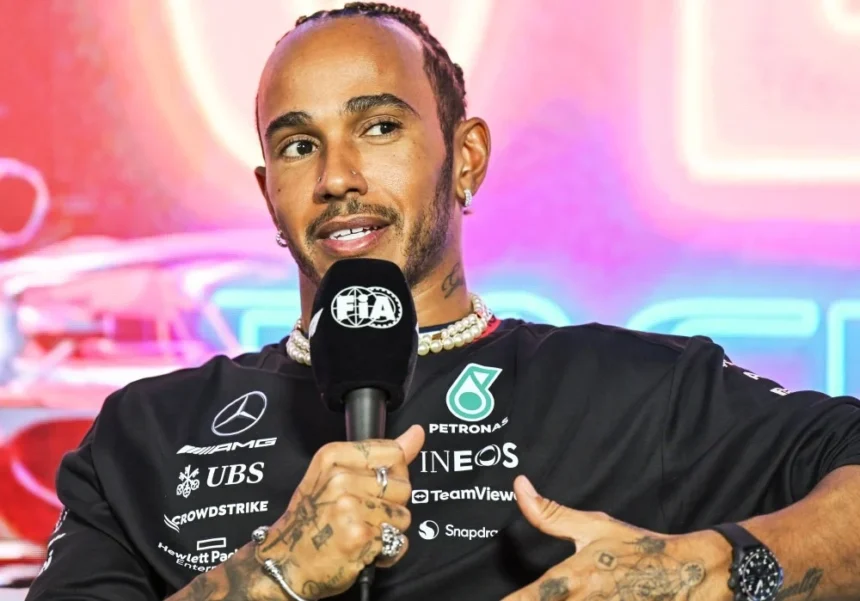
Lewis Hamilton African Grand Prix hopes have become one of Formula One’s most powerful unfinished stories, with the seven-time world champion saying he does not want to leave the sport before racing on the African continent.
Hamilton has pushed Formula One’s leadership for years to return to Africa. Speaking in Melbourne before the 2026 season, the Ferrari driver said he had repeatedly asked F1 officials the same question: why is there still no race in Africa when the sport races across Europe, Asia, the Americas and the Middle East?
For Hamilton, this is not just another calendar debate. It is personal, cultural and historical. He has spoken about his roots in Africa, his pride in the continent and his belief that Formula One has a responsibility to stop overlooking a region with huge sporting, economic and symbolic value.
The Lewis Hamilton African Grand Prix campaign matters because Africa has not hosted a Formula One world championship race since the 1993 South African Grand Prix at Kyalami. More than three decades later, F1 has expanded aggressively into new markets, added more races, built a bigger global audience through streaming and social media, and still left an entire continent off the calendar.
That absence is increasingly hard to defend.
For more motorsport and global sports coverage, The News Ink has also covered how Bahrain and Saudi Arabia F1 races faced uncertainty amid regional tensions, showing how Formula One’s calendar is now shaped by politics, safety and global strategy as much as racing.
Why Lewis Hamilton African Grand Prix hopes matter
Lewis Hamilton African Grand Prix ambitions matter because Hamilton is not an ordinary voice in the paddock. He is one of Formula One’s greatest drivers, a seven-time world champion, the sport’s most successful race winner, and one of the few figures capable of turning a calendar issue into a global conversation.
Hamilton has argued that F1 cannot keep adding races in other parts of the world while Africa remains ignored. His point is simple: if Formula One calls itself a world championship, why is a continent of more than 1.4 billion people absent from the schedule?
That question becomes sharper when the calendar is studied closely. The official 2026 Formula One calendar includes races in Australia, China, Japan, the United States, Canada, Monaco, Spain, Austria, Britain, Belgium, Hungary, the Netherlands, Italy, Azerbaijan, Singapore, Mexico, Brazil, Qatar and Abu Dhabi. It does not include a single African race.
The Lewis Hamilton African Grand Prix push is therefore about representation as much as logistics. It asks whether F1 wants to be truly global or simply commercially global in selected regions.
Hamilton’s argument also reflects the sport’s changing audience. Netflix, social media and the global spread of F1 content have created passionate fan communities far beyond traditional European markets. Africa is part of that growth, even without a home race.
Hamilton’s message: “Why are we not in Africa?”
Hamilton has said he has been fighting behind the scenes for six or seven years to help bring Formula One back to Africa. He has spoken with stakeholders, asked F1 leaders why the continent remains absent, and pushed both South Africa and Rwanda as possible routes.
In Melbourne, he made the personal deadline clear. He said he does not want to leave Formula One without having a Grand Prix in Africa and without racing there himself. That line gives the story urgency because Hamilton is now in the later stage of his career, even if his 2026 form has shown he remains highly competitive.
The Lewis Hamilton African Grand Prix dream is tied to legacy. Hamilton has won almost everything available in the sport. He has raced for McLaren, Mercedes and Ferrari. He has broken records, fought for diversity and carried himself as a global athlete rather than only a racing driver.
An African race would not add another championship to his name. It would add something different: a visible correction to one of F1’s largest geographical omissions.
Hamilton has also spoken strongly about Africa’s future. He has said the continent has enormous resources and potential, but that outside powers have often benefited more than African people themselves. He wants African countries to work together, reclaim more control over their resources and build a stronger collective future.
That makes the Lewis Hamilton African Grand Prix argument bigger than motorsport. For him, a race could help showcase Africa’s beauty, energy, tourism and ambition.
Africa’s long absence from Formula One
Africa’s absence is not because Formula One has no history there. South Africa was once a regular part of the championship. Kyalami hosted races across several periods, including from the late 1960s through the 1980s, and then again in 1992 and 1993.
The 1993 South African Grand Prix was the last F1 race on African soil. Alain Prost won that race for Williams, one year before South Africa’s first democratic elections ended apartheid. Since then, Africa has disappeared from the Formula One calendar.
That absence looks even more striking because F1 has changed dramatically since 1993. The sport has expanded to new street circuits, night races, destination events and major commercial markets. It has added multiple races in the United States. It has deepened its presence in the Middle East. It has strengthened Asian and global broadcast growth. Yet Africa remains missing.
The Lewis Hamilton African Grand Prix campaign forces F1 to confront that imbalance.
It is not enough to say that hosting a Grand Prix is difficult. Hosting a Grand Prix is difficult everywhere. It requires money, infrastructure, political support, a safe circuit, strong logistics, hotels, transport links, security, media facilities and a long-term commercial plan. Those barriers are real, but they have not stopped F1 from making deals elsewhere.
The question is whether Formula One has treated Africa as a serious priority or only as an attractive idea.
The possible African Grand Prix options
Several African routes have been discussed, but none has yet produced a confirmed place on the calendar.
| Possible host | Strengths | Main obstacles |
|---|---|---|
| Kyalami, South Africa | Historic F1 venue, existing circuit, strong motorsport heritage | Upgrade costs, politics, funding and long-term commercial agreement |
| Cape Town, South Africa | Global city, tourism appeal, potential street-race backdrop | Street-race cost, disruption, approvals and infrastructure |
| Rwanda | Strong government interest, ambitious sports strategy, Kigali profile | No existing F1 circuit, high investment requirement, rights criticism |
| Morocco | Historic motorsport link and North African location | No confirmed modern F1-ready project |
| Nigeria | Huge population and commercial potential | Major infrastructure, traffic and event-delivery challenges |
The Lewis Hamilton African Grand Prix dream has most often centred on South Africa and Rwanda. Hamilton has described Rwanda as spectacular and South Africa as stunning. He has also said he has spoken to people connected to both projects.
South Africa offers the most direct historical route because Kyalami already exists and has hosted F1 before. Rwanda offers a different proposition: a new permanent circuit linked to a wider national sports-development strategy.
Both options have appeal. Both also face serious hurdles.
Why Kyalami still matters
Kyalami remains the emotional favourite for many F1 fans because it is the circuit most closely associated with Africa’s Formula One past. Located near Johannesburg, it has history, recognition and a natural claim to revive the South African Grand Prix.
But Kyalami is not automatically ready. Reports have described it as FIA Grade 2, one level below the Grade 1 status required to host a Formula One Grand Prix. That means upgrades would be needed before F1 could return.
Those upgrades would likely involve safety systems, paddock facilities, medical infrastructure, media areas, access roads, hospitality and wider event operations. A modern Grand Prix is far larger than a race weekend from the early 1990s.
The Lewis Hamilton African Grand Prix campaign benefits from Kyalami’s legacy, but nostalgia alone cannot put the race back on the calendar. F1 needs certainty: who pays, who promotes, who guarantees the event, and how it fits into the long-term calendar.
South Africa has political support for a race, and its sports leaders have pushed the idea publicly. But Formula One has seen talks stall before. Until funding, upgrades and commercial terms are locked in, Kyalami remains a powerful symbol rather than a confirmed race.
Rwanda’s ambitious bid
Rwanda has become one of the most talked-about African Grand Prix options. The country has invested heavily in global sport, hosted major international events and built relationships with football, basketball and cycling bodies. It also hosted the FIA’s end-of-year gathering in Kigali, giving the country more visibility in motorsport circles.
Formula One chief executive Stefano Domenicali has previously described Rwanda’s proposal as serious, while also making clear that F1 needs the right investment and strategic plan. That is the key challenge.
Rwanda would likely need to build a new permanent circuit. That means a huge financial commitment before any race can happen. It also raises questions about whether a Grand Prix would produce enough economic benefit to justify the cost.
The Lewis Hamilton African Grand Prix campaign gives Rwanda’s idea more attention, but attention is not the same as delivery. A world-class circuit, transport links, hotel capacity, environmental planning, political stability and long-term funding all matter.
There is also criticism. Rwanda’s government has faced accusations of using sport to improve its image while drawing attention away from human-rights concerns. Formula One would need to handle those questions carefully if Rwanda becomes the leading candidate.
F1 already races in countries where human-rights issues are debated. That does not make the Rwanda question unique, but it does mean the sport cannot pretend the debate would not exist.
Why an African Grand Prix would help F1
A Lewis Hamilton African Grand Prix would benefit Formula One in several ways.
First, it would make the championship more genuinely global. F1’s brand depends on being the highest form of international motorsport. Leaving Africa out weakens that claim.
Second, it would connect the sport with new fans. Africa has young populations, growing digital communities and rising interest in global sport. F1’s online growth means fans no longer need a local race to care, but a local race can turn passive interest into deeper engagement.
Third, it would create a powerful story. Formula One sells speed, glamour and technology, but it also sells place. Monaco, Silverstone, Monza, Suzuka and Singapore all have meaning beyond the track. An African Grand Prix could add a different kind of identity and atmosphere to the calendar.
Fourth, it would support Hamilton’s legacy. F1 has spent years benefiting from Hamilton’s talent, global reach and cultural impact. Helping deliver a race he has long championed would show that the sport listens to its most influential driver on issues beyond performance.
The Lewis Hamilton African Grand Prix argument is not charity. It is a growth opportunity.
Why the race has not happened yet
The reason there is still no African Grand Prix is not one simple failure. It is a combination of money, infrastructure, politics, competition and timing.
F1 race hosting is expensive. Promoters must pay large hosting fees, prepare the venue, sell tickets, attract sponsors and satisfy the sport’s operational demands. Governments often become involved because the commercial return from ticket sales alone may not cover the cost.
Then there is calendar pressure. Formula One already runs one of the most demanding schedules in global sport. Even after the 2026 calendar dropped from 24 to 22 races because of Middle East disruption, the sport still has limited room. Adding Africa may mean removing or rotating another event.
There are also political questions. Which country should host? South Africa has history. Rwanda has momentum. Morocco and Nigeria have strategic appeal. Each option would send a different message.
The Lewis Hamilton African Grand Prix push has moral power, but Formula One still thinks in contracts, freight routes, hotel rooms, broadcast windows and financial guarantees.
That is the gap Hamilton is trying to close.
Hamilton’s Ferrari revival adds urgency
The article originally framed Hamilton’s comments before the new season. The story now looks different because the 2026 campaign is underway and Hamilton has already changed the tone around his Ferrari move.
His first season with Ferrari in 2025 was difficult. He failed to win a Grand Prix or stand on a podium, and at low points he openly criticised his own performances. After a poor qualifying session in Hungary, he called himself “useless,” a line that became a symbol of how painful the season had become.
Over the winter, Hamilton reset. He spoke about training hard, rebuilding his mindset, improving his relationship with Ferrari and rediscovering who he was. By March 2026, he said the version of himself who had lost sight of his identity was gone.
Then the results came. Hamilton finished on the podium early in the season and took his first Ferrari Grand Prix victory in Spain in June 2026. Reuters reported that the Barcelona win was his 106th career victory, his first since joining Ferrari, and proof that he remained a serious force at 41.
That matters for the Lewis Hamilton African Grand Prix dream. Hamilton is not speaking as a fading figure making sentimental requests. He is still relevant, still competitive and still capable of winning.
Ferrari’s new chapter gives Hamilton a longer runway
Hamilton’s improved Ferrari form could give him more time to chase the African race he wants. He has said he may need to stay in the sport until it happens. That may sound playful, but it reflects something real: the longer he remains competitive, the more pressure F1 faces to deliver.
Ferrari’s 2026 season has also grown stronger. After Hamilton’s victory in Spain and Charles Leclerc’s later win at the British Grand Prix, Ferrari became a more serious threat to Mercedes. Team principal Fred Vasseur has played down title talk, but the direction is clear: Ferrari has recovered from its winless 2025 campaign.
Hamilton’s comfort inside Ferrari also appears stronger. He has spoken about understanding the team culture better, working more smoothly with colleagues and feeling more united with the group. That matters because a driver pushing for a major off-track legacy project still needs on-track credibility.
The Lewis Hamilton African Grand Prix story is strongest when Hamilton is still racing at the front. His voice carries because he remains part of the competitive conversation.
The 2026 regulations make experience more valuable
The 2026 Formula One rules have added another layer to Hamilton’s story. The new regulations put far more emphasis on hybrid energy management, with Formula One describing a near 50-50 split between electrical and combustion power when the rules were introduced.
Hamilton said before the season that drivers faced one of the most challenging technical eras in the sport. That was not empty language. The cars require new thinking, new energy deployment habits and different teamwork between driver and race engineer.
That helps explain why Hamilton’s experience still matters. He has raced through multiple rule changes, tyre eras, engine formats and team structures. If Ferrari can keep improving, his knowledge remains valuable.
The Lewis Hamilton African Grand Prix dream therefore sits alongside a serious sporting challenge. Hamilton is not only campaigning for Africa. He is also trying to win again, adapt to a new generation of cars and keep himself in the championship conversation.
For more on how technology shapes sport, The News Ink’s sports training technology guide explores how data, preparation and innovation are changing elite competition.
The symbolism of Hamilton racing in Africa
A Hamilton race in Africa would carry symbolism no other current driver could match. Hamilton has often spoken about identity, representation and barriers in racing. As Formula One’s most prominent Black driver and one of the sport’s most influential global athletes, his presence at an African Grand Prix would be a landmark moment.
It would also matter for young fans. Seeing F1 machinery on African soil, in front of African crowds, with Hamilton on the grid, would send a strong message that the sport belongs to more than its traditional centres.
The Lewis Hamilton African Grand Prix dream is powerful because it is not only about Hamilton. It is about who gets to feel included in Formula One’s future.
Sport often talks about inspiration in vague terms. This would be concrete. A race on the continent would create local jobs, bring global media attention, encourage motorsport development and make African fans part of the live championship rather than distant viewers.
That does not mean a Grand Prix would solve Africa’s wider economic or sporting challenges. It would not. But symbols matter, especially in a sport built on flags, anthems, circuits and national identities.
The strongest argument against rushing
Supporters should still be honest: F1 should not rush into Africa with a weak project just to satisfy pressure. A badly organised race could damage the long-term case.
A Grand Prix needs to be safe, sustainable and credible. It must have proper medical facilities, transport systems, crowd control, local support, environmental planning, broadcast infrastructure and a financial model that does not collapse after one or two years.
The Lewis Hamilton African Grand Prix campaign should therefore push for seriousness, not shortcuts. Africa deserves a race built to last, not a token calendar experiment.
This is where South Africa and Rwanda face different tests. South Africa must show it can upgrade and fund a historic venue or deliver a strong alternative. Rwanda must show that a new circuit makes economic and social sense and that F1 can answer concerns about governance and human rights.
Formula One must also decide whether it is prepared to create room. It cannot praise Africa’s potential indefinitely while always choosing another commercial market first.
What happens next?
The next step is not another quote. It is a decision. Formula One needs to identify its preferred African route, agree a realistic timeline and explain what is still missing.
If Kyalami is the short-term answer, F1 should be clear about what upgrades, guarantees and deadlines are needed. If Rwanda is the long-term answer, F1 should explain what kind of circuit, investment and due diligence would be required. If the sport wants rotation, it should say whether Africa could share calendar space with other regions.
The Lewis Hamilton African Grand Prix dream may still happen, but time matters. Hamilton is 41, and while he has shown he can still win, no driver can race forever. If F1 waits until after he retires, it will have missed the chance to link the return of Africa with the driver who pushed hardest for it.
That would not make an African Grand Prix meaningless. But it would make it less poetic.
FAQ: Lewis Hamilton African Grand Prix
What is the Lewis Hamilton African Grand Prix campaign?
The Lewis Hamilton African Grand Prix campaign refers to Hamilton’s long-running push for Formula One to return to Africa before he retires. He has said he does not want to leave F1 without racing on the continent.
When did Formula One last race in Africa?
Formula One last raced in Africa at the 1993 South African Grand Prix at Kyalami. Alain Prost won that race for Williams.
Which African countries could host an F1 race?
South Africa and Rwanda have been the strongest recent options. Kyalami has F1 history, while Rwanda has shown interest in building a long-term sports and motorsport project.
Is there an African Grand Prix on the 2026 F1 calendar?
No. The official 2026 Formula One calendar does not include an African race.
Why does Hamilton care so much about an African race?
Hamilton has said he is proud of his African roots and believes Formula One should stop ignoring the continent. He also sees an African Grand Prix as a way to showcase Africa’s potential, beauty and global importance.
The bottom line
Lewis Hamilton African Grand Prix hopes are about more than adding another race to an already crowded calendar. They are about whether Formula One is willing to become the world championship it claims to be.
Hamilton has asked the question for years: why is F1 not in Africa? The answer has usually been money, infrastructure, politics or timing. Those obstacles are real, but they are not permanent excuses. Formula One has solved complex problems for other markets when it believed the prize was worth it.
Africa has history through Kyalami, ambition through Rwanda, passionate fans across the continent and a global champion willing to use his platform to keep the issue alive. What it still lacks is a confirmed deal.
Hamilton’s Ferrari revival gives the story new energy. After a painful 2025, he has returned to form in 2026, won in red and shown that he still belongs among the sport’s leading drivers. That makes his demand harder to dismiss.
The Lewis Hamilton African Grand Prix dream should now become a Formula One priority. Not because Hamilton wants a farewell gift, but because the sport has ignored Africa for too long.
For more Formula One, global sport and motorsport politics coverage, follow The News Ink on Threads.