Oscar Piastri: Why His Fastest Practice Time Became a Painful 2026 F1 Lesson
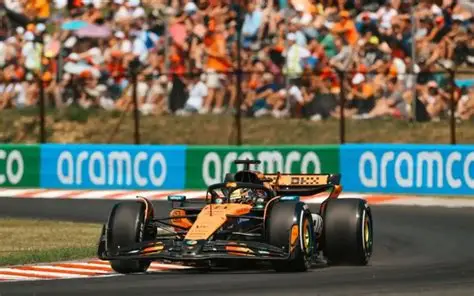
Oscar Piastri gave the Melbourne crowd exactly what it wanted on the opening day of the 2026 Formula One season. The Australian topped second practice at Albert Park, beat Kimi Antonelli and George Russell, and briefly made McLaren look ready to start the new rules era on the front foot.
It was the perfect Friday headline. The local driver was fastest. McLaren had pace. Mercedes looked dangerous but not unbeatable. Ferrari had started well. Max Verstappen had not shown his full hand. The new hybrid cars were difficult to read, but Piastri had put his name at the top of the first meaningful timesheet of the season.
Then the weekend changed.
By Sunday, Mercedes had turned practice promise into race dominance. George Russell won the Australian Grand Prix, Antonelli finished second, and Mercedes left Melbourne with a 1-2 finish. Ferrari completed the next two places through Charles Leclerc and Lewis Hamilton. Lando Norris salvaged fifth for McLaren. Oscar Piastri’s home race ended in frustration after he crashed before the start.
That is why this article now needs a sharper angle. It is no longer only about Piastri setting the fastest time on Friday. It is about how quickly Formula One can punish early optimism, especially in the first race of a new technical era. Practice pace creates excitement. Race execution decides reality.
For readers following The News Ink’s wider Formula 1 coverage, Piastri’s Australian Grand Prix weekend became a perfect early lesson of 2026: the fastest car over one lap on Friday is not always the team with the best race package, strategy discipline or reliability by Sunday.
Why Oscar Piastri’s Friday mattered
Oscar Piastri’s fastest time mattered because of timing, place and context. The first race of a new Formula One season always carries extra weight. The first race of a new technical era carries even more. Teams had spent months preparing for the 2026 regulations, with new power units, active aero, changed energy deployment and different driving demands.
Melbourne was the first public test under full competitive pressure. Every lap was being studied by rivals, engineers, broadcasters and fans. Was Mercedes genuinely quick? Had Ferrari solved its race-pace weaknesses? Was McLaren still a title-level team after winning the 2025 Constructors’ Championship? Had Red Bull fallen back? Could rookies handle the new cars?
Piastri answered part of that question in FP2. He set a 1:19.729 around Albert Park, finishing 0.214 seconds ahead of Antonelli. Russell was third, another tenth behind his Mercedes teammate. Ferrari followed, with Hamilton and Leclerc in the leading group, while Verstappen’s soft-tyre run was not clean enough to show Red Bull’s full potential.
For Piastri, doing that at home mattered emotionally. Australian drivers rarely get many chances to lead an F1 weekend in front of their own crowd. The Melbourne crowd had waited for a local hero to compete at the front. Friday gave them a glimpse.
The Mercedes warning was already visible
The mistake would be to look at the timing screen and think McLaren had control. Even on Friday, Mercedes looked dangerous. Russell and Antonelli were both close on single-lap pace, and the long-run data pointed strongly toward the silver cars.
That was the real warning from opening day. Oscar Piastri had the headline time, but Mercedes looked like the team with the stronger race foundation. Russell’s long runs were especially impressive, and several observers believed Mercedes had an advantage over a race stint.
In modern Formula One, that difference matters. Qualifying pace and race pace are connected, but they are not identical. A car can switch on tyres quickly and set a strong lap, yet struggle over 20 laps with degradation, energy management or balance. Another car may look less spectacular over one lap but become more powerful as fuel loads, tyres and strategy unfold.
Mercedes showed the second version. The team looked calm, efficient and fast across conditions. That impression carried into qualifying and became obvious in the race.
Oscar Piastri’s Friday therefore needs to be read correctly. It was a strong lap, not proof that McLaren had the best car.
The 2026 rules changed the meaning of practice
The 2026 Formula One regulations made practice harder to interpret. The new power units moved toward a much greater electric contribution, with Formula 1 explaining that the target was roughly a 50% contribution from electric power, compared with about 20% under the previous generation. The MGU-K output rose sharply to 350kW, while the MGU-H was removed.
That changed how teams used sessions. Drivers and engineers were no longer only chasing balance, tyre temperature and fuel loads. They were also learning how to deploy, recharge and manage electrical energy under race conditions. F1 also introduced new terminology such as Boost, Overtake and Recharge to make the energy-management era easier for fans to understand.
This is why Friday in Melbourne was so difficult to read. Teams could hide performance by using different engine modes, different recharge settings, different tyre programmes and different fuel loads. A fast lap might reflect good battery deployment as much as pure aerodynamic grip.
Oscar Piastri’s lap was still impressive. But in 2026, practice times became even less reliable as a full performance guide. Teams were learning the cars while trying not to reveal everything.
The opening weekend made that clear.
Ferrari started brightly but lost the race fight
Ferrari’s Friday began with promise. Charles Leclerc led first practice, with Lewis Hamilton close behind in his first Australian Grand Prix weekend as a Ferrari driver under the new rules. Ferrari looked sharp early, and both drivers remained in the top five during FP2.
The race told a different story. Leclerc finished third and Hamilton fourth. That was a solid result, but Ferrari missed a chance to beat Mercedes. The key strategic moment came under the early Virtual Safety Car, when Mercedes made a decisive pit-stop call and Ferrari failed to match it effectively.
That left Leclerc frustrated and Hamilton critical of the missed opportunity. Ferrari had pace, but Mercedes had execution. In a new rules era, that difference becomes even more important because strategy teams must react not only to tyres and track position, but also to energy use, race pace and recovery windows.
Oscar Piastri’s Friday time may have led the headlines, but Ferrari’s weekend also carried a lesson: starting fast is not enough if strategy falls behind.
McLaren’s weekend turned painful
McLaren entered 2026 with major expectations. The team had won the 2025 Constructors’ Championship, while Lando Norris had won the 2025 Drivers’ Championship. That made McLaren one of the teams everyone watched most closely in Melbourne.
Friday suggested McLaren could remain near the front. Piastri topped FP2, Norris was competitive when his running was not affected by a gearbox-related issue, and the car looked fast enough to challenge. But Sunday was painful. Norris finished fifth, well behind the Mercedes and Ferrari cars. Piastri did not get to convert his home pace into a race result after his pre-start crash.
That outcome gave McLaren an early reality check. The team still had performance, but not enough complete execution across the weekend. Reliability, preparation and race consistency all mattered.
For Oscar Piastri, the disappointment was personal. A home race is always emotionally charged, and the chance to start the season strongly in Australia was huge. Friday had created hope. Sunday removed it.
That contrast is why this story still matters. It shows how thin the gap is between hype and hurt in Formula One.
Russell and Antonelli announced Mercedes’ return
The most important result from the Australian Grand Prix was Mercedes’ 1-2 finish. Russell won from pole, while Antonelli finished second in his first full-time F1 season opener. That was a statement result for a team that had spent years trying to return to full title-contending status.
Russell’s win mattered because it confirmed that Mercedes had not simply looked good in practice. They had a complete race package. Antonelli’s second place mattered because it showed the rookie was ready for front-line pressure immediately.
The Italian teenager had already impressed by finishing second to Oscar Piastri in FP2. Qualifying then put Mercedes on the front row, and the race delivered the result the team wanted. By the time the cars left Melbourne, the early championship story had changed. McLaren had Friday pace. Mercedes had the points.
That difference is brutal, but it is the difference that defines seasons.
Antonelli’s rise changed the 2026 title picture
Kimi Antonelli’s performance in Australia was not a one-off. By July, he was leading the 2026 Drivers’ Championship, with Russell second for Mercedes. That gives the Melbourne weekend extra meaning. It was the first sign that Antonelli was not simply a promising rookie. He was ready to fight at the front immediately.
For Oscar Piastri and McLaren, that matters because a new rival had arrived at exactly the wrong time. Piastri already had Norris inside the same garage. He already had Verstappen, Hamilton, Leclerc and Russell in the wider title conversation. Antonelli added another front-line threat.
The new regulations were always going to reshuffle competitive order. Mercedes adapted fastest. Antonelli became the biggest early beneficiary. That does not make Piastri’s FP2 lap less impressive, but it does show why Friday pace alone could not define the season.
By mid-year, the standings had become another reminder: Mercedes had turned Melbourne promise into a sustained advantage, while Piastri was still trying to close the gap.
Verstappen’s difficult weekend hinted at Red Bull’s problems
Max Verstappen’s Melbourne weekend was messy. He did not show full pace on Friday, crashed in qualifying and started from the back, then recovered to sixth in the race. For most drivers, sixth from the back would be a strong recovery. For Verstappen and Red Bull, it underlined that something was wrong.
The early 2026 Red Bull package looked less dominant than previous years. Verstappen remained a threat, but the car did not appear to give him the same margin. By July, he was seventh in the championship, behind both Mercedes drivers, both Ferrari drivers and both McLaren drivers.
That shift changed the wider F1 story. For years, Red Bull and Verstappen were the benchmark. Melbourne suggested the new regulations had weakened that certainty. Mercedes rose. Ferrari stayed close. McLaren remained competitive but inconsistent. Red Bull lost its aura.
Oscar Piastri’s Friday time happened inside that larger reshuffle. It was not only a good lap. It was part of a weekend where the whole pecking order became uncertain.
The Piastri-Verstappen rumours later showed McLaren’s pressure
By July, Oscar Piastri was also part of driver-market speculation. Reuters reported that his manager Mark Webber dismissed as “fiction” claims that Piastri could be involved in a possible swap with Verstappen. Webber said Piastri remained committed to McLaren, while the rumours reflected wider uncertainty around Verstappen and Red Bull.
The fact that such stories gained attention says something about McLaren’s season. A team that begins as reigning Constructors’ Champion but falls behind Mercedes quickly becomes vulnerable to outside noise. When Piastri is sixth in the standings and Verstappen is unhappy with Red Bull, speculation naturally grows.
That does not mean the rumours were accurate. Reuters made clear that Webber rejected them. But the timing is relevant. The Australian Grand Prix had started with Piastri fastest on Friday. Four months later, the conversation had moved toward McLaren’s performance gap and whether its star drivers were satisfied.
That is how fast Formula One narratives move.
The Aston Martin warning at the back
Aston Martin’s difficult start also deserves attention. The team struggled badly in Melbourne, and Fernando Alonso later retired from the race. The original report’s point about Aston Martin being far off the pace fits the wider 2026 theme: the new rules created winners and losers quickly.
Adrian Newey’s presence added extra intrigue. Aston Martin had invested heavily in technical leadership and Honda partnership ambitions, but the opening weekend showed that money and names do not guarantee immediate performance. New regulations can expose weaknesses in simulation, power-unit integration, cooling, energy deployment and chassis balance.
Formula One resets are unforgiving. Some teams find the new direction quickly. Others spend months recovering. Aston Martin started in the second group.
For McLaren, that served as both warning and comfort. They were not lost like Aston Martin, but they were not dominant like Mercedes. They were in the difficult middle: close enough to believe, far enough behind to worry.
Why practice pace still matters
It would be wrong to dismiss Oscar Piastri’s fastest practice time as meaningless. Practice pace matters because it reveals potential. It gives engineers data, gives drivers confidence and tells rivals where a car can be strong.
Piastri’s lap showed that McLaren had single-lap speed. It showed that he could adapt quickly to the 2026 car. It showed that home pressure did not stop him from producing. It also gave McLaren a benchmark against Mercedes and Ferrari.
The problem is that practice pace is only one layer. A team must convert it through qualifying, strategy, reliability and race discipline. Mercedes did that better in Australia. McLaren did not.
That is the lesson. Friday can reveal promise. Sunday reveals the full package.
Oscar Piastri’s Australian weekend should therefore be remembered as both encouraging and painful. The pace was real. The result was not.
What McLaren needed to fix after Melbourne
McLaren’s key questions after Melbourne were clear.
First, they needed cleaner reliability. Norris lost early running with gearbox checks, and any lost practice time in a new rules era matters. Second, they needed stronger race pace. Norris finishing fifth behind Mercedes and Ferrari showed that McLaren did not yet have the best Sunday car. Third, they needed to protect Piastri from home-weekend pressure and build consistency from race one.
Fourth, they needed to understand the 2026 energy-management challenge faster. Mercedes appeared to have the most complete answer early in the season. McLaren could produce fast laps, but it needed race-distance efficiency.
This connects with The News Ink’s wider look at sports training and technology, because modern F1 performance is now a blend of driver skill, simulation, energy modelling, tyre prediction and real-time strategy. The 2026 cars made that blend even more complex.
McLaren had the talent. Melbourne showed it needed sharper execution.
Key facts at a glance
| Detail | Figure |
|---|---|
| Event | 2026 Australian Grand Prix |
| Venue | Albert Park, Melbourne |
| FP2 fastest driver | Oscar Piastri |
| FP2 time | 1:19.729 |
| FP2 gap to Antonelli | 0.214s |
| FP2 top three | Piastri, Antonelli, Russell |
| Race winner | George Russell |
| Race result | Mercedes 1-2 |
| Ferrari result | Leclerc third, Hamilton fourth |
| Best McLaren race result | Lando Norris fifth |
| Piastri race outcome | Crashed before the start |
| July 2026 standings | Antonelli leads, Russell second, Piastri sixth |
What Piastri could take from the weekend
Oscar Piastri could still take something from Melbourne. The result hurt, but the pace showed that he had not lost sharpness. He had adapted quickly to the new car. He had handled home attention on Friday. He had put McLaren at the front of a session where every team was trying to understand the new era.
That matters for a driver’s confidence. A bad race weekend can feel easier to process when there is evidence of underlying speed. Piastri had that evidence. The challenge was to turn it into results across the next races.
By mid-season, his position in the standings showed both recovery and frustration. He had points and pace, but Mercedes had taken control of the title picture. Norris was ahead of him inside McLaren. The season remained alive, but the Melbourne lesson had not disappeared.
In Formula One, the first weekend rarely decides a championship. It often tells the teams what they must become.
The careful takeaway
Oscar Piastri’s fastest time on the opening day of the 2026 Formula One season was a brilliant Friday moment for McLaren and the Melbourne crowd. It showed speed, confidence and promise at the start of a new rules era.
But the Australian Grand Prix weekend became a painful reminder that Formula One rewards complete execution, not isolated pace. Mercedes turned its strong long runs into qualifying strength and then a 1-2 finish. Russell won, Antonelli announced himself as a serious force, Ferrari took third and fourth, and McLaren left with Norris fifth and Piastri’s home hopes broken before the race had properly begun.
That does not make Piastri’s Friday irrelevant. It makes it more revealing. McLaren had speed, but not enough control. Piastri had pace, but not a result. The new regulations gave teams more variables to master, and Mercedes mastered them first.
The opening day belonged to Oscar Piastri. The opening weekend belonged to Mercedes.
For more Formula One analysis, race-weekend updates and sports features, follow The News Ink on Medium.