


Cyprus Criticises UK Response to RAF Akrotiri Drone Strikes as Base Tensions Deepen
Cyprus criticises UK response to the drone strike on RAF Akrotiri because the attack did more than damage a British military site. It shook local confidence, revived old arguments over Britain’s sovereign bases on the island, and exposed how quickly the Iran conflict can pull nearby countries into danger.
The Cypriot government’s frustration centred on two questions. Why were people living near the base not warned sooner? And why did Britain appear slow to strengthen air defences after a Shahed-type drone managed to reach one of the UK’s most important overseas bases?
The drone hit RAF Akrotiri shortly after midnight on 2 March 2026. British and Cypriot officials said the damage was limited and no one was injured. But the political impact was immediate. Families were moved from parts of the base. Nearby villages felt exposed. Cypriot officials said they had not received enough information. The strike also triggered a wider debate about whether Cyprus is being placed at risk because of military operations linked to the UK, the United States and the wider Middle East conflict.
Cyprus criticises UK response not because Nicosia wants to break its security relationship with Britain immediately, but because the attack made a long-standing issue urgent again. The British bases at Akrotiri and Dhekelia have existed since Cyprus gained independence in 1960. For decades, they have been useful to the UK and its allies. For many Cypriots, they have also remained a sensitive reminder of colonial history.
The News Ink has already covered how the Iran conflict disrupted UK Middle East flights and forced the first UK evacuation flight from Oman. The Akrotiri strike shows another side of the same crisis: military bases, civilians and allies all being pulled into the danger zone.
Why Cyprus criticises UK response now
Cyprus criticises UK response because local officials felt Britain did not provide enough warning or reassurance before and after the drone strike. Cypriot High Commissioner to the UK Kyriacos Kouros told BBC Newsnight that people were “disappointed” and “scared” after the attack. He said Cypriots expected more cooperation and stronger protection.
That criticism was echoed in Nicosia. President Nikos Christodoulides and government officials stressed that Cyprus had not participated in military action and did not want the island to be dragged into a regional war. Officials also said there had not been timely warning to citizens living near the Akrotiri base.
The UK’s position was different. British ministers said the strike was aimed at the RAF base, not the Republic of Cyprus, and that the UK had already strengthened defensive systems in the region. Defence Secretary John Healey later told Parliament that Britain had pre-positioned Typhoons, F-35s, counter-drone teams, radar and other defensive capabilities before the worst of the crisis began.
The disagreement is therefore partly about facts, but also about trust. Britain says it acted early and followed military advice. Cyprus says people near the base felt under-informed and exposed.
That is why Cyprus criticises UK response with such force. The dispute is not only about one drone. It is about whether Cyprus has enough say over risks created by foreign military sites on its soil.
What happened at RAF Akrotiri?
RAF Akrotiri was hit by a Shahed-type drone during the first days of Iranian retaliation after US-Israeli strikes on Iran. British officials said the drone caused minimal damage and no casualties. AP reported that the drone struck a hangar near the runway after evading defences, while further drones were later intercepted.
UK officials said the drone was believed to have been launched by a pro-Iranian militia from Lebanon or western Iraq, though the exact launch point was not confirmed. The Guardian reported that British investigators had not conclusively established where the drone came from. That uncertainty matters because the source affects how Cyprus, Britain and allies understand the threat.
Cyprus criticises UK response because even a limited strike proved the base could be reached. For residents near Akrotiri, the question was not whether the damage was minor. The question was whether the next attack could be worse.
The strike also carried symbolic weight. AP described it as a troubling expansion of the US-Israeli war with Iran onto the island of Cyprus, an EU member state, even though the target was British sovereign territory. For Cypriots, that distinction may not feel reassuring when sirens sound near their villages.
The attack showed that modern drones can turn a distant conflict into a local emergency within hours.
Key facts at a glance
| Issue | Detail |
|---|---|
| Location | RAF Akrotiri, a UK sovereign base area in Cyprus |
| Date | Shortly after midnight on 2 March 2026 |
| Weapon type | Shahed-type one-way attack drone |
| Damage | Minimal damage reported |
| Casualties | No casualties reported |
| Further threat | Additional drones were intercepted |
| Cypriot concern | Lack of warning and insufficient information |
| UK response | More air assets, counter-drone teams, helicopters and HMS Dragon |
| Later update | HMS Dragon arrived in the eastern Mediterranean three weeks after the strike |
| Wider issue | Future of UK bases and Cyprus’s exposure to regional conflict |
This table explains why Cyprus criticises UK response as both a security issue and a political issue. The physical damage was limited, but the diplomatic damage was much larger.
HMS Dragon became the symbol of the dispute
Cyprus criticises UK response partly because of the timing of HMS Dragon’s deployment. Britain announced that the Type 45 air-defence destroyer would reinforce the eastern Mediterranean after the Akrotiri strike. But the warship did not sail immediately.
Reuters reported that HMS Dragon departed for the eastern Mediterranean on 10 March, more than a week after the base was hit. The government faced criticism because French and Greek military assets had moved quickly while Britain’s destroyer still had to be prepared for deployment.
Healey told MPs that crews were working “22 hours a day” to get the ship ready. He said HMS Dragon would join US air-defence destroyers and add protection in the eastern Mediterranean. The ship is equipped with the Sea Viper missile system and advanced radar designed to track and neutralise airborne threats.
But in public perception, the delay mattered. HMS Dragon became a symbol of whether Britain had enough readiness to defend its own bases quickly during a fast-moving crisis.
Later, The Guardian reported that HMS Dragon had arrived in the eastern Mediterranean three weeks after the drone hit RAF Akrotiri. That update is important. The ship did eventually reach the region, but not fast enough to silence the criticism.
What Britain says it had already deployed
The UK government argued that HMS Dragon was only one part of a wider defence picture. In his 9 March statement to Parliament, Healey said the UK had taken steps from January to pre-position Typhoons, F-35s, counter-drone teams, radar and air defence systems in the region.
He also said the UK had sent four extra Typhoons, three Wildcat helicopters, a Merlin helicopter and HMS Dragon after the Iranian retaliation began. He described a 400-strong air defence team in Cyprus, additional RAF operations experts in more than five regional countries, and British pilots flying more than 230 hours during the crisis.
Cyprus criticises UK response despite those details because the base was still hit. That is the political problem for Britain. Ministers can list assets, sorties and radar systems. Local residents judge the response by whether a drone got through and whether they were warned.
Both views can be true. Britain may have had serious defensive systems in place. Cyprus may still reasonably ask why those systems and communication arrangements did not prevent fear on the ground.
This is the gap Healey’s visit had to close.
Why the warning issue matters most
The heart of the Cyprus complaint was not only interception failure. It was communication.
AP reported that Cypriot officials said Britain gave no warning to the government about a drone heading toward RAF Akrotiri or that a nearby village of about 1,000 people could be in danger. The UK Ministry of Defence did not directly address that specific complaint in AP’s account, instead stressing the strength of UK-Cyprus friendship and the importance of the bases.
For a government responsible for public safety, that lack of warning is difficult to accept. Cyprus may not control the British sovereign base areas, but Cypriot citizens live nearby. If a drone is heading toward a military site close to civilian communities, Nicosia wants timely information.
Cyprus criticises UK response because emergency warning is not a diplomatic courtesy. It is a safety requirement. Residents need to know whether to shelter, move away from windows, avoid roads or stay clear of military areas.
The same lesson appeared in Qatar, where falling debris from intercepted missiles created civilian danger. The News Ink’s report on an intercepted missile in Doha showed how even successful defence can still leave civilians exposed.
The British bases question returns
The drone strike revived a much older argument: what should happen to Britain’s bases in Cyprus?
Akrotiri and Dhekelia were retained by Britain after Cyprus gained independence in 1960. They cover about 99 square miles and remain sovereign British territory. They include airfields, military infrastructure, listening posts and support facilities used for operations across the Middle East.
Cyprus criticises UK response because the bases are useful to Britain but risky for Cyprus. When they are used for surveillance, logistics or regional operations, they can become targets. Yet nearby Cypriot communities may not have full visibility over what is happening or why.
Cyprus’s foreign minister Constantinos Kombos said after the strike that there would need to be a conversation about the future of the bases. AP later reported that Christodoulides wanted a “frank and open discussion” with Britain after the Iran conflict, though Cypriot officials said abolition was not immediately on the table.
That distinction matters. Cyprus is not necessarily demanding removal tomorrow. It is demanding transparency, reassurance and possibly a new understanding of how the bases operate during regional crises.
Cyprus’s neutrality problem
Cyprus has tried to present itself as a bridge between Europe and the Middle East. It has built ties with Israel, Lebanon, the United Arab Emirates and other regional actors. It has also repeatedly said it is not taking part in military action.
The Akrotiri strike made that position harder to maintain. Cyprus criticises UK response because the presence of British bases means the island can become involved in a conflict even when the Republic of Cyprus says it is neutral.
This is a geographic reality. RAF Akrotiri is much closer to Lebanon, Israel and Syria than Britain is. If Iran-backed groups want to punish Britain or Western allies, a base in Cyprus is a much easier target than one in the UK.
That creates a painful dilemma for Nicosia. The bases bring security ties and strategic relevance, but they also bring exposure. Cyprus can say it is not a belligerent, but missiles and drones do not always respect political distinctions.
The News Ink’s analysis of how the Iran war challenges global rules explains why regional conflicts increasingly blur legal, diplomatic and military boundaries.
Starmer’s defensive-only line
The drone strike also intersected with Keir Starmer’s careful position on the US-Israel campaign against Iran. Britain did not join the first offensive strikes. Starmer later allowed US forces to use British bases for specific defensive operations targeting Iranian missile sites, while saying any UK offensive involvement would need a clear legal basis and plan.
AP reported that British officials later clarified that the bases involved in US defensive operations were in England and Diego Garcia, not RAF Akrotiri. Starmer’s office also said he had reassured Cyprus that RAF Akrotiri would not be used for US strikes on Iran.
Cyprus criticises UK response because, from Nicosia’s point of view, public confusion itself was dangerous. If people believe British bases in Cyprus are being used for strikes, the island could become a target whether or not the claim is accurate.
This is why clear messaging matters. In war, ambiguity can be destabilising. A single unclear statement can create fear among civilians, anger among local officials and opportunities for hostile actors to justify attacks.
Opposition pressure in Britain
The Akrotiri strike also became a political issue in London. Conservative leader Kemi Badenoch called for stronger action, saying that once British bases had been attacked, Britain had become part of the crisis whether it liked it or not. She argued that the UK needed to do what it could to stop further attacks.
Critics also questioned why the Royal Navy could not send HMS Dragon sooner. Reuters reported that the delay added to scrutiny of Britain’s military readiness, especially when other allies had moved assets into the region more quickly.
The government’s response was to stress preparation, legality and defensive action. Healey said British forces had acted from day one, intercepted drones across the region and worked closely with allies. He also said the commander in Cyprus had told him he had been given everything he had asked for.
Cyprus criticises UK response while British opposition parties criticise the government from another angle. Cyprus wanted more warning and protection. UK critics wanted faster and stronger military action. Ministers tried to balance both without escalating beyond defensive operations.
How the drone got through
One of the most uncomfortable questions is how a Shahed-type drone reached RAF Akrotiri despite advanced military systems nearby.
The Guardian reported that UK officials believed the drone evaded detection by flying low and slow. This is a known challenge. One-way attack drones can be cheaper, slower and smaller than traditional missiles, making them difficult to detect and engage, especially when they approach at low altitude or through cluttered radar environments.
Cyprus criticises UK response because the technical explanation does not remove public anxiety. If a low-cost drone can reach a high-value base once, people will ask whether it can happen again.
The UK said it strengthened counter-drone teams, air defence, radar and aircraft deployments. Royal Navy helicopter crews later reported six weeks of sorties safeguarding Cyprus and the eastern Mediterranean from drone and missile threats. Those follow-up measures matter, but they came after the incident had already changed the political mood.
The lesson is clear: drone defence is no longer a specialist issue. It is central to base security, civilian warning systems and regional deterrence.
What assets were used or added?
| Capability | Role in the response |
|---|---|
| RAF Typhoons | Defensive sorties and interception of airborne threats |
| F-35B jets | Advanced air operations and regional deterrence |
| Counter-drone teams | Detecting, tracking and defeating drone threats |
| Radar systems | Early warning and airspace monitoring |
| Wildcat helicopters | Maritime and air-defence support with counter-drone capability |
| Merlin helicopter | Additional aviation support |
| HMS Dragon | Type 45 air-defence destroyer with Sea Viper missile system |
| Voyager aircraft | Refuelling support for RAF operations |
| Dstl analysis | Examining drone fragments for foreign military hardware |
This mix shows that the UK response was broader than one ship. But Cyprus criticises UK response because the public judged the response by outcome and communication, not by inventory.
Why this matters for civilians
The Akrotiri strike caused no casualties, but civilians still had reason to worry. Military sites are often located close to homes, roads, schools, businesses and villages. If drones or missiles are intercepted, debris can fall. If an attack misses, it can hit civilian areas. If a base is targeted repeatedly, surrounding communities live with sirens, road closures and fear.
Cyprus criticises UK response because people near Akrotiri did not feel like spectators to a foreign crisis. They felt close to the target. Some families connected to the bases were temporarily moved. Nearby villages questioned whether they would be warned next time.
This is why defence policy becomes local very quickly. A minister may speak about strategic posture. A resident thinks about children sleeping near a military runway.
The same wider pattern has appeared across the Middle East during the Iran conflict. The News Ink has reported on fear and shortages in Iran and how ordinary people become trapped between military strategy and daily insecurity.
What Healey’s visit had to achieve
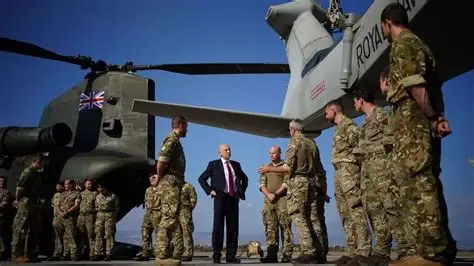
John Healey’s visit to Cyprus was not just a military inspection. It was a diplomatic repair mission.
He needed to reassure British personnel that the government would protect them. He needed to reassure Cyprus that the UK was listening. He needed to defend the government against criticism at home. He also had to avoid suggesting Britain would escalate into a wider offensive role without legal and strategic clarity.
Cyprus criticises UK response because trust had been damaged. Healey’s task was to show that the UK recognised the seriousness of the strike, understood local fear and was improving both military readiness and communication.
That is not easy. In a crisis, governments often speak in different languages. Military officials talk about capability. Diplomats talk about partnership. Local communities want clear warnings and visible protection. Opposition politicians demand stronger action.
A successful response has to address all of them.
Current status after the first criticism
The immediate article frame was “ahead of Healey’s visit.” The later record shows the story continued. HMS Dragon departed on 10 March and arrived in the eastern Mediterranean about three weeks after the strike. It began operational integration into Cyprus’s defence. Royal Navy helicopter crews later marked six weeks of operations safeguarding the skies around Cyprus and the eastern Mediterranean.
That does not erase the original criticism. It updates the story. Britain did reinforce the region, but slowly enough to face scrutiny. Cyprus did not force the bases issue to a breaking point, but it opened the door to future talks about transparency and arrangements.
Cyprus criticises UK response because the strike exposed a gap between strategic cooperation and local consent. That issue remains even after additional military assets arrive.
What happens next?
The next stage depends on three things.
First, the Iran conflict. If attacks ease, the immediate pressure on Akrotiri may fall. If the war escalates again, Cyprus could face renewed drone or missile threats.
Second, UK-Cyprus communication. If Britain improves warning systems and intelligence-sharing with Nicosia, some of the anger may fade. If another incident happens without warning, the bases debate will intensify.
Third, the future of British sovereign bases. Cyprus is unlikely to remove the issue from the political agenda now. Even if abolition is not imminent, calls for greater transparency, consultation and possibly renegotiated terms are likely to grow.
Cyprus criticises UK response because the island wants to avoid becoming a silent platform for other countries’ wars. Britain wants to preserve strategic freedom. Those interests can coexist only if communication improves.
FAQ: Cyprus criticises UK response
Why did Cyprus criticise the UK response?
Cyprus criticises UK response because officials said Britain did not give enough warning or information after a drone strike hit RAF Akrotiri, leaving nearby communities frightened and raising questions about base security.
Was anyone injured in the RAF Akrotiri drone strike?
No casualties were reported. British and Cypriot officials said the Shahed-type drone caused limited or minimal damage.
Where did the drone come from?
UK officials believed the drone may have been launched by a pro-Iranian militia from Lebanon or western Iraq, but the exact launch location was not conclusively confirmed.
Why was HMS Dragon sent to Cyprus?
HMS Dragon, a Type 45 air-defence destroyer, was sent to reinforce protection in the eastern Mediterranean after the Akrotiri drone strike and wider Iranian retaliation across the region.
Are Cyprus and the UK reviewing the bases?
Cypriot officials have called for a frank discussion about the future of the British bases, with a focus on transparency and security. They have not said immediate abolition is the official position.
The bottom line
Cyprus criticises UK response because the RAF Akrotiri drone strike turned a strategic military issue into a civilian and diplomatic crisis. The attack caused limited damage and no casualties, but it raised serious questions about warning systems, base security and Cyprus’s exposure to a war it says it is not part of.
Britain insists it acted early, deployed major defensive assets and strengthened the region with aircraft, counter-drone teams, helicopters and HMS Dragon. Cyprus argues that people near the base still felt uninformed and vulnerable. Both arguments explain why the fallout became so serious.
The deeper issue is the future of Britain’s bases on the island. Akrotiri and Dhekelia remain central to UK and allied operations in the Middle East. But if those bases make Cyprus a target, Nicosia will demand more transparency, more protection and more say.
The drone did little physical damage. Politically, it hit something much more sensitive: trust.
For more Middle East crisis, defence and global security coverage, follow The News Ink on Threads.