Sudan Civil War: Devastating 2026 Peace Warning as Both Sides Keep Fighting
Sudan civil war has reached a stage where small signs of normal life can look almost miraculous, but they should not be mistaken for peace.
On 1 February 2026, a domestic Sudan Airways flight landed at Khartoum International Airport from Port Sudan, carrying passengers back into a capital that had been broken by nearly three years of war. Families rushed across the tarmac. Travellers hugged. Officials presented the flight as another step toward restoring life in Khartoum after the army recaptured the city from the Rapid Support Forces.
The image was powerful because Khartoum had become one of the war’s symbols. Its airport was badly damaged in the opening weeks of fighting in 2023. Its ministries, banks, markets, universities and embassies were looted, burned or turned into battle zones. The return of flights looked like a fragile promise that Sudan might be moving from destruction toward recovery.
But Sudan civil war is not ending simply because planes can land in Khartoum again. Reuters reported in July that more than two million people had returned to the capital, yet electricity was still running at only about one-third of prewar capacity, many buildings remained damaged and civil servants were struggling without regular pay. Drone attacks by the RSF were still targeting infrastructure around the capital.
The war has moved, but it has not stopped. Darfur, Kordofan, Blue Nile and other areas remain violent. The RSF still controls large western territory. The army controls the east and much of the capital. Both sides still believe they can improve their military and political position by fighting.
That is why the question matters: why does the Sudan civil war continue when the cost is already so extreme?
For readers following wider global instability, The News Ink’s global markets analysis shows how conflict, trade routes and regional rivalries can quickly become economic problems far beyond the battlefield.
How Sudan civil war reached this point
Sudan civil war began in April 2023 after a power struggle between the Sudanese Armed Forces, led by General Abdel Fattah al-Burhan, and the paramilitary Rapid Support Forces, led by Mohamed Hamdan Dagalo, known as Hemedti, exploded into open fighting.
The immediate dispute centred on how the RSF would be integrated into the national army and who would control Sudan’s transition after the fall of Omar al-Bashir. But the deeper issue was power. Both forces had weapons, money, foreign contacts and political ambitions. Neither wanted to surrender command to the other.
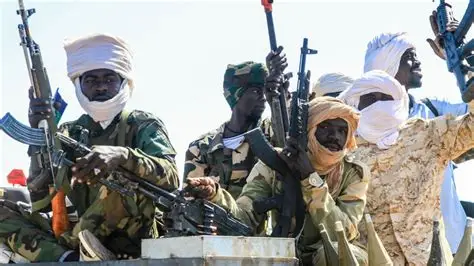
Khartoum became the first great prize. The RSF swept into parts of the capital early in the war, while the army fought to retake ground. Civilians were trapped between airstrikes, artillery, looting, checkpoints and street battles. The war then expanded across Darfur, Kordofan and other regions, drawing in ethnic militias, local armed groups and foreign support networks.
By 2026, Sudan civil war had become a war of division. The army-led government returned ministries to Khartoum and Prime Minister Kamil Idris declared 2026 the “year of peace.” Yet the RSF retained western strongholds and continued fighting elsewhere. The result is not one national government restoring order. It is a fractured country where each side still controls enough territory to keep believing victory is possible.
Why Khartoum’s reopening does not mean peace
Khartoum’s limited reopening is politically important. A government that can bring ministries, civil servants, flights and students back to the capital can claim legitimacy. It can say the state is returning.
But Sudan civil war has taught civilians to distrust symbols. A plane landing does not restore water systems. A ministry reopening does not remove mines from markets. A government announcement does not guarantee electricity, salaries or security.
Reuters reported that signs of recovery are stronger in Omdurman, where the army maintained partial control during the war, while Khartoum and Bahri remain badly damaged and short of services. Students at the University of Khartoum have been told to return even though parts of the campus remain damaged. Small business owners in Souq al-Arabi face pressure to reopen while still lacking reliable power.
That is why the airport image is so important and so limited. It shows the state wants to project normality. It also shows how far normality still has to go.
Sudan civil war has not become less dangerous because Khartoum has become slightly more livable. It has become geographically uneven. Some areas are returning. Others are still being destroyed.
The humanitarian scale is overwhelming
The scale of the Sudan civil war is difficult to absorb. AP reported in July that the war has killed at least 59,000 people, displaced about 13 million and left more than 30 million in need of humanitarian assistance. The World Health Organization said Sudan faces the world’s largest humanitarian emergency, with more than 33 million people needing assistance and 21 million needing health services.
Food insecurity is also severe. WFP, FAO and UNICEF warned in May that nearly 19.5 million people were facing crisis levels of acute food insecurity or worse. They also said more than 825,000 children under five were expected to suffer from severe acute malnutrition in 2026.
Those numbers explain why international officials repeatedly call Sudan one of the world’s worst crises. Yet numbers can also numb readers. The human meaning is simple: families are hungry, sick, displaced, unpaid, bereaved and often unable to reach help.
Sudan civil war continues because the humanitarian cost has not yet translated into enough political cost for the commanders and their backers. Civilians are paying the price. Armed leaders are still calculating power.
The News Ink’s economy coverage helps explain why wars last longer when state revenue, gold, smuggling, taxes and foreign support keep armed groups financially alive even while ordinary people collapse.
Darfur keeps the war from being forgotten
Darfur remains the moral centre of the Sudan civil war because the violence there has revived memories of the atrocities committed during the earlier Darfur conflict. The RSF grew out of the Janjaweed militia network used during that earlier war, and many communities still carry the trauma of that history.
In July 2026, Reuters reported that a United Nations probe found RSF forces and allies carried out mass killings, abductions of women and girls, mass gang rapes and deliberate starvation during the siege and capture of al-Fashir in North Darfur. The UN Fact-Finding Mission said the pattern amounted to genocide. The RSF denied the accusations and said accounts of abuse were fabricated by enemies.
The finding matters because it raises the stakes for any peace deal. If one side believes the other has committed genocide, power-sharing becomes harder. If RSF leaders fear accountability, they may fight to preserve leverage. If the army presents itself as the only force capable of stopping RSF atrocities, it may resist compromise that leaves the RSF in cities or institutions.
Sudan civil war is therefore not only a military contest. It is also an accountability trap. The worse the abuses become, the harder it is for either side to accept a deal that looks like impunity or surrender.
Al-Obeid may be the next warning sign
After al-Fashir, attention has shifted to al-Obeid, the capital of North Kordofan. UN officials and rights groups have warned that another catastrophe may be unfolding there as RSF forces build pressure around the city.
Reuters reported that the UN human rights chief warned of a pattern of summary executions, abductions, torture and sexual violence around al-Obeid. The UN Human Rights Council ordered an urgent investigation into alleged abuses in the region. AP also reported recent drone strikes on civilian vehicles in North Kordofan and near Omdurman, with rights groups accusing the RSF of deliberately targeting civilians.
This shows how Sudan civil war keeps moving from one crisis point to another. When Khartoum becomes quieter, Darfur burns. When al-Fashir falls, al-Obeid becomes the next fear. When one front slows, drones hit roads, power facilities and supply routes elsewhere.
A war like this does not end when one city changes hands. It mutates.
Why both sides still think fighting helps them
The simplest reason Sudan civil war continues is that both sides still believe fighting can improve their bargaining position.
The army sees itself as the state. It controls official institutions, the central bank, parts of the bureaucracy, diplomatic recognition and much of eastern Sudan. After retaking Khartoum, it has a stronger claim that it is restoring national authority. Accepting a deal before the RSF withdraws from occupied cities would look, to army hardliners, like rewarding a paramilitary force that seized civilian neighbourhoods and committed atrocities.
The RSF sees itself as too powerful to be dissolved. It controls territory, fighters, supply networks and parts of the gold economy. It has built alliances in Darfur and elsewhere. If it accepts full withdrawal and disarmament without guarantees, it risks losing everything. For Hemedti and senior RSF figures, military leverage is political survival.
That is the core deadlock. The army wants the RSF out of cities before a real political settlement. The RSF wants guarantees before giving up territory. Each side says the other cannot be trusted. Each side sees compromise as dangerous.
The latest peace plan shows the deadlock
A U.S.-backed peace proposal in 2026 showed how narrow the path to peace remains. Reuters reported that the plan called for an immediate 90-day humanitarian truce, talks on a permanent ceasefire and a civilian-led transition to elections. It also included a unified national army, disarmament and reintegration arrangements.
The army-led government accepted much of the proposal but said any broad agreement must include full RSF withdrawal from all cities occupied since May 2023. The documents reviewed by Reuters showed the army rejected limited withdrawals focused only on priority areas such as North Darfur and North Kordofan.
The RSF said it welcomed the proposal and submitted a response, but Reuters noted that the force has previously welcomed peace initiatives while continuing attacks.
That is the Sudan civil war in one paragraph: everyone says they want peace, but each side defines peace in a way that protects its own leverage. The army wants withdrawal before trust. The RSF wants negotiation before surrender. Mediators want a truce now. Civilians need aid immediately.
Foreign support keeps the war alive
Sudan civil war is also prolonged by outside actors. CSIS described the conflict as an international quagmire, with more than 10 countries taking sides or shaping the war indirectly. The UAE has been widely accused by UN experts, U.S. lawmakers and analysts of backing the RSF, allegations Abu Dhabi denies. Egypt has supported the SAF politically and strategically. Iran, Turkey, Eritrea, Ethiopia, Russia-linked networks and others have all been linked in different ways to weapons, training, logistics or influence.
Chatham House argued that the flow of arms and money feeding the war can be cut, but what is missing is political will. It noted that drone strikes surged in 2026 and that regional actors have helped create permissive conditions for the war economy.
Foreign involvement matters because it reduces the pressure to compromise. If commanders believe weapons, money, fuel, drones or political cover will keep coming, they can gamble on another offensive. If outside states use Sudan as part of wider Red Sea, Gulf, Nile or mineral rivalries, Sudanese civilians become trapped inside other countries’ strategic games.
The News Ink’s report on why the US and Israel attacked Iran is relevant because Middle East escalation has drawn attention and diplomatic energy away from Sudan, even while Sudan itself is being pulled deeper into Gulf and Red Sea politics.
Gold, land and war money
Sudan’s resources also help explain why Sudan civil war continues. Gold, trade routes, livestock, border crossings, taxes, banks and ports all matter. Armed groups do not fight only for flags. They fight for revenue.
CSIS reported that Sudan’s gold production rose sharply after the war began, with both the SAF and RSF using gold trade to buy weapons, pay fighters and finance operations. Control of mines, smuggling corridors and export channels therefore becomes a military objective.
This is one reason peace is hard. A ceasefire is not only about stopping bullets. It is about who controls money afterward. If a commander gives up a territory rich in gold or taxes, he gives up the ability to pay fighters. If fighters are not paid or integrated, they may fragment into criminal networks or local militias.
Sudan civil war has become a war economy. People who profit from that economy may not want peace unless peace protects their interests.
Drones changed the battlefield
Drone warfare has changed the Sudan civil war. The RSF has used drones to strike infrastructure around Khartoum and North Kordofan. The SAF and its backers have also relied on drones and air power. Chatham House cited UN-linked figures showing drone strikes accounted for more than 80% of at least 880 documented civilian deaths between January and April 2026.
Drones make the war harder to contain. They allow forces to strike airports, power stations, vehicles and supply routes far behind front lines. They also disrupt recovery. Khartoum can reopen an airport one week and close it after drone threats the next.
The AP reported in May that a drone launched by the RSF targeted Khartoum International Airport but was shot down before causing damage or casualties. Reuters reported around the same period that drone attacks had shattered months of relative calm in Khartoum and that the army accused the UAE and Ethiopia of links to the attack, which both denied.
This is why flights into Khartoum feel so fragile. A plane landing is progress. A drone strike can reverse the signal overnight.
Disease is another result of war
Sudan civil war has also broken health systems. Reuters reported in July that the World Health Organization warned Sudan’s cholera outbreak could worsen because of conflict, displacement and the rainy season. The outbreak declared in late June had killed at least 114 people and infected more than 1,300 others.
Cholera spreads when clean water, sanitation and healthcare collapse. War creates exactly those conditions. Water systems are damaged. Clinics close. Roads are unsafe. Displaced people crowd into camps or host communities. Aid workers cannot move freely.
The WHO representative in Sudan warned that al-Obeid could become “the second al-Fashir, or even worse.” That warning is not only about bullets. It is about hunger, disease and health facilities that cannot cope.
Sudan civil war is therefore killing people directly and indirectly. Some die in attacks. Others die because the war has destroyed the systems that keep people alive.
Why international outrage has not worked
International outrage has not stopped Sudan civil war because condemnation has been cheaper than enforcement. Governments condemn atrocities. UN bodies order investigations. Aid agencies warn of famine. But arms routes, financing, diplomatic protection and battlefield incentives remain.
The problem is not lack of knowledge. The world knows Sudan is suffering. The problem is lack of unified pressure. External actors do not agree on what they want. Some back the army. Some are accused of supporting the RSF. Some prioritise Red Sea security, Gulf alliances, migration, gold, counterterrorism, or relations with powerful partners.
That division gives Sudan’s warring parties room to maneuver. Each side can tell its supporters that international pressure is biased. Each side can wait for a better battlefield position. Each side can use talks to buy time.
This is why the Sudan civil war has become one of the clearest examples of a neglected global crisis. The devastation is visible, but the political cost of ignoring it remains too low.
What could force both sides toward peace?
Peace will become more likely only when fighting becomes less useful than compromise. That requires pressure on several fronts at once.
First, outside arms and financing must be reduced. If weapons and money keep flowing, both sides will keep fighting.
Second, humanitarian access must become non-negotiable. A 90-day truce would matter only if aid can actually reach people in Darfur, Kordofan and besieged areas.
Third, any settlement must address the future of the RSF. It cannot simply pretend the force does not exist, but it also cannot allow a parallel army to remain intact.
Fourth, accountability must be part of the process. Atrocities in Darfur, al-Fashir, al-Obeid and elsewhere cannot be erased for political convenience.
Fifth, civilians must be central. Sudan civil war began after a derailed transition. A settlement that only divides power between armed men will not solve the crisis.
The hard truth is that peace will require both pressure and guarantees. The army must believe the RSF will not use a ceasefire to regroup. The RSF must believe withdrawal will not mean annihilation. Civilians must believe the future will not be another military bargain.
Timeline of the conflict
| Date | Development | Why it mattered |
|---|---|---|
| April 2023 | Fighting erupted between the SAF and RSF | Sudan’s transition collapsed into full war |
| 2023-2024 | Khartoum, Darfur and other regions were devastated | The war became national and humanitarian |
| 2025 | The army retook Khartoum from the RSF | The government began pushing to restore capital authority |
| 2025 | RSF captured al-Fashir after a long siege | UN investigators later said RSF crimes there amounted to genocide |
| January 2026 | Kamil Idris declared 2026 the “year of peace” | The government tried to signal recovery and return |
| February 2026 | A Sudan Airways flight landed in Khartoum | Limited normality returned to the capital |
| July 2026 | U.S.-backed peace proposal faced objections over RSF withdrawal | The core political-military deadlock remained |
The final judgment
Sudan civil war keeps going because both sides still believe the battlefield can deliver what diplomacy cannot.
The army believes it is restoring the state and cannot accept an RSF presence in cities after years of destruction and alleged atrocities. The RSF believes it must hold territory to survive politically and militarily. Foreign money, weapons, gold, drones and regional rivalries keep both sides supplied. Civilian suffering, however vast, has not yet created enough pressure to force a real settlement.
Khartoum’s returning flights are meaningful. They show people still want home, movement and normal life. They show the capital has not been abandoned. But they do not mean Sudan is at peace. A country can reopen an airport while another city faces siege. A government can return to ministries while millions remain hungry. A prime minister can declare a year of peace while commanders prepare the next offensive.
The Sudan civil war will end only when the armed factions and their backers are made to understand that continued war brings less advantage than compromise. Until then, every sign of recovery will remain fragile, every flight into Khartoum will carry political symbolism, and every civilian outside the spotlight will continue paying the price for a war that should already have ended.
For more world politics and conflict analysis from The News Ink, follow The News Ink on X.