


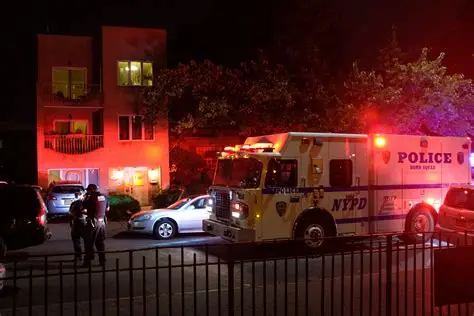
Two Men Charged After Alleged Bomb Attempt Outside NYC Mayor’s Home
A bomb attempt outside the New York City mayor’s official residence has become a federal terrorism case after prosecutors accused two young men of trying to detonate homemade explosive devices during a protest near Gracie Mansion. The defendants, Emir Balat, 18, and Ibrahim Kayumi, 19, have pleaded not guilty to charges that include attempting to provide material support to ISIS and using a weapon of mass destruction.
The case is serious, but it must also be reported carefully. Balat and Kayumi are accused, not convicted. The charges describe an alleged ISIS-inspired attack during a tense protest outside the home of Mayor Zohran Mamdani, New York City’s first Muslim mayor. Federal prosecutors say two devices were thrown but failed to detonate, while a third explosive device was later found in the suspects’ vehicle. No injuries were reported.
The bomb attempt happened on 7 March 2026 outside Gracie Mansion on Manhattan’s Upper East Side. According to the US Department of Justice, the protest included an anti-Islam demonstration and a counter-protest. Authorities allege the suspects travelled from Pennsylvania to Manhattan with improvised explosive devices, discussed causing mass casualties and were arrested quickly after NYPD officers moved in.
Since the original report, the case has developed. The men were indicted on eight federal counts in April, and the Associated Press later reported that both pleaded not guilty in Manhattan federal court. That means the strongest updated version of this article is not only “two men charged”. It is a legal explainer about what prosecutors allege, what has been confirmed, what remains unproven and why the Gracie Mansion bomb attempt has become one of New York’s most sensitive security cases of 2026.
The Case in 90 Seconds
| Detail | Updated position |
|---|---|
| Incident | Alleged bomb attempt during protest outside Gracie Mansion |
| Date | 7 March 2026 |
| Location | Upper East Side, Manhattan, New York City |
| Defendants | Emir Balat, 18, and Ibrahim Kayumi, 19 |
| Status | Indicted and pleaded not guilty |
| Main charges | Material support to ISIS, weapon of mass destruction, explosives offences |
| Injuries | No injuries reported |
| Mayor’s location | AP reported Mayor Mamdani and his wife were not home |
| Investigation | FBI, NYPD and federal prosecutors involved |
This bomb attempt case sits at the intersection of terrorism, protest rights, public safety, religious tension and due process. It should not be reduced to one political slogan or one social-media clip.
What Prosecutors Say Happened
The official account comes mainly from the Department of Justice and the Southern District of New York. Prosecutors allege that Balat and Kayumi drove from Pennsylvania to New York City on the morning of 7 March and parked near Gracie Mansion. The protest outside the residence included a demonstration called “Stop the Islamic Takeover of New York City, Stop New York City Public Muslim Prayer” and a counter-protest called “Run Nazis Out of New York City.”
At about 12:15pm, prosecutors say Balat ignited and threw one improvised explosive device toward the area where protesters were gathered. The device did not explode. Prosecutors then allege that Kayumi handed Balat a second device, which Balat dropped near several NYPD officers before running from the scene. Officers tackled and arrested him shortly afterwards, while Kayumi was arrested nearby.
That sequence is important because the bomb attempt was allegedly interrupted quickly. The DOJ credited NYPD officers with moving toward the threat and preventing injuries or loss of life. If the government’s allegations are proved, the failed detonation may be the reason the incident did not become a mass-casualty attack.
Prosecutors also say a third device was later recovered from the suspects’ vehicle. AP reported that the thrown devices contained TATP and shrapnel, but did not detonate. This article will not describe device construction in detail because the public-interest point is the alleged threat, not technical instruction.
The Charges After the Indictment
The bomb attempt case moved beyond an initial complaint when a federal grand jury returned an eight-count indictment in April. The indictment includes terrorism and explosives charges. The defendants later entered not-guilty pleas.
| Charge category | What it means in plain English |
|---|---|
| Material support to ISIS | Prosecutors allege support or attempted support for a designated foreign terrorist organisation |
| Weapon of mass destruction | Federal law can use this term for certain explosive devices |
| Explosives during a felony | Alleged use or possession of explosives while committing another federal crime |
| Transportation of explosive materials | Alleged movement of explosive materials across state lines |
| Unlawful possession of destructive devices | Alleged possession of prohibited explosive devices |
The legal language is heavy, but the core allegation is straightforward: prosecutors say the defendants brought explosive devices to a protest and tried to cause harm in the name of ISIS.
The defence side has not been fully tested in court. AP reported that both men pleaded not guilty. That plea matters. It means the government must prove its case beyond a reasonable doubt, and the defendants are presumed innocent unless convicted.
The News Ink’s wider legal coverage, including stories on criminal charges and major court cases, follows the same rule: allegations must be clearly separated from proven facts.
Why Gracie Mansion Made the Case More Sensitive
Gracie Mansion is not only a house. It is the official residence of New York City’s mayor and a symbolic civic space. The building sits in Carl Schurz Park on the Upper East Side and has been used by New York mayors and their families for generations. A bomb attempt outside that residence immediately becomes a public-security issue, even if the mayor is not physically present.
Mayor Zohran Mamdani’s identity also shaped the wider reaction. He is New York City’s first Muslim mayor, according to AP. The protest outside his residence was anti-Islam, while the alleged attackers were accused of being inspired by ISIS. That created a volatile and painful mix: anti-Muslim protest, counter-protest, alleged extremist violence and a mayor whose religious identity was central to the political atmosphere around the event.
That does not mean every protester was responsible for the alleged bomb attempt. It also does not mean the protest itself caused the alleged attack. Peaceful protest is protected. Violence is not. The strongest reporting keeps those lines clear.
The DOJ made that distinction directly, saying free speech and peaceful assembly are fundamental, but violence is not protected protest. That framing matters because New York authorities had to respond to both sides of the public-order problem: protecting the right to demonstrate while stopping anyone who allegedly brought explosives into a crowd.
What Authorities Say About ISIS Influence
Federal prosecutors allege the bomb attempt was ISIS-inspired. The DOJ said both defendants made statements after arrest indicating alignment with ISIS. Prosecutors also alleged that Balat wrote a note pledging allegiance to the Islamic State and that dashcam recordings captured discussions about causing casualties.
The indictment, as reported by The Guardian and described by prosecutors, allegedly included disturbing statements about killing people and creating terror. The Associated Press reported that the pair later told police they were inspired by the Islamic State group and that their vehicle’s dashcam captured discussion of killing as many as 60 people.
Those claims are serious, but they remain allegations until proven in court. The defence may challenge the interpretation, context, admissibility or meaning of statements and recordings. That is why every reference to motive in this article is framed as prosecutors’ allegation, not a final legal finding.
This caution is especially important in terrorism coverage. Reporting should inform the public without amplifying propaganda, glamorising extremist groups or prejudicing a criminal trial.
For context on how digital extremism and online influence can shape real-world threats, The News Ink’s coverage of AI deepfakes and disinformation and cybersecurity shows how online content can move from screens into security concerns.
The Protest, the Counter-Protest and Public Order
The bomb attempt allegedly happened during a protest and counter-protest, not in an empty street. That is why the potential risk was so high. Crowds, barricades, police lines, political anger and opposing groups can create a setting where a single violent act causes panic even if the device fails.
AP reported that the protest was hosted by far-right activist Jake Lang, a critic of Mayor Mamdani. The DOJ described the names of both the protest and counter-protest in its charging announcement. Other reporting described arrests for disorderly conduct, obstruction and pepper-spray-related conduct during the broader confrontation.
This wider disorder should not be confused with the terrorism case. Most people at a protest, even a hostile one, are not accused of carrying explosives. But the atmosphere matters because it explains why a failed device could still have produced fear, evacuation and heavy police response.
A democratic city must protect protests, even ugly ones, while keeping people safe. That balance becomes hardest when religious identity, extremism, counter-protest and alleged terrorism all collide outside a mayoral residence.
Why “Weapon of Mass Destruction” Appears in the Charges
Many readers may see the phrase “weapon of mass destruction” and think of nuclear, chemical or military-scale weapons. In federal criminal law, the term can also apply to certain explosive devices. That is why prosecutors can use the phrase in a case involving alleged improvised explosive devices.
The key point is not the label alone. The key point is alleged intent and capability. DOJ officials said the devices were packed with metal shrapnel and had the potential to cause multiple deaths or serious injuries if they had detonated. AP reported that the devices failed to explode and no one was injured.
That contrast is what makes the case both frightening and legally complex. The alleged bomb attempt failed. But under terrorism and explosives law, failure to detonate does not necessarily mean the conduct is treated as minor. Prosecutors are charging the case based on what they say the defendants attempted to do, not only what ultimately happened.
Timeline of the Gracie Mansion Bomb Attempt Case
| Date | Development |
|---|---|
| 7 March 2026 | Protest and counter-protest take place outside Gracie Mansion |
| 7 March 2026 | Prosecutors allege two devices were thrown or dropped and failed to detonate |
| 7 March 2026 | Balat and Kayumi are arrested at or near the scene |
| 9 March 2026 | DOJ announces initial federal charges |
| 7 April 2026 | SDNY announces eight-count indictment |
| 15 April 2026 | AP reports both men pleaded not guilty in federal court |
| After arraignment | Federal case continues with evidence review and further proceedings |
This timeline shows why the bomb attempt story needed updating. The first report focused on charges after the incident. The later legal position includes an indictment and not-guilty pleas.
What Remains Unproven
Several important points remain unresolved because the court process is ongoing.
First, the government must prove that the defendants knowingly committed the charged crimes. That includes proving the relevant intent behind the alleged bomb attempt.
Second, prosecutors must prove the alleged ISIS connection in the legal sense required for material-support charges. Statements, recordings, online material and alleged conduct will likely be central evidence, but they have not yet been tested at trial.
Third, defence lawyers may challenge parts of the evidence. They may contest statements, recordings, device analysis, search evidence or the meaning of alleged conversations.
Fourth, the court must decide any pretrial issues before a trial or plea outcome. Until that happens, no article should treat the indictment as a conviction.
This is why cautious wording is not weakness. It is accuracy.
Why the Case Matters Beyond New York
The bomb attempt outside Gracie Mansion matters beyond New York because it reflects several wider risks facing public life.
One risk is extremist violence around protest spaces. Demonstrations can bring people with opposing views into close contact. Security agencies must identify genuine threats without treating all protest as dangerous.
Another risk is online radicalisation. Prosecutors allege the suspects consumed or echoed ISIS-related material. Even when extremist groups lose territory, their propaganda can still influence individuals or small groups.
A third risk is violence around religious identity. The protest itself was anti-Islam, and the accused men allegedly claimed ISIS inspiration. That combination can feed polarisation if reported irresponsibly. The public needs facts, not collective blame. Muslim New Yorkers are not responsible for ISIS. Protesters who did not participate in violence are not responsible for alleged explosives. The defendants alone are responsible for their alleged conduct unless a court proves otherwise.
The News Ink has covered related public-safety concerns in stories about major investigations and security fears around public events. The same lesson applies here: highly visible events need both civil liberties and serious security planning.
The Mayor’s Response and the City’s Challenge
Mayor Mamdani condemned the alleged violence and said New York would not tolerate terrorism or political violence. That response was expected, but the city’s challenge is broader than one statement.
New York must protect the mayor’s residence without turning it into a fortress that shuts down public life. It must manage protests without appearing to suppress speech. It must protect Muslim communities from backlash while also taking alleged ISIS-inspired violence seriously. It must reassure New Yorkers without exaggerating fear.
That balance is difficult because terrorism cases often create pressure for blunt responses. The better answer is targeted security: identify actual threats, prosecute alleged crimes fairly, avoid communal blame and keep public spaces open where possible.
Gracie Mansion is symbolic, but the deeper issue is civic confidence. A city functions when residents believe protests can happen without bombs, police can act without prejudice and courts can decide cases without political pressure.
How Authorities Responded
The immediate police response appears to have been decisive. DOJ and SDNY statements credited NYPD officers with arresting the suspects quickly after the alleged devices failed to detonate. The FBI’s Joint Terrorism Task Force then became part of the investigation, which is typical in terrorism-related cases.
Officials also examined the suspects’ vehicle and later described additional evidence, including an alleged notebook with attack plans and a storage unit containing explosive residue and materials. Those claims were included in the SDNY indictment announcement and will need to be tested in court.
This is another reason the bomb attempt article should not overstate certainty. Law-enforcement statements are important sources, especially for charges and procedural facts. But prosecutors’ allegations are not the same as a jury verdict.
A strong article should use official statements, reputable reporting and legal caution together.
Lessons for Reporting Terrorism Cases
The Gracie Mansion bomb attempt is exactly the kind of story that can be mishandled online. A short post can exaggerate, omit the plea status, blame entire communities, circulate graphic propaganda or turn allegations into facts.
Responsible reporting should follow several rules:
- use “alleged” and “accused” where appropriate;
- identify charges without treating them as convictions;
- avoid unnecessary technical details about explosives;
- avoid publishing extremist slogans beyond what is essential;
- separate protest activity from alleged criminal conduct;
- avoid collective blame against religious or political groups;
- update the story when indictments, pleas or court rulings change.
That approach protects readers and the legal process. It also makes the article more trustworthy for search engines and AI answer systems because the facts are structured, attributed and current.
The Bigger Security Question
The bomb attempt raises a practical question for New York and other cities: how should police protect high-profile residences during protests without eliminating the right to assemble?
The answer is likely more layered than simply banning demonstrations near official homes. Police need intelligence, barriers, screening, rapid response, bomb-squad readiness and clear separation between opposing groups. But they also need restraint because protest rights are central to democratic life.
The Gracie Mansion case shows why risk assessment cannot rely only on the size of a crowd. A small protest can become dangerous if one or two people arrive with alleged intent to cause mass harm. It also shows why officers at the scene need training to react quickly when a device appears.
The public may never know all the security decisions made that day. What is clear from official statements is that officers moved quickly enough to arrest the suspects and that no injuries were reported.
What Happens Next
The next stage is the federal court process. Prosecutors will continue presenting evidence through legal filings. Defence lawyers may challenge parts of the government’s case. The court may address discovery, detention, motions and trial scheduling. A plea agreement is possible in many federal cases, but no outcome should be assumed.
For readers, the key thing to watch is whether the case moves toward trial, plea negotiations or further evidentiary disputes. Another important issue is whether additional charges, co-conspirator allegations or public safety findings emerge. As of the available reports, the main defendants are Balat and Kayumi, and both have pleaded not guilty.
The bomb attempt case will likely remain politically sensitive because of where it happened, the mayor’s identity, the anti-Islam protest context and the alleged ISIS statements. That makes accurate updates essential.
The Bottom Line
The alleged bomb attempt outside New York City Mayor Zohran Mamdani’s home has moved from a breaking-news arrest story into a federal terrorism case. Emir Balat and Ibrahim Kayumi have been indicted and have pleaded not guilty to charges that include attempting to provide material support to ISIS and using a weapon of mass destruction.
Prosecutors allege the two men travelled from Pennsylvania to Gracie Mansion, tried to detonate explosive devices during a protest and discussed causing mass casualties. Authorities say the devices failed to explode, NYPD officers arrested the suspects quickly and no one was injured.
The case is alarming, but it remains a case of allegations until proven in court. The public facts are serious enough without exaggeration: a protest outside the mayor’s residence, alleged improvised explosive devices, terrorism charges, ISIS-related claims and a federal prosecution now moving through the courts.
For New York, the Gracie Mansion bomb attempt is a warning about the security risks that can surround polarised protest. For readers, it is also a reminder that the strongest reporting in terrorism cases must be calm, precise and legally careful.
For more US crime, courts and public-safety coverage, follow The News Ink on Threads or read our latest coverage of public-event security.