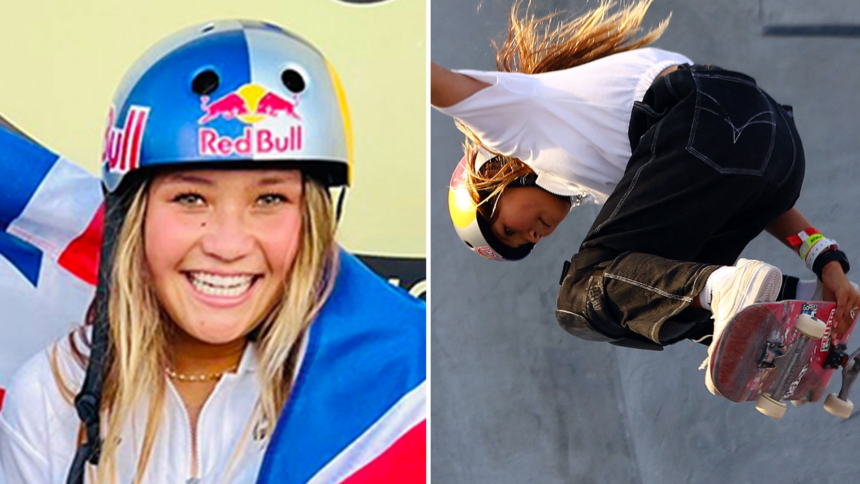
Sky Brown Wins Skateboarding World Championship Again
Sky Brown has spent most of her teenage years making difficult things look natural. In São Paulo, she did it again. The British skateboarding star won the women’s park world championship after a rain-hit final in Brazil, adding another major title to a career that already includes two Olympic bronze medals and a previous world crown.
The final did not end the way athletes, fans or organisers wanted. Heavy rain interrupted the competition, leaving the skaters with only two completed runs instead of the planned four. But by the time the surface became unsafe, Sky Brown had already placed herself beyond the field. Her score of 88.16 points stood as the winning mark, ahead of Japan’s Mizuho Hasegawa on 84.36 and American skater Minna Stess on 83.90.
For another athlete, the weather might have made the victory feel incomplete. For Sky Brown, it still felt like confirmation. She had arrived in Brazil as one of the biggest names in the sport, carried the pressure, put down the best score before the rain returned, and left São Paulo as world champion again.
This was not just another teenage success story. It was another sign that Sky Brown is becoming one of Britain’s most important action-sport athletes, not because of one medal or one viral trick, but because she keeps turning high-risk moments into championship results.
Scene One: A Final That Had to Be Stopped
The women’s park final in São Paulo was supposed to give the world’s best skaters four runs to separate themselves. Instead, weather became part of the competition. Rain delays had already affected the schedule, and the final eventually reached the point where continuing was no longer safe.
Park skateboarding depends on speed, grip and confidence. A wet bowl changes everything. The surface can become slippery, landings become unpredictable and the risk of injury rises sharply. In a sport where athletes are already flying above concrete, organisers had little choice once the rain returned.
Only two runs were completed by all finalists. One skater, Japan’s Cocona Hiraki, began a third run before the weather forced the event to stop again. World Skate froze the standings at the halfway point, meaning Sky Brown’s 88.16 became the gold-medal score.
The decision may have been frustrating, but it was not unfair. Every finalist had two full runs. Every finalist knew the weather was threatening. Every finalist had to produce under pressure early. Sky Brown did that better than anyone else.
That is why the result deserves more than an asterisk. Rain shortened the final, but it did not choose the winner. The best score on the board belonged to Sky Brown.
The Podium in São Paulo
| Position | Skater | Country | Score |
|---|---|---|---|
| Gold | Sky Brown | Great Britain | 88.16 |
| Silver | Mizuho Hasegawa | Japan | 84.36 |
| Bronze | Minna Stess | United States | 83.90 |
| Fourth | Arisa Trew | Australia | 80.06 |
This was a strong podium. Hasegawa brought Japanese depth and explosive style. Stess returned to the world podium with another composed performance. Arisa Trew, the Paris 2024 Olympic champion, finished fourth. That matters because Sky Brown did not win against a weak field. She beat a field that shows how high the level of women’s park skateboarding has become.
For readers following emerging sports, this result connects well with The News Ink’s guide to emerging sports and our coverage of athletes dominating their sport. Skateboarding is no longer a novelty Olympic event. It is a global discipline with young champions, deep rivalry and fast technical progression.
Scene Two: Why This World Title Matters
Sky Brown first became world champion in 2023 in Sharjah, when she was still 14. That victory made her the first British skateboarding world champion and proved that her Olympic bronze in Tokyo was not simply an early breakthrough. The São Paulo title now gives her another layer of authority.
Winning once can be a moment. Winning again makes a pattern.
The second world title matters because the sport has become harder since Brown first reached the top. The Olympic pathway has strengthened national programmes. Japan, Australia, the United States, Brazil and Britain have all produced major talent. Young skaters are learning technical tricks earlier, training more seriously and arriving at finals with fewer obvious weaknesses.
That is why Sky Brown’s latest win should not be reduced to her age. She is still only 17, but she is no longer just a prodigy. She is now an experienced international competitor who understands qualification pressure, Olympic expectation, injury recovery and final-day tactics.
The News Ink’s rising sports stars page often focuses on athletes who combine talent with staying power. Sky Brown fits that category because her story has already moved beyond promise. She is building a senior record while many athletes her age are still trying to make their first major final.
Scene Three: The Run Before the Rain
The key to the São Paulo win was timing. Sky Brown did not wait for the final to open up. She attacked early. Her 88.16 came before the event was cut short, and that proved decisive.
In skateboarding, the order of runs can shape the whole competition. A big early score changes the pressure on everyone else. Rivals know they must take risks. Judges have a benchmark. The leader can breathe slightly easier, even if the event remains dangerous.
Brown’s approach has always mixed freedom with control. She skates with a relaxed style, but her best runs are not random. They are structured enough to score, risky enough to separate, and expressive enough to feel like skateboarding rather than gymnastics on wheels.
That balance matters in park. A skater needs height, speed, flow, difficulty, variety and clean execution. Big tricks count, but so does how the run connects. Judges are not only rewarding one moment. They are reading the whole line.
In São Paulo, Sky Brown had enough of everything before the rain took over. Her score held because it was not merely safe. It was championship-level skating delivered early enough to survive the weather.
A Career Timeline That Still Feels Unusual
| Year | Sky Brown milestone |
|---|---|
| 2019 | Podium at the world championships in São Paulo as an 11-year-old |
| 2021 | Won Olympic bronze in Tokyo and became Great Britain’s youngest Olympic medallist |
| 2023 | Won her first women’s park world title in Sharjah |
| 2024 | Won another Olympic bronze in Paris despite shoulder problems |
| 2026 | Won another world title in São Paulo with 88.16 points |
The timeline is remarkable because it compresses a full career into adolescence. Many athletes spend years trying to reach one Olympic Games. Sky Brown had already won two Olympic medals before turning 17. Many athletes spend a career chasing one world title. Brown now has two.
The News Ink’s sports records coverage often looks at achievements that feel difficult to repeat. Brown’s youngest-Team-GB-medallist mark belongs in that type of conversation, but her greater achievement may be what came next: she kept winning after the first wave of attention.
Scene Four: The Injury Story Behind the Smile
Sky Brown’s career is often described through joy, colour and youth. That is fair, but it can hide how physically demanding her path has been.
Before Tokyo, Brown survived a serious training crash. At Paris 2024, she competed after dislocating her shoulder and still won bronze. During that Olympic event, she fell again in qualifying, landed on the injured shoulder and pushed through pain to reach the podium. Her second run in the final placed her in medal contention, and she held on for bronze behind Arisa Trew and Cocona Hiraki.
That Paris medal may become one of the defining parts of her career because it showed something beyond talent. It showed competitive toughness. The difference between being gifted and being elite is often revealed when things hurt. Brown has repeatedly shown that she can compete when the conditions are imperfect.
That does not mean injuries should be romanticised. Skateboarding is dangerous, and young athletes need careful management. Progression in action sports often comes with risk, but long careers depend on knowing when to push and when to protect the body.
For readers interested in the preparation behind elite performance, The News Ink’s sports training and technology guide and feature on training secrets offer useful background on how athletes manage risk, recovery and performance.
Sky Brown’s story is inspiring because she keeps coming back. It is also a reminder that every medal in skateboarding is earned on concrete.
Scene Five: The Global Identity of a British Star
Sky Brown was born in Miyazaki, Japan, to a Japanese mother and British father. She chose to represent Great Britain in 2018 and has since become one of Team GB’s most recognisable young athletes. That identity gives her story a global texture. She belongs to British sport, Japanese skate culture, American training circuits and a wider action-sports world that does not always fit neatly into traditional national categories.
That is one reason she connects with younger audiences. Skateboarding has always had a different relationship with national teams than older Olympic sports. It is shaped by streets, parks, clips, sponsors, local crews and global style. The Olympics and world championships add medals and flags, but the culture still values expression.
Brown carries both sides. She is a Team GB medal winner and a global skateboarding figure. She can stand on a podium for Britain while still representing a sport that grew from community, creativity and personal style.
That dual identity is part of why Sky Brown matters beyond results. She helps explain why skateboarding has become useful for the Olympic movement. It brings youth, diversity, visual drama and a less formal sporting language. It also creates new kinds of stars.
The News Ink’s wider sports tournaments coverage shows how global sport keeps changing. Athletes like Brown are part of that change, because they do not look or sound like the champions of older Olympic eras.
The Rivals Are Getting Stronger
Sky Brown’s second world title does not mean she is alone at the top. The women’s park field is crowded with talent. That is what makes the win valuable.
Japan remains a powerhouse in women’s skateboarding. Mizuho Hasegawa’s silver in São Paulo continued that strength, while Cocona Hiraki remains one of the most technically gifted skaters in the sport. Australia’s Arisa Trew, who won Olympic gold in Paris at 14, is already one of Brown’s biggest rivals. Minna Stess gives the United States another consistent podium contender.
This is not a sport waiting for one superstar to define it. It is a sport with several teenage and young adult athletes pushing each other. The tricks are getting bigger. The judging standards are rising. The margins are often narrow.
That competitive pressure is good for Brown. It means she cannot rely on reputation. Every major final forces her to update the level. Every rival pushes her to add difficulty or improve execution. Every Olympic cycle resets the hierarchy.
The São Paulo world title proved that Sky Brown can still win in that environment. The next question is whether she can keep winning when the field becomes even more aggressive before Los Angeles 2028.
Why the Rain-Shortened Finish Should Not Overshadow the Win
Some readers may wonder whether a final decided after two runs feels less complete. It is a fair question. Athletes prepare for four runs. Fans want a full contest. Rivals want every chance to respond. Brown herself admitted she was disappointed the final could not continue.
But sport often asks athletes to deal with conditions they cannot control. Rain affects tennis, cricket, motorsport and outdoor athletics. Wind affects ski jumping and golf. Snow affects alpine racing. In São Paulo, the challenge was simple: produce before the window closed.
Sky Brown did that.
The important detail is that all finalists had two runs. The standings were not frozen after only one skater had a chance. The event was shortened for safety, not convenience. Once the bowl was unrideable, continuing would have been reckless.
That context protects the result. Brown did not benefit from a secret rule or judging confusion. She benefited from delivering the best run before conditions made the final unsafe.
What the Win Means for Team GB
For Team GB, Brown remains one of the most valuable young athletes heading toward LA 2028. She already has Olympic experience, global recognition and a medal record. She also competes in a sport that appeals strongly to younger fans, which matters for national teams trying to grow beyond traditional audiences.
Britain has also been developing more depth in skateboarding. Lola Tambling competed at Paris 2024, and Skateboard GB has been building a stronger structure around the sport. Brown’s success creates attention, but it also creates a pathway. Young British skaters can now see that a world title or Olympic medal is possible without having to come from a traditional sporting system.
That is important for the future of British action sports. A single star can inspire interest, but sustainable progress needs coaching, skateparks, funding, safeguarding, competitions and grassroots access.
The News Ink’s page on sports technology and athlete development covers how modern athletes benefit from better training tools and analysis. Skateboarding still has a creative soul, but elite performance now also depends on structured preparation.
Sky Brown’s success gives British skateboarding visibility. The challenge is turning visibility into depth.
LA 2028 Already Feels Like the Next Chapter
The next Olympic Games in Los Angeles will be a major target. Brown will be 20 when the Games begin, still young by most sporting standards but already experienced enough to be considered one of the leading contenders.
Los Angeles also feels symbolically right for skateboarding. The sport has deep roots in California, and Brown has spent much of her career connected to the American skate scene. A strong Olympic performance there would carry extra meaning.
But LA 2028 will not be simple. Trew, Hiraki, Hasegawa, Stess and other rising skaters will all be chasing the same podium. Qualification will demand consistency. Injury management will matter. Brown may also continue to balance skateboarding with surfing ambitions, media commitments and sponsor pressure.
The São Paulo win helps because it resets her momentum after Paris. She is not only a two-time Olympic bronze medallist looking back. She is the current world champion looking forward.
That distinction matters. Sky Brown is not protecting an old reputation. She is still building.
Why Her Message After Winning Stood Out
After winning, Sky Brown spoke with gratitude but also pointed beyond the competition. She said the victory meant a lot, especially on International Women’s Day, but added that bigger things were happening and that she prayed for peace in the world.
Athletes are often asked to perform emotion immediately after winning, and many give predictable answers. Brown’s response was notable because it mixed happiness with perspective. She did not pretend the world championship was unimportant. She simply placed it inside a wider world.
That may be another reason she appeals to many fans. She competes with intensity but often speaks with openness. She looks like a modern sports star shaped by global media, family support, social awareness and a sport where personality is part of performance.
For a 17-year-old, that is a lot to carry. Yet Sky Brown has been in public view for years and seems increasingly comfortable with the responsibility.
The Bigger Picture for Women’s Skateboarding
Brown’s victory also says something about women’s skateboarding as a whole. The sport is young at Olympic level, but the standard is rising fast. Young skaters are landing tricks that would once have seemed impossible in women’s park contests. Finals are becoming deeper, more technical and more unpredictable.
The podium in São Paulo reflected that global growth. Great Britain, Japan and the United States all placed athletes in the top three, while Australia’s Olympic champion finished just outside the medals. Brazil hosted a lively event, and World Skate is continuing to build a tour that gives skaters more major stages.
This matters because women’s skateboarding has often had to fight for space, funding and visibility. Now, some of the sport’s biggest names are teenage girls and young women. Brown is one of them, but she is not the only one.
That competitive ecosystem is what makes the future exciting. The story is not only that Sky Brown won again. It is that she won in a sport becoming more difficult every year.
The Bottom Line
Sky Brown won the women’s park world championship again in São Paulo with a score of 88.16 after rain forced officials to end the final early. Mizuho Hasegawa took silver, Minna Stess earned bronze, and Brown added another major title to a career that already includes two Olympic medals and her first world crown from 2023.
The weather shortened the final, but it did not weaken the achievement. Brown led when the contest had to stop, and she did so against a field filled with Olympic and world-level talent. Her win confirmed that she remains one of the defining athletes in women’s park skateboarding.
At 17, Sky Brown is no longer only Britain’s teenage skateboarding sensation. She is a repeat world champion, a two-time Olympic medallist and one of the leading names heading toward LA 2028.
The story now is not whether she belongs at the top. São Paulo answered that again. The story is how much higher she can still go.
For more global sports coverage, follow The News Ink on Instagram or read our latest features on rising sports stars and breakthrough athletes.