Nvidia Revenue: Powerful 2026 Record Fuels AI Optimism and Doubt
Nvidia revenue has become one of the clearest signals of how fast the artificial intelligence economy is expanding, and the company’s record fiscal 2026 results show why investors still treat the chipmaker as the engine room of the AI boom.
That is why Nvidia revenue deserves more than a quick earnings headline.
The headline number is enormous. In its fourth-quarter and fiscal 2026 results, Nvidia reported full-year revenue of $215.9 billion, up 65% from the previous year. Its fourth-quarter revenue reached $68.1 billion, up 73% year on year. The company’s data-center division, which sells the chips, networking products and systems used to train and run advanced AI models, produced $193.7 billion across the year.
That is why Nvidia revenue is no longer just a semiconductor story. It is now a proxy for the global race to build AI factories, cloud infrastructure, model-training clusters and inference capacity. When Nvidia beats expectations, the market reads it as evidence that hyperscalers, startups, governments and enterprises are still spending aggressively on artificial intelligence.
But the story is not one-sided. Nvidia revenue also raises uncomfortable questions about whether the AI infrastructure boom can keep producing enough real economic value to justify the spending. The company is growing at a historic pace, yet some investors worry that massive AI deals, customer financing, export controls and circular investment structures could make demand harder to read.
For The News Ink readers following the wider AI shift, this is where Nvidia connects directly with the broader market. Our guide to AI trends explains why model development, cloud demand and automation are pushing companies to spend more on compute. Nvidia sits at the center of that pressure.
Why Nvidia revenue matters beyond Wall Street
Nvidia revenue matters because the company supplies the hardware foundation for much of the modern AI economy. Its graphics processing units, networking equipment, systems software and data-center platforms are used by model builders, cloud providers, research labs and enterprise AI teams.
The company began as a graphics-chip specialist, but its modern business is dominated by accelerated computing. Training a frontier AI model requires huge clusters of specialized processors. Running AI services at scale also requires high-performance inference systems. Both trends have pushed Nvidia from an important technology supplier into one of the most strategically significant companies in the world.
In fiscal 2026, Nvidia revenue showed how concentrated that shift has become. Data Center revenue accounted for the overwhelming majority of sales. Gaming, once the company’s public identity, remains important but is no longer the main driver. Professional visualization, automotive and robotics all matter, but the AI data-center business is the core.
That shift is important for two reasons. First, it explains Nvidia’s extraordinary valuation. Second, it explains why the debate around the company has become bigger than normal earnings analysis. Investors are no longer asking only whether Nvidia can sell more chips next quarter. They are asking whether global AI spending is becoming the next durable computing platform or a capital-spending cycle that may eventually slow.
The record numbers in context
The scale of Nvidia’s fiscal 2026 results is easier to understand when the figures are separated by period and business line.
| Metric | Reported figure | Why it matters |
|---|---|---|
| Fiscal 2026 revenue | $215.9 billion | Record full-year sales and 65% annual growth |
| Q4 fiscal 2026 revenue | $68.1 billion | 73% higher than the same quarter a year earlier |
| Fiscal 2026 Data Center revenue | $193.7 billion | Shows how much AI infrastructure now drives the company |
| Q4 fiscal 2026 Data Center revenue | $62.3 billion | Confirms demand remained strong late in the year |
| Q1 fiscal 2027 revenue | $81.6 billion | Shows the growth did not stop after the annual record |
| Q1 fiscal 2027 Data Center revenue | $75.2 billion | Reinforces the Blackwell-led data-center ramp |
The latest update matters because the article’s original angle ended with fiscal 2026. Nvidia then reported first-quarter fiscal 2027 revenue of $81.6 billion, up 85% year on year. Data Center revenue reached $75.2 billion, up 92% from a year earlier. That means Nvidia revenue did not merely peak with the annual report; it continued to accelerate into the next fiscal year.
Nvidia revenue, in other words, has become a rolling indicator rather than a single annual milestone.
This is why a simple “record revenue” headline understates the story. Nvidia is not only reporting a big year. It is still reporting record quarters after that big year.
Jensen Huang’s “AI factories” argument
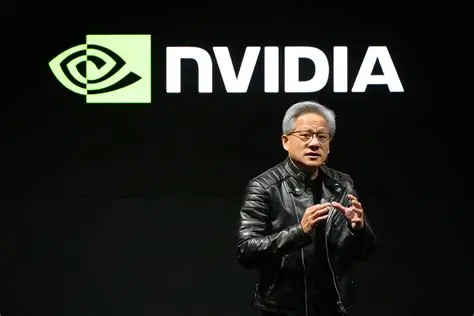
Chief executive Jensen Huang has framed the demand as part of a new industrial buildout. In the fiscal 2026 earnings release, he said computing demand is growing exponentially and described AI compute facilities as the factories powering the AI industrial revolution.
That language is important because it shows how Nvidia wants investors to understand the company. Nvidia is not selling individual chips in isolation. It is selling the machinery of a new computing layer. The idea is that every major economy and every major digital company will need AI factories the way previous generations needed power plants, telecom networks and cloud regions.
That argument supports the bull case for Nvidia revenue. If AI becomes a permanent layer of business operations, demand for accelerated computing could stay elevated for years. Training models is expensive, but inference could become even larger as AI tools are used daily by consumers, developers, offices, factories, hospitals and governments.
The News Ink’s guide to cloud computing gives useful background here. AI infrastructure is not separate from the cloud; it is becoming one of the cloud’s most important growth engines. Data centers, networking, storage and specialized chips are now tied together in the same investment cycle.
Why the Data Center business dominates the story
Nvidia revenue is now overwhelmingly shaped by data centers because the biggest AI customers are not buying one chip at a time. They are buying entire systems, racks, networking stacks and software-supported platforms. That makes each customer relationship larger, more complex and more strategic.
The company’s Blackwell platform has been especially important. Nvidia has described Blackwell demand as strong across hyperscalers and frontier model builders. The platform is designed for large-scale AI training and inference, which is exactly where the largest spending is happening.
For customers, the attraction is not only raw performance. Time matters. If a model builder can train faster, serve users more efficiently or reduce the cost of inference, the investment can be justified even when the upfront bill is huge. That is why Nvidia’s most valuable product is not just silicon. It is the full stack: chips, networking, systems, software libraries and developer ecosystem.
This full-stack advantage helps explain why Nvidia revenue has continued rising even as competitors develop custom AI chips. Google, Amazon, Microsoft and other major players are investing in their own accelerators, but Nvidia’s ecosystem remains deeply embedded in AI development. CUDA, networking, system design and supply-chain relationships all create switching costs.
The investor concern: is AI spending sustainable?
Nvidia revenue therefore carries both the excitement of AI adoption and the anxiety of AI overinvestment.
The strongest bear argument is not that Nvidia is weak. It is that customers may be spending faster than end-user demand can support. If AI services do not generate enough revenue, the infrastructure cycle could eventually cool.
That concern has become more serious because the numbers are so large. Hyperscalers are spending hundreds of billions of dollars on data centers, power, chips and networking. Model developers need more compute to train new systems, while AI apps need inference capacity to serve users. The spending is real, but the profits from many AI products are still uneven.
This is where Nvidia revenue becomes both impressive and difficult to interpret. Record sales prove that customers are buying. They do not automatically prove that every customer will earn attractive returns from what they buy.
There is also the “circular financing” concern. Nvidia has announced major AI infrastructure partnerships, including an OpenAI partnership under which it intends to invest up to $100 billion progressively as each gigawatt of Nvidia systems is deployed. The structure may support long-term demand, but it also gives sceptics room to ask whether supplier financing can blur the line between organic demand and vendor-supported growth.
That does not mean the demand is fake. The better point is more cautious: investors need to distinguish between end-user adoption, customer capital expenditure and financing structures that help customers buy more infrastructure.
Why Nvidia still has a powerful advantage
Even with those concerns, Nvidia remains in a strong position. Its products sit at the bottleneck of AI growth. Model builders need compute. Cloud providers need capacity. Enterprises want access to AI tools. Governments want sovereign AI infrastructure. In most of those cases, Nvidia is either the default supplier or one of the first names in the conversation.
Nvidia revenue also benefits from a powerful feedback loop. More developers use Nvidia hardware because the software ecosystem is mature. More companies deploy Nvidia systems because talent already knows the tools. More customers buy the platform because partners, libraries and cloud offerings support it. That reinforces the company’s lead.
Competition is real, but it has not yet broken the cycle. Custom chips can reduce reliance on Nvidia for specific workloads, especially inside hyperscalers. AMD can compete in parts of the accelerator market. Startups can target inference niches. But Nvidia’s breadth remains difficult to match.
For readers comparing the companies driving AI adoption, The News Ink’s OpenAI vs Google Gemini analysis helps explain why model competition also feeds infrastructure demand. Every serious model race eventually becomes a compute race.
The China and export-control risk
Nvidia’s growth also depends on geopolitics. Advanced AI chips are strategic products, and U.S. export controls have limited the company’s ability to sell certain high-performance chips to China. Nvidia has designed China-specific products in response, but restrictions can still affect revenue, margins and customer relationships.
For Nvidia revenue, geopolitics is now part of the earnings story, not a side issue.
This matters because Nvidia revenue is global. Demand exists in North America, Europe, the Middle East and Asia, but policy decisions can reshape where the company can sell its most advanced products. Export controls may protect national-security interests, yet they also create uncertainty for investors.
The Q1 fiscal 2027 result showed that Nvidia could still deliver record revenue despite regulatory challenges. However, the risk should not be dismissed. If rules tighten further, or if China accelerates domestic alternatives, Nvidia could face pressure in a market that remains large and strategically important.
The issue also connects with cybersecurity and national resilience. AI chips are no longer ordinary electronics. They sit inside data centers that may power defense research, scientific discovery, financial systems, public services and critical business tools. The News Ink’s cybersecurity guide offers a useful foundation for why infrastructure control now matters far beyond traditional IT teams.
What record Nvidia revenue says about the AI economy
Nvidia revenue tells us three things about the AI economy in 2026.
First, demand for compute is still growing faster than many sceptics expected. If the market had already reached saturation, Nvidia would not be reporting record quarters after a record year.
Second, AI spending is becoming more infrastructure-heavy. The early consumer excitement around chatbots has evolved into a much larger buildout involving data centers, power, networking, chips, software and cloud services.
Third, the gap between AI leaders and laggards may widen. Companies that can afford compute can train better models, deploy faster products and serve more users. Smaller companies may need cloud access, partnerships or financing structures to compete.
Nvidia revenue has also become a confidence gauge for the wider technology sector.
That is why Nvidia revenue has become a macro signal. It reflects not only chip demand but also the confidence of the companies betting that AI will reshape productivity, software, search, advertising, robotics, healthcare, manufacturing and media.
The News Ink’s guide to the best AI tools shows the consumer-facing side of that shift. The tools people use every day depend on infrastructure that companies like Nvidia help supply.
What could go wrong from here?
The biggest risk is not that AI disappears. The biggest risk is that growth slows before valuations adjust. Nvidia is priced like a company that can keep turning AI demand into extraordinary revenue and profit. That leaves little room for disappointment.
Several risks could challenge the story:
- Customers could delay data-center projects because of power shortages, permitting delays or financing costs.
- AI products could struggle to produce enough revenue to justify the capital spending.
- Custom chips from hyperscalers could capture more workloads.
- Export controls could remove or reduce important international sales.
- Gross margins could compress if competition increases or supply costs rise.
- Investors could become less willing to reward future growth if the AI trade becomes crowded.
None of these risks cancels the fiscal 2026 achievement. They simply explain why Nvidia revenue can be record-breaking and controversial at the same time.
The long-term question is inference
Training created the first wave of demand. Inference may decide the next one. Training is the process of building AI models. Inference is what happens when users ask those models to generate answers, code, images, video, recommendations or decisions.
If AI becomes embedded in search, office software, customer service, programming, education, healthcare and entertainment, inference demand could be enormous. That would support the long-term Nvidia revenue story because companies would need ongoing capacity rather than one-time training clusters.
The challenge is economics. Inference has to become efficient enough for companies to serve billions of requests without losing money. Nvidia’s hardware roadmap, networking performance and software stack are all aimed at improving that equation.
This is why the company is trying to position itself as more than a chip vendor. It wants to be the platform behind AI factories, robotics, autonomous vehicles, digital twins and enterprise AI. If that broader platform strategy works, Nvidia revenue could become more diversified over time. If it does not, investors may continue to view the company as highly exposed to one giant spending cycle.
Why the record is still a defining moment
Nvidia’s $215.9 billion fiscal 2026 result deserves attention because few companies have ever scaled so quickly at such a large revenue base. The move from gaming-led GPU company to AI infrastructure giant is one of the most dramatic business transformations in modern technology.
Nvidia revenue is also reshaping how investors think about the semiconductor industry. Chips are no longer just components inside devices. They are strategic infrastructure. The companies that control the best accelerators, networking and software stacks may influence the speed of AI development itself.
That does not make the stock risk-free. It does not prove the AI boom will avoid painful corrections. It does not remove legitimate questions about customer concentration, circular financing, energy needs or geopolitical restrictions.
But it does prove one thing: AI demand is not theoretical. It is already flowing through income statements, data-center budgets and global supply chains. Nvidia is currently capturing the largest share of that value.
What investors and readers should watch next
The next stage of the story will be judged by more than one earnings beat. Watch whether Nvidia can keep Data Center revenue growing without relying too heavily on a small group of customers. Watch whether Blackwell and future platforms ramp smoothly. Watch whether cloud providers earn enough from AI services to keep spending at this pace. Watch whether export controls change the company’s China opportunity. Watch whether inference becomes the durable demand engine Nvidia expects.
Nvidia revenue is the scoreboard many investors will keep checking as the AI cycle matures.
Nvidia revenue will remain one of the cleanest indicators of the AI buildout. When it rises, investors will see confirmation that the infrastructure race is still alive. If it slows, the market may start asking harder questions about how much AI capacity the world really needs.
For now, the record is powerful. Nvidia has delivered one of the strongest growth stories in global technology, and its latest results show that the AI infrastructure boom still has force. The concern is not whether Nvidia matters. It clearly does. The concern is whether the world can turn this enormous investment into enough real productivity, revenue and value to make the boom last.
For more technology and AI analysis from The News Ink, follow The News Ink on X.