Nepal Election: Stunning 2026 Youth Victory That Crushed the Old Order
Nepal election history changed in March 2026 because voters did more than choose a new parliament. They punished a political class that had survived years of coalition deals, corruption anger, unemployment and public distrust, then handed power to a party that barely existed four years earlier.
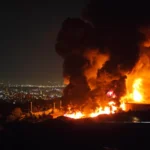
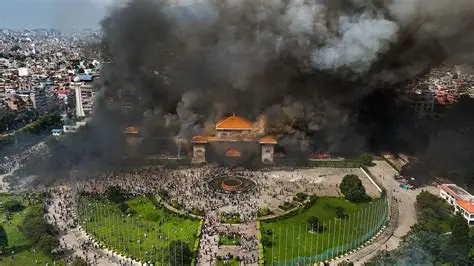
The vote was the first general election since Gen Z-led protests in September 2025 forced the resignation of former prime minister KP Sharma Oli. Those protests began after a social media ban, but they quickly grew into a wider revolt against corruption, economic stagnation, political privilege and the sense that old leaders had stopped listening to a young country. More than 75 people were killed during the unrest, with Reuters election coverage putting the toll at 77.
By the time the Nepal election was over, the message was unmistakable. Balendra Shah, the former rapper and former mayor of Kathmandu widely known as Balen, had led the Rastriya Swatantra Party to a landslide. Reuters reported that the RSP won 182 seats in the 275-member House of Representatives, the largest majority for any party in more than six decades. The Nepali Congress finished a distant second with 38 seats, while Oli’s Communist Party of Nepal (Unified Marxist-Leninist) won only 25.
That result turned a protest mood into governing power. It also created a much harder test. The Nepal election gave Shah and the RSP a mandate to clean up politics, create jobs and deliver stability. Now they must prove that a youth-backed movement can run the state better than the establishment it defeated.
For readers following the economic pressure behind the revolt, The News Ink’s economy coverage explains why jobs, wages, inflation and public trust often decide political outcomes long before ballots are counted.
Why the Nepal election became a national turning point
The Nepal election mattered because it came after one of the most dramatic political collapses in the country’s democratic history. The September 2025 protests were not only about social media access. The ban on platforms such as Facebook and Instagram was the spark, but the fuel was deeper: frustration over corruption, poor services, unemployment, inequality and the privileged lifestyles of political families.
Young people used online platforms, including Discord and other digital spaces, to organise, debate and push demands. The movement was often described as Gen Z-led because students and young workers were at its centre, but its anger reached across wider society. Parents worried about children leaving the country for work. Workers complained about low wages. Voters across the country questioned why Nepal had seen so many governments but so little delivery.
The crackdown made the crisis worse. Demonstrators were killed, government buildings were attacked, and the Oli government collapsed. Former chief justice Sushila Karki then led an interim administration tasked with steering the country toward elections.
That is why the Nepal election was not a normal mid-cycle contest. It was a vote held after bloodshed, public rage and a collapse of legitimacy. Voters were asked whether the old parties deserved another chance or whether Nepal needed a dramatic generational break.
Nepal election result: RSP’s landslide changed everything
The RSP’s 182-seat victory changed the basic arithmetic of Nepali politics. Nepal has long been known for unstable coalition governments. Reuters noted that the country had seen 32 changes of government in 35 years, a record that damaged investor confidence and slowed economic reform. For once, a single party had the numbers to govern without the usual fragile bargaining.
The Nepal election therefore produced two results at once. First, it delivered a huge defeat for the parties that had dominated since the restoration of democracy. Second, it gave the new government little excuse if it fails. Coalition instability can no longer be blamed for every delay.
The seat breakdown also matters. Anadolu reported that the Election Commission’s final results gave the RSP 125 seats through the first-past-the-post system and 57 through proportional representation. That means the party did not merely perform well in one voting channel. It won direct constituency contests and also secured broad national support.
This is why the Nepal election looks less like a protest vote and more like a political realignment. Voters did not only punish old parties. They gave a new party enough power to act.
Who is Balendra Shah?
Balendra Shah’s rise is unusual even by South Asian political standards. Before becoming prime minister, he was known as a structural engineer, rapper and Kathmandu mayor. His music criticised the establishment and gave him a near celebrity-like following online. His mayoral victory in 2022 had already shown that voters were willing to back non-traditional candidates.
In the 2026 campaign, Shah turned that image into national politics. He offered himself as a symbol of clean government, youth confidence and anti-corruption change. Reuters described him as the first politician expected to become prime minister from the southern plains of Madhesh, a region that has often felt politically marginalised in Kathmandu-centred power.
The Nepal election also made Shah the country’s youngest prime minister in decades. Reuters reported that he was sworn in on March 27 at the President House in Kathmandu and appointed a smaller 14-member cabinet, including economist Swarnim Wagle as finance minister. AP also reported that Shah was appointed by President Ram Chandra Paudel after the RSP won nearly two-thirds of the lower house.
That matters because image alone is no longer enough. Shah is not only a protest voice now. He is the head of government.
Why the old parties lost so badly
The old parties lost because many voters no longer believed their promises. The Nepali Congress, UML and Maoist-rooted forces had spent decades rotating through power, forming and breaking coalitions, and promising reform without convincing enough people that daily life was improving.
The Nepal election punished that record. The Nepali Congress, once the country’s oldest and most powerful democratic party, won only 38 seats. Oli’s UML, which argued that the protests did not represent true public opinion, fell to 25 seats. The result showed that voters did not treat the September revolt as a temporary disruption. They treated it as a warning the old leadership had failed to understand.
Corruption was central. So were jobs. Reuters reported that about 1,500 Nepalis leave the country daily for work abroad. That single figure helps explain the anger. A political system that cannot create enough decent work at home forces families to depend on migration, remittances and separation.
The News Ink’s personal finance coverage is relevant here because political instability becomes personal when families rely on foreign wages, debt, loans, remittances and uncertain household budgets.
Jobs were the Nepal election’s deepest issue
The Nepal election was shaped by a simple question: why must so many young Nepalis leave to build a life?
For years, remittances have helped sustain the economy, but they also reveal a failure. When a country depends heavily on workers abroad, it means domestic opportunity is not strong enough. Young people see friends and relatives leave for Qatar, Malaysia, the Gulf, India, South Korea and other labour markets. Families accept separation because staying home often means underemployment or low wages.
The Gen Z protests turned that private frustration into public politics. Protesters wanted cleaner government, but they also wanted a reason to believe Nepal could offer a future. They wanted jobs that pay, agriculture that works, cities that function, and public services that do not depend on connections.
That is why Shah’s promise to fight graft and grow the economy resonated. Reuters reported that the RSP campaigned on a programme to fight corruption, create jobs and more than double Nepal’s $42 billion economy in five years. That is an ambitious promise. The Nepal election gave him the authority to try. It also gave voters a clear benchmark for judging him.
The Gen Z movement won, but it did not become the government by itself
One important point needs care. The Nepal election was powered by Gen Z anger, but the Gen Z movement itself was not a single party, committee or ideology. It was broad, digital, emotional and sometimes divided. Carnegie Endowment analysis warned that young Nepalis should not be treated as a homogenous group, and that the movement’s democratic test would come through political organisation.
That warning remains relevant. Shah benefited from the movement, supported the protesters publicly and became its most powerful electoral symbol. But he did not personally represent every protester, activist or reform demand. Some youth leaders may still doubt whether the RSP will implement the full reform agenda that came out of the streets.
This tension is healthy if it remains democratic. A protest movement can topple a government, but a democracy needs institutions, opposition, courts, media, local bodies and civil society to keep a new government accountable.
The News Ink’s cybersecurity guide offers useful background on why digital mobilisation matters: when politics moves through social platforms, bans, online groups and data systems, governments must handle digital rights with much more care.
Nepal election system explained
Nepal’s House of Representatives has 275 seats. Of these, 165 are filled through direct constituency contests, while 110 are allocated through proportional representation based on party vote shares. This mixed system is designed to balance local representation with national party support.
In the Nepal election, the RSP succeeded across both systems. That is why its result was so powerful. It was not only a party-list surge among urban youth. It won constituency races and national votes.
Nearly 19 million voters were eligible to cast ballots, according to Reuters. About one million voters were added after the protests, many of them young people. Polling took place across more than 23,000 polling booths, with more than 300,000 security personnel deployed to keep voting peaceful.
Counting took longer than in some countries because of Nepal’s geography and manual processes. Ballot boxes from mountainous areas can be difficult to transport, and proportional representation calculations take time. But when the final results arrived, the verdict was clear.
Why Shah’s majority is both strength and risk
The Nepal election majority gives Shah power. It lets the RSP pass laws, form a government without unstable coalition deals and take ownership of reform. That could help Nepal after decades of instability.
But a big majority also creates risk. Weak opposition can make any government overconfident. New parties can become what they once opposed if they do not build strong internal checks. Popular leaders can start treating criticism as obstruction. Civil society groups have already warned that Nepal’s new government must be held accountable, not simply celebrated.
The Nepal election gave Shah a mandate, not a blank cheque. He must protect media freedom, respect courts, preserve local democracy and show that anti-corruption politics will not become selective revenge.
This is especially important because one of Shah’s senior party figures, Ravi Lamichhane, has faced allegations over misuse of funds from small saving companies, which he denies. The case shows that a party elected on clean politics will be judged by how it handles allegations inside its own ranks as well as against opponents.
The protest-violence investigation could define the new government
One of Shah’s hardest early tests is accountability for the September 2025 violence. Reuters reported that political analyst Puranjan Acharya said the new government’s first challenge would be implementing the recommendations of a panel that investigated the crackdown, including recommendations to prosecute those responsible.
This is politically explosive. Families of victims want justice. Protesters want the state to admit wrongdoing. But prosecuting former officials, including figures connected to the previous government, can look like justice or political revenge depending on how it is handled.
The Nepal election was born out of that violence, so ignoring it would betray the movement. But any prosecutions must be transparent, evidence-based and legally fair. A government promising rule of law must not use shortcuts even against unpopular opponents.
This will be a central test of Shah’s maturity. A revolutionary mandate can win power. Legal discipline is needed to keep it.
Foreign policy will not wait
Nepal sits between India and China, two powers that watch Kathmandu closely. Any new prime minister must balance development, trade, border sensitivities, investment and security concerns without appearing captured by either side.
Shah’s youth-backed image may be domestic, but the job is geopolitical. India and China both congratulated him after he took office, according to Reuters. That reflects how important Nepal remains to both neighbours. Infrastructure, hydropower, trade routes, border politics and regional influence will all shape his term.
The Nepal election may have been driven by domestic anger, but the new government cannot focus only inward. It must reassure neighbours, attract investors and protect sovereignty while delivering jobs at home.
The News Ink’s report on India and U.S. trade talks shows how regional economic decisions increasingly interact with global power politics. Nepal’s challenge is smaller in scale, but the same principle applies: domestic promises need a realistic external strategy.
Economic pressure from the wider world
Shah also inherits a difficult global economy. Nepal depends on tourism, remittances, imports and external partnerships. Conflict in the Middle East can affect Nepali workers abroad. Global energy shocks can raise domestic costs. Slower tourism can hurt local businesses.
The News Ink’s analysis of global markets during the Iran war shows how geopolitical shocks can move through oil, gas, inflation and jobs. For Nepal, those shocks can become personal because so many families have relatives working overseas and so many businesses rely on imported fuel or foreign visitors.
That means Shah’s jobs promise cannot be solved by slogans. It requires investment, infrastructure, skills training, agricultural reform, tourism recovery, digital governance and a serious plan to keep young people from feeling that leaving is the only path.
Rural Nepal cannot be ignored
Young voters in Kathmandu helped drive the narrative, but the next government must deliver far beyond the capital. Rural areas still face weak infrastructure, limited healthcare, poor road links, uneven schools and fewer job opportunities.
The Nepal election created expectations that development will not remain concentrated in major cities. Voters want roads that work, public offices that respond, local corruption reduced, and opportunities closer to home. If the RSP becomes only an urban reform brand, disappointment will spread quickly.
Tourism also matters outside Kathmandu. Nepal’s mountains, heritage sites and trekking routes support livelihoods across the country. The News Ink’s smart travel coverage is relevant because political stability, safety and infrastructure directly influence whether visitors come and whether communities benefit.
The new government must treat rural development as central, not secondary. A youth mandate is not only about internet users in cities. It is also about young people in villages who want to study, work and stay connected to their families.
What Nepal election success would look like
Success after the Nepal election would not mean solving every problem in one year. It would mean visible early progress.
That could include transparent investigations into protest deaths, an asset-probe process that is fair rather than theatrical, faster public services, a credible jobs plan, cleaner procurement, stronger local governance, protection of digital rights and a budget that matches campaign promises.
Reuters reported in April that Shah’s new government had set up a panel to investigate the property and assets of past and present politicians and officials. That move fits the anti-corruption mandate, but it must be handled carefully. If the panel becomes independent, evidence-led and transparent, it can build trust. If it becomes selective, it can deepen division.
The Nepal election gave the RSP a rare chance to prove that anti-corruption politics can be institutional, not just emotional.
The final judgment
The Nepal election was a stunning youth-backed verdict against an old political order that had run out of public patience.
Voters did not merely replace one coalition with another. They gave Balendra Shah and the Rastriya Swatantra Party a commanding majority after deadly Gen Z-led protests forced Nepal to confront corruption, unemployment, digital rights and state violence. The Nepal election result made Shah the country’s youngest prime minister in decades and gave his party the kind of mandate Nepal has rarely seen.
But the harder story begins now. Protest energy can win an election. Governing requires discipline, law, budgets, compromise and delivery. Shah must create jobs, investigate past abuses, protect democratic freedoms and prove that a new generation will not repeat the habits of the old one.
The Nepal election gave young voters hope that politics could change. Whether that hope becomes reform depends on what the new government does with its power.
For more world politics and economy coverage from The News Ink, follow The News Ink on X.