WAFCON 2026: Why CAF’s Alarming Postponement Still Hurts Women’s Football
WAFCON 2026 was supposed to begin in Morocco on 17 March. Instead, the Confederation of African Football moved the tournament just 12 days before kick-off, turning one of the most important dates in African women’s football into another argument about respect, planning and governance.
CAF said the decision followed discussions with FIFA and other stakeholders and was made because of “unforeseen circumstances.” The new dates are 25 July to 16 August. That gives the competition a new window, but it does not erase the damage caused by the late change. Teams had already entered final preparation mode. Players had arranged travel, camps and family plans. Coaches had built training cycles around March. Journalists had booked routes to Morocco. Supporters had expected the tournament to start within days.
That is why WAFCON 2026 matters beyond a calendar change. It is a test of how seriously African football’s leaders treat the women’s game. The tournament is not a friendly competition that can be moved casually. It is the continent’s biggest women’s football event and part of the qualification pathway for the 2027 FIFA Women’s World Cup in Brazil.
The frustration is sharper because this is not the first disruption. The 2024 Women’s Africa Cup of Nations was delayed by 19 months and played in July 2025. The 2020 edition was cancelled during the COVID-19 pandemic. Now WAFCON 2026 has also been moved at short notice, reinforcing the fear that women’s football is still asked to absorb uncertainty that would create a far bigger crisis in the men’s game.
For readers following The News Ink’s wider football coverage, this is the core issue: African women’s football has grown in quality, audience and ambition, but its biggest competition is still being treated as if the calendar is negotiable until the last moment.
What CAF announced
CAF confirmed on 5 March that WAFCON 2026 would be rescheduled from 17 March–3 April to 25 July–16 August. Its statement said Morocco had been granted hosting rights in October 2024 and that preparations were continuing. It also said all parties remained confident the tournament would be successful.
That statement gave WAFCON 2026 new dates, but not enough explanation. “Unforeseen circumstances” is a broad phrase. It can cover logistics, host readiness, security, commercial issues, broadcasting, political pressure or travel complications. Without detail, it leaves players and supporters guessing.
This is why the anger has been so strong. CAF did not only change the dates. It changed them after telling people, repeatedly, that the tournament was going ahead. The Guardian reported that CAF president Patrice Motsepe had said in February that the March dates would be respected. Less than three weeks later, the competition was moved.
WAFCON 2026 therefore became a trust problem. When governing bodies announce a tournament, teams build their lives around it. A sudden change sends a message that the women’s calendar is fragile and conditional.
Why the timing was so damaging
The timing of WAFCON 2026 is the most serious part of the decision. A postponement months in advance is difficult but manageable. A postponement 12 days before kick-off is disruptive and expensive.
National teams had already entered final camps or arranged friendlies. Ghana’s Black Queens were in the United Arab Emirates for a training tour. Nigeria and Cameroon had used international fixtures to sharpen preparations. Players based in Europe, North America and Africa had planned their club workloads around national-team duty.
When WAFCON 2026 was moved, all of that planning became unstable. Coaches must now decide whether to release players back to clubs, schedule new camps, adjust fitness loads or rebuild team momentum months later. Players must manage the mental impact of peaking for a competition that suddenly disappears from the calendar.
That matters in women’s football because many players do not have the same financial cushion, club support or recovery infrastructure as top men’s stars. A disrupted camp can mean lost wages, travel complications and personal stress. For some players, it can also mean another difficult conversation with a club about release dates and future availability.
This is why the delay cannot be described only as administrative. It has human cost.
Morocco remains central to WAFCON 2026
Morocco was awarded the hosting rights for WAFCON 2026 after staging recent major CAF events and building a strong reputation for sports infrastructure. The country hosted the 2022 Women’s Africa Cup of Nations, the delayed 2024 edition in 2025, and the 2025 men’s Africa Cup of Nations.
That experience should have made Morocco a reliable host. Instead, reports before the postponement suggested there was uncertainty over whether the country would continue. South Africa’s sports minister Gayton McKenzie publicly commented on possible backup hosting, then had to clarify the situation. The Moroccan federation did not offer a full public explanation of why the March window became impossible.
WAFCON 2026 is still listed by CAF as Morocco 2026, and the rescheduled dates remain in Morocco’s name. But the confusion damaged confidence. Hosting a continental tournament is not only about stadiums. It is also about communication. Teams need to know where they are going, when they are playing and how travel, hotels, security and training sites will work.
Morocco has shown it can deliver major football events. CAF now has to make sure the July-August version of this tournament is organised clearly enough to rebuild trust.
A record 16-team tournament deserved better
One reason the postponement is so frustrating is that WAFCON 2026 should be a landmark edition. CAF’s draw procedures confirmed a record 16 teams, divided into four groups of four. The top two teams from each group will advance to the knockout stage, which includes quarter-finals, semi-finals, a third-place play-off, the final and Women’s World Cup qualifying play-offs.
The qualified teams are Morocco, Algeria, Burkina Faso, Cameroon, Cape Verde, Côte d’Ivoire, Egypt, Ghana, Kenya, Malawi, Mali, Nigeria, Senegal, South Africa, Tanzania and Zambia. That expanded field gives the competition greater depth and gives more countries a platform to build women’s football.
Cape Verde and Malawi’s presence is especially important. New or emerging teams bring new audiences and new stories. Zambia have global star power. Nigeria arrive as defending champions. Morocco are hosts and recent finalists. South Africa remain a major force. Ghana and Cameroon bring history and expectation.
WAFCON 2026 should be sold as a continental breakthrough. Instead, much of the conversation has become about whether CAF can stage it properly.
The World Cup qualification stakes for WAFCON 2026
This tournament also matters because of the 2027 FIFA Women’s World Cup. CAF’s official draw procedures say the knockout stage includes FIFA Women’s World Cup Brazil 2027 qualifying play-offs. That makes the tournament a direct part of Africa’s pathway to the global stage.
A late postponement therefore affects more than one trophy. It affects World Cup preparation, scouting, player exposure and federation planning. Coaches aiming for Brazil need competitive matches. Players hoping to earn moves need visibility. Federations hoping to attract sponsorship need clear dates and a credible product.
The FIFA Women’s World Cup has become more competitive and more commercially important. African teams have made real progress, with Morocco, Nigeria, South Africa and Zambia all carrying rising international profiles in recent years. CAF should be using that momentum.
WAFCON 2026 is the stage where that momentum should be organised, marketed and protected. Moving it at the last moment sends the opposite signal.
Why players and coaches were angry
The anger around WAFCON 2026 came from people who had already invested time, emotion and money. South Africa coach Desiree Ellis questioned whether this kind of disruption would happen in the men’s game. A Nigeria Football Federation official told the Guardian the women’s game was being treated with “so much disrespect.” Nigeria forward Rinsola Babajide called the situation embarrassing.
Those reactions matter because they come from inside the ecosystem. Players and coaches understand that football calendars sometimes change. They also know when a pattern looks structural.
The issue is not only inconvenience. It is dignity. When the women’s game is moved repeatedly, players feel they are being told that their competition is secondary. When explanations are vague, they feel they are not owed honesty. When costs fall on teams, journalists and players, they feel the burden is being pushed downward.
This is the opposite of what women’s football needs. The African game is growing because players, coaches and federations keep pushing despite fewer resources. CAF should be making their work easier, not harder.
Ghana’s difficult preparation showed the human side
Ghana’s situation showed how complicated the postponement became. The Black Queens were in the UAE for the Pink Ladies Cup when the delay was announced, and their coach Kim Björkegren described the wider regional conflict situation as frightening. He said some players were stressed, some could not sleep, and the environment affected the group in different ways.
That detail matters. A national team camp is supposed to be controlled preparation. Ghana’s players were dealing with international travel, tournament uncertainty and security worries at the same time. Then the competition they had been preparing for was moved.
WAFCON 2026 therefore became more than a schedule issue for Ghana. It became an emotional and logistical challenge. Should the team continue training? Should players return home? How should coaches maintain motivation? How should federations handle travel costs?
These are not small questions. Women’s football teams often work with tighter budgets. A disrupted overseas camp is not easily replaced.
The women’s game keeps paying for CAF’s calendar problems
The WAFCON 2026 postponement fits a wider CAF scheduling problem. The 2024 Women’s Africa Cup of Nations was delayed until July 2025 because of calendar clashes. The 2020 tournament was cancelled. CAF also delayed the 2024 African Nations Championship shortly before its planned start in Kenya, Tanzania and Uganda because more time was needed for infrastructure and facilities.
Some scheduling challenges are unavoidable. International football is crowded. Club competitions, Olympic tournaments, World Cups, AFCON, CHAN and regional events all compete for space. But the repeated pattern weakens confidence.
WAFCON 2026 should have been protected earlier. If March was not workable, CAF and Morocco needed to know that long before teams entered their final preparations. The late timing suggests either poor planning, poor communication or a refusal to admit problems until the last possible moment.
For women’s football, that is damaging. The sport cannot grow properly if its flagship competition keeps moving. Sponsors need certainty. Broadcasters need schedules. Fans need travel plans. Players need training cycles. Clubs need release windows.
A credible competition begins with a credible calendar.
The AFCON final controversy added to CAF’s credibility problem
The WAFCON delay also came during a difficult period for CAF governance. Reuters reported that CAF planned changes to its statutes and regulations after chaotic scenes at the 2025 men’s Africa Cup of Nations final, where Senegal walked off in protest over a late penalty decision before returning and winning 1-0. CAF’s Appeal Board later stripped Senegal of the title, a decision being challenged at the Court of Arbitration for Sport.
That controversy matters because it shaped the atmosphere around WAFCON 2026. Fans and journalists were already questioning CAF’s decision-making, transparency and competition management. Then the women’s tournament was postponed with little explanation.
These issues are not identical. A disputed men’s final and a postponed women’s tournament involve different departments and decisions. But they belong to the same broader trust problem. CAF needs stakeholders to believe its tournaments are stable, fair and professionally run.
When several controversies happen close together, each one reinforces the next. The women’s game becomes another example in a wider argument about governance.
Why the new dates bring another challenge
Moving WAFCON 2026 to 25 July–16 August solves the immediate March problem, but it creates new challenges. The new window comes soon after the men’s FIFA World Cup final on 19 July and overlaps with other global sporting events, including the Commonwealth Games. That could reduce media attention.
It may also affect club relationships. Just Women’s Sports noted that the new dates could create problems for National Women’s Soccer League clubs, with players such as Temwa Chawinga, Barbra Banda and Michelle Alozie likely to be involved for their national teams. Clubs had already planned around the men’s World Cup pause. Now some could lose important African players again in the middle of the season.
This is another reason late planning matters. Women’s football is increasingly global. African players are central to clubs in the United States, Europe and elsewhere. When CAF moves dates, the effect travels through club calendars around the world.
WAFCON 2026 will still be important in July and August. But CAF must now work harder to make sure the tournament is not overshadowed.
Nigeria’s title defence deserves attention
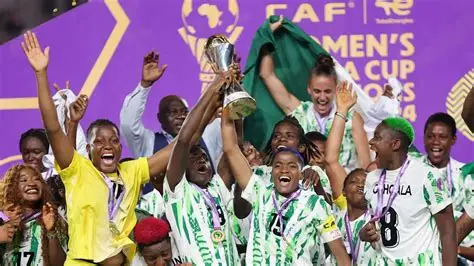
Nigeria should be entering the tournament as one of the biggest stories. The Super Falcons won the delayed 2024 WAFCON in July 2025, producing a dramatic comeback to beat Morocco 3-2 in Rabat and claim a record-extending 10th title. That final should have become a launchpad for the next edition.
Instead, Nigeria’s buildup was disrupted. The team had friendlies against Cameroon as part of preparation, but the postponement forced a reset. Defending champions need rhythm like everyone else. A delay means players return to clubs, fitness cycles change and tactical work has to be repeated later.
WAFCON 2026 should give Nigeria a chance to defend their crown in an expanded tournament against stronger competition. It should also give challengers such as Morocco, South Africa, Zambia and Ghana a chance to test the champions. That sporting story remains compelling, but CAF’s handling has distracted from it.
The women on the pitch deserve to make WAFCON 2026 the headline again.
Why the expanded format could help African football
Despite the disruption, the expanded format is a positive step. A 16-team tournament gives more players experience at elite continental level. It also gives federations a reason to invest in women’s programmes because qualification feels more realistic.
Countries such as Malawi, Cape Verde, Kenya and Tanzania can use WAFCON 2026 to accelerate development. More matches mean more exposure. More exposure can lead to sponsorship, broadcast interest, better domestic support and stronger player pathways.
The format also creates more competitive balance. If only a small group of established teams dominate access, emerging countries struggle to close the gap. Expansion gives more teams meaningful tournament football. It may produce heavy defeats at first, but it also builds experience.
That is why CAF must protect the tournament’s credibility. Expansion works only if the event itself is stable. A 16-team WAFCON should feel like growth, not chaos.
What CAF must do now
CAF still has time to repair some of the WAFCON 2026 damage before the new kick-off. But it needs clear action, not another vague statement.
First, it should provide full fixture details, venue information, travel support and operational guidance as early as possible. Teams should not be guessing about logistics.
Second, CAF should explain what “unforeseen circumstances” meant. It does not need to publish every internal discussion, but stakeholders deserve more detail than one phrase.
Third, it should support federations whose preparation costs were affected. Women’s national teams should not carry the financial burden of a late continental decision alone.
Fourth, CAF should improve communication with media. Journalists losing money on flights and hotels are part of the sport’s visibility problem. If women’s football needs coverage, the governing body should not make it harder to cover.
Fifth, CAF should publish a long-term women’s football calendar that is protected from last-minute political and logistical improvisation.
The sports training and technology side of modern football is increasingly precise. Teams plan workloads, recovery, nutrition and tactical cycles months ahead. CAF’s calendar must match that professionalism.
Key facts at a glance
| Issue | Detail |
|---|---|
| Tournament | Women’s Africa Cup of Nations 2026 |
| Original dates | 17 March–3 April 2026 |
| New dates | 25 July–16 August 2026 |
| Host listed by CAF | Morocco |
| Announcement date | 5 March 2026 |
| Time before original kick-off | 12 days |
| Format | 16 teams, four groups of four |
| Defending champions | Nigeria |
| World Cup link | Part of qualification pathway for Brazil 2027 |
| CAF explanation | “Unforeseen circumstances” |
| Main criticism | Late timing, vague explanation and repeated disruption |
The careful takeaway
WAFCON 2026 has been saved on the calendar, but damaged in trust. CAF’s decision to postpone the tournament 12 days before kick-off created frustration across African women’s football because it disrupted camps, friendlies, travel, media plans and player preparation with almost no detailed explanation.
The new dates, 25 July to 16 August, give Morocco and CAF another chance to stage a successful tournament. The expanded 16-team format still offers huge potential. Nigeria’s title defence, Morocco’s hosting pressure, Zambia’s star quality, Ghana’s recovery, South Africa’s ambition and debut stories from emerging teams can still make this a landmark edition.
But CAF must understand what the anger is really about. It is not only the postponement. It is the pattern. Women’s football has already endured a cancelled 2020 tournament, a delayed 2024 edition and now another late disruption. Players and coaches are tired of being asked to stay patient while the men’s game receives stronger protection.
WAFCON 2026 can still succeed. But success now requires more than good matches. It requires transparency, compensation where appropriate, serious logistics, proper promotion and a calendar that treats the women’s game as essential rather than adjustable.
The tournament should now become a celebration of African women’s football. CAF’s first job is to stop making the organisation the story.
For more football analysis, women’s football coverage and sports features, follow The News Ink on Medium.