NASA History Explained: From 1958 and Apollo to Artemis and Mars
NASA history is much bigger than the Apollo Moon landings.
Since beginning operations in 1958, the National Aeronautics and Space Administration has moved through repeated periods of technological ambition, scientific discovery, tragedy, reinvention and international cooperation.
NASA sent the first Americans into space.
It learned how to rendezvous and dock spacecraft.
It landed astronauts on the Moon.
It built America’s first space station.
It operated the Space Shuttle for 30 years.
It helped construct the International Space Station.
It repaired the Hubble Space Telescope in orbit.
It sent robotic explorers across Mars.
It launched spacecraft toward every major region of the solar system.
It developed commercial partnerships that changed how astronauts reach orbit.
And in 2026, Artemis II sent humans around the Moon again for the first time since the Apollo era.
Understanding NASA history therefore means understanding how the agency repeatedly changed its methods while maintaining a core mission built around exploration, science, aeronautics and technology.
NASA COMPLETE GUIDE AT THE NEWS INK.
NASA History at a Glance
| Era | Major Development |
|---|---|
| 1915–1958 | NACA establishes U.S. aeronautics research foundation |
| 1957 | Sputnik accelerates the Space Race |
| 1958 | NASA created and begins operations |
| 1958–1963 | Project Mercury |
| 1961–1966 | Project Gemini development and flights |
| 1961–1972 | Apollo era |
| 1969 | Apollo 11 lands humans on the Moon |
| 1973–1974 | Skylab |
| 1977 onward | Voyager exploration |
| 1981–2011 | Space Shuttle era |
| 1990 onward | Hubble Space Telescope |
| 1997 onward | Modern Mars rover era |
| 2000 onward | Continuous human presence aboard ISS |
| 2020 onward | Commercial Crew era |
| 2021 onward | James Webb Space Telescope |
| 2022 onward | Artemis |
| 2026 | Artemis II lunar flyby and Roman launch |
This timeline shows an important feature of NASA history: one program rarely replaces everything that came before it.
Human spaceflight, astronomy, planetary exploration, Earth science and aeronautics often develop simultaneously.
NASA History Started Before NASA Existed
The roots of NASA reach back to 1915.
That year, the United States created the National Advisory Committee for Aeronautics, commonly known as NACA.
Its purpose was to advance aeronautical research.
NACA laboratories investigated subjects including:
- aircraft wings;
- aerodynamics;
- propulsion;
- high-speed flight;
- wind-tunnel testing;
- aircraft structures.
By the 1950s, NACA was also studying technologies relevant to spaceflight.
NASA notes that NACA researchers developed the blunt-body concept that became fundamental to spacecraft re-entry and began exploring how humans might operate beyond Earth’s atmosphere.
When NASA began operations in 1958, NACA did not merely disappear.
Its laboratories, facilities, approximately 8,000 employees and decades of aerospace expertise became part of the foundation of the new organization.
That is why serious NASA history should begin with aeronautics rather than with rockets.
Sputnik and the Beginning of the Space Age
On October 4, 1957, the Soviet Union launched Sputnik 1, the world’s first artificial satellite.
The event had enormous political, scientific and military significance.
A small satellite orbiting Earth demonstrated that the Soviet Union possessed advanced rocket technology.
NASA’s history office describes Sputnik as the event that ushered in the Space Age and intensified the U.S.-Soviet Space Race.
The United States accelerated its response.
Congress held hearings.
Scientists and government officials debated how civilian space research should be organized.
President Dwight D. Eisenhower ultimately supported the creation of a new civilian organization built substantially around NACA.
NASA Is Created in 1958
President Eisenhower signed the National Aeronautics and Space Act on July 29, 1958.
NASA officially began operations on:
October 1, 1958.
T. Keith Glennan became the agency’s first administrator, while NACA director Hugh Dryden became deputy administrator.
The new organization inherited NACA facilities and gained additional capabilities from other government organizations.
The Jet Propulsion Laboratory in California also came under NASA sponsorship in December 1958.
Within days, the new agency began organizing its first human-spaceflight effort.
NASA history was moving quickly.
Project Mercury: Can Humans Survive Spaceflight?
Project Mercury was the United States’ first human-spaceflight program.
Its central objectives were relatively simple compared with later programs:
- place a human spacecraft into orbit;
- determine whether a person could function in space;
- return the astronaut and spacecraft safely.
NASA formally organized Mercury only days after beginning operations.
Seven astronauts were introduced publicly in 1959.
They became known as the Mercury Seven.
Alan Shepard Becomes the First American in Space
On May 5, 1961, Alan Shepard flew aboard Freedom 7.
The mission lasted just over 15 minutes.
It was suborbital rather than orbital, but Shepard became the first American to travel into space.
The United States was still behind the Soviet Union in several major Space Race milestones.
Then Mercury produced another breakthrough.
John Glenn Orbits Earth
On February 20, 1962, John Glenn became the first American to orbit Earth.
His Friendship 7 spacecraft completed three orbits during a flight lasting almost five hours.
Mercury ultimately completed six crewed flights between 1961 and 1963.
It proved that humans could operate in space.
But NASA was already preparing for something far harder.
Kennedy Sets the Moon Goal
Only weeks after Shepard’s flight, President John F. Kennedy challenged the United States to land a person on the Moon and return safely to Earth before the end of the 1960s.
The goal changed the scale of NASA history.
A lunar landing required capabilities Mercury had never been designed to provide.
Astronauts would need to remain in space much longer.
Spacecraft would need to maneuver precisely.
Vehicles would need to find one another in orbit.
They would need to dock.
Astronauts would need to work outside their spacecraft.
NASA needed another program between Mercury and Apollo.
That program was Gemini.
Project Gemini: Apollo’s Training Ground
Project Gemini is sometimes overshadowed by Apollo, but it was one of the most technically important programs in NASA history.
NASA describes Gemini as the bridge between Mercury and Apollo.
The program included 10 crewed launches, two uncrewed launches and seven target vehicles.
Gemini tested many capabilities necessary for a Moon landing.
Longer missions
Gemini crews remained in space for progressively longer periods.
Gemini VII spent about 14 days in orbit, demonstrating that astronauts could function for longer than the time expected for a basic lunar mission.
Spacewalking
During Gemini IV in June 1965, Ed White became the first American to perform a spacewalk.
Rendezvous
Gemini VI-A and Gemini VII demonstrated precise orbital rendezvous.
Docking
Gemini VIII, commanded by future Moonwalker Neil Armstrong, achieved the first docking between two spacecraft in orbit in March 1966.
These were not publicity experiments.
Apollo’s lunar-orbit-rendezvous architecture depended on them.
Without Gemini, the Moon landing would have been much more difficult.
Apollo and the Cost of Exploration
Apollo became the defining program of early NASA history, but its path included tragedy.
On January 27, 1967, astronauts Gus Grissom, Ed White and Roger Chaffee died during a ground test when a fire swept through the Apollo 1 command module.
The accident forced NASA to examine spacecraft design, materials, procedures and management.
Human spaceflight’s risks had become brutally clear.
The agency redesigned significant parts of the spacecraft before returning to crewed Apollo missions.
Apollo 8 Reaches the Moon
Before anyone attempted a landing, NASA made a bold decision.
Apollo 8 carried Frank Borman, Jim Lovell and William Anders around the Moon in December 1968.
It was the first crewed mission to leave Earth orbit and travel to another celestial body.
The crew entered lunar orbit and photographed Earth rising above the Moon’s horizon.
Those images changed how many people viewed Earth itself.
Only months remained before the Moon-landing attempt.
Apollo 11 Changes NASA History
Apollo 11 launched on July 16, 1969 aboard the enormous Saturn V rocket.
The crew consisted of:
Neil Armstrong
Buzz Aldrin
Michael Collins.
On July 20, Armstrong and Aldrin landed the lunar module Eagle in the Sea of Tranquility while Collins remained in lunar orbit.
Armstrong became the first human to step onto another world.
Aldrin joined him soon afterward.
NASA records that they spent more than two hours walking on the Moon, collecting samples and deploying experiments.
The event became the most famous achievement in NASA history.
But Apollo did not end with Apollo 11.
Twelve Humans Walk on the Moon
NASA conducted six successful crewed lunar landing missions:
Apollo 11
Apollo 12
Apollo 14
Apollo 15
Apollo 16
Apollo 17.
Twelve astronauts walked on the lunar surface.
Later Apollo missions became increasingly science-focused and used the Lunar Roving Vehicle to explore larger areas.
Apollo 17, launched in December 1972, became the final Apollo lunar landing.
It included geologist Harrison Schmitt, the first professional scientist to walk on the Moon.
Commander Gene Cernan became the last person of the Apollo era to leave the lunar surface.
Humans would not travel to the lunar region again for more than half a century.
Skylab: NASA’s First Space Station
After Apollo, NASA began focusing more attention on learning how people could live and work in orbit for extended periods.
Skylab launched in May 1973.
It was America’s first space station.
Three crews lived aboard the laboratory between 1973 and 1974.
The first crew stayed 28 days.
The final crew remained for 84 days.
Astronauts conducted solar observations, Earth studies, biomedical research and experiments related to long-duration spaceflight.
Skylab proved that humans could live and work in orbit for months rather than days.
That experience later influenced the Space Shuttle and International Space Station eras.
Robotic Exploration Expands NASA History
Human spaceflight receives much of the public attention, but robotic exploration became equally important.
NASA spacecraft explored planets, moons, asteroids and the outer solar system.
Viking reaches Mars
The Viking program placed two landers on Mars in 1976 and conducted some of the earliest sophisticated investigations of the Martian surface and potential biological activity.
Voyager transforms planetary science
NASA launched Voyager 1 and Voyager 2 in 1977.
Their original mission focused on Jupiter and Saturn.
The spacecraft performed so well that Voyager 2 continued to Uranus and Neptune.
NASA’s current Voyager history notes that the spacecraft were originally designed for a five-year mission but ultimately became far more ambitious explorers of the outer solar system and interstellar environment.
Voyager represents another recurring theme in NASA history:
successful spacecraft frequently outlive their original design goals.
The Space Shuttle Era Begins in 1981
On April 12, 1981, Space Shuttle Columbia launched on STS-1.
The Shuttle introduced a new approach to human spaceflight.
Its orbiter launched vertically like a rocket but returned to Earth by gliding to a runway.
Across 30 years, NASA flew:
135 Space Shuttle missions.
The final mission landed on July 21, 2011.
The Shuttle carried astronauts and satellites, conducted scientific experiments, serviced Hubble and helped assemble the International Space Station.
It expanded access to orbit.
It also produced two of the darkest tragedies in NASA history.
Challenger and Columbia
On January 28, 1986, Space Shuttle Challenger broke apart shortly after launch.
All seven crew members died.
The accident halted Shuttle flights and led to extensive investigations and redesigns.
Seventeen years later, on February 1, 2003, Columbia disintegrated during atmospheric re-entry at the end of STS-107.
Again, seven astronauts died.
These disasters changed NASA’s approach to engineering risk, organizational decision-making and crew safety.
They are essential parts of NASA history because exploration cannot be understood only through successes.
Hubble: From Embarrassment to Scientific Icon
NASA launched the Hubble Space Telescope aboard Space Shuttle Discovery on April 24, 1990.
The celebration quickly turned into a crisis.
Hubble’s primary mirror had been manufactured to the wrong shape.
Its early images were blurred.
For NASA, the problem became a major public embarrassment.
But Hubble had been designed to be serviced in orbit.
In December 1993, astronauts aboard STS-61 installed corrective optics and a new camera.
The repair succeeded.
NASA ultimately conducted five astronaut servicing missions, extending and improving Hubble’s capabilities.
Hubble went on to become one of the most productive observatories ever built.
Its history is a useful lesson from NASA history:
engineering failure does not always have to become mission failure.
The International Space Station Era
The International Space Station represented a different kind of exploration.
Instead of a short mission controlled largely by one country, the ISS became an enormous international partnership involving NASA, Russia and other international partners.
Construction began in orbit in 1998.
On November 2, 2000, Expedition 1 entered the station.
Humans have lived aboard it continuously ever since.
The station became:
- a microgravity laboratory;
- a testbed for human health research;
- a technology demonstration platform;
- an international partnership;
- a training environment for long-duration spaceflight.
The ISS also gave the Space Shuttle a major purpose during its final decade as Shuttle crews delivered and assembled large station components.
NASA Returns to Mars With Rovers
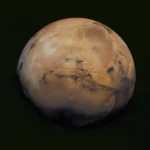
Mars became one of the great robotic success stories in modern NASA history.
Sojourner
Mars Pathfinder landed in 1997 and deployed Sojourner, the first wheeled rover to operate on Mars.
NASA describes this mission as the start of a new era of continuous robotic Mars exploration.
Spirit and Opportunity
The twin Spirit and Opportunity rovers landed in 2004.
Both were designed for missions of about 90 Martian days.
Both greatly exceeded expectations.
Spirit operated until 2010.
Opportunity continued for almost 15 years before a global dust storm ended communications in 2018.
Curiosity
Curiosity landed in Gale Crater in 2012 and investigated whether ancient Mars possessed environments capable of supporting microbial life.
Perseverance
Perseverance landed in Jezero Crater in 2021.
It studies Mars geology and astrobiology while caching selected samples for possible future study.
NASA’s rover progression from Sojourner to Perseverance illustrates how one mission generation builds on another.
The Commercial Spaceflight Transition
The retirement of the Space Shuttle in 2011 created another major transition in NASA history.
NASA increasingly moved away from developing and operating every transportation system itself.
Its Commercial Crew Program partnered with private companies to develop astronaut transportation to low-Earth orbit.
NASA selected Boeing and SpaceX for crew transportation contracts in 2014.
The major breakthrough came in 2020.
On May 30, NASA astronauts Bob Behnken and Doug Hurley launched aboard SpaceX Crew Dragon on Demo-2.
It was the first launch of astronauts from U.S. soil on an American rocket and spacecraft since the Shuttle program ended in 2011.
The event marked a new model for NASA:
the agency could purchase transportation services from commercial operators while concentrating resources on science and exploration farther from Earth.
Webb Opens Another Era of Astronomy
The James Webb Space Telescope launched on December 25, 2021 aboard an Ariane 5 rocket from French Guiana.
Webb is an international mission involving NASA, the European Space Agency and Canadian Space Agency.
Its infrared instruments were designed to study early galaxies, star formation, exoplanets and objects throughout the solar system.
Webb’s launch represented another evolution of NASA astronomy.
Hubble demonstrated the scientific value of a large space observatory in Earth orbit.
Webb placed an even larger infrared observatory much farther from Earth, near the Sun-Earth L2 region.
Artemis Brings NASA History Back to the Moon
NASA launched Artemis I in November 2022.
The uncrewed mission tested the Space Launch System rocket and Orion spacecraft around the Moon.
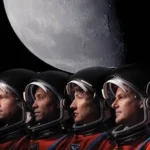
Then, in April 2026, Artemis II carried four astronauts on a lunar flyby.
Reid Wiseman, Victor Glover, Christina Koch and Canadian Space Agency astronaut Jeremy Hansen became the first humans since Apollo 17 to leave Earth orbit for the lunar region.
This creates a remarkable historical connection.
1972
Apollo 17 leaves the Moon.
2026
Artemis II carries humans around the Moon again.
More than five decades separate those events.
For the detailed current mission architecture, this page should link sideways to NASA Artemis Program Explained rather than duplicating the entire program here.
Roman Joins NASA’s Observatory History in 2026
Another major milestone arrived only months after Artemis II.
NASA’s Nancy Grace Roman Space Telescope launched on August 30, 2026 aboard a SpaceX Falcon Heavy from Kennedy Space Center.
Roman is designed to conduct enormous infrared surveys while investigating subjects including dark energy, dark matter and exoplanets.
Its launch adds another chapter to NASA’s lineage of major orbital observatories:
Hubble.
Webb.
Roman.
Each uses different capabilities to investigate the universe.
NASA History Is Also Aeronautics History
Spaceflight dominates popular accounts of NASA history, but aeronautics never disappeared.
NASA inherited the laboratories and expertise of NACA.
Over the decades, the agency has researched:
- high-speed aircraft;
- wing design;
- propulsion;
- aircraft safety;
- air traffic systems;
- experimental X-planes;
- supersonic flight.
This continuity explains why the agency is called the National Aeronautics and Space Administration, not simply the national space agency.
A later dedicated NASA Aeronautics Explained cluster should explore that history in depth.
How NASA Changed Over Time
The easiest way to understand NASA history is to examine how the agency’s operating model evolved.
1960s NASA
Large government-led programs.
Extreme Cold War urgency.
A clear geopolitical objective.
Shuttle-era NASA
Reusable spacecraft.
Large orbital infrastructure.
Greater emphasis on long-term operations.
ISS-era NASA
Deep international cooperation.
Permanent orbital presence.
Long-duration human research.
Commercial-era NASA
Private companies provide more launch, cargo and crew services.
NASA shifts more resources toward science and deep-space exploration.
Artemis-era NASA
Government systems, private companies and international partners are integrated into a much more distributed architecture.
The destination changed.
The organization changed.
The partnership model changed.
The underlying desire to explore did not.
Major NASA History Timeline
| Year | Event |
|---|---|
| 1915 | NACA created |
| 1957 | Sputnik 1 launched |
| July 1958 | National Aeronautics and Space Act signed |
| Oct. 1958 | NASA begins operations |
| 1961 | Alan Shepard becomes first American in space |
| 1962 | John Glenn becomes first American to orbit Earth |
| 1965 | Ed White performs first American spacewalk |
| 1966 | Gemini VIII achieves first docking in space |
| 1967 | Apollo 1 crew killed in fire |
| 1968 | Apollo 8 orbits Moon |
| 1969 | Apollo 11 lands on Moon |
| 1972 | Apollo 17 completes final Apollo lunar landing |
| 1973 | Skylab launches |
| 1977 | Voyager 1 and 2 launch |
| 1981 | First Space Shuttle mission |
| 1986 | Challenger disaster |
| 1990 | Hubble launches |
| 1993 | Hubble repair mission succeeds |
| 1997 | Sojourner rover operates on Mars |
| 2000 | Continuous human occupation of ISS begins |
| 2003 | Columbia disaster |
| 2004 | Spirit and Opportunity land on Mars |
| 2011 | Space Shuttle program ends |
| 2012 | Curiosity lands on Mars |
| 2020 | Crew Dragon launches NASA astronauts |
| 2021 | Perseverance lands on Mars |
| 2021 | James Webb Space Telescope launches |
| 2022 | Artemis I flies around Moon |
| 2026 | Artemis II carries astronauts around Moon |
| 2026 | Roman Space Telescope launches |
Frequently Asked Questions About NASA History
When did NASA history begin?
NASA officially began operations on October 1, 1958, although its institutional roots extend back to NACA, founded in 1915.
Why was NASA created?
NASA was created during the early Space Age as a civilian organization responsible for U.S. non-military space activity, scientific exploration and aeronautical research. The Soviet launch of Sputnik helped accelerate its creation.
Who created NASA?
Congress passed the National Aeronautics and Space Act, and President Dwight D. Eisenhower signed it into law on July 29, 1958.
What was NASA’s first human spaceflight program?
Project Mercury was NASA’s first human-spaceflight program.
Who was the first American in space?
Alan Shepard became the first American in space on May 5, 1961.
Who was the first American to orbit Earth?
John Glenn became the first American to orbit Earth on February 20, 1962.
Why was Project Gemini important?
Gemini tested long-duration flight, spacewalking, orbital rendezvous and docking, all capabilities needed for Apollo.
When did NASA first land humans on the Moon?
Apollo 11 landed Neil Armstrong and Buzz Aldrin on the Moon on July 20, 1969.
How many people walked on the Moon during Apollo?
Twelve astronauts walked on the Moon across six successful Apollo landing missions.
How many Space Shuttle missions did NASA fly?
NASA flew 135 Space Shuttle missions between 1981 and 2011.
When did continuous human occupation of the ISS begin?
Continuous occupation began when Expedition 1 entered the International Space Station on November 2, 2000.
When did commercial crew flights begin?
The major crewed Commercial Crew milestone occurred on May 30, 2020, when SpaceX Demo-2 launched NASA astronauts from Florida.
When did NASA return humans to the Moon?
NASA returned humans to the lunar region with Artemis II in April 2026. The mission flew around the Moon without landing.
Conclusion: NASA History Is a Story of Reinvention
NASA history began before NASA existed.
NACA built an aeronautics research foundation.
Sputnik accelerated political pressure.
The 1958 Space Act created a new civilian agency.
Then everything moved quickly.
Mercury proved humans could travel into space.
Gemini taught NASA how to stay longer, work outside spacecraft, rendezvous and dock.
Apollo transformed those lessons into lunar exploration.
Apollo 11 put humans on another world in 1969.
Five additional landing missions followed.
Twelve people walked on the Moon.
Then the priorities changed.
Skylab investigated long-duration orbital living.
Voyager expanded planetary exploration.
The Space Shuttle created a reusable transportation system.
Hubble showed that astronauts could repair and upgrade a major scientific observatory in orbit.
The International Space Station turned low-Earth orbit into a continuously inhabited research environment.
Mars exploration shifted from landers toward increasingly sophisticated rovers.
Commercial partnerships changed the way NASA transports people and cargo.
Webb expanded astronomy into a new infrared era.
And Artemis began connecting modern NASA with one of its most famous historical destinations.
The 2026 Artemis II mission is especially important in NASA history because it closed a 54-year gap in human travel to the lunar region.
Apollo 17 returned from the Moon in December 1972.
Artemis II launched four astronauts toward the Moon in April 2026.
Yet modern NASA is not simply rebuilding Apollo.
The agency now operates through international partnerships, commercial launch providers, private spacecraft developers and increasingly distributed scientific missions.
The same organization that once built Saturn V now buys commercial launch services.
The agency that once focused enormous resources on one geopolitical Moon race now simultaneously studies Earth, Mars, distant galaxies, potentially dangerous asteroids and future aviation.
Roman’s August 2026 launch shows that the scientific branch of NASA history continues developing even while Artemis captures much of the attention.
That ability to change may be NASA’s most important historical characteristic.
It has never followed one uninterrupted strategy.
Programs are cancelled.
Schedules change.
Administrations change.
Technology changes.
Accidents force reassessment.
New discoveries create new questions.
Yet each major era leaves knowledge that becomes useful later.
Mercury helped Gemini.
Gemini made Apollo possible.
Apollo and Skylab influenced later human-spaceflight systems.
The Shuttle helped build and supply the ISS.
ISS research contributes to future deep-space planning.
Commercial Crew grew partly from the need for a new transportation model after Shuttle.
Artemis now draws on decades of experience in spacecraft, orbital operations, international partnerships and commercial contracting.
That is why NASA history is best understood not as a collection of famous launches but as a chain of accumulated capabilities.
One generation learns something.
The next generation builds on it.
The Moon landing remains the agency’s most famous achievement.
But NASA’s wider history includes something even larger: nearly seven decades of repeatedly redefining what a civilian aerospace organization can do.
The next chapters are still being written.
For The News Ink’s NASA architecture, this article should link upward to the main NASA Explained pillar and sideways to the dedicated NASA Artemis Program Explained cluster once both URLs are confirmed live.
Authoritative Sources
For further historical research, use NASA’s official resources:
NASA’s First 50 Years: Historical Perspectives
Follow The News Ink
Stay connected with The News Ink for technology, science, space exploration and global news:
X
Pinterest
Medium
Quora
TikTok
Instagram
Substack
Threads
Bluesky
Mastodon