




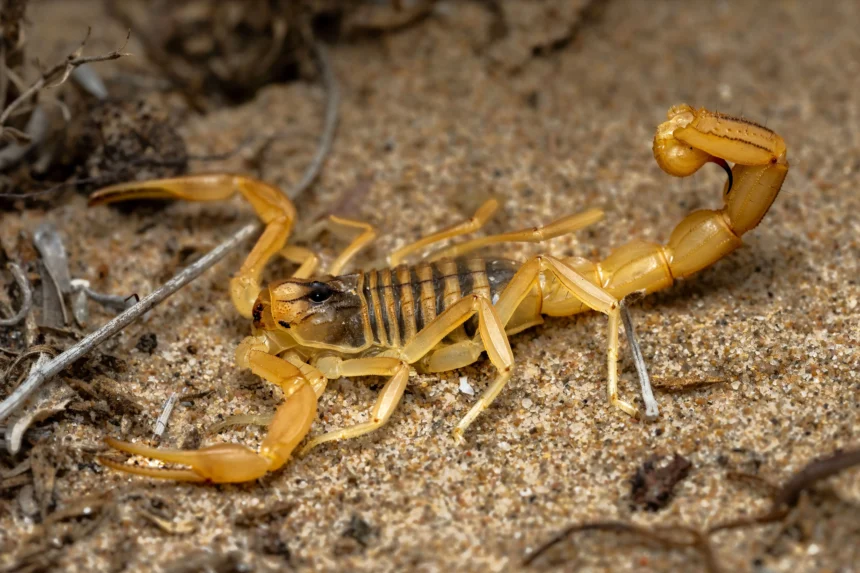
10 Creatures That Can Survive Conditions That Would Kill Humans
Take an unprotected human into the vacuum of space, several kilometers beneath the ocean, or into water near a deep-sea hydrothermal vent and survival quickly becomes impossible.
Human biology works within relatively narrow limits.
Our cells need oxygen.
Our proteins function within limited temperature ranges.
Our tissues require enormous amounts of water.
Our bodies are designed for approximately one atmosphere of pressure.
Allow body temperature to move too far in either direction and critical organs begin failing.
Yet evolution has produced animals that survive extreme conditions that seem almost incompatible with animal life.
Some can allow much of their bodies to freeze.
One microscopic animal has survived direct exposure to the vacuum of space.
A tiny mammal can remain alive for 18 minutes with no oxygen at all.
Fish thrive kilometers beneath the ocean beneath hundreds of atmospheres of pressure.
An Antarctic insect can lose more than 70% of its body water.
Worms live beside hydrothermal vents where surrounding conditions combine crushing pressure, toxic chemicals and extreme heat.
These creatures are often described online as indestructible.
They are not.
Every organism has limits.
Even the toughest animals that survive extreme conditions can die when exposure becomes too intense or lasts too long.
There is another important correction to the title.
Not every condition below would literally kill a human in one second. Some—such as deep-ocean pressure or unprotected space—would make human survival impossible extremely quickly. Others, including severe heat, freezing, anoxia and dehydration, become lethal over minutes or longer.
What makes these animals extraordinary is that their bodies continue functioning, or enter protective states, under conditions the human body simply cannot tolerate unaided.
Animals That Survive Extreme Conditions at a Glance
| Creature | Extreme Condition | Survival Strategy |
|---|---|---|
| Tardigrade | Vacuum, dehydration, radiation, freezing | Cryptobiosis |
| Wood frog | Large-scale body freezing | Cryoprotective glucose and metabolic shutdown |
| Naked mole-rat | Complete oxygen deprivation | Fructose-powered anaerobic metabolism |
| Mariana snailfish | Enormous deep-ocean pressure | Pressure-adapted proteins and membranes |
| Giant tube worm | Toxic hydrogen sulfide at deep-sea vents | Symbiotic bacteria and specialized blood chemistry |
| Saharan silver ant | Body temperatures above 50°C | Heat tolerance and rapid surface foraging |
| Antarctic midge | Severe dehydration and freezing | Osmolytes and metabolic suppression |
| Devil worm | Deep underground, hot, oxygen-poor water | Heat- and hypoxia-adapted physiology |
| Brine shrimp | Extreme salinity and desiccation | Osmoregulation and dormant cysts |
| Pompeii worm | Hot hydrothermal-vent environment | Exceptional thermal tolerance |
These animals that survive extreme conditions did not evolve because nature was attempting to create biological superheroes.
Each adaptation solved a specific problem in a particular environment.
1. Tardigrades Can Survive Exposure to Outer Space
No list of animals that survive extreme conditions can begin anywhere else.
Tardigrades—better known as water bears—are microscopic eight-legged animals generally measuring less than a millimeter long.
Under ordinary circumstances, they are not particularly dramatic.
They live in environments such as mosses, freshwater and thin films of moisture.
Their extraordinary abilities appear when conditions deteriorate.
Certain tardigrades can enter cryptobiosis, an extreme survival state in which ordinary metabolism falls almost to a standstill.
The animal contracts into a dehydrated form called a tun.
Water content drops dramatically.
Metabolic activity becomes almost undetectable.
Molecules and cellular structures are protected until favorable conditions return.
The most famous test came in space.
In the European Space Agency’s TARDIS experiment, dehydrated tardigrades were exposed outside a spacecraft to the vacuum and radiation environment of low-Earth orbit. Some subsequently survived after returning to Earth. ESA described them as the first animals demonstrated to survive exposure to space. ESA’s tardigrade space experiment
NASA has subsequently used tardigrades to study how biological systems respond to the stresses of spaceflight.
Why Would Space Kill a Human?
An unprotected human requires atmospheric pressure and oxygen.
Space provides neither.
Tardigrades survive because they do not attempt to remain normally active in vacuum.
Their survival strategy is effectively to suspend ordinary biological life until suitable conditions return.
That distinction matters.
Tardigrades do not casually walk around in space eating and reproducing.
Cryptobiosis allows them to endure conditions they normally would not inhabit actively.
That makes tardigrades perhaps the most famous example among animals that survive extreme conditions.
They also appear in The News Ink’s guide to animals that can survive without food for extraordinarily long periods because cryptobiosis reduces energy requirements to astonishingly low levels.
2. Wood Frogs Can Freeze Solid and Wake Up Again
Freeze a human body extensively and ice becomes catastrophic.
Ice crystals disrupt cells.
Blood circulation fails.
Organs lose oxygen.
Nervous-system function stops.
Yet North America’s wood frog, Rana sylvatica, has evolved a completely different relationship with ice.
During winter, these frogs can freeze.
Not merely become extremely cold.
Freeze.
Research shows that wood frogs can survive while roughly 65%–70% of their body water becomes extracellular ice.
During the frozen state:
breathing stops;
movement stops;
the heart stops beating;
and measurable brain activity disappears.
Then temperatures rise.
The animal thaws.
Its heart restarts.
It begins breathing again.
Eventually it hops away.
Recent research continues to investigate the complex genetic changes that occur during freezing and thawing. Wood frog freeze-tolerance research
How Does a Frog Survive Being Frozen?
The frog does not allow ice to spread randomly through every cell.
Instead, it floods tissues with protective substances, particularly glucose, that function partly as cryoprotectants.
Water freezes mainly outside cells.
Cells lose water but are protected from the worst effects of intracellular ice formation.
Metabolism falls dramatically.
The frog effectively waits for spring.
Northern populations are even more remarkable. Alaskan wood frogs have survived experimental freezing to temperatures around −16°C and extended frozen periods under controlled conditions.
Among animals that survive extreme conditions, the wood frog demonstrates that even a vertebrate body can temporarily tolerate a state that looks remarkably similar to death.
3. Naked Mole-Rats Can Survive 18 Minutes With No Oxygen
Humans depend critically on oxygen.
Brain tissue is especially sensitive to its loss.
The naked mole-rat lives under very different conditions.
These strange, nearly hairless mammals spend most of their lives inside crowded underground tunnel systems in eastern Africa, where oxygen can become scarce and carbon dioxide can rise.
Evolution has prepared them accordingly.
In a landmark Science study, naked mole-rats survived 18 minutes of complete oxygen deprivation in laboratory experiments without apparent injury.
Even more impressively, they could tolerate hours of extremely low oxygen.
Researchers discovered that naked mole-rats can switch part of their metabolism toward using fructose in a way unusual for mammalian tissues.
This allows critical organs such as the brain to continue producing energy when normal oxygen-dependent metabolism becomes impossible. Science research on naked mol-rat anoxia survival
That places naked mole-rats among the most fascinating animals that survive extreme conditions because they achieve their feat while remaining mammals.
They have:
brains;
hearts;
lungs;
and blood
built from broadly the same mammalian biological architecture as ours.
Evolution simply rewired some of the metabolic rules.
4. Mariana Snailfish Live Under Hundreds of Atmospheres of Pressure
Imagine descending into the Mariana Trench.
At the ocean surface, atmospheric pressure is approximately one atmosphere.
As you descend, water pressure rapidly increases.
Around 8,000 meters down, pressure approaches roughly 800 times atmospheric pressure.
An unprotected human cannot survive anything remotely comparable.
Yet fish live there.
The Mariana snailfish, Pseudoliparis swirei, has been found below 6,000 meters and represents one of the deepest-living vertebrate groups known.
Research combining anatomy and genome analysis found multiple adaptations associated with life under immense pressure.
These include changes related to:
protein stability;
cell-membrane function;
transport proteins;
and skeletal development.
The fish has thin, lightly ossified bones and unusual biological chemistry suited to the hadal environment. Nature study of Mariana snailfish adaptation
Pressure is especially dangerous because it affects molecules themselves.
Proteins must retain the correct three-dimensional shapes required to function.
Cell membranes must remain usable.
Biochemical reactions must still proceed.
The Mariana snailfish has evolved solutions over millions of years.
That is why deep-sea species belong among animals that survive extreme conditions, rather than simply ordinary fish living farther down.
The News Ink’s detailed exploration of life in the Challenger Deep explains how amphipods, microbes and other organisms continue living at depths approaching 11 kilometers even though fish appear to reach a physiological depth limit well above the very bottom.
5. Giant Tube Worms Live Beside Toxic Hydrothermal Vents
When deep-sea hydrothermal vents were explored in the 1970s, scientists discovered something that seemed almost impossible.
Large biological communities existed in total darkness.
There were no plants producing food through sunlight.
Instead, some ecosystems were based on chemical energy.
The giant tube worm Riftia pachyptila became one of the iconic animals of these vent communities.
It can grow more than two meters long.
Adults do not even have a conventional mouth or digestive system.
Instead, they contain symbiotic bacteria that use chemical reactions involving hydrogen sulfide to manufacture organic compounds.
That is remarkable because hydrogen sulfide is toxic to humans and many other animals.
Riftia’s blood contains specialized hemoglobin capable of transporting both oxygen and hydrogen sulfide while helping prevent the sulfide from poisoning the animal’s tissues. The bacteria inside the worm then exploit the sulfide as an energy source. Smithsonian explanation of giant tube worm symbiosis
Add total darkness and enormous deep-ocean pressure, and giant tube worms become compelling animals that survive extreme conditions.
They demonstrate that one organism’s poison can become another ecosystem’s fuel.
6. Saharan Silver Ants Run Across Ground Hot Enough to Be Dangerous to Humans
At midday in the Sahara, most desert animals seek shade.
Saharan silver ants do something extraordinary.
They emerge.
Cataglyphis bombycina forages during periods of extreme surface heat partly because many predators cannot remain active under those conditions.
Classic physiological research found critical thermal limits around 53.6°C for Saharan silver ants, with related Cataglyphis species reaching slightly higher values.
The ants routinely forage with body temperatures exceeding 50°C. Research on Saharan ant thermotolerance
A human exposed to environments driving core body temperature anywhere near those values faces catastrophic heat illness.
Humans actively defend a core temperature around 37°C.
Saharan silver ants operate at body temperatures that would be incompatible with normal human physiology.
Their strategy involves more than simply being “heat resistant.”
They forage very quickly.
Long legs lift their bodies away from the hottest boundary layer near the ground.
Their distinctive reflective hairs help manage solar radiation.
And they operate close to their own thermal limits, meaning speed matters.
These animals that survive extreme conditions do not defeat heat.
They exploit a narrow thermal window better than predators can.
Extreme environments are also not simply defined by temperature. The News Ink’s article on places where it almost never rains explains how atmospheric circulation, mountains and ocean currents create some of the world’s driest habitats.
7. Antarctic Midges Can Lose More Than 70% of Their Body Water
Humans are mostly water.
Lose even a comparatively modest fraction of body water and physiological performance deteriorates rapidly.
Severe dehydration becomes a medical emergency.
The Antarctic midge Belgica antarctica follows very different rules.
This tiny wingless insect is Antarctica’s only endemic insect.
Its larvae endure:
months of freezing conditions;
desiccation;
ice;
and enormous seasonal environmental stress.
Laboratory research found that larvae can survive losing more than 70% of their body water.
They respond by changing metabolism and increasing protective substances such as glycerol and trehalose. Research on Antarctic midge dehydration tolerance
The midge can also use cryoprotective dehydration.
As temperatures fall, larvae deliberately lose water.
That concentrates dissolved substances inside their bodies and reduces the chance of destructive internal freezing.
It sounds counterintuitive.
To survive freezing, the animal partly survives by becoming even more dehydrated.
This is why animals that survive extreme conditions frequently use strategies that would be disastrous for humans.
Their physiology evolved around environmental pressures ours never faced.
8. The “Devil Worm” Lives More Than a Kilometer Underground
For decades, scientists assumed Earth’s deep continental subsurface was largely the domain of microbes.
Then researchers found nematodes.
One was given an appropriately dramatic name:
Halicephalobus mephisto—the devil worm.
Researchers recovered these microscopic animals from deep fracture water inside South African mines.
The original discovery reported nematodes living in water found roughly 0.9 to 3.6 kilometers below the surface, with H. mephisto associated with a deep subsurface habitat.
The water was thousands of years old.
Oxygen was limited.
Temperatures were elevated.
There was no sunlight and no ordinary surface food web.
Yet multicellular animals were alive. Nature discovery of deep-subsurface nematodes
Later genomic research found expanded families of heat-shock proteins associated with surviving elevated temperature and other environmental stress.
The devil worm can also reproduce without requiring a mate and feeds on underground microorganisms.
These are animals that survive extreme conditions in one of the strangest habitats imaginable.
Not beneath an ocean.
Not frozen in Antarctica.
Inside Earth’s crust.
The discovery forced scientists to expand their ideas about where complex animal life can exist.
9. Brine Shrimp Can Live in Water Several Times Saltier Than the Ocean
Ordinary seawater is already far too salty for humans to drink safely.
Brine shrimp, Artemia, inhabit bodies of water where salt concentrations can rise far beyond normal ocean levels.
Research describes Artemia as an animal extremophile capable of surviving salinities approaching 10 times ordinary seawater under some conditions.
Their secret is extraordinary osmoregulation.
Living cells need to control the movement of water and dissolved salts across membranes.
In extremely salty environments, water naturally tends to leave less-salty biological tissues.
Without adaptation, cells dehydrate.
Brine shrimp use specialized physiological systems to regulate internal salt balance and prevent catastrophic water loss. Scientific review of brine shrimp extreme-salinity adaptations
Their embryos add another survival strategy.
When environmental conditions deteriorate, Artemia can produce dormant cysts capable of severe dehydration.
These cysts can wait until conditions improve.
Among animals that survive extreme conditions, brine shrimp illustrate that water itself can become hostile when too much salt is dissolved inside it.
10. Pompeii Worms Live on Hydrothermal-Vent Chimneys
The Pompeii worm, Alvinella pompejana, lives on the walls of hydrothermal-vent chimneys more than two kilometers below the Pacific Ocean.
Its environment combines:
total darkness;
high pressure;
toxic vent chemistry;
and extraordinary thermal gradients.
For years, Pompeii worms were sometimes described as tolerating temperatures as high as 80°C.
Modern experiments have produced a more careful picture.
Live-animal studies under pressure found that prolonged exposure to 50–55°C was lethal, while the worms showed a thermal optimum above roughly 42°C.
That still places them among the most heat-tolerant complex marine animals known. Experimental study of Pompeii worm heat tolerance
This correction matters because extreme-animal facts are especially vulnerable to exaggeration.
A worm living on a vent chimney does not mean its entire body is continuously sitting in 100°C water.
Hydrothermal vents create steep temperature gradients over very short distances.
The animals position themselves where conditions remain within their biological limits.
That is an important lesson about animals that survive extreme conditions.
They are extraordinary.
They do not violate chemistry.
Extreme Animals Are Not Truly Indestructible
Popular science often turns these creatures into superheroes.
Tardigrades survive everything.
Wood frogs cannot freeze to death.
Desert ants love unlimited heat.
Deep-sea fish cannot be crushed.
None of those statements is correct.
Every adaptation has boundaries.
Tardigrades die under sufficiently severe or prolonged exposure.
Wood frogs have minimum survivable temperatures.
Naked mole-rats eventually die without oxygen.
Pompeii worms overheat.
Deep-sea fish cannot simply be brought rapidly to the surface and remain unaffected.
Saharan ants operate extremely close to their thermal limits.
Evolution does not remove physical limits.
It moves them.
That is the scientific reason animals that survive extreme conditions are more interesting than fictional invulnerability.
Each animal remains constrained by physics.
Evolution has simply changed where those constraints lie.
Humans Survive Extremes With Technology Instead
Humans look physically unimpressive by comparison.
We cannot naturally survive:
underwater pressure;
hard vacuum;
major body freezing;
weeks without water;
or extended anoxia.
But our evolutionary strategy produced another remarkable adaptation.
Intelligence.
Instead of evolving pressure-resistant proteins, humans build submarines.
Instead of evolving antifreeze in our blood, we manufacture insulated clothing and heated buildings.
Instead of surviving vacuum naturally, we build spacecraft and pressure suits.
Instead of tolerating desert temperatures indefinitely, we create shelter and air conditioning.
Humans change the environment around the body.
Extreme animals change the body’s biology.
That creates two very different routes to survival.
The News Ink’s article on liver regeneration and the human body’s repair abilities demonstrates that our own biology contains remarkable survival systems too—just not adaptations for the kinds of environmental extremes these animals endure.
What Extreme Animals Teach Scientists
Studying animals that survive extreme conditions is not scientific curiosity alone.
Their biology can inspire research with practical applications.
Preserving Biological Material
Tardigrade strategies could help researchers understand how proteins, cells, vaccines or other biological materials might be stabilized during dehydration.
Protecting Organs From Oxygen Loss
Naked mole-rat metabolism may provide clues for understanding how mammalian tissues survive extreme oxygen deprivation.
Cryopreservation
Freeze-tolerant frogs reveal mechanisms that protect cells from ice damage.
Deep-Space Biology
Tardigrades offer models for studying radiation and spaceflight stress.
Climate Adaptation
Understanding extreme tolerance can reveal which species may survive rapidly changing environmental conditions—and where biological limits become impossible to overcome.
The News Ink’s Climate Change Explained guide explores why rising temperatures, ocean warming and changing precipitation can push organisms toward or beyond existing physiological limits.
Ironically, even animals that survive extreme conditions can be vulnerable to environmental change.
Specialization can become a weakness.
An Antarctic animal adapted to stable cold may struggle when conditions become warmer.
A desert animal already operating close to its maximum temperature has little additional thermal margin.
Being extreme does not mean being adaptable to everything.
Why Evolution Produces Such Strange Solutions
Evolution does not plan.
There is no biological engineer deciding:
“This frog should survive freezing.”
Instead, variation occurs.
Some individuals possess traits that improve survival.
Those individuals leave more offspring.
Generation after generation, useful traits become more common.
Over millions of years, the result can appear deliberately engineered.
Wood frogs accumulate cryoprotectants.
Naked mole-rats reroute metabolism.
Deep-sea snailfish stabilize proteins.
Brine shrimp regulate salt.
Tardigrades enter cryptobiosis.
This is how animals that survive extreme conditions become so specialized.
Their adaptations are records of environmental problems solved across evolutionary time.
Which Animal Is the Toughest?
There is no scientifically meaningful single winner.
It depends on the challenge.
For vacuum?
The tardigrade is extraordinary.
For whole-body freezing?
Wood frogs are among the most impressive vertebrates.
For oxygen deprivation?
Naked mole-rats are exceptional mammals.
For pressure?
Hadal animals dominate.
For heat?
Desert ants and hydrothermal-vent animals push animal physiology toward extraordinary limits.
For dehydration?
Tardigrades and Antarctic midges are remarkable.
This is why ranking animals that survive extreme conditions from “weakest” to “strongest” does not make much biological sense.
Survival adaptations are specialized.
A Mariana snailfish transferred to the Sahara would not suddenly outperform a silver ant.
An Antarctic midge cannot live on a hydrothermal vent.
Evolution produces specialists, not universal superheroes.
Frequently Asked Questions
What animals can survive the most extreme conditions?
Tardigrades are probably the most famous animals that survive extreme conditions because some species tolerate severe dehydration, radiation, freezing and even exposure to the vacuum of space.
Can any animal survive in outer space?
Tardigrades in dehydrated cryptobiotic states have survived experimental exposure to space vacuum. They do not normally live actively in space.
What animal can survive being frozen?
Wood frogs are exceptional freeze-tolerant vertebrates. Much of their body water can freeze while breathing and heartbeat cease, followed by recovery after thawing.
Which animal can survive without oxygen?
Naked mole-rats have survived 18 minutes of complete oxygen deprivation under controlled experimental conditions and much longer periods of severe hypoxia.
What animal lives at extreme ocean pressure?
Mariana snailfish and numerous hadal invertebrates are adapted to enormous pressures several kilometers below the ocean surface.
Can humans survive at the bottom of the Mariana Trench?
Not without a pressure-resistant submersible. The pressure at the deepest ocean trenches exceeds roughly 1,000 atmospheres and is incompatible with unprotected human survival.
Can animals survive temperatures above 50°C?
Some can. Saharan Cataglyphis ants can reach body temperatures above 50°C, while certain vent-associated worms tolerate very high temperatures for complex animals.
Which animal survives the most dehydration?
Several animals that survive extreme conditions tolerate remarkable water loss. Antarctic midge larvae can survive losing more than 70% of body water, while some tardigrades survive near-complete desiccation by entering cryptobiosis.
Are extremophile animals immortal?
No. Extreme tolerance has limits. Even highly resistant animals die when stress becomes sufficiently severe or prolonged.
Why can’t humans evolve the same abilities?
Human ancestors evolved under completely different environmental pressures. Evolution favors traits that improve reproductive success in a species’ normal environment, not every theoretically useful survival ability.
Animals That Survive Extreme Conditions Redefine What “Habitable” Means
Human beings naturally imagine life from a human perspective.
We need breathable air.
Liquid water.
Moderate temperatures.
Manageable pressure.
Regular food.
A body that remains mostly unfrozen.
So when an environment violates those rules, we call it uninhabitable.
Then biology surprises us.
A microscopic tardigrade dries almost completely, enters suspended animation and survives exposure to space.
A wood frog freezes until its heart stops and later thaws back to life.
A naked mole-rat loses oxygen and temporarily switches metabolic fuel.
A translucent fish swims beneath pressure that would make unprotected human existence impossible.
A giant worm uses toxic hydrogen sulfide to support a biological partnership.
A desert ant runs across scorching ground while its body exceeds 50°C.
An Antarctic insect loses most of its water.
A nematode lives more than a kilometer inside Earth’s crust.
Brine shrimp thrive where salt has made water hostile to most animals.
Pompeii worms occupy one of the strangest interfaces on the planet: the boundary between cold abyssal seawater and superheated hydrothermal geology.
These animals that survive extreme conditions reveal an important truth about life.
There is no single definition of a comfortable environment.
There is only an environment and the biology adapted to it.
Humans are extremely successful, but our bodies are not universally durable.
Take away technology and our environmental tolerance is modest.
Many animals outperform us in heat.
Others outperform us in freezing.
Some tolerate dehydration, pressure or oxygen loss that our organs cannot survive.
But none is invincible.
The true achievement is not that these creatures break the laws of biology.
It is that evolution has pushed ordinary biological materials—proteins, membranes, sugars, blood and cells—to operate astonishingly close to the boundaries imposed by physics and chemistry.
That is what makes animals that survive extreme conditions so scientifically important.
They show us not that life has no limits.
They show us just how surprisingly far those limits can be moved.
Follow The News Ink
For more research-driven explainers, science coverage and global stories, follow The News Ink on X, Instagram, Threads, Medium, Substack, Bluesky, Pinterest, TikTok, Quora and Mastodon.