NASA Mars Missions Explained: Rovers, Orbiters and the Search for Life
NASA Mars missions have changed humanity’s understanding of the Red Planet more dramatically than almost any other planetary exploration campaign.
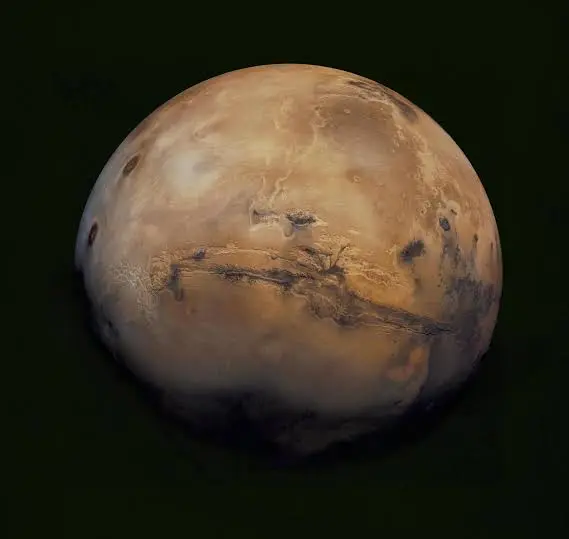
Mars was once observed only as a reddish point moving across Earth’s night sky.
Spacecraft changed that.
NASA photographed Mars up close.
Placed landers on its surface.
Drove increasingly sophisticated rovers across ancient lakebeds.
Measured its atmosphere.
Detected evidence of environments once shaped by liquid water.
Flew the first powered aircraft on another planet.
Collected carefully selected Martian rock samples.
And discovered materials that scientists classify as potential biosignatures, although NASA has not confirmed that life ever existed on Mars.
Today, NASA Mars missions are entering another transition.
NASA currently lists four active missions at Mars:
- Perseverance;
- Curiosity;
- Mars Reconnaissance Orbiter;
- Mars Odyssey.
MAVEN, which studied how Mars lost much of its atmosphere, ended in 2026 after more than 11 years in orbit. Meanwhile, NASA is developing a new Mars exploration strategy emphasizing lower-cost, high-science-value missions, stronger industry participation and infrastructure that could support future robotic and eventually human exploration.
NASA Mars Missions at a Glance
| Mission | Type | Major Achievement |
|---|---|---|
| Mariner 4 | Flyby | First successful Mars mission and first close-up Mars images |
| Viking 1 & 2 | Orbiters/Landers | First fully successful U.S. Mars landings; searched for signs of life |
| Mars Pathfinder | Lander/Rover | Delivered Sojourner, first successful rover on Mars |
| Spirit | Rover | Major evidence of Mars’ watery past |
| Opportunity | Rover | Operated almost 15 years and found extensive water-related geology |
| Mars Odyssey | Orbiter | Global mapping and long-term relay operations |
| Mars Reconnaissance Orbiter | Orbiter | High-resolution mapping and communications relay |
| Curiosity | Rover | Confirmed ancient Mars had habitable environmental conditions |
| MAVEN | Orbiter | Studied loss of Martian atmosphere; mission ended 2026 |
| InSight | Lander | Investigated Mars’ interior and seismic activity |
| Perseverance | Rover | Searches for ancient life and stores Mars samples |
| Ingenuity | Helicopter | First powered controlled flight on another planet |
Why NASA Keeps Exploring Mars
Mars is particularly important because it may once have been much more Earth-like than it is today.
Its surface contains:
ancient river channels,
lake deposits,
minerals formed in water,
sedimentary rocks,
polar ice,
and geological structures showing that Mars’ environment changed enormously over billions of years.
NASA’s Mars Exploration Program says its central scientific question is whether Mars was, is or could be a habitable world.
That does not mean scientists expect to find cities or complex organisms.
The main biological question concerns whether ancient Mars could once have supported microbial life.
To answer it, NASA Mars missions investigate four broad questions:
- Did Mars once have habitable environments?
- Could evidence of ancient life have been preserved?
- How did the Martian climate and geology evolve?
- What must humans understand before attempting to explore Mars directly?
Mariner 4 Begins Successful NASA Mars Exploration
The first great breakthrough came with Mariner 4.
Launched in November 1964, the spacecraft flew past Mars on July 14, 1965.
NASA describes it as the first successful mission to Mars and the spacecraft that returned the first close-up images of another planet.
The photographs were primitive by modern standards.
But they were revolutionary.
Instead of the imagined canals and vegetation that had influenced earlier popular ideas about Mars, Mariner 4 revealed a cratered and apparently barren landscape.
Those first images transformed Mars from an astronomical mystery into a world that could be studied directly by spacecraft.
Viking Takes NASA Mars Missions to the Surface
The Viking program represented an enormous increase in ambition.
NASA launched Viking 1 and Viking 2 in 1975.
Each mission consisted of:
an orbiter
and
a lander.
Viking 1 successfully landed in Chryse Planitia on July 20, 1976.
Viking 2 landed at Utopia Planitia on September 3. NASA describes Viking as the first fully successful mission to land on Mars and the first specifically designed to search the Martian surface for evidence of life.
Neither mission established evidence of Martian life.
But Viking transformed knowledge of Mars.
Its orbiters mapped large portions of the planet.
Its landers studied soil, atmosphere, weather and surface chemistry.
The results helped establish Mars as:
cold,
dry,
dominated by carbon dioxide,
yet marked by strong evidence that flowing water had existed in its distant past.
That question about ancient water would shape many later NASA Mars missions.
Mars Pathfinder Introduces the Rover Era
After a long gap in successful U.S. surface exploration, NASA returned with Mars Pathfinder.
The mission landed on July 4, 1997.
Pathfinder carried a small rover called:
Sojourner
NASA identifies Sojourner as the first robotic rover successfully delivered to the Martian surface.
It weighed only about 10.6 kilograms.
Compared with modern Mars rovers, it was tiny.
But technologically, it was extremely important.
Sojourner demonstrated that mobile exploration worked.
A rover could drive away from a stationary lander and investigate multiple rocks and soil targets instead of studying only whatever happened to be within reach of one fixed spacecraft.
Modern NASA Mars missions involving Spirit, Opportunity, Curiosity and Perseverance all grew from that basic idea.
Spirit and Opportunity Rewrite the Story of Water on Mars
NASA dramatically expanded the rover concept in 2004.
The twin Spirit and Opportunity rovers landed on opposite sides of Mars.
Their main objective was to investigate environments where liquid water may once have existed.
Both greatly exceeded their expected lifetimes.
Spirit operated until 2010.
Opportunity continued until a global dust storm interrupted communications in 2018.
NASA officially ended Opportunity’s mission in 2019.
It had operated for almost 15 years and traveled more than 28 miles, or 45 kilometers.
What Opportunity Found
Opportunity found compelling geological evidence that parts of Mars had once interacted extensively with liquid water.
Layers of sedimentary rock and water-altered minerals helped establish something now central to NASA Mars missions:
Modern Mars may be extremely dry, but ancient Mars was not always the same world.
What Spirit Found
Spirit also uncovered evidence involving past water and hydrothermal environments.
The two rovers together helped transform the scientific question.
Instead of asking simply:
Was there water on Mars?
Researchers increasingly asked:
For how long did habitable environments exist, and could they have preserved evidence of ancient life?
Mars Odyssey and the Orbiter Network
Not every important Mars spacecraft has wheels.
Orbiters are essential to NASA Mars missions.
NASA’s Mars Odyssey entered orbit around the planet in 2001 and remains active in 2026. NASA identifies it as one of four currently active Mars missions.
Odyssey has helped map the distribution of chemical elements and minerals across the Martian surface.
It has also served an extremely practical role:
communications.
Mars rovers can transmit data upward to orbiting spacecraft, which relay that information back toward Earth.
This relay architecture greatly increases how much science surface missions can return.
Mars Reconnaissance Orbiter
The Mars Reconnaissance Orbiter, or MRO, reached Mars in 2006 and also remains active.
Its high-resolution instruments have photographed the planet in extraordinary detail.
MRO studies:
- surface geology;
- water-related features;
- atmospheric conditions;
- landing sites;
- surface changes.
It is also a crucial communications hub for surface missions. NASA’s current Mars program specifically lists MRO as both an exploration mission and a major relay asset.
That communications role will become increasingly important as NASA Mars missions grow more complicated.
Curiosity Changes the Habitability Question
NASA’s Curiosity rover landed inside Gale Crater on August 6, 2012.
Its primary scientific objective was not to search directly for living organisms.
Instead, Curiosity was designed to determine whether ancient Mars ever had environmental conditions capable of supporting microbial life.
The answer became:
yes, at least in some ancient environments.
NASA says samples from an ancient lakebed showed the necessary chemistry and potential nutrients for microbes existed in Gale Crater billions of years ago.
Curiosity then began climbing Mount Sharp, a mountain rising about five kilometers above the crater floor.
Its layers preserve a geological history of changing Martian environments.
Curiosity Is Still Exploring in 2026
Curiosity is now one of the most extraordinary examples of spacecraft longevity among NASA Mars missions.
Launched in 2011 and landed in 2012, it remained scientifically active in 2026.
In July 2026, NASA reported Curiosity exploring a Martian valley nicknamed Valle Grande, where it found extensive polygonal or honeycomb-like fractures associated with changes in ancient groundwater and rock chemistry.
Curiosity also continues producing important chemistry results.
In April 2026, NASA reported that analysis of a previously drilled rock sample revealed the most diverse collection of organic molecules yet identified on Mars, including seven carbon-containing molecules never previously detected there.
Organic molecules do not automatically mean life.
They can be produced through biological or non-biological processes.
That distinction is essential.
MAVEN Explains How Mars Lost Its Atmosphere
Mars today has a thin atmosphere.
But evidence indicates the planet once possessed conditions capable of supporting lakes, rivers and a much more active water cycle.
What happened?
The MAVEN mission was designed to investigate part of that mystery.
MAVEN entered Mars orbit in 2014 and studied the upper atmosphere and its interaction with the solar wind.
The mission helped scientists examine how atmospheric gases escape to space over long periods.
MAVEN lasted far beyond its original one-year primary mission.
NASA ended the mission in June 2026 after an unexpected loss of signal dating from December 2025 could not be recovered. The spacecraft had spent more than 11 years at Mars.
Its ending reduced NASA’s active Mars fleet to four missions.
InSight Looks Beneath the Martian Surface
NASA’s InSight lander approached Mars differently.
Instead of driving across the surface, InSight remained in one location and studied the planet’s interior.
Its instruments measured marsquakes and helped scientists understand:
the crust,
mantle,
core,
and seismic activity.
The mission’s power gradually declined as dust accumulated on its solar panels.
NASA lost communications in December 2022 and concluded the mission had reached the end of operations.
InSight demonstrated that NASA Mars missions are not limited to searching for water or life.
Understanding the planet’s internal structure also helps scientists reconstruct how rocky planets form and evolve.
Perseverance Takes NASA Mars Missions Into Astrobiology
The Perseverance rover landed inside Jezero Crater on February 18, 2021.
Jezero was selected because evidence suggests it once contained a lake and river delta.
That makes it a particularly valuable place to investigate ancient habitability and search for preserved signs that microorganisms may once have existed.
Perseverance has several major goals:
- study Martian geology;
- investigate ancient environments;
- search for potential biosignatures;
- collect carefully selected samples;
- demonstrate technologies useful for future exploration.
By 2026, Perseverance was operating outside Jezero Crater and studying some of the oldest terrain yet encountered during its mission.
The Cheyava Falls Discovery
One of the most important recent developments in NASA Mars missions involves a rock nicknamed Cheyava Falls.
Perseverance examined the rock in 2024 and collected a sample called Sapphire Canyon.
NASA reported in September 2025 that a peer-reviewed scientific study concluded the sample contains potential biosignatures.
The wording matters enormously.
A potential biosignature is something that might have a biological origin but requires additional evidence before scientists can conclude that life was involved.
The rock contains unusual mineral and chemical patterns that can be associated with microbial processes on Earth.
But non-biological explanations remain possible.
Therefore:
NASA has not discovered confirmed life on Mars.
What NASA has found is scientifically interesting evidence that deserves much deeper investigation.
Why Returning Mars Samples Matters
Perseverance can perform impressive science on Mars.
But laboratories on Earth contain instruments far larger, more sensitive and more flexible than anything a rover can carry.
That is why returning Perseverance samples has long been one of the most ambitious goals associated with NASA Mars missions.
Perseverance has collected more than two dozen geologically diverse samples, while a backup set of tubes was deposited on the surface in Jezero Crater.
Scientists hope that future missions can eventually bring selected samples to Earth.
If that happens, researchers could examine them using technologies that may not even exist when the sample-return spacecraft is launched.
What Happened to Mars Sample Return?
This area needs particularly careful reporting.
Older articles often present one fixed Mars Sample Return architecture and a specific return date.
That is no longer safe.
NASA’s current Mars Sample Return page describes the campaign as a proposed future multi-mission effort to return Perseverance samples to Earth.
NASA had previously evaluated multiple redesigned approaches after cost and complexity concerns emerged.
Meanwhile, the agency’s broader 2026 Mars strategy emphasizes a new model based on:
lower-cost missions
high scientific value
greater launch frequency
and
industry participation.
For The News Ink, the safest wording is:
Returning Perseverance samples remains a major scientific objective, but the exact architecture, schedule and funding path should be rechecked before every update.
Do not reuse the old 2033 return date as though it remains guaranteed.
Ingenuity Makes the First Flight on Another World
Perseverance carried a small experimental helicopter named Ingenuity.
Its original objective was modest:
perform up to five experimental flights over about 30 days.
Instead, Ingenuity flew:
72 times.
Its first flight on April 19, 2021 became the first powered, controlled flight of an aircraft on another planet.
The mission ultimately lasted almost three years.
Ingenuity demonstrated that powered aerial exploration is possible even in Mars’ extremely thin atmosphere.
The helicopter later helped scout terrain for Perseverance.
Its final flight occurred in January 2024 after rotor damage made further flying impossible.
Ingenuity’s success could influence future NASA Mars missions involving aerial vehicles.
The increasing role of autonomous machines in planetary exploration also connects naturally with The News Ink’s Robotics Explained pillar.
Autonomous Navigation Is Becoming More Important
Mars is too far away for direct real-time control.
Depending on the positions of Earth and Mars, signals take minutes to travel between the planets.
That means a rover cannot simply be driven like a remote-controlled car.
Increasing autonomy is therefore critical.
In February 2026, NASA announced a new Mars Global Localization capability allowing Perseverance to determine its precise location more independently rather than relying entirely on Earth-based processing.
Future NASA Mars missions will likely require even greater autonomous capability.
Robots may need to:
navigate,
select safe routes,
inspect equipment,
manage resources,
and respond to unexpected conditions
without waiting continuously for instructions from Earth.
NASA’s Four Active Mars Missions in 2026
NASA’s current Mars portfolio is now unusually easy to summarize.
| Active Mission | Role |
|---|---|
| Perseverance | Surface geology, astrobiology and sample collection |
| Curiosity | Habitability and changing Martian environments |
| Mars Reconnaissance Orbiter | High-resolution orbital science and communications |
| Mars Odyssey | Orbital mapping and communications support |
NASA’s Mars Science portal identifies these as its four active missions at the Red Planet.
This active fleet combines surface science and orbital infrastructure.
Both are necessary.
Without orbiters, communications with rovers would be significantly more limited.
NASA Is Building a New Mars Communications Network
A major new development arrived on September 1, 2026.
NASA selected Blue Origin to develop a next-generation Mars Telecommunications Network.
NASA said the contract has a maximum potential value of approximately $700 million, with the company expected to deliver a high-performance telecommunications orbiter no later than December 31, 2028.
The spacecraft is intended to support:
science data,
images,
navigation,
and mission communications
for spacecraft operating on and around Mars.
This could become extremely important as NASA Mars missions increase in complexity.
A more capable communications infrastructure could support multiple robotic missions and contribute to future human exploration.
NASA’s New Mars Exploration Strategy
NASA’s current Mars planning is shifting away from relying only on very large flagship missions.
Its 2026 Mars Future Plan calls for lower-cost, high-science-value missions and payloads launched at a higher frequency.
This approach could provide several advantages.
More frequent missions reduce the danger of depending entirely on one giant spacecraft.
Different missions can investigate different scientific questions.
Commercial technologies may reduce some costs.
New instruments can reach Mars more regularly.
That does not mean large missions will disappear.
It means the portfolio may become more diversified.
Could Humans Become the Next NASA Mars Mission?
Eventually, NASA intends human exploration to become part of the Mars story.
Mars appears as the long-term horizon of NASA’s wider Moon-to-Mars strategy.
But sending astronauts there is dramatically harder than sending robots.
Distance
A one-way journey would take months rather than days.
Communications delay
Crews cannot depend on real-time instructions from Earth.
Radiation
Astronauts would spend long periods outside Earth’s protective magnetic environment.
Life support
Water, oxygen, food and waste systems would need exceptional reliability.
Landing
Mars has an awkward atmosphere.
It is thick enough to produce intense heating but too thin to slow very heavy spacecraft easily using parachutes alone.
Return
Astronauts would need the ability to leave Mars and travel safely back to Earth.
The experience gained from robotic NASA Mars missions is therefore part of preparing for human exploration.
Every successful landing improves engineering knowledge.
Every atmospheric measurement improves models.
Every autonomous driving system teaches future mission designers something.
Mars Is Not the Next Artemis Mission
Mars and Artemis are closely connected strategically, but they should not be confused.
The NASA Artemis Program focuses first on returning astronauts to lunar exploration.
NASA sees the Moon as a comparatively nearby testing ground for:
life-support systems,
surface mobility,
power,
robotics,
communications,
autonomy,
and long-duration operations.
Those experiences can eventually inform Mars missions.
That is why the NASA pillar should connect this article sideways to NASA Artemis Program Explained, while keeping the search intents separate.
Artemis owns the Moon.
This page owns NASA’s broad Mars exploration story.
Major NASA Mars Missions Timeline
| Year | Mission Milestone |
|---|---|
| 1965 | Mariner 4 completes first successful Mars flyby |
| 1976 | Viking 1 and Viking 2 land on Mars |
| 1997 | Pathfinder lands and Sojourner begins driving |
| 2001 | Mars Odyssey reaches Mars |
| 2004 | Spirit and Opportunity land |
| 2006 | Mars Reconnaissance Orbiter arrives |
| 2012 | Curiosity lands in Gale Crater |
| 2014 | MAVEN reaches Mars |
| 2018 | InSight lands |
| 2021 | Perseverance lands in Jezero Crater |
| 2021 | Ingenuity makes first powered flight |
| 2022 | InSight mission ends |
| 2024 | Ingenuity’s flying mission ends after 72 flights |
| 2025 | Perseverance potential-biosignature result passes peer review |
| 2026 | MAVEN mission formally ends |
| 2026 | Curiosity and Perseverance remain active |
| 2026 | NASA announces new Mars future strategy |
| 2026 | Blue Origin selected for future Mars telecommunications network |
Frequently Asked Questions About NASA Mars Missions
What are NASA Mars missions?
NASA Mars missions are robotic exploration projects designed to study the Red Planet’s geology, atmosphere, climate, habitability, potential signs of ancient life and conditions relevant to future human exploration.
How many NASA missions are currently active at Mars?
NASA lists four active missions in 2026: Perseverance, Curiosity, Mars Reconnaissance Orbiter and Mars Odyssey.
What was NASA’s first successful Mars mission?
Mariner 4 was NASA’s first successful Mars mission. It flew past Mars in 1965 and returned the first close-up images of another planet.
What was the first NASA rover on Mars?
Sojourner, carried by Mars Pathfinder, became NASA’s first rover to operate successfully on Mars in 1997.
Is Curiosity still active?
Yes. Curiosity remained active in 2026 and continues exploring Mount Sharp inside Gale Crater.
Is Perseverance still active?
Yes. Perseverance remained active in 2026, exploring ancient terrain outside Jezero Crater while collecting scientific samples.
Has NASA found life on Mars?
No. NASA has not confirmed life on Mars. Perseverance has collected a sample containing potential biosignatures, but biological and non-biological explanations still have to be distinguished.
What happened to Ingenuity?
Ingenuity completed 72 flights before rotor damage during its January 2024 final flight ended its ability to fly.
What happened to MAVEN?
NASA declared the MAVEN mission over in June 2026 after recovery attempts following a December 2025 loss of signal were unsuccessful.
Will Perseverance samples return to Earth?
NASA continues to describe Mars Sample Return as a proposed future mission objective, but the architecture and schedule have undergone major reassessment. A fixed return date should not currently be presented as guaranteed.
Will NASA send astronauts to Mars?
Human Mars exploration remains a long-term NASA goal, but no routine crewed Mars mission is currently operating. Robotic missions and Moon-to-Mars technology development are helping prepare for that possibility.
Conclusion: NASA Mars Missions Are Moving From Exploration Toward Infrastructure
The story of NASA Mars missions begins with photographs.
Mariner 4 flew past Mars in 1965 and returned images that changed how humanity imagined the planet.
Then Viking landed.
For the first time, NASA could study Martian soil directly and conduct experiments explicitly connected with the possibility of life.
Pathfinder added mobility.
Sojourner showed that a robot could drive across another planet.
Spirit and Opportunity demonstrated how valuable that mobility could become.
They found evidence of environments transformed by ancient water.
Opportunity survived for almost 15 years.
Then Curiosity changed the question again.
It demonstrated that Gale Crater once contained the chemistry and environmental conditions required for microbial habitability.
Perseverance pushed NASA Mars missions further toward astrobiology.
It explored an ancient lake and river-delta environment.
It collected rock cores.
It stored them in sealed tubes.
And one sample, Sapphire Canyon from Cheyava Falls, contains features NASA and peer-reviewed researchers classify as potential biosignatures.
That finding is important.
But scientific caution is equally important.
Potential biosignature does not mean confirmed organism.
Organic material does not mean life.
Ancient habitability does not prove ancient biology.
Mars science advances by separating those questions instead of collapsing them into one sensational claim.
Meanwhile, Curiosity continues working at Gale Crater.
Perseverance continues across ancient terrain near Jezero.
Mars Reconnaissance Orbiter continues looking down from orbit.
Mars Odyssey continues its long-running work.
Those four spacecraft form NASA’s active Mars fleet in 2026.
Other chapters have ended.
InSight stopped communicating in 2022.
Ingenuity completed its remarkable flying career in 2024 after 72 flights.
MAVEN’s mission formally ended in 2026 after more than 11 years studying the upper atmosphere.
But NASA Mars missions are not shrinking into history.
They are changing.
NASA’s new Mars strategy emphasizes lower-cost, high-science-value missions at greater frequency.
Industry participation is increasing.
A new Mars Telecommunications Network is being developed to provide stronger communications and navigation infrastructure around the planet.
That may point toward the next major transformation.
For decades, NASA sent individual spacecraft to Mars.
The future may require something more like an ecosystem.
Orbiters providing communications.
Surface robots performing science.
Autonomous systems navigating without constant human instruction.
Sample-return systems.
Aerial vehicles.
Commercial spacecraft.
And eventually infrastructure capable of supporting astronauts.
The most important unanswered question remains the same one that has driven many NASA Mars missions:
Was Mars ever inhabited?
Researchers already know that ancient Mars contained environments where microbial life could potentially have survived.
They know liquid water once shaped its surface.
They have identified organic molecules.
They have discovered potential biosignatures.
But the final biological answer remains open.
That uncertainty is precisely why Mars remains such a powerful scientific destination.
Each mission has changed the next question.
Mariner asked what Mars looked like.
Viking asked what its surface was made of and whether biology might be detectable.
Spirit and Opportunity followed the water.
Curiosity investigated habitability.
Perseverance is examining astrobiology and preserving samples.
The next generation may bring more sophisticated science, stronger communications infrastructure and perhaps eventually some of those samples back to Earth.
Beyond that lies another possibility.
Humans.
NASA’s wider exploration strategy sees robotic Mars science and lunar exploration as part of a much longer path toward crews operating on the Red Planet.
That future remains extremely difficult and uncertain.
But every successful NASA Mars mission makes Mars a little less unknown.
That has been the pattern since 1965.
And more than six decades later, the Red Planet remains one of NASA’s most important scientific frontiers.
For broader robotic-exploration context, read The News Ink’s Robotics Explained.
Once the NASA cluster URLs are live, this article should link upward to NASA Explained, sideways to NASA History Explained, and from the human-exploration section to NASA Artemis Program Explained.
Authoritative Sources
NASA Mars Exploration overview
NASA Curiosity and Perseverance 2026 update
NASA Ingenuity mission conclusion
Follow The News Ink
X
Pinterest
Medium
Quora
TikTok
Instagram
Substack
Threads
Bluesky
Mastodon