Shipping Costs for Consumers Rise as Iran Conflict Reshapes Global Trade
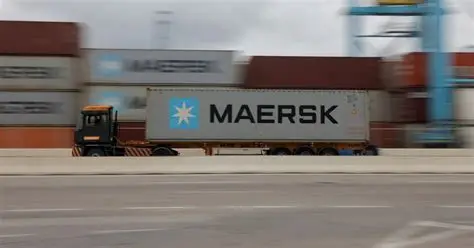
Shipping costs for consumers are no longer a distant risk discussed only by freight companies and importers. Months after Maersk chief executive Vincent Clerc warned that higher fuel and operating expenses would move through supply chains, the Iran conflict has pushed container rates, marine fuel prices, insurance costs and delivery risks sharply higher.
The original warning came in March 2026, when Clerc explained that Maersk’s contracts and surcharge mechanisms allow changes in fuel costs to be passed to customers. By May, the scale of the shock had become clearer. Maersk said the conflict was adding roughly 3 billion Danish kroner—about $473 million—to its monthly costs as bunker fuel prices climbed from around $600 to just under $1,000 per metric tonne.
Those expenses do not move from a ship’s fuel tank to a supermarket label overnight. Carriers charge importers, manufacturers reconsider costs, retailers protect margins, and households eventually see higher prices, fewer discounts, delays or reduced choice.
Shipping costs for consumers have therefore become a wider inflation story. The conflict has disrupted Hormuz traffic, kept carriers away from the Red Sea, lengthened voyages around Africa and exposed seafarers to repeated attacks. By mid-July, the International Maritime Organization had confirmed dozens of incidents and 17 seafarer deaths.
The Maersk Warning Has Become More Serious
Clerc’s first warning was straightforward: Maersk could not permanently absorb a large rise in fuel costs. Shipping contracts commonly include mechanisms that adjust what customers pay when bunker fuel becomes more expensive. Spot-market prices can react even faster because they reflect the immediate balance of vessel space, demand, fuel expenses and risk.
By May, Reuters reported that Maersk had recovered the additional costs through contract renegotiations and higher spot rates. Clerc also warned that the energy crisis could continue for months even if fighting ended, because fuel markets and disrupted supply networks do not return to normal immediately.
The risk operates in two directions. Carriers need higher rates to cover expenses, but shipping costs for consumers can also fuel inflation and weaken demand for imported goods.
Clerc warned that high costs, weaker demand and excess vessel capacity could become a dangerous combination. Higher freight rates do not automatically produce easy profits when carriers are also paying more for fuel, insurance, diversions and emergency logistics.
Maersk’s financial position also evolved after the initial warning. On 29 June, the company upgraded its 2026 guidance, citing strong container demand—particularly in the Far East—and a sustained increase in spot rates. The upgrade showed that market conditions were supporting revenue, but it did not remove the underlying cost pressure or the risk that shipping costs for consumers could weaken demand later in the year.
How the Conflict Raises the Cost of Moving a Container
The price of ocean freight is shaped by more than distance. A container rate reflects fuel, crew, vessel ownership or chartering, port fees, insurance, equipment availability, schedule reliability and the balance between cargo demand and available capacity.
The Iran conflict has affected several of those components at once.
| Cost pressure | How it reaches the freight bill |
|---|---|
| Higher bunker fuel prices | Carriers use surcharges, contract adjustments or higher spot rates |
| Longer routes | More sailing days require additional fuel, crew time and vessel capacity |
| War-risk insurance | Insurers charge more for voyages near threatened waters |
| Port and hub congestion | Delays reduce schedule reliability and tie up ships and containers |
| Suspended services | Less available capacity can lift rates on alternative routes |
| Emergency land and air transport | Importers pay more to bypass blocked maritime connections |
| Inventory disruption | Businesses hold more stock or pay for faster replacement shipments |
This combination explains why shipping costs for consumers can rise even when a particular container never passes through the Strait of Hormuz. Fuel is purchased globally, vessels are reassigned across networks, and delays in one region can remove capacity from another.
In June, Reuters reported that spot rates from Asia to the United States had almost doubled from late-February levels. The reported Shanghai-to-Los Angeles rate reached $4,565 for a 40-foot container, while Shanghai-to-New York stood at $5,505.
The report said very-low-sulphur marine fuel had risen 55% across 20 major hubs. Because fuel can represent as much as 60% of a container ship’s voyage cost, the increase quickly lifts shipping costs for consumers.
Two Chokepoints, One Global Supply-Chain Problem
The Strait of Hormuz and the Bab el-Mandeb Strait play different roles, but disruption around both creates a powerful combined shock.
Hormuz is especially important for oil, liquefied natural gas and petroleum products. UN Trade and Development estimates that the strait normally carries around a quarter of global seaborne oil trade, alongside significant LNG and fertiliser volumes. A slowdown therefore affects fuel markets far beyond the Gulf.
Bab el-Mandeb links the Red Sea to the Gulf of Aden and helps connect Asian trade with the Suez Canal and Europe. When carriers avoid that route, many vessels sail around the Cape of Good Hope. The diversion can add days or weeks, consume more fuel and reduce the number of round trips each ship can complete.
Maersk has maintained a public page of Middle East operational updates, including vessel contingency plans, temporary booking restrictions and alternative land, sea and air solutions. Its update dated 16 July said conditions remained volatile and subject to rapid change.
The two-route disruption matters because shipping networks are interconnected. A vessel diverted around Africa arrives late for its next voyage, containers are returned more slowly and importers lose reliable arrival dates. Each delay can make shipping costs for consumers more persistent than a temporary oil-price spike.
The News Ink’s analysis of global markets and the Iran war explains how energy prices, investor anxiety and transport disruption reinforce one another. The same mechanism is visible in freight: a security shock becomes a fuel shock, then a capacity problem, and finally a consumer-price risk.
The Strait of Hormuz Remains Dangerous
Crew safety is the first reason major carriers avoid threatened waters. Commercial ships are civilian workplaces, not military assets, yet seafarers have faced missiles, drones, fires, abandonment and fatal injuries.
As of 17 July, the International Maritime Organization’s incident tracker listed 58 confirmed incidents and 17 confirmed seafarer deaths connected to the Middle East maritime crisis. Several July incidents involved vessels damaged near Oman, including fatalities and multiple injuries.
Those figures correct the original article’s early reference to at least seven deaths. The humanitarian toll has increased.
Safety decisions also have a commercial effect. Owners and crews may reject a route even when it is technically open, insurers may demand larger premiums, and one attack can suspend an entire service. Shipping costs for consumers rise when safe capacity disappears.
In mid-July, tanker traffic through Hormuz fell to a two-month low as renewed attacks increased caution. That instability means shipping costs for consumers are influenced not only by formal closures, but also by how captains, crews, insurers and company security teams judge the real risk.
Maersk’s approach has consistently emphasised the safety of people, ships and cargo. In March, it suspended vessel crossings through Hormuz and rerouted affected services. The carrier has since used contingency plans and multimodal options to keep some cargo moving without exposing crews to unacceptable danger.
Why Consumers Do Not See the Increase Immediately
Shipping costs for consumers usually appear with a delay. Retailers may already have stock in warehouses or goods at sea under earlier contracts. Large importers can hedge fuel exposure, negotiate annual freight agreements or absorb part of a short-term increase to protect market share.
The effect becomes clearer when disruption lasts. A retailer importing low-value, bulky goods is more exposed than a company selling small, high-margin products because the freight increase is divided across fewer saleable units.
Businesses typically choose among five responses:
- absorb the extra cost and accept a lower profit margin;
- raise retail prices;
- reduce promotions or package sizes;
- switch suppliers or transport routes;
- delay orders until freight conditions improve.
Companies often use several responses at once. Shipping costs for consumers can therefore appear as smaller discounts, longer waits, missing sizes, reduced variety or temporary surcharges.
Import-dependent economies with weaker currencies are hit twice because freight becomes more expensive in dollars and in local currency. Countries importing fuel, fertiliser and food face the greatest pressure.
For a wider household perspective, The News Ink’s report on how the Iran war affects bills examines the connection between energy, inflation, interest rates and everyday budgets.
Food, Fertiliser and Essential Goods Face Particular Pressure
Consumer discussion often focuses on clothing, electronics and toys because these products arrive in visible containers. The more serious risk may be the effect on food systems and industrial inputs.
Hormuz carries energy products and fertiliser materials that support agriculture. When natural gas, fuel or fertiliser becomes more expensive, farmers face higher production costs. Food processors pay more for electricity and packaging. Refrigerated transport becomes costlier, while delayed shipping can damage perishable cargo.
UNCTAD has warned that higher energy, fertiliser, insurance and freight expenses may raise food prices and intensify cost-of-living pressure, particularly in vulnerable developing economies. This is one reason shipping costs for consumers cannot be measured only by the freight charge on a finished product.
A supermarket price reflects several transport stages, from raw materials and processing to ocean freight and store delivery. The conflict can influence every stage through fuel, insurance and delay, spreading shipping costs for consumers across essential goods.
The News Ink’s guide to rising oil prices and daily life offers additional context on how energy shocks spread beyond petrol stations.
China’s Intervention Showed the Global Stakes
China’s role matters because it is the world’s largest exporter and a major source of manufactured goods, machinery, electronics and vehicles. Disruption to routes between China, the Middle East, Europe and the Americas can affect factories, ports and consumers across several continents.
On 9 March, China’s Ministry of Transport summoned representatives from Maersk and Mediterranean Shipping Company to discuss their international shipping operations. The official notice was brief, but subsequent reporting said Chinese officials were concerned about freight increases, service suspensions and the stability of supply chains.
The meeting did not prove that carriers were charging unjustified prices; they faced real fuel and security expenses. It showed that governments were watching shipping costs for consumers and the stability of trade flows.
By June, the increase in Asia–US spot rates demonstrated that shipping costs for consumers were no longer confined to cargo moving directly through the Gulf. Importers accelerated orders because they feared further increases, adding demand pressure to a market already dealing with expensive fuel and disrupted capacity.
The News Ink’s analysis of China’s exposure to the Iran war explores why Beijing has a strong interest in stable energy supplies and uninterrupted trade corridors.
Why Shipping Costs for Consumers Vary by Product
A doubling of a container spot rate does not mean the price of every imported item doubles. The effect depends on the number and value of products inside the container, the importer’s contract, inventory levels, exchange rates, competition and the length of disruption.
A freight increase divided across thousands of high-value devices may add little to each unit. The same increase on bulky, low-cost furniture can be much more visible. Shipping costs for consumers become easier to detect when they remain elevated across several ordering cycles and businesses can no longer protect margins.
Freight Inflation Can Feed Wider Economic Inflation
Transport is one part of the inflation system. Higher freight costs can raise the price of imported goods, but energy has an even broader effect because it influences factories, airlines, farms, delivery vehicles and household utilities.
That is why the Maersk warning matters beyond maritime trade. Clerc’s concern was not only that carriers needed to recover fuel expenses. He also warned that persistent inflation could weaken consumer demand in the second half of 2026.
Central banks cannot produce oil or reopen a strait, but they watch whether temporary shocks become lasting expectations. Shipping costs for consumers matter most when they combine with energy, food and insurance increases that squeeze disposable income.
Readers can follow The News Ink’s broader economy coverage for analysis of inflation, trade and household finances.
Maersk’s Higher Guidance Does Not Cancel the Warning
Maersk’s upgraded annual guidance may appear to contradict the idea that the conflict is harmful. In reality, both can be true.
Strong demand and higher spot rates can improve revenue. At the same time, the company can face hundreds of millions of dollars in additional monthly fuel costs, operational disruption and uncertainty over future demand.
Container shipping has a history of sharp cycles. When demand exceeds available vessel capacity, rates can rise quickly. When new ships arrive or consumer demand falls, rates can collapse. The Iran conflict has added an energy and security shock to that already volatile market.
The company’s June guidance, relevant to shipping costs for consumers, assumed global container-market volume growth of about 4% in 2026. Its next scheduled financial update is due in August, when investors will look for evidence about whether higher rates are offsetting fuel costs and whether demand remains resilient.
For households tracking shipping costs for consumers, the more relevant question is not whether Maersk earns more or less in one quarter. It is how long shipping costs for consumers stay high and how widely businesses pass them through.
How Businesses Can Limit Shipping Costs for Consumers
Importers cannot control war, but they can reduce dependence on one route, supplier or transport method. Useful responses include realistic inventory buffers, longer freight contracts, several ports, better shipment visibility and selective near-shoring.
Maersk and other logistics groups have expanded landbridge, air-sea and sea-air options. These can move urgent cargo, but they are more expensive and cannot replace container-ship capacity.
Smaller businesses have less bargaining power and may raise prices sooner. Governments can help by keeping ports efficient, sharing security information and challenging opportunistic conduct without treating every surcharge as profiteering.
What Would Bring Freight Costs Down?
A durable reduction requires more than a temporary pause in fighting.
Safe and predictable passage through Hormuz and the Red Sea would allow carriers to restore routes, insurers to reassess risk and vessels to return to more efficient schedules. Fuel supply chains would also need time to normalise.
Clerc warned in May that the energy crisis would not disappear on the day a peace agreement was signed. Bunker fuel inventories, refinery output, vessel positions and port congestion can take months to rebalance.
Shipping costs for consumers could ease sooner if demand weakens sharply or new vessel capacity creates competition among carriers. That would reduce freight rates, but a demand collapse caused by recession would hardly be a positive outcome.
The best outcome for shipping costs for consumers is gradual de-escalation combined with restored navigation, stable fuel markets and continued consumer demand. Until those conditions emerge, businesses should expect volatility rather than a smooth return to pre-conflict pricing.
The Consumer Impact Is Now a Continuing Story
The original Maersk warning on shipping costs for consumers accurately identified the basic transmission mechanism: carriers face higher fuel and operating expenses, pass them to customers, and some of the burden eventually reaches households.
What has changed is the scale and duration. By May, Maersk’s monthly cost increase was approaching half a billion dollars. By June, Asia–US container spot rates had almost doubled from late-February levels. By 17 July, the IMO had confirmed 58 maritime incidents and 17 seafarer deaths.
Those developments make shipping costs for consumers a continuing global-trade issue, not a one-day warning from a company executive.
Shipping costs for consumers will not affect every shop or country identically, and the disruption should not be exaggerated into claims of universal shortages. The direction is nevertheless clear: longer routes, expensive fuel, security risks and unreliable schedules make trade more costly.
For continuing analysis of the conflict’s economic effects, readers can join The News Ink on WhatsApp.
Shipping costs for consumers ultimately depend on how long the Iran conflict disrupts energy markets and maritime routes. The longer instability continues, the harder it becomes for importers and retailers to absorb the bill—and the more likely it is that households will encounter it in prices, delivery times and product choice.