Life in Tehran Under Fire as US-Israeli Strikes, Fear and Security Controls Tighten
Life in Tehran under fire has become a daily test of fear, patience and survival as US-Israeli strikes continue to shake Iran’s capital, security forces tighten control and ordinary residents try to protect their families in a city that no longer feels normal.
The war began on 28 February 2026 with US and Israeli attacks on Iranian military, political and leadership targets. Tehran was hit in the opening phase, including strikes around central political compounds. Iran’s Supreme Leader Ali Khamenei was killed in the first wave, an event that changed the country’s politics overnight and deepened the sense of uncertainty across the capital.
For residents, however, the war is not only a matter of leadership, diplomacy or military targets. It is heard in the sound of explosions, felt in windows left open to stop glass from shattering, seen in empty streets and measured in the rising price of basic food. One Tehran resident, identified as Salar in media accounts, described the level of destruction as hard to believe. Others say every day feels longer because the bombing, warnings and uncertainty rarely stop.
Life in Tehran under fire is also shaped by silence. Internet shutdowns and heavy censorship have made it harder for people to share what they are experiencing. International journalists have struggled to enter or work freely. Families outside Iran often cannot reach relatives. Inside the city, residents face not only external attacks but also checkpoints, nervous security forces and fear of being watched.
The News Ink has also covered why the US and Israel attacked Iran and how depleting weapons stockpiles could shape the Iran conflict.
Why life in Tehran under fire has changed so quickly
Life in Tehran under fire changed quickly because the opening strikes targeted the political and security centre of the Islamic Republic. Tehran is not only Iran’s capital. It is where the regime’s institutions, security networks, ministries, media operations and elite political compounds are concentrated.
That made the city a strategic target. It also made millions of civilians vulnerable to the consequences of strikes aimed at power centres around them.
Residents describe a city where people now leave home only when necessary. Bakeries and supermarkets still operate in some areas, but routines have become fragile. People queue for petrol, bread and basic goods. Some shops remain closed. Some cash machines do not work. Families plan errands around possible strikes, fuel shortages and checkpoints.
Life in Tehran under fire is therefore not one single crisis. It is a chain of small disruptions that accumulate: food costs rising, transport becoming uncertain, mobile internet failing, schools closing, families separating, rumours spreading and fear becoming ordinary.
The psychological effect may be harder to measure than the physical damage. People are trying to live in the capital of a state at war while also sensing that the state itself is under pressure.
Tehran residents describe fear and exhaustion
The most striking accounts from Tehran are not only about explosions. They are about exhaustion.
Residents say blasts can shake buildings without warning. Some leave windows open so pressure waves do not break the glass. Others sleep in hallways or rooms away from windows. Parents try to calm children while also avoiding conversations that could frighten them more.
Life in Tehran under fire means every sound can become suspicious. A distant boom, a siren, a drone-like noise or a sudden loss of signal can change the mood inside a home. People may not know whether a strike landed nearby, whether air defences intercepted something, or whether another round is coming.
That uncertainty is made worse by limited information. When the internet is restricted and state media is selective, rumours fill the gap. Residents hear one thing from a neighbour, another from a Telegram channel, another from foreign media and another from official announcements. Deciding what to believe becomes part of daily survival.
The war has also changed social behaviour. Streets that were once busy now feel empty at certain hours. People who can stay indoors often do. Those who must work, buy food or check on relatives move quickly and return home.
Key facts at a glance
| Issue | Reported situation |
|---|---|
| War start date | 28 February 2026 |
| Main targets | Military, political, leadership and security sites |
| Capital impact | Strikes, security checkpoints, fear and disrupted daily life |
| Leadership shock | Ali Khamenei killed in the first wave of US-Israeli strikes |
| Civilian toll | HRANA reported at least 1,394 civilian deaths by 20 March |
| Minab school strike | Amnesty said 156 people were killed, including 120 children |
| Internet restrictions | Iran suffered an 87-day blackout before partial restoration |
| Daily-life pressure | Higher food prices, queues, closed shops and fuel concerns |
| Security climate | Checkpoints, surveillance fears and crackdowns on dissent |
| Current risk | Renewed July fighting has revived fear of wider escalation |
This table shows why life in Tehran under fire cannot be understood only through military maps. The war has entered homes, markets, schools, communications and family routines.
Civilian casualties changed the mood
The Minab school strike became one of the most painful symbols of the war’s civilian cost. Early reports described more than 160 deaths. Later human rights reporting gave a more precise toll. Amnesty International said 156 people were killed, including 120 children, in the strike on a school in Minab, Hormozgan province.
Human Rights Watch separately said the attack on the school should be investigated as a possible war crime and reported that US military assessments pointed toward likely US responsibility, though final accountability remained contested in public statements.
Life in Tehran under fire is influenced by such incidents even when they happen far from the capital. News of children killed in a school deepens fear everywhere. Parents in Tehran ask whether any public building is safe. Families wonder whether schools, clinics or neighbourhood blocks could be hit by mistake.
The White House has said the United States does not target civilians. That statement matters legally and diplomatically. But for civilians, the practical question is different: if the war continues, can anyone guarantee that mistakes, misidentification or blast effects will not kill ordinary people?
The answer so far has not reassured them.
HRANA’s casualty numbers show the scale
The Human Rights Activists News Agency has tracked deaths and injuries since the start of the conflict. In early March, HRANA reported more than 1,000 civilian deaths. By 20 March, the organisation said at least 1,394 civilians had been killed, including at least 210 children. It also reported military deaths and unidentified fatalities.
Those figures are difficult to verify independently in real time because Iran is heavily restricted, war zones are dangerous and internet access has been disrupted. But HRANA’s reporting has become one of the most important sources for understanding the civilian toll.
Life in Tehran under fire is shaped by those numbers because they confirm what residents feel: civilians are not outside this war. They are part of its cost.
Casualty figures can sometimes become abstract. In Tehran, they are not abstract. They mean relatives not answering calls, hospitals under pressure, families searching for information and neighbours wondering which district will be next.
The scale of deaths also fuels political tension. Some residents may blame the US and Israel. Others blame Iran’s rulers for bringing the country to this point. Many blame everyone with power for failing to protect ordinary people.
Khamenei’s death changed the security atmosphere
The killing of Ali Khamenei in the first wave of strikes transformed Iran’s political landscape. Reuters reported that Iranian state media confirmed Khamenei’s death after airstrikes pulverised his central Tehran compound. His son Mojtaba later became Iran’s new supreme leader, though he was reportedly injured in the same strike.
Life in Tehran under fire changed after that because the leadership crisis created fear inside the system. Residents reported more checkpoints and a heavier security presence. A 25-year-old student described security forces as nervous, suggesting officials feared protests after the leader’s death.
That fear is not irrational from the regime’s point of view. Iran had already faced major protests, economic anger and deep distrust before the war. The death of the supreme leader created a moment of shock that could have produced public mourning, anger, celebration or unrest depending on the community.
The state responded with control. Security forces became more visible. Streets were monitored. Gatherings became sensitive. The official message focused on unity and resistance, but the reality underneath was more complicated.
Reuters later reported that massive funeral events for Khamenei in July showed the regime could still mobilise large crowds, yet analysts said public support for the Islamic Republic remained thin beneath the display of unity.
Security checkpoints and nervous streets
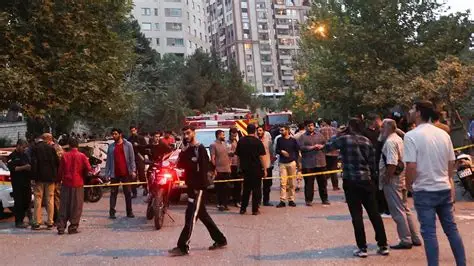
Checkpoints have become part of daily life in Tehran. Security forces stop cars, monitor roads and appear in areas where officials fear unrest or infiltration. Residents say the atmosphere feels tense rather than orderly.
Life in Tehran under fire is difficult because people must navigate two kinds of danger. One comes from outside: airstrikes, drones, explosions and the possibility of escalation. The other comes from inside: surveillance, questioning, arrests and fear of being accused of disloyalty.
That second danger affects behaviour. People may avoid photographing damage. They may avoid discussing politics in public. They may delete messages before crossing a checkpoint. They may stop posting online because the internet is restricted and digital activity could be monitored.
This is how war changes a city even between explosions. Public space becomes political. Ordinary movement becomes cautious. A trip to buy bread can involve calculating which streets to avoid and what not to say.
Tehran has lived with pressure before. But residents say the combination of strikes, leadership shock and security control has created a different kind of fear.
Internet shutdowns deepen isolation
The internet blackout became one of the most serious non-military consequences of the war. Iran cut international internet access after the February strikes, and Reuters reported in May that President Masoud Pezeshkian ordered the restoration of international access after an 87-day blackout. AP later reported that access was returning but users still faced heavy restrictions, slow speeds and blocked platforms.
NetBlocks said connectivity had fallen to around 1% of ordinary levels during the shutdown, according to reports cited by Al Jazeera and other outlets. For many Iranians, that meant weeks or months of digital isolation.
Life in Tehran under fire became harder because people could not easily verify information, contact relatives abroad, work online, receive money, run digital businesses or share evidence of damage. Students, freelancers, small businesses and families with relatives outside Iran were hit especially hard.
An internet blackout during war does not only silence politics. It interrupts daily life. It cuts income. It blocks medical coordination. It prevents emergency updates. It increases anxiety because people cannot confirm whether loved ones are alive.
Even after partial restoration, heavy filtering remains a form of control.
Shortages and rising prices hit families
The war has pushed everyday costs higher. Residents report that basic goods such as eggs and potatoes have become more expensive. Long lines have formed outside petrol stations and bakeries. Some shops have shut because supplies are uncertain, staff cannot travel or owners fear damage.
Life in Tehran under fire is therefore also a household economics story. Families must decide what to buy, how much to store and whether to spend cash quickly before prices rise again. People worry about fuel because fuel affects everything: transport, food distribution, generators and emergency movement.
Cash access has also become a problem in some areas. If ATMs fail or digital payments are disrupted by internet restrictions, people become dependent on whatever cash they already have. That makes normal shopping harder and increases anxiety around shortages.
Supermarkets and bakeries still operate in parts of Tehran, which matters. The city has not stopped functioning completely. But it is functioning under strain. The difference between availability and stability is important. Food may still exist, but if prices rise sharply and queues grow longer, daily life becomes harder.
Tehran’s empty streets tell their own story
Residents say Tehran’s streets can feel unusually empty. That does not mean everyone has left. It means people have changed how they move.
Some families have relocated temporarily to relatives’ homes in less exposed areas. Others stay inside unless they need food, fuel, medicine or cash. Students avoid campuses. Shops shorten hours. Social visits decline. Nightlife disappears. Public mood becomes quieter and more watchful.
Life in Tehran under fire can be seen in those absences: fewer cars, fewer conversations on pavements, fewer children outside, fewer people lingering in markets. A city of millions can still feel hollow when fear changes public behaviour.
The funeral events for Khamenei showed that the state could still bring crowds into the streets. But organised mass mourning is not the same as ordinary life returning. A city can hold a procession one day and return to fear the next.
Tehran’s emptiness reflects calculation. People are not only afraid of bombs. They are afraid of being caught in the wrong place when something happens.
Different reactions inside the city
It would be wrong to describe all Tehran residents as feeling the same way. War divides opinion as well as territory.
Some Iranians mourned Khamenei and saw the US-Israeli strikes as an attack on national sovereignty. Others quietly welcomed the blow to a leadership they blamed for repression and economic hardship. Some wanted political change but feared foreign bombing. Some opposed the regime while also opposing strikes that killed civilians.
Life in Tehran under fire contains all of those contradictions. A person can hate the regime and still fear American bombs. A person can blame Israel and the US while also resenting Iranian officials. A person can hope for change but fear the chaos that may follow.
This is why simple narratives fail. Tehran is not one mood. It is a city of grief, anger, fear, exhaustion, defiance and suspicion.
The war has not only intensified opposition or unity. It has intensified uncertainty. People are asking what comes next, who is really in control and whether any political future can emerge without more bloodshed.
Crackdowns widen beyond war targets
AP reported in July that Iran had intensified persecution of the Baha’i minority during a year of protests and war, according to rights groups. The report described arrests, forced confessions and broader repression, with rights groups saying the crackdown was being used to intimidate Iranians more widely.
That matters for understanding life in Tehran under fire because wartime security measures often expand beyond military necessity. Governments under pressure may target minorities, activists, students, journalists, lawyers and online voices. Officials may justify restrictions as national security while using them to silence criticism.
The Baha’i case is one example. Internet shutdowns are another. Checkpoints are another. Arrests of suspected dissidents or alleged collaborators can become another layer of fear.
For ordinary residents, this means the war is not only overhead. It is also inside institutions, courts, police stations and neighbourhoods. People fear airstrikes, but they also fear being accused of the wrong loyalty.
This is the social cost of a state under siege.
What July changed
By July, the war had entered a dangerous new phase. The Guardian reported renewed US-Iran tensions, including Trump’s announcement of a restored blockade on Iran and a proposed 20% shipping fee through the Strait of Hormuz. The same reporting described recent missile and drone exchanges between US and Iranian forces and warned of a wider regional escalation.
Life in Tehran under fire is affected by that renewed escalation because every new round of fighting revives fear in the capital. A ceasefire or pause can let people breathe. A fresh strike campaign forces them back into survival mode.
Khamenei’s delayed funeral ceremonies in July also reopened emotional wounds. Reuters reported large crowds at funeral events, while analysts said the public display of unity did not erase internal fractures over repression and the economy.
That combination is volatile. The state wants mourning to become legitimacy. Opponents may see the funeral as propaganda. Foreign strikes continue. Economic pressure grows. Security forces remain alert.
For Tehran residents, July did not feel like a clean aftermath. It felt like another uncertain chapter.
How war reshapes family decisions
Families in Tehran are making choices that would have seemed extreme before the war.
Some decide whether children should sleep away from windows. Some keep bags ready in case they need to leave quickly. Some stockpile flour, rice, water or medicine when they can. Some avoid hospitals unless absolutely necessary because movement feels risky. Some families outside Iran send money or instructions through unstable channels.
Life in Tehran under fire is especially hard for elderly people, people with disabilities and families with young children. Queues are difficult. Medicine shortages are frightening. Loud explosions can cause panic. Internet blackouts make remote support harder.
There is also the question of whether to leave the city. Not everyone can. Travel requires money, fuel, relatives elsewhere and confidence that roads are safe. For many people, staying is not a choice made from courage. It is the only option.
War often creates the illusion that civilians can simply move. Most cannot.
What daily survival looks like
Daily survival in Tehran now involves planning around uncertainty.
Residents may:
- shop early before queues grow;
- keep windows open during heavy strikes;
- charge phones whenever electricity and connectivity allow;
- store cash because digital payments may fail;
- avoid photographing military damage;
- use coded language when discussing politics;
- check on elderly relatives in person when phone lines fail;
- keep fuel in vehicles when possible;
- avoid large gatherings unless necessary;
- stay away from obvious security sites.
Life in Tehran under fire has become a routine of caution. People still cook, work, care for children and visit relatives. But each normal act now carries risk.
That is one of war’s cruellest effects. It does not only destroy buildings. It makes ordinary life feel strategic.
The wider Iran war context
The Tehran story is part of a larger war that has spread through the region. The conflict has affected Gulf bases, oil routes, shipping, civilian aviation and global energy markets. Iran has launched missiles and drones. The US and Israel have continued strikes. Gulf states have tried to protect their own territory while avoiding wider collapse.
The News Ink has reported on US-Iran ceasefire pressure, global markets shaken by the war and China’s economic concerns over the Iran conflict.
Life in Tehran under fire sits at the human centre of that geopolitical story. Oil traders may watch Hormuz. Diplomats may watch ceasefire talks. Military planners may watch stockpiles and targets. Tehran residents watch their doors, windows, phones, children and food supplies.
The same war looks very different depending on where someone stands.
FAQ: life in Tehran under fire
How has life in Tehran changed during the war?
Life in Tehran under fire has changed through airstrikes, explosions, empty streets, rising food prices, fuel queues, internet restrictions and a heavier security presence across the capital.
Was Ali Khamenei killed in the first strikes?
Yes. Reuters and Iranian state media reported that Supreme Leader Ali Khamenei was killed in the first wave of US-Israeli strikes on 28 February 2026.
How many civilians have been killed in Iran?
HRANA reported at least 1,394 civilian deaths by 20 March, including at least 210 children. The figure is difficult to verify independently because of war conditions and information restrictions.
What happened at the Minab school?
Amnesty International said 156 people, including 120 children, were killed in a strike on a school in Minab, Hormozgan province. Rights groups have called for accountability and investigation.
Is Iran’s internet back?
Iran began restoring international internet access after an 87-day blackout, but AP reported users still face heavy restrictions, slow speeds and blocked platforms.
The bottom line
Life in Tehran under fire shows the civilian reality behind the Iran war. The conflict is not only about missiles, leaders, oil routes or military targets. It is about families sleeping away from windows, parents searching for food, students crossing checkpoints, shopkeepers losing income and relatives abroad unable to reach loved ones.
The killing of Ali Khamenei changed Iran’s political landscape. The Minab school strike deepened civilian grief. HRANA’s casualty figures show a rising human toll. Internet blackouts have isolated millions. Security controls have tightened as the state tries to prevent unrest. Renewed fighting in July has reminded residents that the war is not over.
Tehran remains a functioning city, but not a normal one. Bakeries still open. Markets still sell food. People still work where they can. But daily life is now shaped by caution, fear and uncertainty.
Life in Tehran under fire is the story of a capital trapped between foreign bombardment and domestic control. Civilians did not choose the war, but they are living with its consequences every day.
For more Iran war, Middle East and global security coverage, follow The News Ink on Threads.