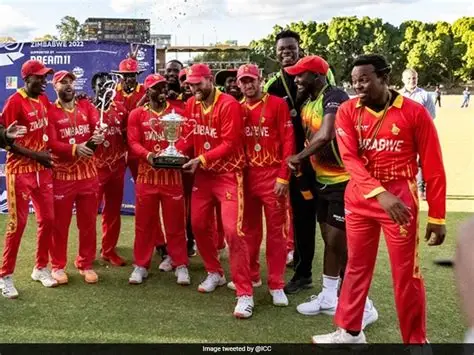
For cricket fans who remember the 1990s, Zimbabwe’s success on the world stage seemed natural.
The team regularly challenged top nations. They won Test series against India and Pakistan. At the 1999 World Cup, Zimbabwe finished fifth in the Super Six stage, narrowly missing the semi-finals.
Stars like Andy Flower, Heath Streak, and Henry Olonga made Zimbabwe a force to be reckoned with. Fans hoped the rise would continue.
But trouble loomed.
The Dark Years
At the 2003 World Cup, Flower and Olonga wore black armbands to protest the decline of democracy under Robert Mugabe. Both players eventually left the country.
In 2004, 14 senior players resigned over political interference and selection quotas. By 2006, Zimbabwe suspended its Test status after heavy defeats and internal struggles.
The team spent 15 years in decline, with only occasional flashes of past glory. Zimbabwe returned to Test cricket in 2011 with a win over Bangladesh, but Zimbabwe Cricket faced debts up to $27 million.
Former all-rounder Sean Williams said in 2023:
“There were more office members than players. It looked like cricket was dying—if not dead.”
The low point came in 2019, when the International Cricket Council suspended Zimbabwe Cricket and blocked them from qualifying for the 2021 T20 World Cup.
A Comeback on the Big Stage
Despite these setbacks, Zimbabwe rebuilt its team and infrastructure. Strong leadership and emerging talent helped them reach the second stage of the latest T20 World Cup.
Their return shows a smaller cricketing nation can still compete at the highest level. Fans now hope Zimbabwe can sustain this resurgence and once again challenge the world’s best teams.