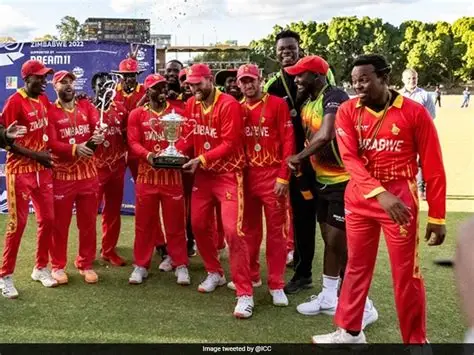
Zimbabwe Cricket: How a Stunning 2026 World Cup Comeback Rebuilt Belief
Zimbabwe cricket has travelled one of the most difficult roads in the modern international game. For supporters who remember the 1990s, Zimbabwe were not a novelty act or a sentimental underdog. They were a competitive full-member side capable of beating major nations, producing world-class players and troubling opponents who expected an easier afternoon.
That history made the long decline more painful. Political pressure, player departures, financial problems, administrative crises and repeated qualification failures pushed Zimbabwe cricket away from the centre of the global game. The national side still produced memorable individual performances, but the sense of a stable cricketing pathway was badly damaged.
The 2026 ICC Men’s T20 World Cup did not solve every problem. Zimbabwe reached the Super Eight stage but lost all three matches in the second phase. Still, the campaign mattered because Zimbabwe cricket had climbed from a suspension, a missed 2024 T20 World Cup and years of uncertainty to beat Australia, defeat co-hosts Sri Lanka and remind the sport why the Chevrons still matter.
Zimbabwe Cricket Once Belonged on the World Stage
The rise of Zimbabwe cricket in the 1990s was built on a rare mix of skill, resilience and identity. Andy Flower became one of the finest batters in the world. Heath Streak gave Zimbabwe a fast-bowling leader of international class. Henry Olonga, Grant Flower, Alistair Campbell and others helped create a side that was technically sound and difficult to dismiss.
The 1999 Cricket World Cup remains the clearest symbol of that era. Zimbabwe reached the Super Six stage and finished fifth, just short of the semi-finals. Their campaign included wins that made stronger nations take notice, and it helped establish the idea that Zimbabwe cricket could compete seriously against the best.
For younger fans, that period can feel distant. Yet it is essential to understanding why the 2026 revival created such emotion. Zimbabwe were not discovering cricketing ambition for the first time. They were reconnecting with a standard the country had once known.
The News Ink’s verified cricket guide explains the formats, tournament stages and scoring systems that shape international cricket. Zimbabwe cricket has lived through almost every part of that structure: Test promise, one-day competitiveness, T20 disappointment and now a new short-format surge.
The Collapse Was Slow, Public and Deep
The decline of Zimbabwe cricket did not happen in one season. It unfolded across years of political tension, administrative breakdown and the loss of senior players. The 2003 Cricket World Cup brought one of the most symbolic moments when Andy Flower and Henry Olonga wore black armbands to protest what they described as the death of democracy in Zimbabwe. Both players eventually left the country.
In 2004, a group of senior players withdrew from the national set-up during a dispute over selection, governance and political interference. The team’s depth was badly damaged. By 2006, Zimbabwe had stepped away from Test cricket after heavy defeats and internal instability.
The sport did not disappear, but the damage was serious. Zimbabwe cricket remained alive through domestic structures, loyal fans and determined players, yet the national team increasingly looked isolated. There were flashes of quality, including victories over major sides, but they were difficult to sustain.
Financial pressure added to the burden. Reports over the years described a board under debt, a player system under strain and a cricket culture that had to rebuild trust. When a national team loses senior talent, money, facilities and confidence at the same time, recovery becomes much harder than simply selecting a new XI.
The 2019 ICC Suspension Became the Lowest Point
The most damaging institutional moment arrived in July 2019. The International Cricket Council suspended Zimbabwe Cricket with immediate effect, citing failure to ensure there was no government interference in its governance. The ICC suspension statement said funding would be suspended and representative teams from Zimbabwe would be barred from ICC events.
For Zimbabwe cricket, this was more than a public embarrassment. ICC events are vital for visibility, revenue, player motivation and national pride. A suspension threatens the whole ecosystem because players lose targets, supporters lose hope and administrators face even greater pressure.
The timing also hurt. Zimbabwe were trying to recover from years of instability, but the suspension placed their international future in doubt. Although the ICC later restored Zimbabwe’s membership, the damage to qualification pathways and reputation remained significant.
The 2019 episode is one reason the 2026 World Cup run felt so powerful. Zimbabwe cricket had not merely improved from a poor tournament. It had recovered from a period when its place in ICC competition was formally threatened.
Missing the 2024 T20 World Cup Made the Rebuild More Urgent
The next major setback came in qualification for the 2024 T20 World Cup. Zimbabwe failed to secure one of the two African regional places after losses to Namibia and Uganda. The result was especially painful because Uganda qualified for a first men’s T20 World Cup, while Zimbabwe were left outside another global event.
The ICC’s report on Hamilton Masakadza’s resignation as director of cricket recorded that he stepped down after Zimbabwe failed to qualify for the 2024 tournament. The failure was not treated as a minor disappointment. It prompted reviews, coaching changes and renewed debate about whether the structure around Zimbabwe cricket was strong enough.
That missed tournament became a turning point. Zimbabwe could not rely on reputation. Africa’s cricket landscape had changed. Namibia had become consistent, Uganda had improved, and smaller nations were no longer intimidated by Zimbabwe’s full-member status.
If Zimbabwe cricket wanted to return to global relevance, it had to earn that place again through qualifiers, not through nostalgia.
Qualification for 2026 Restored Momentum
Zimbabwe’s route back began in the Africa qualifiers for the 2026 T20 World Cup. The pressure was obvious. Another failure would have deepened the crisis. Instead, Zimbabwe held their nerve.
The ICC report on Namibia and Zimbabwe claiming T20 World Cup places confirmed that Zimbabwe secured qualification by beating Kenya by seven wickets in the second semi-final of the Africa Regional Final. Namibia took the other place.
That qualification was the first major signal that Zimbabwe cricket was moving in the right direction. It did not guarantee success at the main tournament, but it restored a platform. It gave the players a global stage, gave supporters a reason to believe and gave the board proof that progress was possible.
The most important part was not simply reaching the tournament. It was how Zimbabwe then used the opportunity.
Zimbabwe Cricket Shocked Australia
Zimbabwe’s biggest statement at the 2026 T20 World Cup came against Australia in Colombo. The official ICC report described Zimbabwe’s 23-run win as the biggest upset of the tournament at that stage. It also noted that the result revived memories of Zimbabwe’s famous 2007 T20 World Cup victory over Australia.
Beating Australia mattered for several reasons. Australia were former champions and one of cricket’s deepest talent pools. Zimbabwe were still fighting to prove that their qualification was not only symbolic. A win over a major side changed the tone of the group.
The result showed that Zimbabwe cricket had rediscovered something essential: the ability to make elite opponents uncomfortable. T20 cricket rewards fearlessness, fielding intensity and tactical clarity. Zimbabwe had enough of each to turn a group match into a global talking point.
| Zimbabwe’s 2026 World Cup turning points | Why it mattered |
|---|---|
| Qualified through the Africa Regional Final | Restored global tournament participation after missing 2024 |
| Beat Australia by 23 runs | Produced the tournament’s first major shock |
| Beat Sri Lanka by six wickets | Proved the Australia win was not a one-off |
| Reached the Super Eight stage | Marked Zimbabwe’s strongest modern T20 World Cup run |
| Lost all three Super Eight games | Showed the gap that still remains against elite depth |
Defeating Sri Lanka Made the Comeback Real
One upset can be dismissed as a great day. A second major result makes a tournament run feel real. Zimbabwe confirmed their Super Eight credentials by beating co-hosts Sri Lanka by six wickets. The ICC’s group-stage report said Zimbabwe remained unbeaten in the group stage after that win.
Sri Lanka had started quickly, but Zimbabwe stayed calm. They absorbed pressure, trusted their batting and completed the chase with enough authority to show they belonged in the next phase.
This was a crucial difference from some earlier Zimbabwe campaigns. In previous years, strong moments were often followed by immediate collapse. In 2026, Zimbabwe cricket showed continuity. The win over Australia was not a single burst of emotion. The win over Sri Lanka confirmed a wider change in confidence.
The result also carried symbolic weight. Sri Lanka were co-hosts, playing with crowd pressure and tournament expectation. Zimbabwe handled the occasion and topped Group B unbeaten. That achievement gave the Chevrons one of their most celebrated white-ball moments in years.
The Super Eight Stage Exposed the Next Challenge
The revival had limits. Zimbabwe’s Super Eight campaign was difficult. They lost to West Indies, India and South Africa, and the gap in power, depth and execution became clear.
The ICC’s post-tournament review captured that balance well. It said Zimbabwe had signalled intent by defeating Australia and Sri Lanka but then fell short in all three Super Eight matches. Sikandar Raza still described the tournament as beautiful for Zimbabwe.
That is the right framing. Zimbabwe cricket did not complete a fairytale by reaching the semi-finals. It completed a serious step forward by getting to the stage where the weaknesses were exposed by elite sides.
West Indies punished them with a huge total. India and South Africa showed the difference between a team on the rise and teams with deeper batting, sharper bowling options and more tournament experience. Those defeats should not erase the progress. They should guide the next stage of the rebuild.
Why Sikandar Raza Became the Face of the Revival
Every comeback needs leadership, and Zimbabwe cricket found it in Sikandar Raza. His career has become a bridge between eras: old enough to understand the pain of decline, still good enough to compete with the modern game’s best short-format players.
Raza’s importance extends beyond runs and wickets. He gives Zimbabwe a tactical centre, a public voice and emotional credibility. In a team that has carried years of disappointment, leadership matters because belief can disappear quickly after one bad over or one heavy defeat.
Zimbabwe’s 2026 success was not only about one player, but Raza became the clearest symbol of the team’s refusal to accept permanent decline. Around him, players such as Blessing Muzarabani, Ryan Burl, Tadiwanashe Marumani and Brian Bennett helped give the side a more balanced T20 identity.
For a smaller cricket nation, that balance is vital. One superstar can win a match. A group with defined roles can build a tournament.
Fans Helped Change the Meaning of Zimbabwe Cricket
The emotional power of the comeback came partly from the supporters. Zimbabwe cricket has historically carried complicated questions of race, access and identity. For years, the sport was often associated with older structures and narrower communities. Recent crowds have suggested a broader connection.
The Guardian’s report on Zimbabwe’s 2026 breakthrough described a fan culture that had become more inclusive, energetic and connected to the national side. It highlighted Shona chants, travelling supporters and a sense that the team had become a point of shared joy rather than a reminder of division.
That matters because national teams are not built only in dressing rooms. They need supporters who feel represented. When Zimbabwe cricket feels like a sport for more of the country, the team gains emotional force. Players respond to that energy. Young fans start imagining themselves in the shirt. Sponsors and administrators see a product worth backing.
The comeback therefore had two layers. On the field, Zimbabwe beat strong opponents. Off the field, the team gave people a reason to gather around cricket again.
What Zimbabwe Cricket Still Must Fix
A strong tournament should not hide unfinished work. Zimbabwe cricket still faces structural challenges that cannot be solved by two group-stage wins.
The player pool remains smaller than those of major nations. Domestic standards need constant improvement. Facilities, coaching pathways and youth development must keep pace with ambition. Zimbabwe also need more regular fixtures against stronger opponents, because players improve faster when they are exposed to elite pressure.
The 2026 Super Eight defeats showed where improvement is needed most:
- more death-over bowling options;
- deeper batting against high pace and spin variety;
- better recovery plans after losing early wickets;
- stronger fielding under pressure;
- more franchise and international exposure for younger players;
- clearer succession planning beyond senior leaders.
These are not criticisms meant to reduce the achievement. They are the natural next steps. Zimbabwe cricket has proved it can return to the conversation. The task now is to stay there.
The 2027 World Cup Gives the Rebuild Another Target
Zimbabwe’s next major opportunity is especially important. The 2027 ICC Men’s Cricket World Cup will be co-hosted by South Africa, Zimbabwe and Namibia. That gives Zimbabwe cricket a rare chance to connect a home audience with a global event.
Hosting is not only about stadiums and schedules. It is about legacy. A home World Cup can improve facilities, inspire school participation and bring new supporters closer to the game. It can also increase scrutiny. A host nation is expected to be competitive, organised and visible.
The News Ink’s guide to sports tournaments in 2026 explains how major events can reshape expectations around teams and host countries. For Zimbabwe, the 2027 ODI World Cup should be treated as a national cricket project, not just a tournament on the calendar.
If the 2026 T20 World Cup restored belief, 2027 can test whether that belief becomes a sustainable structure.
Why This Comeback Belongs With Sport’s Best Revival Stories
The best comeback stories in sport are rarely simple. They usually include failure, poor decisions, long waits and people who keep working when attention has moved elsewhere. Zimbabwe cricket fits that pattern.
The journey from 1999 promise to 2019 suspension and then to the 2026 Super Eight stage is not a straight line. It includes political controversy, player exits, financial strain, missed tournaments and painful defeats. That is why the 2026 campaign carried more weight than an ordinary group-stage success.
The News Ink’s article on greatest comeback stories in sports history explores how recovery often depends on resilience as much as talent. Zimbabwe’s case belongs in that conversation because the comeback involved an entire cricketing system, not just one athlete returning from injury.
Frequently Asked Questions About Zimbabwe Cricket
Why was Zimbabwe’s 2026 T20 World Cup run important?
Zimbabwe reached the Super Eight stage after beating Australia and Sri Lanka. The run mattered because Zimbabwe had missed the 2024 T20 World Cup and had spent years dealing with administrative and competitive instability.
Did Zimbabwe reach the 2026 T20 World Cup semi-finals?
No. Zimbabwe reached the Super Eight stage but lost to West Indies, India and South Africa. Their campaign still represented major progress.
Why was Zimbabwe Cricket suspended in 2019?
The ICC suspended Zimbabwe Cricket in July 2019 because of governance concerns and failure to ensure there was no government interference. ICC funding was suspended and Zimbabwe teams were barred from ICC events during the suspension.
How did Zimbabwe qualify for the 2026 T20 World Cup?
Zimbabwe qualified through the Africa Regional Final, securing their place with a seven-wicket win over Kenya in the second semi-final.
Who were the key figures in Zimbabwe’s revival?
Sikandar Raza was the central leader, while players including Blessing Muzarabani, Ryan Burl, Tadiwanashe Marumani and Brian Bennett contributed to the team’s stronger T20 identity.
What is Zimbabwe’s next major cricket opportunity?
The 2027 ICC Men’s Cricket World Cup, co-hosted by South Africa, Zimbabwe and Namibia, gives Zimbabwe a major chance to build on renewed public interest.
Zimbabwe Cricket Has Rebuilt Belief, Not Finished the Job
Zimbabwe cricket has not returned to the top of the world. That would be an exaggeration. But Zimbabwe cricket has done something deeply important: it has restored belief.
The 2026 T20 World Cup campaign showed that the Chevrons can still trouble major nations, energise supporters and reach the business end of a global tournament. The wins over Australia and Sri Lanka were not enough to produce a semi-final, but they were enough to change the conversation.
The real test begins now. Zimbabwe cricket must turn a powerful tournament into better systems, deeper squads and stronger results. If that happens, the 2026 comeback will not be remembered as a brief emotional high. It will be remembered as the moment Zimbabwe cricket began building again.
For more cricket features and sports analysis, follow The News Ink on X.