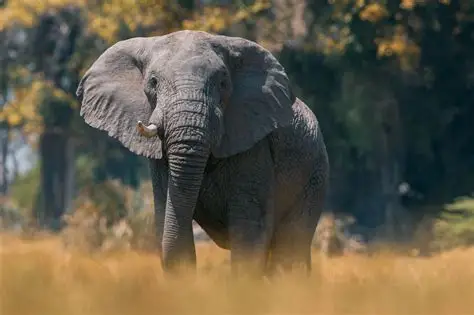
Angola’s Ghost Elephants: Explorer Confirms the Long-Rumored Herd
Angola’s ghost elephants spent decades surviving in a landscape that outsiders could barely enter and researchers struggled to understand. When conservation biologist Steve Boyes finally gathered convincing evidence of the herd, the result did not prove that a local legend had suddenly become real. It confirmed what communities in southeastern Angola had been saying for generations: elephants still moved through the remote highlands, even if they had learned to avoid almost every human being.
That distinction matters. The animals were never unknown to the Nkangala, Luchazi and local hunters who read their tracks and knew the valleys they used. They were “ghosts” mainly to modern science, which lost sight of them during war, poaching and isolation.
The search became Werner Herzog’s documentary Ghost Elephants. It follows Boyes, National Geographic Explorer Kerllen Costa and KhoiSan master trackers Xui, Xui Dawid and Kobus. Technology produced fragments; the trackers turned them into a picture of a living population.
What emerged was more interesting than a simple sighting. Camera-trap images, a mobile-phone video, footprints, feeding signs and DNA collected from dung indicated that Angola’s ghost elephants are African savanna elephants living at an unusual altitude. Preliminary genetic work also suggested that the population had been isolated for centuries.
The discovery now creates a harder challenge. Finding the animals was difficult. Protecting their habitat, migration routes and relationship with nearby communities may be harder still.
The Search Began With an Elephant Garden
Boyes’s modern search for Angola’s ghost elephants began in 2015 during work in the upper Okavango Basin. In a remote clearing, he found elephant dung and vegetation that appeared to have been shaped by a large bull. The sign was unexpected because researchers had little verified information about a resident population so far into the highlands.
The clue connected Boyes’s work on the Okavango headwaters with elephants’ role as ecosystem engineers. Evidence in the source region suggested that an important population and a globally significant watershed depended on the same neglected habitat.
Boyes returned by motorbike in 2016. He and his team could smell elephants and find signs, but they did not see them. Camera traps photographed leopards, monkeys, porcupines and other wildlife while missing the largest animals in the forest.
A helicopter search in 2019 also failed. The miombo woodland, peatlands and river valleys made observation difficult, and the elephants appeared to move beneath cover. The absence of a sighting did not prove the animals were absent; it showed how poorly standard survey methods fitted the landscape.
Why 180 Cameras Barely Found Angola’s Ghost Elephants
Over roughly seven years, the project deployed about 180 camera traps and used motion, heat and acoustic sensors. Boyes later said it took seven years to obtain the first black-and-white trail-camera photograph of one elephant.
The cameras revealed how effective Angola’s ghost elephants had become at avoiding detection. A device had to face the right route at the right moment. The animals travelled mostly in darkness, used dense cover and sometimes damaged cameras without being photographed.
The turning point came after Abraão António Luhoke, a former soldier and hunter, told the team it was searching in the wrong place. Luhoke knew the Cangamba area and had recognised elephant signs there. After he joined the work in 2021, the search narrowed, and cameras began producing occasional images.
In September 2024, the team obtained a shaky but unmistakable mobile-phone video. The footage was not a polished wildlife sequence, but it added another layer of confirmation. Angola’s ghost elephants were no longer represented only by tracks and stories.
The larger lesson was that expensive equipment became useful only after local knowledge guided it. A camera can record what passes in front of it; it cannot decide which valley an animal trusts.
Traditional Trackers Changed the Search for Angola’s Ghost Elephants
For the expedition filmed by Herzog, Boyes and Costa worked with Xui, Xui Dawid and Kobus, master trackers whose knowledge had been developed through close observation of animals and landscapes.
Tracking meant reading broken stems, dung, mud on bark, feeding damage and spacing between prints. Those signs indicated group size, timing and whether Angola’s ghost elephants knew they were being followed.
At one river crossing, tracks suggested that a group of about 20 elephants had met another group of roughly 24. The animals appeared to have socialised before moving onward. The team was reconstructing an encounter it had missed, almost as though reading the previous pages of a story.
This approach reframed the search. The goal was not only to force a visual encounter with Angola’s ghost elephants. It was to understand how they moved without disturbing a population already deeply afraid of people.
The documentary uses that contrast as its central idea: advanced sensors created data, but traditional ecological knowledge made the landscape legible.
What the Discovery of Angola’s Ghost Elephants Actually Proved
The phrase “discovered the elephants” can make the evidence sound simpler than it was. No single dramatic moment settled every question. Confirmation accumulated through several kinds of proof.
| Evidence | What it showed | What it did not prove |
|---|---|---|
| Tracks and feeding signs | Large elephant groups were moving through the highlands | Their genetics or full population size |
| Camera-trap photographs | At least some elephants were resident in the study area | That they formed a new species |
| Mobile-phone video | A live elephant could be visually documented | That the whole herd had been located |
| Dung samples | DNA could be compared with other elephant populations | A direct family link to Henry |
| Preliminary genetic analysis | The animals were savanna elephants and appeared unusually distinct | A formally recognised new subspecies |
| Local testimony | Communities knew the animals’ routes and history | A complete scientific census |
The evidence supports the existence of a little-studied, highly elusive highland population. It does not support calling Angola’s ghost elephants a newly discovered species.
National Geographic’s investigation reported that preliminary DNA work identified them as African savanna elephants. Researchers also said the samples looked genetically different from others they had analysed, suggesting long isolation. Those findings are scientifically important, but they remain more limited than claims that a new giant species has been found.
The population estimate is also provisional. Boyes has suggested that around 100 elephants may move through the wider region. Trackers have followed breeding herds and bulls, but thick forest, vast distances and nocturnal behaviour make a precise census difficult.
How War Taught Angola’s Ghost Elephants to Disappear
Angola endured an anti-colonial war from 1961 to 1974 and then a civil war from 1975 until 2002. Southeastern Angola became a major conflict zone, while landmines and unexploded ordnance continued to restrict movement long after the fighting ended.
Elephants paid an enormous price. Ivory helped finance armed groups, and researchers have cited reports that tens of thousands of animals may have been killed during the wider period of conflict. A 2015 aerial survey found only about 4,000 elephants remaining in southeastern Angola.
The pressure continued after the war as weapons remained available, work was scarce and ivory or bushmeat offered income.
Angola’s ghost elephants appear to have responded behaviourally. They moved at night, rested in cover during daylight and became unusually quiet and wary. National Geographic described adult animals behaving more like prey species than the dominant land mammals they are.
Preliminary genetics suggested Angola’s ghost elephants may have remained in the highlands, surviving by becoming almost invisible.
The Elephants Were Never Ghosts to Everyone
The Nkangala origin story gives the search a deeper cultural foundation. According to the account shared with the expedition, a lone elephant reached the Quembo River, removed its elephant skin and became a woman. A hunter prevented her from changing back, and their family became the ancestors of the Nkangala.
The story is not a zoological claim. It expresses kinship, responsibility and the belief that elephants are connected to human ancestry. Traditional leaders described the animals as more than wildlife and asked conservation teams to work with local trackers and guardians.
That relationship complicates the familiar exploration narrative. Boyes did not arrive in an empty wilderness and reveal a creature no one had known. He entered territories governed by communities with their own authority, environmental knowledge and spiritual understanding.
Angola’s ghost elephants survived partly because the landscape was remote, but remoteness alone was not enough. Local people knew where the animals travelled and, in many places, did not advertise that knowledge.
The stronger model emerging in Lisima recognises local leaders and residents as conservation partners rather than obstacles.
Henry Inspired the Search, but DNA Has Not Proven a Link
The documentary opens at the Smithsonian National Museum of Natural History in Washington, where an enormous mounted African savanna elephant stands in the rotunda.
Often called Henry or the Fénykövi elephant, the animal is 13 feet tall and weighed about 11 tons. It was killed in Angola in 1955 by Hungarian-born hunter Josef J. Fénykövi, who later donated the hide to the Smithsonian. The mount has greeted museum visitors since 1959.
Boyes wondered whether Angola’s ghost elephants could be related to the same unusually large population that produced Henry. The possibility gave the search a dramatic scientific question: had descendants of Angola’s giant elephants survived in isolation?
The available evidence has not established that family connection. Dung DNA showed that the highland animals are savanna elephants and may be genetically distinct, but it did not prove they descend directly from Henry or share his exceptional size.
Henry symbolises what Angola lost to trophy hunting. Angola’s ghost elephants matter even if none grows as large as the museum specimen.
Why Angola’s Ghost Elephants Matter to Southern Africa’s Water
The elephants live within the Angolan Highlands Water Tower, a network of peatlands, wetlands, forests, lakes and river sources. Local people call the wider landscape Lisima lya Mwono, meaning “Source of Life.”
Water beginning in these highlands feeds the Okavango system and also connects with headwaters associated with the Zambezi and Congo basins. The National Geographic Okavango Wilderness Project has spent years mapping rivers, biodiversity and communities in a region that had been poorly documented by outside science.
The peatlands act like large sponges. They store water and release it gradually, helping sustain downstream ecosystems through seasonal changes. Protecting Angola’s ghost elephants therefore cannot be separated from protecting water, vegetation and the communities that depend on the same landscape.
In January 2026, Angola designated Lisima Lya Mwono as its first Wetland of International Importance under the Ramsar Convention. The site covers more than 53,000 square kilometres.
That designation gives the landscape international recognition, but it is not an invisible fence. Roads, commercial agriculture, mining, fire, poaching and poorly planned development can still alter habitats unless protection is translated into local management and enforcement.
The News Ink has explored the value of overlooked ecosystems in Los Llanos, another landscape where water and seasonal movement support extraordinary wildlife. The lesson is similar in Angola: protecting one famous animal requires protecting the larger ecological system around it.
Finding Angola’s Ghost Elephants Created a New Danger
Public attention can attract funding and political support, but it can also expose vulnerable wildlife. The film avoids precise coordinates, and the habitat has few roads or bridges, limited aircraft access and continuing landmine dangers.
Remoteness is not a permanent security plan. Infrastructure will improve as Angola develops. A road that helps a village reach a clinic can also help logging, mining or illegal hunting reach previously protected forest.
Conservation must therefore move faster than access. Boyes has spoken about training and supporting hundreds of local wildlife guardians. The goal is not to turn the entire region into a fenced tourism reserve, but to build community-led protection around migration routes, water sources and culturally important areas.
This approach resembles an “other effective area-based conservation measure,” or OECM, in which biodiversity is protected outside a conventional national park through locally governed land use.
Protecting Angola’s Ghost Elephants Means Protecting People
Conservation will fail if rural communities carry the costs while outsiders receive the benefits. Elephants can damage crops and create danger, while families also need bridges, schools, clinics, markets and livelihoods.
Project Lisima’s model employs local people as trackers, guides, rangers and researchers. Traditional leaders help determine access, while residents provide information that no satellite can replace.
The next stage should connect protection of Angola’s ghost elephants with practical gains: paid guardian roles, safer crop-protection methods, education, medical access and carefully managed tourism where communities control how visits occur.
This matters because the elephants’ fear is rooted in human violence. Their future depends on whether a new relationship with people can be built without repeating the extraction that made them disappear.
The same principle applies far beyond Angola. The News Ink’s report on emperor penguins facing environmental danger shows how protecting a species requires protecting the conditions that make its life possible.
What Ghost Elephants Adds to the Story
The official documentary release followed the film’s 2025 Venice Film Festival premiere and brought it to theatres and streaming in early 2026. National Geographic aired the feature on March 7 before it reached Disney+ and Hulu on March 8.
Herzog treats the search less like a conventional wildlife documentary and more like a meditation on obsession, memory and the limits of proof. That choice fits animals that are present mainly through tracks, darkness and brief images.
The film’s strongest contribution is not simply showing Angola’s ghost elephants. It gives serious attention to the trackers and communities whose knowledge made the search possible. The three KhoiSan trackers are not decorative guides attached to a heroic outsider. Their reading of the landscape is presented as a sophisticated way of knowing.
The documentary places Henry’s museum body beside animals that survived by refusing visibility. One became famous after being killed; the others endured because they could not be found. That contrast changes the meaning of discovery.
The Scientific Work Is Only Beginning
Researchers still need a clearer picture of how many Angola’s ghost elephants remain, how groups are related and where they move across seasons.
Genetic sampling from dung can help reveal relatedness, diversity and historical isolation without capturing or closely approaching the animals. Camera traps and acoustic monitoring can also improve estimates of activity and distribution.
Researchers also need to map seasonal routes. Isolated populations can lose genetic diversity and become more vulnerable to disease, drought or local conflict.
The preliminary DNA result is encouraging because it establishes biological importance. It also increases responsibility. A population isolated for centuries can contain genetic history that disappears if only a few breeding groups remain.
The search should now become quieter. Confirmation demanded publicity; long-term study may require restraint.
From Finding the Herd to Earning Its Trust
Boyes hopes Angola’s ghost elephants may become less fearful after years without hunting. Yet they do not need to become comfortable around tourists to justify protection. Success should mean population growth, safe movement and fewer threats—not easier viewing.
The trackers’ evidence already shows that the elephants live complex social lives outside the camera frame. Herds meet, feed, communicate and travel whether visitors see them or not.
The aim should not be to turn ghosts into performers. It should be to create a landscape where hiding is no longer essential.
The Real Meaning of the Discovery
The story of Angola’s ghost elephants is not a tale in which myth loses and science wins.
Local tradition preserved knowledge that the animals existed. Trackers translated signs into movement and behaviour. Technology recorded fragments. Genetics added another form of evidence. Each method answered a different question.
The result is a stronger picture than any one approach could have created alone. Angola’s ghost elephants are an elusive population of African savanna elephants, probably isolated for a long period and shaped by generations of human violence. They live in a vast water-producing landscape that now has international recognition but still faces development and conservation challenges.
Steve Boyes helped bring the evidence to a global audience. Kerllen Costa, local trackers, traditional leaders and residents made that work possible. Werner Herzog turned the search into a film about what humans imagine, overlook and pursue.
The next chapter will be judged less by another photograph than by whether the herd is still there decades from now.
Finding Angola’s ghost elephants solved one mystery. Keeping them alive will reveal whether people learned anything from the history that taught the elephants to disappear.
For more discoveries, wildlife and conservation reporting, follow The News Ink on Instagram.