


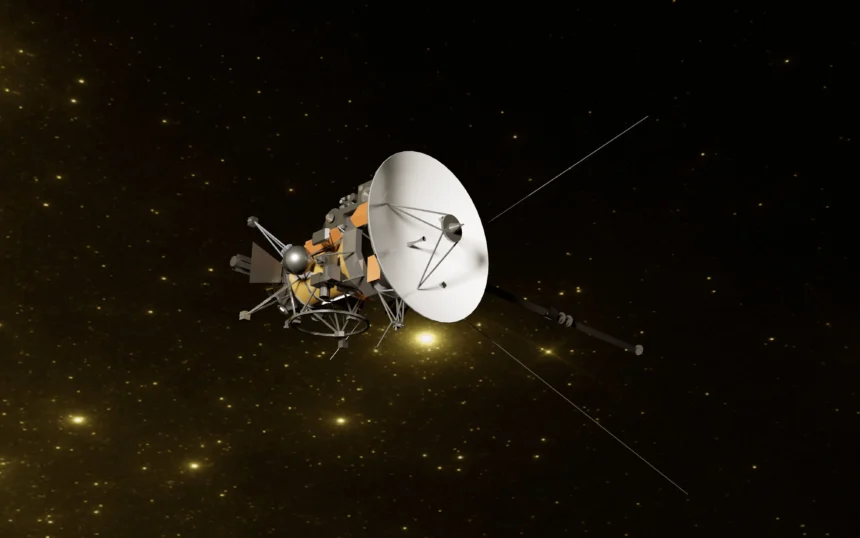
Artemis III Explained: NASA’s 2027 Mission, Astronauts, Spacecraft and New Moon Landing Plan
More than half a century after astronauts last walked on the Moon, NASA is preparing for another major step in human space exploration. But the next mission in its Artemis program is no longer the lunar landing that millions of people originally expected.
Artemis III has undergone a significant transformation. Instead of sending astronauts to the Moon’s surface, NASA now plans to launch four crew members into low Earth orbit in 2027, where they will test some of the most complicated technologies required for future lunar landings.
The mission will bring together NASA’s Orion spacecraft, its powerful Space Launch System rocket, and experimental lunar landers developed by SpaceX and Blue Origin. For approximately 14 days, astronauts and mission controllers will conduct rendezvous, docking, spacecraft-system and crew-operation demonstrations.
The objective is to prove that vehicles built by different organizations can safely connect and operate together in space before attempting the same operations near the Moon.
According to NASA’s November 2026 update, Artemis III remains targeted for 2027, while the first crewed lunar landing of the Artemis era is now planned for Artemis IV in 2028.
That distinction matters because many older descriptions still identify Artemis III as the mission that will return humans to the lunar surface.
The new plan reflects a broader challenge facing modern space exploration: reaching the Moon is difficult, but developing a repeatable transportation system capable of safely carrying astronauts there is even more demanding.
What Is Artemis III?
Artemis III is NASA’s third major mission under the Artemis program, a long-term campaign intended to return humans to the Moon and develop the technologies necessary for more sustained exploration.
Unlike the first two missions, Artemis III will focus primarily on testing how different spacecraft function together.
It is intended to demonstrate essential capabilities before astronauts attempt to land near the lunar South Pole.
The latest NASA mission overview identifies the flight as a crewed demonstration scheduled for 2027.
| Mission detail | Current NASA plan |
|---|---|
| Mission name | Artemis III |
| Space agency | NASA, with international and commercial partners |
| Target launch | 2027 |
| Mission duration | Approximately 14 days |
| Crew members | Four |
| Primary destination | Low Earth orbit |
| Launch vehicle | Space Launch System |
| Crew spacecraft | Orion |
| Commercial partners | SpaceX and Blue Origin |
| Main objective | Test rendezvous, docking and integrated spacecraft operations |
| Lunar landing | No |
| Next planned crewed landing | Artemis IV, targeted for early 2028 |
The mission will launch from Kennedy Space Center in Florida.
NASA plans to conduct a complex sequence involving three spacecraft launched on separate heavy-lift rockets.
Instead of conducting the tests in distant lunar orbit, engineers will perform them much closer to Earth, where communication, monitoring and contingency planning are generally less complicated.
The goal is to identify technical problems before exposing future lunar crews to the additional risks associated with operating hundreds of thousands of kilometers from home.
Why Did NASA Change the Artemis III Mission?
When NASA originally developed its Artemis campaign, the third mission was expected to become the first human lunar landing since Apollo 17 in December 1972.
That plan changed in February 2026.
NASA revised the sequence of missions, adding a dedicated crewed demonstration before the first landing.
The decision followed years of development challenges involving lunar landers, spacecraft integration, schedules and other elements of the exploration program.
Under the revised architecture, Artemis III will demonstrate critical operations in Earth orbit, while Artemis IV will undertake the first crewed landing attempt.
The change does not mean NASA has abandoned its lunar ambitions.
Instead, the agency is attempting to reduce risk by dividing a complicated exploration campaign into more manageable stages.
The Government Accountability Office examined NASA’s revised plans in July 2026, noting that changes to the Artemis architecture would require adjustments to project schedules, contracts and cost estimates.
The report also identified technical and management challenges affecting major Artemis-related projects.
Why an Additional Test Mission Matters
A lunar landing involves several spacecraft performing highly coordinated operations.
Astronauts must launch safely, travel toward the Moon, transfer between vehicles, descend to the surface, return to orbit and eventually reenter Earth’s atmosphere.
Every major maneuver creates opportunities for equipment failure or operational mistakes.
NASA can test individual components on the ground, but reproducing the complete orbital environment is more difficult.
An Earth-orbit demonstration allows engineers to study real spacecraft behavior without immediately committing astronauts to a lunar landing.
Artemis III is therefore designed to convert theoretical procedures and ground-test results into practical flight experience.
How Artemis III Fits Into NASA’s Moon Program
The Artemis program follows a sequence of increasingly ambitious missions.
Each flight is intended to establish capabilities needed for the next stage.
| Mission | Main objective | Status or target |
|---|---|---|
| Artemis I | Uncrewed SLS and Orion flight around the Moon | Completed November–December 2022 |
| Artemis II | First crewed Orion journey around the Moon | Completed April 2026 |
| Artemis III | Crewed Earth-orbit docking and lander demonstrations | Planned for 2027 |
| Artemis IV | First planned Artemis crewed lunar landing | Targeted for early 2028 |
| Artemis V | Additional lunar surface expedition | Targeted for late 2028 |
Artemis I established that the SLS rocket and Orion spacecraft could complete a demanding mission beyond Earth orbit.
Artemis II then demonstrated important spacecraft capabilities with astronauts aboard.
The next challenge is integrating Orion with the commercial lunar landers that will eventually carry astronauts down to the Moon.
Our NASA Artemis Program guide examines the complete campaign, including its spacecraft, landing architecture and long-term exploration objectives.
What Artemis I Achieved
Artemis I launched on November 16, 2022, without a human crew.
The mission sent Orion around the Moon before returning to Earth on December 11.
According to NASA’s Artemis I record, the mission lasted 25 days, 10 hours and 53 minutes.
Its purpose was to evaluate the rocket, spacecraft, navigation systems and return procedures under demanding deep-space conditions.
The flight also provided valuable engineering data, including information about Orion’s heat shield.
Artemis I established the foundation for later crewed missions, although engineers continued improving the spacecraft after reviewing its performance.
What Artemis II Achieved in 2026
Artemis II launched on April 1, 2026, carrying NASA astronauts Reid Wiseman, Victor Glover and Christina Koch, alongside Canadian Space Agency astronaut Jeremy Hansen.
The mission marked humanity’s first journey around the Moon since the Apollo era.
The four astronauts returned safely on April 10 after spending just over nine days in space.
NASA’s Artemis II mission summary describes how the crew evaluated Orion’s systems during the lunar flyby.
Unlike Artemis I, this mission tested the spacecraft with people aboard.
It provided experience with life support, spacecraft operations, navigation, communication and human performance during a journey beyond Earth orbit.
Artemis III will build upon those achievements by introducing commercial landing-system technology into the crewed flight sequence.
Who Are the Four Artemis III Astronauts?
NASA announced the Artemis III crew on June 9, 2026.
The mission includes three NASA astronauts and one astronaut from the European Space Agency.
| Astronaut | Agency | Mission role |
|---|---|---|
| Randy Bresnik | NASA | Commander |
| Luca Parmitano | ESA | Pilot |
| Andre Douglas | NASA | Mission specialist |
| Frank Rubio | NASA | Mission specialist |
NASA astronaut Bob Hines was assigned as a backup crew member.
The official crew announcement identified the astronauts selected to perform the demanding docking and integrated spacecraft demonstrations.
Randy Bresnik — Commander
Randy Bresnik is an experienced NASA astronaut and former U.S. Marine Corps test pilot.
He has previously flown aboard the Space Shuttle and served aboard the International Space Station.
His experience with spacecraft operations and extravehicular activities provides a strong background for commanding a technically complex flight.
As commander, Bresnik will lead the crew and oversee major mission responsibilities.
Luca Parmitano — Pilot
Luca Parmitano is an Italian astronaut representing the European Space Agency.
He has completed two long-duration missions aboard the International Space Station and previously served as a station commander.
His selection marks an important milestone for Europe’s involvement in the Artemis campaign.
According to the European Space Agency, Parmitano will pilot Orion during an orbital demonstration supported by the European-built service module.
Andre Douglas — Mission Specialist
Andre Douglas joined NASA’s astronaut corps as part of its 2021 astronaut candidate class.
His background includes engineering, systems development and work connected with human spaceflight.
Artemis III will be his first spaceflight.
His role will involve supporting the testing and operational objectives necessary for the mission.
Frank Rubio — Mission Specialist
Frank Rubio is a NASA astronaut with extensive long-duration spaceflight experience.
He spent 371 days aboard the International Space Station during a mission that established a record for the longest single spaceflight by an American astronaut.
His knowledge of spacecraft operations and extended missions will contribute to the Artemis III demonstrations.
The crew’s diverse experience is particularly valuable because this mission requires astronauts to evaluate several systems built by different organizations.
Seven Critical Tests Artemis III Will Perform
The central objective of Artemis III is to demonstrate technologies and procedures that future lunar crews must rely on.
These tests involve spacecraft coordination, docking systems, crew movement, environmental controls and mission operations.
1. Coordinating Three Separate Spacecraft Launches
Artemis III will involve a launch sequence unlike the simpler flight profiles used during Artemis I and Artemis II.
NASA plans to coordinate three separate spacecraft.
Blue Origin will launch a test version of its Blue Moon lander into Earth orbit.
NASA will subsequently launch Orion and its astronauts aboard SLS.
SpaceX will then launch a Starship Version 3 lander test vehicle later in the mission.
Every launch must fit into a coordinated operational schedule.
A delay involving one vehicle could require adjustments to orbital positioning, crew activities or the timing of another launch.
The challenge is not simply launching three rockets.
It is ensuring that the vehicles arrive in suitable orbits, remain operational and can safely interact.
2. Testing Orion’s Rendezvous Capabilities
Rendezvous is the process of bringing two spacecraft together in orbit.
Although spacecraft appear to move slowly when viewed from a distance, vehicles in low Earth orbit travel at several kilometers per second.
To meet safely, engineers must carefully control their relative positions and velocities.
Artemis III will test Orion’s navigation systems, propulsion maneuvers, communications and proximity operations.
The astronauts and ground teams will evaluate how reliably Orion approaches commercial landing-system vehicles.
These procedures are essential because future lunar landing missions will also require Orion and a lander to meet and connect.
3. Docking With Blue Origin’s Lunar Lander
Blue Origin will provide a test article based on its Blue Moon Mark 2 human landing system.
NASA’s current plan calls for the lander test vehicle to enter a circular low Earth orbit at approximately 273 miles above the planet.
Once Orion reaches a suitable position, the spacecraft will conduct its first major docking demonstration.
The crew is expected to enter the Blue Moon test vehicle and spend approximately two days evaluating its internal systems.
These evaluations will include cabin conditions, controls and life-support functionality.
The astronauts will also assess how the two spacecraft operate while connected.
A successful demonstration would provide practical evidence that the systems can function together under real orbital conditions.
4. Docking With SpaceX’s Starship
Following the Blue Origin demonstration, Orion will undock and prepare for another rendezvous.
SpaceX plans to launch a Starship Version 3 test article equipped with a docking system.
The spacecraft will perform a separate orbital docking demonstration with Orion.
Unlike the Blue Origin test, the Artemis III crew is not currently scheduled to enter Starship.
NASA expects the docking test to last up to approximately two hours.
Engineers will evaluate communication, spacecraft control, software integration and the dynamics of docking and undocking.
The sequence allows NASA to examine two distinct spacecraft designs during one crewed mission.
5. Checking Communications and Integrated Software
Modern spacecraft depend heavily on software.
Navigation, propulsion, thermal control, environmental systems and communication equipment must work together.
When two spacecraft connect, their systems must exchange information reliably.
Artemis III will examine how Orion’s systems interact with commercial lander hardware and software.
Engineers will assess data exchange, guidance, flight-control behavior and operational coordination.
This may appear less dramatic than launching a rocket, but software compatibility is a major concern when independent organizations develop different parts of a mission.
A successful docking requires much more than two mechanical ports fitting together.
The spacecraft must behave predictably as a connected system.
6. Evaluating Crew Safety and Spacecraft Habitability
Artemis III will also study how astronauts interact with the spacecraft during extended operations.
The crew will evaluate elements of Orion’s survival suits and examine human factors such as movement, cabin usability and the ability to perform tasks efficiently.
NASA plans to collect thermal, acoustic and environmental measurements during the mission.
Inside the Blue Moon test vehicle, astronauts will assess systems that could eventually support human habitation during lunar operations.
These tests can help engineers identify problems that might not become apparent until equipment is used in space.
7. Testing Scientific Operations and Safe Return
After the docking demonstrations, Artemis III will continue conducting additional experiments and spacecraft evaluations.
NASA plans investigations involving human health, cellular biology, environmental measurements and preparations for future lunar sample-handling procedures.
Some tests will build on knowledge obtained during Artemis II.
At the end of the mission, the crew will prepare Orion for atmospheric reentry and splashdown in the Pacific Ocean.
NASA’s October 2026 mission plan describes these objectives as part of its effort to reduce operational risk before the lunar landing campaign.
How Will the Artemis III Mission Work Step by Step?
The mission architecture is complicated, but the basic sequence can be understood as a coordinated orbital campaign.
First, Blue Origin will launch its Blue Moon lander test article.
The spacecraft is expected to remain operational in orbit while NASA prepares Orion and its crew.
Next, SLS will launch the four astronauts aboard Orion from Kennedy Space Center.
After reaching orbit, the crew will perform spacecraft checks and begin positioning Orion for its first rendezvous.
Orion will then approach and dock with Blue Moon.
The astronauts will enter the lander test article, examine its systems and conduct planned evaluations.
Once those activities are complete, Orion will undock.
SpaceX will launch its Starship test vehicle into low Earth orbit.
Orion will conduct a second rendezvous and docking demonstration, this time with Starship.
Unlike the first test, this procedure will not involve the crew entering the commercial spacecraft.
After completing its main docking activities, Orion will continue scientific and operational investigations before returning to Earth.
The entire mission is expected to last about two weeks, although exact timings will depend on actual launch readiness and orbital operations.
What Rocket Will Launch Artemis III?
NASA will use the Space Launch System, commonly known as SLS, to launch the Artemis III astronauts.
SLS is a super-heavy-lift rocket developed for human exploration beyond low Earth orbit.
It combines a large central core stage, four RS-25 engines and two solid rocket boosters.
Although Artemis III will remain in Earth orbit, SLS is the vehicle NASA plans to use for launching its Orion crews.
According to NASA’s SLS overview, the rocket is designed to support demanding deep-space exploration missions.
Its powerful launch capability allows NASA to carry Orion and its crew as part of the Artemis transportation system.
The rocket’s performance was first demonstrated during Artemis I and subsequently during the crewed Artemis II mission.
Future configurations and supporting systems remain part of NASA’s evolving exploration strategy.
What Is the Orion Spacecraft?
Orion is NASA’s crew spacecraft for the Artemis program.
It is designed to carry astronauts into space, sustain them during missions and return them safely to Earth.
The spacecraft includes a pressurized crew module where astronauts live and work.
It also uses a European Service Module that provides propulsion, electricity, thermal control and other essential functions.
Orion has been developed to support four astronauts on demanding exploration missions.
The Orion spacecraft overview explains the spacecraft’s major components and capabilities.
For Artemis III, Orion will serve as the central vehicle connecting NASA’s astronauts with commercial lunar landing-system test vehicles.
It is important to understand that Orion is not designed to land directly on the Moon.
Future landing missions will require astronauts to transfer from Orion to a separate lunar lander.
This division of responsibilities is one of the defining characteristics of NASA’s modern exploration architecture.
Why Are SpaceX and Blue Origin Both Involved?
NASA is relying on commercial companies to develop vehicles capable of carrying astronauts between lunar orbit and the Moon’s surface.
SpaceX is developing a lunar landing system based on its Starship architecture.
Blue Origin is developing its Blue Moon human landing system.
The two companies are pursuing different engineering approaches.
NASA wants to gain experience with both systems and reduce dependence on a single provider.
The agency’s 2026 lander update describes changes intended to simplify future landing operations and accelerate development.
Both companies must still demonstrate critical capabilities before NASA can certify their systems for carrying astronauts to the lunar surface.
These include propulsion, navigation, landing performance, crew safety and the ability to operate reliably in the lunar environment.
Why Lunar Landers Are So Difficult to Build
Landing on the Moon involves different engineering challenges from entering Earth orbit.
A lunar vehicle must navigate toward the surface, reduce its velocity, avoid dangerous terrain and land safely.
Unlike Earth, the Moon has virtually no atmosphere capable of providing aerodynamic braking.
The lander must therefore rely on propulsion and guidance systems during descent.
Returning astronauts from the surface introduces another demanding maneuver.
The vehicle must launch from the Moon and rendezvous with the spacecraft that will bring the crew home.
For that reason, testing spacecraft docking in Earth orbit represents an important step, even though it does not demonstrate every technology required for a lunar landing.
Why Artemis III Will Not Land on the Moon
Artemis III is not attempting a lunar landing because NASA has assigned that objective to a later mission.
The revised flight architecture separates spacecraft integration tests from lunar descent operations.
This allows engineers to evaluate key systems in an environment that is closer to Earth and generally offers more operational flexibility.
A successful Artemis III mission would not prove that either commercial lander can safely descend to the Moon and return.
Those capabilities require additional testing and certification.
However, the mission could resolve important uncertainties associated with crew transfers, docking hardware and spacecraft compatibility.
The distinction is essential.
Artemis III is a preparation mission.
Artemis IV is the current landing mission.
When Will NASA Land Astronauts on the Moon Again?
NASA currently targets early 2028 for the first crewed Artemis lunar landing.
The mission is called Artemis IV.
According to the Artemis IV overview, four astronauts will travel toward the Moon, with two expected to descend to the lunar surface.
The surface crew is planned to spend approximately one week exploring the lunar South Pole region.
Scientists expect the astronauts to collect samples, conduct geological investigations and deploy scientific instruments.
However, the precise landing date remains a target rather than a guarantee.
Major engineering milestones must still be achieved.
SpaceX and Blue Origin are continuing development of their lunar landers, and NASA has not assigned a specific provider to the first revised landing mission.
The provider that demonstrates sufficient readiness and meets the necessary certification requirements will be central to that decision.
Why NASA Wants to Explore the Lunar South Pole
The Moon’s South Pole is one of the most scientifically interesting regions on the lunar surface.
Unlike the areas visited by Apollo astronauts, polar terrain contains unusual lighting conditions, ancient geological formations and permanently shadowed craters.
Some of those locations are extremely cold.
Scientists have detected evidence of water ice in parts of the lunar polar environment.
The NASA lunar environment guide explains why permanently shadowed regions can preserve frozen materials over long periods.
These deposits are important for two reasons.
First, they may provide information about the history of water and other volatile substances in the inner solar system.
Second, they may eventually support future exploration if sufficient accessible resources can be located and processed economically.
Water could potentially be used for drinking, oxygen production and other applications.
However, discovering water ice does not automatically mean it can be extracted easily or safely.
Researchers must understand its distribution, concentration and accessibility.
Our NASA Moon Base guide examines the infrastructure and technologies that would be necessary for longer-term human activity on the lunar surface.
What Scientific Experiments Will Artemis III Conduct?
Although Artemis III will not reach the Moon, NASA plans to use the mission to collect scientific and technical information.
Some experiments will focus on human performance and spacecraft environments.
Researchers are interested in how astronauts conduct tasks during missions involving multiple spacecraft and different operational systems.
NASA also plans to study cellular biology and test concepts related to medical assessments when astronauts cannot communicate directly with mission control.
That capability will become increasingly important for future missions farther from Earth.
Other investigations will examine thermal and acoustic conditions, the spacecraft environment and potential contamination considerations.
The mission will also help refine procedures for transporting and handling lunar samples during future expeditions.
Scientists will not be collecting new lunar rocks during Artemis III itself.
Instead, teams will evaluate how samples from later missions could be transported, received and preserved after their return to Earth.
These activities may appear secondary to docking demonstrations, but they contribute to NASA’s preparation for longer exploration missions.
How Does Artemis III Compare With Apollo?
The Artemis program shares a fundamental objective with Apollo: enabling humans to explore the Moon.
However, the architecture and ambitions differ considerably.
Apollo used a predominantly government-developed transportation system involving the Saturn V rocket, Command and Service Module, and Lunar Module.
Artemis combines NASA hardware with commercial spacecraft and international contributions.
The mission is also part of a much broader strategy intended to support repeated lunar exploration rather than a limited series of short visits.
| Feature | Apollo program | Artemis program |
|---|---|---|
| Heavy-lift rocket | Saturn V | Space Launch System |
| Main crew spacecraft | Apollo Command and Service Module | Orion |
| Lunar landing vehicle | Apollo Lunar Module | Commercial human landing systems |
| Primary landing regions | Equatorial and mid-latitude sites | Strong focus on lunar South Pole |
| Commercial role | Government-led contractor development | Expanded commercial spacecraft partnerships |
| International participation | Primarily United States | NASA with major international partners |
| Long-term objective | Demonstrate human lunar exploration | Develop more sustained lunar exploration capabilities |
Apollo also demonstrated the importance of testing spacecraft operations before attempting a landing.
Apollo 9, for example, conducted critical Lunar Module tests in Earth orbit before Apollo 11 achieved the first crewed lunar landing.
The revised Artemis III mission follows a similar engineering principle: validate important systems before using them during a more ambitious expedition.
Our NASA history guide explains how the Apollo program and other major missions shaped the evolution of human spaceflight.
What Are the Biggest Risks Facing Artemis III?
Despite the advantages of the revised architecture, Artemis III remains a complicated mission.
Its success depends on several spacecraft, launch vehicles and operational teams performing according to plan.
The most significant challenges include launch coordination, commercial lander readiness, software integration and spacecraft docking performance.
SpaceX and Blue Origin are developing technologies that must satisfy demanding safety requirements.
NASA must also ensure that Orion’s systems can interact properly with both test vehicles.
Unexpected hardware failures or testing delays could affect the mission schedule.
The complexity of coordinating three launches adds another potential source of difficulty.
Weather, technical problems or vehicle availability can delay individual launches, making coordination essential.
Cost and schedule management also remain concerns.
The Government Accountability Office has warned that changes to Artemis project requirements may create additional management challenges.
However, these risks do not mean Artemis III is destined to fail.
They help explain why NASA is placing greater emphasis on demonstrating the systems before attempting another human lunar landing.
Could Artemis III Be Delayed Beyond 2027?
A delay remains possible.
Human spaceflight schedules depend on hardware readiness, testing results, safety reviews, launch vehicle availability and mission coordination.
Artemis III is especially challenging because several organizations must prepare complex spacecraft that have not previously performed this exact sequence together.
NASA’s 2027 target reflects the agency’s current mission plan, not an unconditional launch commitment.
If a critical system requires additional testing or redesign, the schedule could change.
NASA may also adjust the sequence of operations as engineering work progresses.
The mission should therefore be evaluated against actual development milestones rather than assuming that every announced date will remain fixed.
How Artemis III Could Help Humans Reach Mars
The immediate purpose of Artemis III is to prepare for future lunar landings.
However, the experience could also support NASA’s broader ambitions for human exploration beyond the Moon.
Future Mars missions will require reliable spacecraft, advanced life-support systems, autonomous operations and the ability to coordinate complex activities far from Earth.
Astronauts traveling to Mars will face communication delays and fewer opportunities for immediate assistance.
Experience gained from Artemis III could help engineers improve spacecraft interoperability, crew procedures and operational independence.
The Moon provides a relatively accessible environment for developing and testing these capabilities before attempting much longer missions.
Our NASA Mars missions guide explores the robotic missions and scientific discoveries that continue shaping humanity’s plans for the Red Planet.
Artemis III will not solve every problem associated with Mars exploration.
Nevertheless, it could contribute important operational knowledge to the gradual development of more capable human spaceflight systems.
Frequently Asked Questions About Artemis III
When will Artemis III launch?
NASA currently plans to launch Artemis III in 2027. The precise launch date remains subject to spacecraft readiness, testing and mission requirements.
Will Artemis III land astronauts on the Moon?
No. Under NASA’s revised 2026 plan, Artemis III will remain in low Earth orbit and conduct docking demonstrations with lunar landing-system test vehicles.
Who are the Artemis III astronauts?
The four crew members are Randy Bresnik, Luca Parmitano, Andre Douglas and Frank Rubio. NASA astronaut Bob Hines is the backup crew member.
How long will Artemis III last?
NASA currently plans a mission lasting approximately 14 days, although the final duration could change based on operational requirements.
What spacecraft will Artemis III use?
NASA will launch four astronauts aboard Orion using the Space Launch System rocket. Blue Origin and SpaceX will provide separate lunar lander test vehicles for docking demonstrations.
When will humans return to the Moon?
NASA currently targets Artemis IV in early 2028 for the first crewed lunar landing of the Artemis era.
Is Artemis III more important than Artemis IV?
The missions have different objectives. Artemis III is intended to validate essential systems, while Artemis IV aims to use those capabilities during the first planned lunar landing. Success in the demonstration mission would strengthen preparations for the landing.
Why Artemis III Could Be One of NASA’s Most Important Missions
Artemis III may not deliver the dramatic images of astronauts walking across the Moon, but its significance should not be underestimated.
The mission represents a crucial transition in NASA’s exploration strategy.
Artemis I demonstrated that the agency’s new deep-space transportation system could complete an uncrewed lunar journey.
Artemis II carried humans around the Moon for the first time in more than five decades.
Artemis III will now attempt something different: bringing NASA’s crew spacecraft together with commercial lunar landing-system vehicles during a coordinated orbital mission.
The technical challenge is substantial.
Three spacecraft must launch successfully, reach suitable orbits and perform carefully controlled maneuvers.
Astronauts must evaluate unfamiliar systems, mission controllers must coordinate operations across multiple organizations, and engineers must collect enough information to support future decisions.
A successful demonstration could strengthen confidence in the architecture NASA intends to use for lunar exploration.
However, it would not eliminate the challenges still facing the first landing.
Commercial lunar landers must complete further development and testing, and the mission planned for 2028 must meet demanding safety requirements before astronauts can descend to the surface.
The long-term objective extends beyond repeating Apollo.
NASA wants to develop a system that can support more frequent expeditions, scientific investigations, advanced surface technologies and eventually a sustained human presence on the Moon.
That ambition requires dependable spacecraft, commercial partnerships, international cooperation and experience gained through carefully planned missions.
Artemis III is one step in that process.
Its importance will not be measured by how close its astronauts come to the Moon, but by how much NASA learns about safely connecting the spacecraft that future explorers will depend upon.
If those lessons help prepare the way for Artemis IV, the 2027 demonstration could become an essential milestone in humanity’s return to the lunar surface.
For more research-driven explainers, science coverage and global stories, follow The News Ink on X, Instagram, Threads, Medium, Substack, Bluesky, Pinterest, TikTok, Quora and Mastodon.