


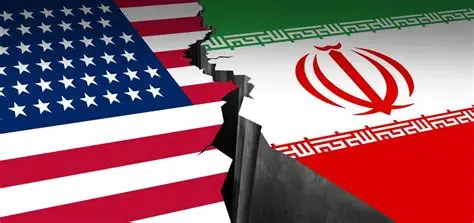
US-Iran War Strategy: Why Washington and Tehran Fight Different Wars
The US-Iran war is being fought with aircraft, missiles, drones, ships and economic pressure, but the deeper contest is between two different ideas of victory. Washington repeatedly describes success in decisive terms: destroying military capabilities, restoring freedom of navigation, compelling negotiations and demonstrating that American force can impose a new strategic reality. Tehran approaches the same conflict more like a struggle for survival and endurance, seeking to remain functional, preserve enough retaliatory power and make the cost of continuing the war rise faster than the United States is willing to bear.
That difference explains why both governments can claim progress while the US-Iran war remains unresolved. The United States can destroy command centres, radar sites, missile facilities and naval assets without producing surrender. Iran can lose leaders, infrastructure and weapons while arguing that survival itself disproves Washington’s victory narrative.
The gap has become clearer since the US-Iran war began on 28 February 2026. President Donald Trump demanded Iran’s “unconditional surrender” in March. A preliminary ceasefire memorandum followed in June, but it broke down and attacks resumed. As of 18 July, US forces were again conducting repeated strikes, while Iran was attacking American-linked facilities and Gulf states and using the Strait of Hormuz as leverage.
The central question is not which side possesses greater military power. The United States has overwhelming conventional superiority. The harder question is whether it can convert battlefield dominance into a political outcome Iran is willing—or forced—to accept.
The US-Iran War Has Two Theories of Victory
The simplest way to understand the US-Iran war is to compare what each side needs in order to claim success.
| Strategic question | United States | Iran |
|---|---|---|
| What does victory look like? | Iranian military capability reduced, shipping protected and Tehran compelled to accept US terms | Regime survival, preserved retaliation and no formal submission |
| Preferred timeline | A relatively short campaign with a visible end state | A prolonged contest that tests American patience |
| Main advantage | Airpower, intelligence, naval reach and economic pressure | Geography, dispersed systems, missiles, drones and tolerance for hardship |
| Main vulnerability | Domestic opposition, cost, casualties, fuel prices and election pressure | Infrastructure damage, economic collapse, public anger and weapons depletion |
| Best political narrative | Decisive force produced a better regional order | Iran endured the world’s strongest military and remained sovereign |
This does not mean every official in Washington or Tehran supports one perfectly coherent plan. Objectives have shifted, and both governments contain competing factions. It does show why the same battlefield event can mean something different to each side.
A destroyed missile site is a tactical success for Washington. For Tehran, the more important question may be whether enough launchers, drones and coastal weapons remain to impose further costs. An American declaration of victory may satisfy the White House, but Iran does not have to recognise that declaration for the US-Iran war to continue.
Washington’s Version of the US-Iran War Is About Decision
The American theory of the US-Iran war is built around the idea that superior force can create a decisive turning point. US Central Command has described its operations as attempts to degrade Iran’s ability to attack commercial shipping, threaten American forces and control the Strait of Hormuz. In July, CENTCOM announced repeated waves of strikes against air defences, command networks, surveillance systems, weapons storage, coastal radars, anti-ship missiles and naval craft.
The military logic is clear: destroy the systems Iran uses to threaten shipping, reduce its ability to retaliate, enforce a blockade and offer negotiations from a position of strength.
The political version appeared in Trump’s March demand for “unconditional surrender.” He said there would be no deal until Iran submitted and accepted leadership considered acceptable by the United States and its partners. That went far beyond a narrow operation to protect shipping or destroy a particular capability.
American objectives later narrowed. By June, Washington was negotiating a memorandum intended to reduce fighting and reopen maritime trade. By July, its collapse returned the US-Iran war to strikes, blockades and retaliation. The movement from surrender, to negotiation, to renewed attacks shows that military success has not produced a stable political end state.
Tehran’s Version of the US-Iran War Is About Endurance
Iran cannot match American airpower, naval capacity or global logistics. Its realistic objective in the US-Iran war is to deny Washington a clean political victory.
Reuters described Tehran’s strategy as a bet on endurance and energy disruption. Iran’s leadership appeared prepared to absorb severe attacks while preserving enough missiles, drones, dispersed launch systems and regional reach to keep imposing costs. The aim was not to destroy the US military. It was to survive, retain sovereignty and make continuation politically expensive.
That strategy uses asymmetry. Iran can threaten commercial vessels without controlling the sea conventionally. It can force airlines, shipping companies and insurers to change behaviour through risk rather than total closure. It can strike Gulf infrastructure, US bases or allied states and compel Washington to maintain expensive defences and a large regional deployment.
The Strait of Hormuz is central to the US-Iran war because it turns Iranian geography into global leverage. Before the fighting, about 20 million barrels of oil and petroleum products moved through the waterway each day, roughly one-fifth of global petroleum liquids consumption. Even partial disruption can raise insurance costs, reduce tanker traffic and move oil prices far beyond the region.
For Tehran, this converts military weakness into economic influence. Iran does not need to stop every ship. It needs companies, crews and governments to believe passage remains dangerous.
Hormuz Is Where the Two Wars Meet
Washington sees the Strait of Hormuz as an international shipping route that must remain open. Tehran treats it as both a security perimeter and bargaining instrument.
Reuters reported that the June agreement left important questions unresolved, including maritime passage, sanctions relief and how the sides understood control of the strait. Renewed attacks on vessels and US-linked military sites led Trump to declare the arrangement over and order further strikes.
The United States can bomb coastal radars, missile batteries and small boats. It can escort vessels, clear mines and enforce a blockade. Completely neutralising Iran’s ability to threaten a narrow waterway is harder than destroying a fixed base.
Iran has prepared for asymmetric conflict around the Gulf for decades. Mobile anti-ship missiles, drones, mines, small craft and concealed launch positions create persistent danger. AP reported that fully reopening the strait could require a much larger and riskier effort than political rhetoric suggests, potentially including sustained naval escorts and operations near Iranian territory.
That is the collision inside the US-Iran war: America seeks control, while Iran needs only recurring uncertainty.
Why Superior Force Has Not Produced Surrender
Military superiority can destroy assets, but surrender is a political act. It occurs when a government concludes that resistance is more dangerous than accepting the enemy’s terms.
Iran’s leaders face the opposite incentive. Formal surrender could threaten the Islamic Republic’s survival, damage the revolutionary identity that legitimises the state and expose senior officials to internal or external retribution. Even weakened leaders may prefer continued resistance to an agreement presented as humiliation.
Comparisons with Germany and Japan in 1945 therefore mislead. Their unconditional surrenders followed total war and the collapse of their military positions. Washington has repeatedly argued that the US-Iran war will not become another large nation-building campaign, and there is little American appetite for occupying a country of Iran’s size.
Without occupation or regime collapse, the United States must eventually negotiate with institutions it has failed to eliminate. That does not make airstrikes ineffective. It means tactical destruction and political submission are different outcomes.
The US-Iran war presents an uncomfortable possibility: America may be able to hit almost any visible target without forcing the one decision its most maximalist rhetoric demands.
Hegseth’s Message Exposed the End-State Problem
Defence Secretary Pete Hegseth argued in March that the United States would use overwhelming power and avoid another prolonged nation-building war. When asked whether the conflict was at its beginning, middle or end, he said the president would define the end state.
That answer reflected presidential control over war aims, but it also exposed uncertainty. The military can report targets struck and capabilities degraded. Political leaders must decide whether those results are sufficient.
If the US-Iran war is about protecting shipping, one set of conditions might end it. If it is about eliminating nuclear and missile capabilities, the threshold becomes much higher. If it is about surrender or leadership change, the campaign could become open-ended.
Trump has moved between claims of victory, demands for surrender, negotiations and threats of greater destruction. AP reported in March that the administration was clearer about military achievements than about how those achievements would create a lasting settlement.
Iran Can Lose More and Still Claim Success
In conventional military accounting, Iran has absorbed far greater physical damage. Its senior leadership has been hit, infrastructure disrupted, facilities destroyed and economy placed under enormous pressure.
Wars of endurance are judged differently. If Iran retains a functioning state, prevents imposed leadership, continues launching attacks and extracts negotiations, it can argue that Washington failed to achieve its maximal goals.
This is why Iran can tolerate damage that appears irrational under a short-war model. Its leaders may believe time works against Washington. American voters face fuel prices, casualty reports and midterm elections. Iran’s authoritarian system can repress dissent, restrict information and frame hardship as national resistance.
That does not make Tehran secure. Reuters has reported severe anxiety, inflation, disrupted employment and communications restrictions. Prices for basic goods have risen sharply, while renewed bombing could deepen public anger or expose divisions within the state.
Iran’s strategy in the US-Iran war is a gamble that social control and nationalism will hold longer than American political patience.
Domestic Politics Put the US-Iran War on Two Clocks
Trump faces congressional funding fights, public opinion and the November midterm elections. A July Reuters/Ipsos poll found that 79% of Americans expected a prolonged conflict, while only 18% thought it would end within weeks. Just 37% approved of US strikes, 60% expected higher fuel prices and half said the war was not worth its costs.
Those numbers encourage the White House to describe each new strike as decisive and each negotiation as evidence that pressure is working. A conflict sold as limited becomes politically dangerous when voters see it as indefinite.
Iran faces no competitive national election capable of removing the ruling system in the same way. It does face economic exhaustion, elite rivalry and public resentment. Its leaders may have a longer formal timeline but a more brittle internal structure.
The clocks are different, not absent. Washington worries about months. Tehran worries about whether cumulative pressure produces a break inside the state.
Oil Prices Are Part of the US-Iran War Strategy
Energy disruption is not merely an accidental consequence of the US-Iran war. It is among Iran’s strongest tools.
EIA data show that the closure and reduced use of Hormuz pushed Brent crude above $100 a barrel during parts of the second quarter. Traffic improved after the June memorandum, but renewed fighting again lifted prices; AP reported oil near $86 a barrel on 18 July.
Higher prices hurt importing economies, raise transport costs and feed inflation. They also create direct political pressure in the United States, where gasoline prices are visible to voters every day.
The News Ink has examined how the conflict pushed oil and gas prices higher and how it could affect fuel prices and household bills. Iran’s strategy relies on turning those effects into pressure for a settlement.
The United States has countermeasures: domestic production, strategic reserves, sanctions, naval protection and coordination with Gulf producers. It cannot fully separate its military strategy from the price of energy.
Weapons Stockpiles Create Another Contest of Time
A prolonged US-Iran war tests inventories as well as political will.
The United States uses precision weapons, air-defence interceptors, cruise missiles and expensive aircraft support to strike Iran and protect bases, ships and allies. Iran relies heavily on missiles and drones that may be less sophisticated but can be dispersed and launched in volume.
The exchange is about cost, replacement speed and competing global commitments. Washington must preserve advanced munitions for other theatres and allies. Tehran must protect launchers, factories and supply networks from sustained surveillance and attack.
The News Ink’s analysis of depleting weapons stockpiles explains why attrition can shape the endgame even when one side remains technologically superior.
Iran benefits when the United States spends expensive interceptors against cheaper drones. Washington benefits when intelligence allows it to destroy launch systems before they fire. Neither side needs literal exhaustion; it needs the other to believe the next month will cost more than the last.
The June Pause Revealed the Real Bargain
The preliminary June memorandum was revealing because it emerged without surrender or regime collapse.
Washington wanted reduced attacks on shipping, greater freedom of navigation and a way to lower economic and military costs. Iran wanted relief from strikes and blockades, recognition that it retained leverage and some economic benefit from reopening trade.
That suggested the realistic endgame for the US-Iran war was transactional rather than transformational. It also showed why the arrangement was fragile. The sides paused fighting without resolving their incompatible positions on Hormuz, sanctions, nuclear restrictions, regional attacks or enforcement.
When the memorandum collapsed, both returned to familiar tools. The United States resumed airstrikes and blockade enforcement. Iran resumed maritime pressure and attacks across the Gulf.
The US-Iran war’s failed pause did not prove diplomacy impossible. It proved that a ceasefire without a shared definition of compliance can become another stage of war.
Four Plausible Endgames for the US-Iran War
1. A narrower maritime agreement
The most achievable outcome may focus on commercial shipping, limited sanctions relief, military deconfliction and a mechanism for investigating violations. It would not resolve every dispute, but it could reduce immediate escalation.
2. A broader negotiated settlement
A more ambitious agreement could address Hormuz, uranium enrichment, missile limits, detainees, sanctions and attacks on US partners. It would require both sides to abandon maximalist public positions and accept verification.
3. Prolonged managed conflict
The two sides could continue alternating strikes, blockades and temporary pauses without a decisive result. This would resemble armed containment rather than peace and would keep energy markets and Gulf states under pressure.
4. Uncontrolled regional escalation
Further attacks on civilian infrastructure, Gulf energy facilities or large numbers of US personnel could trigger a wider campaign. AP reported on 18 July that both sides had crossed earlier red lines, increasing the risk of escalation neither intended at the beginning.
None resembles the clean surrender imagined in the most maximalist rhetoric surrounding the US-Iran war.
What a Realistic American End State Requires
A credible US-Iran war strategy must distinguish essential objectives from desirable ones.
Protecting US forces and international shipping is identifiable. Preventing Iran from obtaining a nuclear weapon can be connected to inspections, limits and enforcement. Reducing missile threats may require deterrence and regional defence.
“Victory,” “acceptable leadership” and “unconditional surrender” remain slogans unless officials explain the conditions that would produce them.
A realistic end state should answer five questions:
- What specific Iranian actions must stop?
- What sanctions or military measures would Washington lift in return?
- Who verifies compliance?
- What happens after a violation?
- Which objectives justify continued economic and human costs?
Iran also faces limits. Survival does not repair infrastructure, restore investment or protect civilians. Tehran would probably need to accept restrictions on attacks against shipping and neighbouring states, credible monitoring and some form of nuclear arrangement if it wants durable sanctions relief.
Why the US and Iran Are Fighting Different Wars
The United States is trying to make military superiority produce a decision. Iran is trying to prevent that decision long enough for economic, diplomatic and political pressure to reshape Washington’s goals.
One side counts degraded targets, reopened shipping lanes and demonstrations of force. The other counts continued governance, surviving launch systems, disrupted oil flows and every week in which surrender does not occur.
That is why the US-Iran war can look simultaneously one-sided and unresolved.
America has the capacity to inflict far more destruction. Iran has the capacity to deny a clean ending. The US-Iran war will end only when both sides find an outcome they consider preferable to continued fighting—or when one loses the ability to continue.
As of 18 July 2026, neither condition has been reached. US strikes continue, Iran continues retaliating and the ceasefire framework has largely collapsed. Washington and Tehran are not merely disputing who is winning. They are using different definitions of what winning means.
For more context, read The News Ink’s guide to why the US and Israel attacked Iran and follow The News Ink on Threads.