Arvind Kejriwal: Powerful 2026 Court Relief After a Bitter Legal Battle
Arvind Kejriwal has received the strongest court relief of his long-running Delhi excise policy battle, but the case is not a simple story of political victory or legal closure. It is a story about a collapsed prosecution case, harsh judicial criticism, continuing appeals and the unresolved question of how India’s investigative agencies should handle politically explosive corruption allegations.
The Rouse Avenue Court in Delhi discharged Arvind Kejriwal and the other accused in the Central Bureau of Investigation case linked to the now-scrapped Delhi excise policy. The ruling found that the material before the court did not disclose even a prima facie case strong enough to put the accused on trial. That is a major legal moment for Kejriwal, Manish Sisodia, K Kavitha and others who had been accused of involvement in an alleged liquor policy conspiracy.
But there is a crucial legal distinction. The court did not acquit Arvind Kejriwal after a full trial. It discharged him before trial, meaning the judge found insufficient material to frame charges. For public understanding, that distinction matters. A discharge can still be challenged, and the CBI has already moved the Delhi High Court against the order.
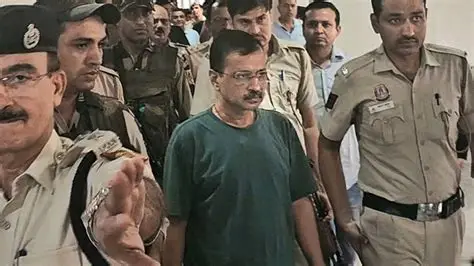
The broader political meaning is still significant. Arvind Kejriwal was arrested in 2024 when he was Delhi chief minister and leader of the Aam Aadmi Party. His party repeatedly called the case politically motivated. The BJP denied that allegation and argued that investigative agencies were pursuing corruption claims through the legal process. The discharge order now gives AAP a powerful argument, but the appeal means the legal battle is not over.
For readers following India’s wider political and economic setting, The News Ink’s economy coverage explains why governance, regulation and public trust remain central to India’s growth story.
Why Arvind Kejriwal’s court relief matters
Arvind Kejriwal’s discharge matters because the excise policy case was never just another corruption file. It shaped Delhi politics, national opposition politics and the debate over the use of central investigative agencies. The case led to arrests of major AAP leaders, months of courtroom battles and intense political campaigning around alleged misuse of institutions.
Kejriwal was arrested in March 2024 by the Enforcement Directorate in the money-laundering side of the excise policy case and was later arrested by the CBI in June 2024 while already in custody. Reuters reported at the time that the case centred on allegations linked to liquor licence allocations under Delhi’s 2021–22 excise policy. The AAP denied wrongdoing and said the case was designed to weaken the party before elections.
The 2026 discharge changed the immediate legal balance. According to Reuters, the court dismissed the alleged corruption case against Arvind Kejriwal for insufficient grounds to proceed with trial, and 22 others were also cleared in the ruling. The CBI said it would appeal, arguing that parts of the investigation had not been properly considered.
That is why the article should avoid two extremes. It should not say the case was proven false in every possible legal forum, because the appeal is pending. It also should not continue describing Kejriwal as if the trial court found a case to answer. The strongest current wording is this: Arvind Kejriwal was discharged by the trial court, the prosecution case suffered a major setback, and the CBI has challenged the order.
What the court found
The court order is lengthy, but its central conclusion is clear. The judge found that the prosecution had not established a prima facie case against the accused. The order said accused A-1 to A-23 were discharged of all offences alleged in the case.
For Arvind Kejriwal specifically, the court found no material placing him in conspiratorial meetings, no substantiated financial trail linking him to alleged cash transfers, and no admissible evidence that Vijay Nair acted as his conduit. The order also said the documentary record reflected institutional deliberation rather than clandestine orchestration.
That matters because the CBI’s theory depended heavily on the idea that the policy was manipulated through a wider conspiracy. The court instead pointed to a layered policy-making process involving departments, the Council of Ministers and the office of the Lieutenant Governor. The judge observed that when the policy record was read as a whole, the foundation of a selective conspiracy allegation collapsed.
The court also criticised reliance on approver statements without enough independent corroboration. In criminal law, an approver is usually an accused person who turns state witness after receiving or expecting leniency. The court warned that such statements cannot replace objective evidence, especially when foundational facts are missing.
Key facts at a glance
| Issue | What happened | Why it matters |
|---|---|---|
| Case | Delhi excise policy corruption case | Centred on alleged irregularities in the 2021–22 liquor policy |
| Main figure | Arvind Kejriwal | Former Delhi chief minister and AAP national convenor |
| Court outcome | Discharge before trial | The court found insufficient material to frame charges |
| Other accused | Manish Sisodia, K Kavitha and others | The order discharged all accused in the CBI case |
| Agency response | CBI challenged the order | The case is not fully closed |
| Wider issue | ED-related remarks and CBI criticism | Some adverse observations became part of High Court litigation |
| Political impact | AAP claimed vindication | BJP and agencies maintain the case should continue through appeal |
This table shows why Arvind Kejriwal’s legal relief is important, but also why the case should not be described as fully finished.
Why “discharged” is more accurate than “acquitted”
The existing slug says the court “acquits” Arvind Kejriwal, but the legally safer wording inside the article is “discharged.” In Indian criminal procedure, discharge usually occurs before charges are framed when the court finds there is not enough material to proceed. An acquittal usually follows a trial after evidence has been tested.
This is not a small technicality. Calling the result an acquittal may sound stronger than the actual procedural outcome. Calling it a discharge is precise and still reflects the seriousness of the court’s finding.
For readers, the practical meaning is simple. The trial court did not find enough material to make Arvind Kejriwal and the other accused face trial in the CBI case. But because the CBI has appealed, the High Court can review whether that discharge should stand.
That is why the cleanest headline can still highlight court relief without overstating the finality of the case.
The court’s criticism of the investigation
The discharge order did more than clear the accused at the trial-court level. It raised serious questions about the investigation. The court criticised the way the prosecution built parts of its case, including reliance on approvers, selective readings of records and what the judge saw as insufficient corroboration.
The order’s discussion of approver evidence is especially important. The court noted that an approver’s statement is inherently suspect unless supported by independent material. It warned that criminal law cannot allow narrative convenience to replace proof. In a politically charged case, that reasoning matters because it speaks to the danger of building prosecution theory around statements from people who may benefit from cooperating.
The court also rejected the idea that policy disagreements or administrative choices automatically become criminal conspiracy. In a democracy, policy decisions can be criticised, reversed or investigated. But to become criminal, the prosecution must show the necessary legal ingredients: agreement, intent, unlawful gain, admissible evidence and a chain connecting accused persons to the alleged offence.
The court found those elements lacking at the stage of charge.
The CBI appeal keeps the case alive
Arvind Kejriwal and AAP leaders celebrated the discharge as vindication, but the CBI quickly challenged the order. Reports said the agency moved the Delhi High Court and argued that the trial court had ignored important parts of the investigation and evidence.
That appeal changes the public reading of the case. The trial court’s order is a major setback for the prosecution, but it is not necessarily the final word. The High Court can uphold the discharge, modify aspects of the order, restore proceedings or decide questions relating to adverse remarks made against the agency.
The Delhi High Court later stayed some adverse observations against the CBI and its investigating officer. That does not undo the discharge itself, but it shows that higher courts may separate two issues: whether charges should proceed against Arvind Kejriwal and others, and whether the trial court was justified in making broad critical remarks about the investigation.
For that reason, the updated article should make clear that the case has entered an appellate phase.
The ED angle remains sensitive
The CBI case and ED case are connected but not identical. The CBI case focused on alleged corruption and conspiracy in the excise policy. The Enforcement Directorate’s case focused on alleged money laundering arising from the same alleged predicate offence.
After the discharge order, ED-related litigation also continued. Reports said the ED moved the Delhi High Court seeking removal of certain adverse observations made by the trial court, arguing that the agency had not been heard before those remarks were made. The High Court asked Kejriwal, Sisodia and others to respond.
That distinction is important because Arvind Kejriwal’s discharge in the CBI case does not automatically erase every related legal proceeding. It does, however, weaken the foundation of the wider allegation if the predicate corruption case remains unsupported at the charge stage.
This is why legal precision matters. The court relief is powerful, but readers should understand which case, which agency and which stage of proceedings are being discussed.
Why the excise policy became so controversial
Delhi’s 2021–22 excise policy was presented by the AAP government as a reform of the liquor trade. The policy aimed to move away from the old retail structure, increase government revenue, reduce black-market sales and rationalise licensing. Supporters argued that the system needed modernisation and clearer distribution of retail zones.
The policy soon became politically explosive. Delhi Lieutenant Governor Vinai Kumar Saxena recommended a CBI probe after allegations of irregularities, favouritism and undue benefits to private retailers. The policy was later withdrawn.
The CBI registered its case in 2022, and the investigation widened over time. Manish Sisodia, then Delhi’s deputy chief minister, became one of the earliest and most prominent accused. Arvind Kejriwal was later drawn directly into the case, turning it into one of the most high-profile opposition-leader prosecutions in India.
For background on how regulation and institutional trust affect public life in India, The News Ink’s report on India’s digital fraud losses and RBI action offers a different but relevant example of why enforcement credibility matters.
The political stakes for AAP
For AAP, the discharge order is more than legal relief. It is a political weapon. The party can now argue that its central claim — that the case was built without adequate evidence — has found support in court. Kejriwal’s emotional response outside court, including his statement that truth had prevailed, reflected that sense of vindication.
The ruling also matters for Manish Sisodia and Sanjay Singh, who spent long periods fighting the case and became symbols within AAP’s narrative of political persecution. AAP has repeatedly accused the BJP-led central government of using agencies to target opposition leaders. The BJP has consistently denied that charge and said agencies act independently under the law.
The discharge does not settle that political argument forever. But it gives AAP a stronger basis to say that the legal process imposed a heavy personal and political cost before a trial court found insufficient material even to frame charges.
That question will now be central to AAP’s messaging: if the case could not pass the charge stage, why were senior leaders jailed or politically damaged for so long?
The BJP and agency response
The BJP’s position is likely to remain that the matter should be decided through the appeals process and that the trial court’s discharge should not be treated as final political exoneration. The CBI’s appeal allows that argument to continue.
Investigative agencies, meanwhile, face a credibility challenge. If the High Court upholds the discharge, questions about the quality of the investigation will become more serious. If the High Court reverses the discharge, the CBI will argue that the trial court took too narrow a view of the material.
The public should therefore separate political reaction from legal process. Political parties will use the ruling to support their narratives. Courts will examine whether the discharge was legally justified.
That is how the article should frame the dispute: Arvind Kejriwal has won major trial-court relief, but the final legal and political consequences depend on what happens next in the appellate courts.
Why this case matters beyond Delhi
The Arvind Kejriwal case matters beyond Delhi because it sits inside a larger debate about Indian democracy, opposition politics and investigative power. India’s central agencies often handle complex corruption, money-laundering and public-interest cases. Their work is essential when evidence is strong. But when cases involve political leaders, every major decision attracts scrutiny.
That scrutiny is not automatically unfair. Investigative agencies must be able to pursue corruption. Political leaders should not be immune from investigation. At the same time, agencies must meet high evidentiary standards, especially when arrests and long custody affect elected leaders, elections and public trust.
This is the balance the court order brings into focus. It does not say politicians cannot be investigated. It says the prosecution must produce enough legal material to justify trial. That is a basic rule of criminal justice.
The News Ink’s report on India and U.S. trade talks after tariff uncertainty shows how legal certainty and institutional stability also matter for India’s wider policy reputation.
What happens next
The next phase depends on the Delhi High Court. The CBI’s appeal will test whether the trial court applied the correct legal standard at the charge stage. The High Court may examine whether the trial court weighed evidence too deeply, whether it properly assessed approver statements, and whether the record genuinely lacked enough material to raise grave suspicion.
ED-related proceedings over trial-court remarks may also continue separately. Those proceedings could affect how much of the lower court’s criticism remains on record, even if the discharge issue follows its own legal path.
For Arvind Kejriwal, the political relief is immediate. For the legal system, the case is still live. For voters, the ruling raises a harder question: how should India judge cases where the process itself becomes politically consequential before guilt is ever tested at trial?
That question will not disappear.
The final takeaway
Arvind Kejriwal’s court relief is one of the biggest developments in the Delhi excise policy saga. The court found no prima facie case strong enough to proceed against him and the other accused in the CBI case. It also raised serious concerns about the prosecution’s approach, especially its reliance on statements that the court believed lacked adequate independent support.
But the story is not finished. The CBI has appealed. The High Court has already intervened on some adverse remarks against the agency. Related ED litigation remains part of the legal background. That means the case has shifted from trial-court collapse to appellate scrutiny.
The strongest conclusion is careful and clear: Arvind Kejriwal has won a powerful legal and political reprieve, but the final chapter will be written only after the higher courts decide whether the discharge order stands.
For more world news and political analysis from The News Ink, follow The News Ink on X.