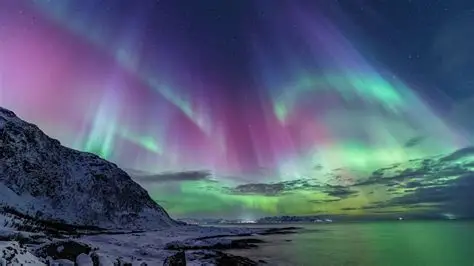
Northern Lights in 2026: How Aurora Chasers Can See a Stunning Sky Show
Northern Lights in 2026 are attracting unusual attention because the Sun has been moving through one of the most active phases of its 11-year cycle. For travellers, photographers and night-sky fans, that means the coming aurora seasons could still deliver stronger, wider and more frequent displays than many ordinary years.
The key word is “could”. The aurora is never guaranteed. It depends on solar storms, Earth’s magnetic field, cloud cover, darkness, moonlight and local light pollution. But the science behind the excitement is real. NASA and NOAA announced in October 2024 that the Sun had entered its solar maximum period, and the NOAA Space Weather Prediction Center continues to track Solar Cycle 25 as new sunspot and radio-flux data arrive. Even as the cycle begins to ease from its peak, powerful individual storms can still happen.
That is why Northern Lights in 2026 are not just another travel trend. They are a rare mix of space science, weather luck and careful planning. A good aurora trip is part astronomy lesson, part winter expedition and part patience test. It rewards people who understand when to go, where to stand, what to check and how to stay warm when the sky stays quiet for hours.
Why Northern Lights in 2026 Still Look Promising
Auroras happen when charged particles from the Sun interact with Earth’s magnetic environment and upper atmosphere. As NASA’s aurora explainer notes, those particles can collide with oxygen and nitrogen high above Earth, releasing light in greens, reds, purples and pinks. The colours depend on the gases involved, altitude and the strength of the display.
During solar maximum, the Sun produces more sunspots, solar flares and coronal mass ejections. When a strong coronal mass ejection is directed toward Earth, it can trigger geomagnetic storms. Those storms can expand the aurora oval and sometimes push the Northern Lights much farther south than usual.
Northern Lights in 2026 are especially interesting because the year sits close to the strongest part of Solar Cycle 25. The peak itself may already have passed, but the period around solar maximum is often messy and active. Some memorable aurora events in past cycles have occurred after the official peak, during the declining phase. That means early 2026, autumn 2026 and the 2026-27 winter season all deserve attention from serious aurora chasers.
For readers who follow sky events beyond auroras, this is part of a wider boom in public interest around space and astronomy, from a six-planet parade to the drama of a Blood Moon. The difference is that auroras are harder to schedule. A lunar eclipse has a fixed time. Northern Lights in 2026 require flexibility.
The Aurora Obsession That Started in Iceland
For astrophotographer Wil Cheung, one freezing night in Iceland turned curiosity into a life-changing pursuit. In 2015, he travelled to Iceland to watch the solar eclipse of March 20. During the trip, a strong aurora forecast pointed toward Thingvellir National Park. The weather was bitter, the drive was uncertain and the sensible choice would have been to stay indoors.
Instead, Cheung and his friends went out.
As they drove into darker countryside, faint colour began to appear above the horizon. Then pillars of light stretched upward. The display grew brighter, wider and more intense until the group was lying in snow, watching the sky move above them. Cheung later described the experience as almost spiritual. It was not just a photograph to capture. It was a moment that changed how he saw the night sky.
Back home in Northumberland, he volunteered at a local observatory, studied night-sky photography and began giving stargazing and aurora talks. By 2017, he was hosting events in Northumberland National Park. Later, he launched aurora tours abroad, where demand grew quickly.
His story explains why Northern Lights in 2026 have such emotional pull. The aurora is not a theme-park attraction. It is unpredictable, silent and deeply atmospheric. People often spend hours in darkness for a few minutes of reward. When the reward comes, it feels earned.
Best Places to See Northern Lights in 2026
The best places to see Northern Lights in 2026 are still the classic aurora regions: northern Norway, Iceland, Swedish Lapland, Finnish Lapland, Greenland, northern Canada and Alaska. These places sit under or near the aurora oval, the ring-shaped zone around the geomagnetic pole where auroras are most common.
That does not mean every Arctic destination is equal. Cloud cover can ruin a perfect solar forecast. City lights can weaken a faint display. Mountains, coastlines and road access can either help or trap you. The best destination is not always the most famous one; it is the one that gives you darkness, mobility and several nights of clear-sky chances.
| Destination | Why it works | Main challenge |
|---|---|---|
| Akureyri, Iceland | Good access, flexible driving routes and strong northern exposure | Winter roads and fast-changing weather |
| Tromsø, Norway | Famous aurora hub with many tours and Arctic scenery | Coastal cloud can block the sky |
| Abisko, Sweden | Known for relatively clear skies in Swedish Lapland | Remote location and high demand |
| Finnish Lapland | Dark forests, glass cabins and long winter nights | Cloud and cold can be intense |
| Fairbanks, Alaska | Inland climate, strong aurora reputation and forecast tools | Long travel time for many visitors |
| Yukon or Northwest Territories, Canada | Dark skies and powerful northern latitude | Remote logistics and severe cold |
| Greenland | Dramatic landscapes and low light pollution | Limited access and weather disruption |
Cheung has often praised Iceland because road access allows travellers to move between clearer areas. That flexibility matters. If clouds cover one valley, you can drive to another. In northern Norway, aurora cruises can also help because ships can move away from local light pollution and sometimes reposition around weather systems.
Northern Lights in 2026 may also appear in less typical places during strong geomagnetic storms. Scotland, northern England, Ireland, northern Germany, the Baltic states and parts of the northern United States can occasionally see displays when activity is high. But travellers planning a once-in-a-lifetime trip should still prioritise the aurora belt rather than betting on a rare southern show.
When to Travel for Northern Lights in 2026
The best time for Northern Lights in 2026 is when three things overlap: darkness, clear weather and solar activity. The aurora can happen at any time of year, but you cannot see it well under bright summer skies in far-northern regions. That is why most aurora travel seasons run from late August or September through March or early April, depending on latitude.
NOAA says the best aurora is usually within an hour or two of midnight, roughly between 10 p.m. and 2 a.m. local time, though strong activity can expand that window. The University of Alaska Fairbanks also notes that the hours around midnight are usually the strongest viewing period for interior Alaska.
For trip planning, September, October, February and March are especially attractive. September and March sit near the equinoxes, when geomagnetic activity can become more favourable. October often brings dark skies before the deepest winter cold. February and March can offer a useful mix of darkness, snow landscapes and improving travel conditions.
Northern Lights in 2026 should be planned as a multi-night attempt, not a one-night stop. Three nights gives you a chance. Five nights is better. A week is better still. The mistake many travellers make is building an aurora dream around a single evening in one town. If that night is cloudy, the trip fails.
The Conditions That Matter Most
Aurora hunting is a battle against variables, and Northern Lights in 2026 will still depend on local conditions as much as solar activity. Solar activity gets attention, but local conditions often decide whether you actually see anything.
The first condition is darkness. A bright full Moon can wash out faint auroras, although strong displays can still shine through moonlight. For the best contrast, choose dates near a new Moon or when the Moon sets early.
The second condition is clear sky. The Icelandic Met Office aurora forecast makes this point clearly: aurora viewing requires dark and partly clear skies. If there are thick clouds between you and the aurora, the show may be happening above you while you see nothing.
The third condition is low light pollution. Check whether towns, ski resorts, roads or ports sit north of your viewing spot. A glow on the northern horizon can hide faint auroras. Organisations such as DarkSky International exist because artificial light increasingly affects night-sky visibility worldwide.
The fourth condition is patience. Northern Lights in 2026 may reward travellers with dramatic displays, but many nights start slowly. A grey-green arc may sit low for an hour before suddenly breaking into curtains. Some displays fade after five minutes. Others build across the whole sky.
Forecast Tools Every Aurora Chaser Should Use
Forecasts help with Northern Lights in 2026, but they should not be treated as promises. Space weather is difficult because eruptions on the Sun must travel through space before forecasters can measure their final impact near Earth. A forecast can improve your odds; it cannot guarantee a display.
Start with the NOAA Aurora Dashboard, which gives a short-term view of aurora activity and geomagnetic conditions. Then use regional tools. The University of Alaska aurora forecast is useful for Alaska and wider high-latitude context. In Iceland, the Icelandic Met Office combines aurora activity with cloud cover, which is often more important for travellers on the ground.
The Kp index is useful but often misunderstood. A higher Kp number generally means stronger geomagnetic activity and a wider aurora oval. But a Kp 4 night in northern Iceland may be excellent, while a Kp 6 night under clouds may be useless. Local weather, darkness and horizon visibility still matter.
For Northern Lights in 2026, the smartest approach is to check three layers together:
- space weather, including Kp and geomagnetic storm alerts;
- local cloud forecasts, especially low and middle cloud;
- light conditions, including Moon phase and nearby towns.
That combined view is more reliable than chasing one number on an app.
What to Pack for a Long Night Outside
Aurora chasing is not a normal sightseeing activity, and Northern Lights in 2026 will test travellers who underestimate the cold. You may stand still for hours in sub-zero temperatures, often in wind, snow or icy darkness. Dressing well is not about comfort alone. It affects whether you can stay outside long enough to see the display.
A practical aurora kit should include thermal base layers, insulated trousers, a warm mid-layer, a windproof and waterproof outer shell, thick socks, winter boots, gloves, hand warmers and a hat that covers your ears. Many experienced guides also recommend foot warmers, a heated vest and a small sitting pad because cold often comes from the ground.
Avoid dressing only for photos. Fashionable coats are rarely enough for Arctic nights. Function wins.
For photography, bring a tripod, spare batteries, a lens cloth, a headlamp with a red-light setting and a camera or phone that can shoot long exposures. Cold drains batteries quickly, so keep spares close to your body. A smartphone can capture a faint aurora better than the naked eye, especially in night mode, but a camera with manual settings gives more control.
Northern Lights in 2026 will also attract first-time winter travellers, so basic travel safety matters. Download offline maps, tell someone where you are going, check road conditions and avoid risky roadside stops. If you are using hotel Wi-Fi, airport networks or tour booking pages while travelling, a simple public Wi-Fi safety routine can also protect your accounts.
How to Photograph Northern Lights in 2026
Photographing Northern Lights in 2026 is a balance between light, motion and sharpness. If the aurora is faint, you may need a longer exposure. If it is moving fast, a long exposure can blur the curtains into a green cloud. The best settings change with the display.
A good starting point for a camera is a wide lens, manual focus set carefully on a bright star, ISO between 800 and 3200, aperture as wide as possible and exposure between two and ten seconds. For a faint arc, try the longer end. For a fast, bright display, shorten the exposure.
For phones, use night mode or pro mode if available. Keep the phone still on a tripod or against a solid surface. Turn off flash. Do not judge the sky only through the screen. Some of the most memorable aurora moments are visual, not photographic.
Northern Lights in 2026 will probably produce millions of social-media images, but chasing the perfect shot can distract from the experience. Take a few frames, then look up. The camera records colour; your memory records scale, silence and movement.
Cruises, Road Trips and Guided Tours
There are three main ways to chase Northern Lights in 2026: drive yourself, join a local guide or take a cruise. Each has advantages.
Self-driving gives freedom, especially in Iceland and parts of northern Scandinavia. You can move toward clear skies, change locations and stay out as long as you want. The downside is winter driving. Ice, darkness, wind and remote roads can be dangerous for visitors who are not used to them.
Guided tours reduce that risk. Good guides understand local cloud patterns, safe stopping points and how to interpret forecasts. They also help beginners with camera settings and clothing. The downside is cost and less flexibility.
Cruises can be excellent because ships move away from city lights and offer open northern horizons. Along the Norwegian coast, a ship may sail through gaps in cloud that would be difficult to reach by road. But cruises also have limitations: you cannot choose every location, weather can still block the sky and ship movement can complicate photography.
The best choice depends on your confidence, budget and destination. For first-timers, a guided first night can be useful even if you plan to explore independently later.
Budget Tips for Northern Lights in 2026
Northern Lights in 2026 travel can be expensive, but it does not have to be wasteful. The smartest budget strategy is to spend money on time and flexibility rather than luxury.
Book several nights in one region instead of hopping across countries. Choose accommodation with easy access to dark areas. Consider shoulder months such as September, October, February or March instead of peak holiday weeks. Use refundable or flexible bookings when weather risk is high. Do not overpay for a glass-roof cabin if it is surrounded by trees, lights or cloudy coastal weather.
Northern Lights in 2026 may also bring higher demand in famous locations, so lesser-known bases can be valuable. Akureyri instead of only Reykjavik, inland Lapland instead of only resort towns, or smaller Canadian aurora communities instead of headline destinations may improve both price and experience.
Travellers who enjoy unusual places may find aurora chasing part of a broader appetite for atmospheric journeys, much like visits to strange places or visually famous destinations such as Hanoi’s Train Street. The lesson is the same: the best trip balances wonder with preparation.
A Simple Aurora Planning Checklist
Before booking, ask practical questions rather than relying only on glossy photos.
- Will the destination be dark enough during my travel dates?
- Am I staying for at least three to five nights?
- Can I move if clouds cover the sky?
- Is there a clear northern horizon nearby?
- What is the Moon phase?
- Do I have proper winter clothing?
- Are roads safe for self-driving?
- Which local forecast tools will I check each evening?
This checklist matters because Northern Lights in 2026 will still be unpredictable. Better solar activity improves the odds, but preparation turns those odds into a real chance.
Why the Aurora Feels Bigger Than a Travel Trend
Part of the appeal of Northern Lights in 2026 is that the phenomenon connects everyday travellers to the Sun. A flare erupts millions of miles away. Charged particles travel through space. Earth’s magnetic field guides them toward the polar atmosphere. Oxygen and nitrogen glow. Someone standing in snow sees the sky ripple green.
That chain of events is enormous, yet the experience feels personal.
It also reminds us how much remains mysterious and beautiful above us. The same curiosity that drives stories about a possible dark galaxy or a new Milky Way map is present when travellers stand under the aurora. People want to feel the scale of the universe, not only read about it.
Final Advice for Aurora Chasers
The best aurora advice is simple: choose the right region, stay several nights, avoid bright light, watch the weather, dress properly and stay patient. Do not book a trip expecting the sky to perform on command. Book it because the attempt itself is part of the experience.
Northern Lights in 2026 may bring some unforgettable displays, especially for travellers who understand the balance between solar activity and local conditions. The year is not a guarantee, but it is a serious opportunity. With Solar Cycle 25 still influencing space weather, aurora chasers have good reason to look north.
If the clouds part, the Moon stays low and the Sun sends the right storm toward Earth, Northern Lights in 2026 could deliver the kind of night people remember for the rest of their lives.