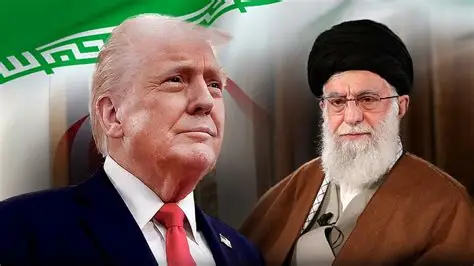
The US Iran ceasefire deal 2026 remains uncertain and deeply fragile after US Secretary of State Marco Rubio confirmed on Friday that Washington is waiting for Tehran’s formal response to proposals for an interim agreement to end the Middle East conflict. Rubio made the statement during a visit to Rome, expressing hope that Iran’s answer would form the basis for serious negotiations — even as violence in and around the Strait of Hormuz intensified and Iran accused the United States of breaking the existing informal truce.
The situation reflects the extraordinary contradictions defining this moment in the conflict — diplomatic channels remain open while military clashes continue, and both sides simultaneously signal willingness to talk and willingness to fight. President Donald Trump said on Friday evening that he expected to receive a letter from Iran that same night, telling reporters at the White House: “I’m getting a letter supposedly tonight.”
US Iran Ceasefire Deal 2026: What Rubio Said in Rome
The US Iran ceasefire deal 2026 diplomatic process took centre stage on Friday when Rubio addressed reporters during his Rome visit and laid out Washington’s current position with notable directness.
“We’re expecting a response from them today at some point,” Rubio said. “I hope it’s a serious offer, I really do. The hope is it’s something that can put us into a serious process of negotiation.”
The language Rubio used was carefully balanced — expressing genuine hope while stopping well short of optimism. The phrase “I hope it’s a serious offer” signals that Washington has reason to question whether Tehran’s response, when it arrives, will represent a genuine opening for substantive talks or a diplomatic manoeuvre designed to buy time.
Key points from Rubio’s Rome statement:
- Washington is actively awaiting Iran’s formal response to ceasefire proposals
- Rubio expressed hope that the response would be serious and substantive
- He framed the goal as entering “a serious process of negotiation”
- His language was cautious — hopeful but not confident
- The statement came as Rubio visited Rome — itself a diplomatically significant location
- Trump separately told reporters he expected a letter from Iran the same evening
Trump’s own remarks at the White House added further context. When asked whether Iran was deliberately slowing the negotiation process to gain advantage, the President replied: “We’ll find out soon enough” — a response that conveyed impatience without abandoning the diplomatic track entirely.
US Iran Ceasefire Deal 2026: The Role of Pakistan as Mediator
The US Iran ceasefire deal 2026 diplomatic process has involved Pakistan playing a quiet but critical mediating role between Washington and Tehran. In recent days, Pakistani intermediaries passed a brief memorandum to Iran that the United States described as a potential basis for a more solid ceasefire agreement and a pathway to new formal talks.
The use of Pakistan as a mediating channel reflects the absence of direct diplomatic relations between the United States and Iran and the need for trusted third-party intermediaries to carry communications between the two sides. Pakistan’s geographic proximity to Iran, its established diplomatic relationships with both parties, and its experience navigating complex regional dynamics make it a logical — if not widely publicised — choice for this role.
The mediation process — key facts:
- Pakistan is serving as the primary mediating channel between the US and Iran
- Pakistani intermediaries delivered a brief memorandum to Iran on behalf of the US
- The memorandum outlines proposals that could form the basis for a more solid ceasefire
- The US has framed the document as a potential starting point for serious talks
- Iran’s response to the memorandum is what both Rubio and Trump await
- The use of third-party mediation reflects the absence of direct US-Iran diplomatic relations
The memorandum itself represents a significant step — a concrete written document rather than verbal signals passed through back channels. Whether Iran treats it as a genuine foundation for negotiation or as a document to be rejected, modified, or used as leverage will reveal much about Tehran’s true intentions at this stage of the conflict.
US Iran Ceasefire Deal 2026: Iran’s Position and Accusations
While Washington waits for Tehran’s formal response, Iran’s foreign minister Abbas Araghchi used Friday to publicly accuse the United States of breaking the ceasefire — casting serious doubt on the good faith of the negotiations from Iran’s perspective.
Araghchi posted directly on social media platform X, writing: “Every time a diplomatic solution is on the table, the U.S. opts for a reckless military adventure.” The statement was a direct reference to recent US military actions in and around the Strait of Hormuz, which Iran characterises as ceasefire violations.
Araghchi also delivered a striking and significant boast alongside his diplomatic criticism — claiming that Iran’s ballistic missile stocks and launcher capacity had not only been repaired and restocked during the pause in hostilities, but actively expanded. If accurate, this claim carries major implications for any negotiation over Iranian military capability.
Iran’s stated position as of Friday:
- Iran accuses the US of breaching the informal ceasefire through recent military actions
- Foreign Minister Araghchi publicly condemned US military actions near the Strait of Hormuz
- Iran claims its ballistic missile stockpiles and launcher capacity have been rebuilt and expanded during the truce
- Araghchi framed the US as consistently choosing military escalation over diplomatic solutions
- Iran retains two primary negotiating cards — control of the Strait of Hormuz and the ability to threaten Gulf oil infrastructure
- Iran has not yet delivered its formal response to the US ceasefire memorandum
The claim about expanded missile capacity is particularly significant. Eliminating Iran’s missile arsenal and production facilities was repeatedly stated as a key objective by US officials early in the conflict. If Iran has used the ceasefire period to rebuild and expand that very capability, it fundamentally changes the military balance that any negotiated agreement must address.
US Iran Ceasefire Deal 2026: Violence at the Strait of Hormuz
The most dramatic illustration of the gap between diplomatic statements and ground-level reality in the US Iran ceasefire deal 2026 situation came on Friday when US forces fired on and disabled two Iranian-flagged tankers attempting to violate the American blockade of Iran’s ports.
The incident was the latest in a series of significant flare-ups in and around the Strait of Hormuz since the informal truce began — described by observers as the biggest escalations since the ceasefire was announced. The violence followed Donald Trump’s announcement — and then rapid pause — of a new naval mission aimed at reopening the strategically critical waterway.
The Strait of Hormuz carries an enormous proportion of the world’s oil supply. Its closure by Iran has already caused a significant rise in global oil prices and contributed to wider economic disruption across international markets. The waterway represents perhaps Iran’s single most powerful negotiating card — the ability to threaten global energy supply at a moment of significant economic vulnerability.
Strait of Hormuz — key developments:
- US forces fired on and disabled two Iranian-flagged tankers on Friday
- The tankers attempted to breach the American blockade of Iran’s ports
- Recent days have seen the biggest Hormuz flare-ups since the informal truce began
- Trump announced then rapidly paused a new naval mission to open the strait
- Iran’s closure of the strait has driven up global oil prices significantly
- The strait and Gulf oil infrastructure represent Iran’s two main negotiating levers
- The US blockade of Iran-linked shipping aims to maximise economic pressure on Tehran
The simultaneous occurrence of naval clashes and diplomatic exchanges perfectly captures the paradox of this moment. Both sides continue to fire at each other — literally and figuratively — while also leaving open the channels through which a deal might eventually be reached.
US Iran Ceasefire Deal 2026: What Each Side Wants
Understanding the US Iran ceasefire deal 2026 negotiation requires clarity about what each party is actually seeking from any agreement — because the gap between those positions remains significant.
The United States entered this conflict with the elimination of Iran’s missile arsenal and production facilities as a stated key objective. Restricting Iran’s ballistic missile capability is expected to remain a central demand in any formal negotiation. Washington also seeks a durable resolution to the Strait of Hormuz closure and a guarantee that Iran cannot threaten regional oil infrastructure.
Iran, meanwhile, holds control of the strait and the threat to Gulf infrastructure as its primary bargaining chips. Tehran will seek relief from the US blockade, recognition of its regional influence, and security guarantees that prevent future military strikes on its territory and leadership.
The core negotiating gap:
- US demands: Elimination or severe restriction of Iran’s missile capability and production; resolution of the Strait of Hormuz closure; security guarantees for regional partners
- Iran’s demands: End to the US blockade of Iranian shipping; relief from economic pressure; security guarantees against future US-Israeli military action
- Iran’s leverage: Control of the Strait of Hormuz; ability to threaten Gulf oil infrastructure; expanded missile stockpiles as claimed by Araghchi
- US leverage: Ongoing blockade of Iranian ports; military superiority; economic pressure through sanctions and trade restrictions
- Key sticking point: Iran’s missile capability — a US priority for restriction that Iran has reportedly expanded during the truce