Norway Dominates the Winter Olympics: Powerful 2026 Success Built on Joy
Norway dominates the Winter Olympics again because its sporting system does something many bigger nations still struggle to copy: it treats lifelong participation as the foundation of elite success, not as a distraction from it.
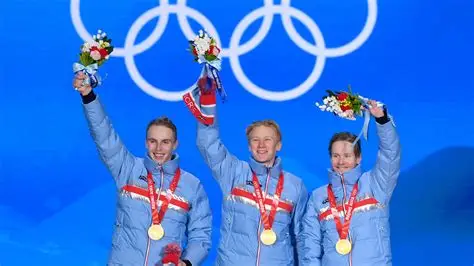
At the 2026 Milan-Cortina Games, Norway finished top of the official medal table with 18 gold medals, 12 silver medals, 11 bronze medals and 41 medals in total. That total set a new Winter Olympic benchmark and placed Norway ahead of much larger nations, including the United States, Italy, Germany and Japan. For a country with just over 5.6 million people, the result was not only impressive. It was a reminder that size, money and population do not automatically produce the strongest winter-sports system.
The old explanation is that Norway is cold, snowy and obsessed with skiing. That is partly true, but it is not enough. Canada is cold. The United States has mountains, money and a huge population. Germany has deep winter-sports history. Italy hosted the Games. Yet Norway dominates the Winter Olympics because it has built a culture where sport begins as play, grows through community clubs and becomes elite only after children have been given time to enjoy, explore and develop.
That is the real lesson for the United States. The U.S. does not need to become Norway. It has different geography, schools, college sport, private clubs and professional pathways. But if American sport leaders want broader participation and more sustainable excellence, Norway’s model offers a powerful challenge: stop treating children as early investments and start treating them as children.
For wider context on how Olympic stories from Milan-Cortina unfolded, The News Ink’s report on the 2026 Winter Olympics closing moments explains why these Games became a defining showcase for both established powers and new stars.
Why Norway dominates the Winter Olympics at unusual scale
Norway dominates the Winter Olympics most clearly when the medal table is compared with population size. The official Olympic record for Milan-Cortina lists Norway first with 18 golds and 41 total medals. The United States finished second with 12 golds and 33 medals. Italy, the host nation, finished third with 10 golds and 30 medals.
That means Norway won eight more medals than the U.S. despite having a population smaller than many American states. Statistics Norway’s 2026 projection describes the country as having just over 5.6 million people. The comparison is not perfect, because winter-sport access is not distributed evenly in any country, but it still captures the scale of the achievement.
| Nation | Gold | Silver | Bronze | Total |
|---|---|---|---|---|
| Norway | 18 | 12 | 11 | 41 |
| United States | 12 | 12 | 9 | 33 |
| Italy | 10 | 6 | 14 | 30 |
| Germany | 8 | 10 | 8 | 26 |
| Japan | 5 | 7 | 12 | 24 |
The numbers also continued a trend. Norway led the medal table at PyeongChang 2018, Beijing 2022 and Milan-Cortina 2026. One strong Games can be explained by a golden generation. Three straight Winter Olympics point to a system.
Norway dominates the Winter Olympics not because every athlete becomes a champion, but because enough children stay in sport long enough for talent to emerge naturally. That is a different philosophy from systems built around early selection, early travel teams and early rankings.
Why Norway dominates the Winter Olympics through patience, not pressure
The most important part of Norway’s system is also the easiest to misunderstand. Norway is serious about sport, but it is not serious in the way many youth systems are serious. It does not rush children into adult-style competition. It does not treat a 10-year-old’s result as a national forecast. It does not assume early specialization is the safest route to excellence.
The Norwegian Olympic and Paralympic Committee and Confederation of Sports says that nine out of 10 children aged 6 to 12 take part in one or more sporting activities. Its official children’s sport framework puts participation, safety and joy at the centre of youth sport, with rules on competitions, travel, ranking and awards designed to keep children motivated rather than frightened of failure.
That philosophy helps explain why Norway dominates the Winter Olympics. The country protects the base of the pyramid. More children are encouraged to play. More families can stay involved. More athletes avoid burning out before they are physically or emotionally ready for serious training.
Reuters interviewed Tore Øvrebø, Norway’s head of delegation and director of elite sport, during the Milan-Cortina Games. He linked Norway’s success to a system that values children’s happiness, broad access, shared knowledge and multi-sport development. He also stressed that Norway tries not to focus on winning too early.
That is the uncomfortable part for other nations. Norway is not soft. It is strategic. It knows that the best teenage athlete is not always the best future Olympian. The system gives children time to grow into sport before asking them to carry adult expectations.
Why Norway dominates the Winter Olympics with joy as an advantage
Norway dominates the Winter Olympics partly because joy keeps people in the system. A child who enjoys sport becomes an active teenager. An active teenager has more years to develop coordination, endurance, balance, confidence and social skills. A patient system then has a larger pool of healthy athletes to identify later.
This does not mean Norway ignores performance. Its elite sport programme is sophisticated. Coaches share information. Federations cooperate. Training is detailed. Athletes are measured, supported and challenged. But the elite layer sits on top of a broad participation culture instead of replacing it.
The lesson is especially important in expensive winter sports. Skiing, skating, biathlon and sliding sports can exclude families quickly if equipment, travel and coaching costs rise too high. Øvrebø told Reuters that Norway’s used-equipment culture helps families participate, even in sports that can otherwise become financially intimidating.
The News Ink’s sports training technology guide shows how modern elite performance depends on science, recovery and data. Norway uses elite knowledge, but it does not start by turning childhood into a laboratory. It lets children build movement skills first.
That balance is why Norway dominates the Winter Olympics without looking like a country obsessed with producing medal machines. It produces champions because it first produces participants.
Why Norway dominates the Winter Olympics beyond one superstar
No athlete represented Norway’s 2026 dominance better than Johannes Høsflot Klæbo. His six-gold performance made him one of the central figures of the Games and reinforced Norway’s status as the world’s leading cross-country skiing nation.
The News Ink’s feature on how Johannes Klæbo made history with six golds explains why his Milan-Cortina campaign became more than a personal triumph. It became a symbol of a wider system that consistently produces athletes capable of controlling the biggest Olympic events.
Klæbo’s success also shows why Norway dominates the Winter Olympics through depth, not just isolated brilliance. A single superstar can lift one sport. Norway’s advantage is that stars often arrive with strong teams around them. Relay events, team tactics, waxing support, coaching and shared knowledge all matter.
That collective culture is easy to overlook. Spectators see the final sprint. They do not always see the system behind it: clubs, trails, family habits, school balance, national coaching cooperation and a winter-sport identity that begins long before the Olympic flame is lit.
Why Norway dominates the Winter Olympics but also succeeds beyond snow
The original article rightly noted that Norway is now producing major athletes beyond snow and ice. That matters because it shows the country’s sporting model may be bigger than the climate.
Norway has produced Erling Haaland and Martin Ødegaard in football, Ada Hegerberg in women’s football, Casper Ruud in tennis, Viktor Hovland in golf and Olympic success in sports such as beach volleyball, triathlon and athletics. These examples do not prove that every Norwegian sport is thriving equally, but they do weaken the lazy argument that winter medals come only from snow.
Norway dominates the Winter Olympics because winter sports are deeply rooted in daily life, but its broader success suggests a healthier sporting culture. Children are encouraged to try several activities. Clubs are community institutions. The goal is not simply to find prodigies. It is to keep the door open long enough for different forms of talent to appear.
That principle is relevant to emerging sports as well. The News Ink’s feature on emerging sports taking the world by storm shows how new pathways can grow when participation feels accessible, social and exciting. Norway’s model works because it understands that sport survives through culture before it wins through medals.
What the United States can learn as Norway dominates the Winter Olympics
The U.S. cannot copy Norway by passing one policy. American sport is fragmented across schools, private clubs, colleges, national governing bodies, travel teams, city leagues and professional academies. That fragmentation creates opportunity, but it also creates inconsistency.
Project Play, part of the Aspen Institute’s sports work, argued after Milan-Cortina that Norway’s model offers lessons for the American system, especially around children’s rights, participation and early pressure. It noted that Norway avoids sorting young children too aggressively and protects a zone where sport can remain developmentally appropriate.
For the U.S., the first lesson is access. Winter sports are often geographically limited and expensive. Many children live far from ski jumps, biathlon ranges, sliding tracks or cross-country trails. Even basic skating access depends on rinks, transport and cost. A serious American response would not only fund elite athletes; it would make more entry points affordable.
The second lesson is coaching. Youth coaches shape whether children stay or quit. A better system would reward coaches for development, safety, retention and joy, not only wins.
The third lesson is delayed specialization. Norway dominates the Winter Olympics while encouraging children to play multiple sports. That should challenge the American belief that earlier specialization always creates better athletes. In many cases, it creates tired, injured or anxious athletes.
What America should not copy blindly while Norway dominates the Winter Olympics
Norway dominates the Winter Olympics, but copying Norway without context would be a mistake. Norway is smaller, more socially cohesive and more naturally connected to winter sport. Its club system, public trust and outdoor culture cannot be recreated overnight in a country of more than 330 million people.
The U.S. also has strengths Norway does not have at the same scale. American college sport, professional leagues, sports science networks and private training facilities can produce remarkable athletes. Team USA’s Milan-Cortina medal total was strong, and the country remains a broad Olympic power.
The lesson is not that the U.S. is failing. The lesson is that its youth sports system often asks families to spend too much, travel too far and specialize too early. That can produce champions, but it can also lose millions of children who might have stayed active if sport had felt less like a job.
The News Ink’s article on the Canada-USA Olympic ice hockey final shows that North America can still build elite winter-sport cultures. The question is whether those pathways can become more inclusive and less expensive without losing competitive edge.
Why Norway dominates the Winter Olympics through cultural familiarity
Some sports become easier to sustain when they feel culturally familiar. In Norway, skiing is not only an elite sport. It is recreation, transport, family activity and national identity. That familiarity gives children repeated low-pressure exposure before formal competition matters.
Curling offers another useful example of how culture and community shape interest. The News Ink’s guide to why curling is a must-watch sport explains that some winter sports grow through tradition, ritual and social connection as much as raw athletic spectacle.
Norway dominates the Winter Olympics because its best sports are not hidden behind elite gates. Many children encounter skiing or winter activity as part of ordinary life. That does not guarantee medals, but it creates comfort. A child who spends years on snow before serious selection has already built balance, endurance and confidence.
For the U.S., the equivalent may not always be skiing. It could be hockey in Minnesota, speedskating in Wisconsin, snowboarding in Colorado, or community skating programmes in cities with rinks. The key is not to force every child into Olympic pathways. It is to create more places where winter sport feels normal.
Why Norway dominates the Winter Olympics as a small-country lesson
Norway’s size is often presented as a limitation, but it may also be an advantage. Øvrebø told Reuters that Norway shares knowledge because it is not big enough to stay in silos. Coaches and experts know each other, learn from each other and work across boundaries.
That is a powerful lesson. Big countries often have more resources, but they can waste them through duplication and competition between institutions. One federation develops a good idea, another ignores it. One region has facilities, another has none. One sport improves coaching, another keeps old habits.
Norway dominates the Winter Olympics because its sports ecosystem appears more coherent. Mass participation, club culture and elite sport are connected rather than treated as separate worlds. That makes it easier for ideas to move.
The U.S. does not need central control of every youth club. But it could benefit from more shared standards: child protection, coach education, age-appropriate competition, affordable entry-level programmes and better data on participation. Coherence does not mean bureaucracy. It means fewer children falling through gaps.
Why Norway dominates the Winter Olympics through culture, not just technology
It is tempting to search for Norway’s secret in waxing rooms, altitude plans, ski technology or funding formulas. Those things matter. At Olympic level, details always matter. But the deeper lesson is cultural.
Norway dominates the Winter Olympics because it has aligned elite ambition with a broad social idea: sport should help people live good lives. That phrase may sound too gentle for medal analysis, but it is central. A system that keeps more people active creates more chances for excellence. A system that protects children’s joy reduces burnout. A system that shares knowledge wastes less talent.
The U.S. can learn from that without becoming less competitive. In fact, the opposite may be true. A healthier youth sports culture could give America a wider base, better long-term athletes and fewer early exits.
The next Winter Olympic cycle will bring new events, new stars and new medal-table debates. Norway may not lead forever. No sporting system is immune to decline, injury cycles or stronger competition. But the reason Norway dominates the Winter Olympics in this era is clear enough: it built a system where excellence grows from participation, not pressure alone.
That is the message worth taking seriously. Norway’s record 2026 Games should not be remembered only as a medal-table triumph. It should be remembered as evidence that joy, patience and community can still beat size.
For more sports features and Olympic analysis from The News Ink, follow The News Ink on X.