UK Middle East Flights Cancelled as Gulf Airspace Crisis Deepens After Iran Strikes
UK Middle East flights cancelled has become the urgent travel warning for passengers after US and Israeli strikes on Iran, Iranian retaliation across the Gulf, temporary airspace closures and airline suspensions disrupted routes between Britain, Dubai, Doha, Bahrain, Tel Aviv and other regional hubs.
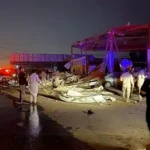
The first major disruption came on 28 February 2026, when airlines halted or diverted flights after several Middle East countries closed airspace during the initial wave of strikes and counterstrikes. The situation has since shifted several times. Some airlines have restored routes, but others are still cancelling or delaying services because the region remains unpredictable.
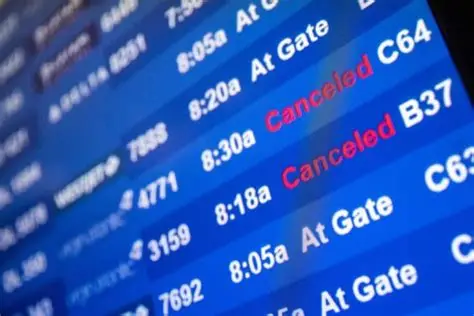
That means passengers should not rely on old airport boards, screenshots or social-media posts. UK Middle East flights cancelled is still a live travel story because airline schedules can change quickly when airspace restrictions, missile risks or security alerts affect the Gulf.
British Airways says some of its regional flights remain cancelled or temporarily suspended because of ongoing uncertainty and airspace restrictions. Reuters reported on 8 July 2026 that some airlines were restoring Middle East flights, while several carriers were still keeping suspensions in place. The UK Foreign Office also warns that regional tensions remain unpredictable and that attacks could resume at short notice.
For wider regional context, The News Ink has covered Iran’s retaliatory strikes across the Gulf and the intercepted missile that fell into a residential area in Doha.
Why UK Middle East flights cancelled became the headline
UK Middle East flights cancelled became the headline because the disruption hit some of the busiest long-haul travel corridors from Britain. Dubai and Doha are not only destinations. They are global connection points for flights to Asia, Africa, Australia and other parts of the Middle East.
When airspace around Qatar, the UAE, Bahrain, Kuwait, Jordan, Israel or Iran becomes restricted, the effect spreads far beyond one airport. A passenger flying from London to Bangkok through Doha may be affected. A family travelling from Manchester to Australia through Dubai may face rerouting. A business traveller heading to Bahrain may find the route suspended even if their final destination is not inside the main conflict zone.
The first wave of disruption followed US and Israeli attacks on Iran and Iranian retaliation across the region. Al Jazeera reported that at least eight states, including Iran, Israel, Iraq, Jordan, Qatar, Bahrain, Kuwait and the UAE, closed airspace as the crisis erupted. That scale explains why UK airports quickly saw knock-on delays and cancellations.
UK Middle East flights cancelled is therefore not just about one airline. It is about how quickly modern aviation depends on safe corridors through politically sensitive airspace.
What has changed since the first cancellations
The original report focused on immediate disruption after Dubai and Doha airport operations were affected by airspace closures. That was correct for the first phase, but the story now needs updating because the disruption has become longer and more uneven.
Reuters reported on 8 July that more airlines were restoring some Middle East flights after the conflict that followed US and Israeli strikes on Iran, but several carriers still had suspensions in place. British Airways delayed the resumption of Doha flights until 1 August and Riyadh flights until 8 August. It also planned to keep flights to Dubai, Tel Aviv, Bahrain and Amman paused until the end of the summer season, with services scheduled to resume on 25 October.
That is the key update: UK Middle East flights cancelled is no longer only about a single day of airport closures. It is about extended route suspensions, cautious airline planning and the difficulty of operating safely in a region where conditions can change quickly.
Some Gulf carriers may operate more normally than European airlines because their networks are built around the region. But even they can face rerouting, delays, crew-scheduling pressure and passenger backlogs when airspace risk rises.
Current airline disruption at a glance
| Airline or route group | Latest reported position |
|---|---|
| British Airways | Some services to Abu Dhabi, Amman, Bahrain, Doha, Dubai, Tel Aviv and Riyadh cancelled or temporarily suspended |
| BA Doha | Reuters reported resumption delayed until 1 August 2026 |
| BA Riyadh | Reuters reported resumption delayed until 8 August 2026 |
| BA Dubai, Tel Aviv, Bahrain, Amman | Reuters reported services paused until the end of the summer season, scheduled for 25 October |
| Finnair | Doha flights suspended until October 2; avoiding Iraq, Iran, Syria and Israel airspace |
| Air Canada | Tel Aviv and Dubai flights cancelled until October 24 |
| Lufthansa Group | Multiple Middle East destinations suspended into October |
| Wizz Air | Dubai, Abu Dhabi and Amman flights from mainland Europe suspended until mid-September |
| Singapore Airlines | Singapore-Dubai suspension extended until August 2 |
This table shows why UK Middle East flights cancelled remains a moving story. The disruption is not identical across airlines. Some routes may restart while others remain paused for weeks or months.
British Airways passengers face the clearest UK impact
UK Middle East flights cancelled is especially important for British Airways passengers because BA has confirmed continuing disruption across several Middle East routes.
BA’s own travel-news page says that because of ongoing uncertainty and airspace restrictions, some of its flights in the region have been cancelled or temporarily suspended. The listed services include Abu Dhabi, Amman, Bahrain, Doha, Dubai, Tel Aviv and Riyadh.
For passengers, the practical impact is straightforward. A flight may be cancelled well before departure, retimed, routed differently or rebooked through another hub. Customers may also face longer journey times if airlines avoid certain airspace.
The airline has told affected customers to check booking updates and has offered rebooking options where services are cancelled. Passengers should not wait until they reach Heathrow, Gatwick or Manchester to confirm their journey. They should check the airline app, booking email, airport departure board and official travel advice before leaving home.
UK Middle East flights cancelled also affects passengers beyond BA. Emirates, Qatar Airways, Etihad, Kuwait Airways and other carriers may continue operating some services, but airport congestion and regional security alerts can still affect departure times.
Heathrow and Gatwick disruption
The original article said Heathrow confirmed a small number of flights were delayed or cancelled and urged passengers travelling to the Middle East to check directly with airlines. That remains the right practical advice.
Large airports such as Heathrow and Gatwick do not control the full security situation. They can manage runway slots, ground operations and passenger flows, but airlines decide whether aircraft can safely operate based on airspace access, crew rules, insurance, aircraft positioning and government guidance.
UK Middle East flights cancelled can also create secondary disruption. If an aircraft due to arrive from Doha does not land in London, the same aircraft may be unavailable for its next route. If a crew cannot legally complete a duty because a flight is delayed or rerouted, another service may be affected. If a transit hub becomes congested, bags and connections can be missed.
That is why airport disruption sometimes continues even after airspace reopens. The system takes time to reset.
Passengers should therefore treat “airport open” and “flight operating” as two different things. An airport can be open while specific airlines keep some routes suspended.
Why Dubai and Doha matter so much
Dubai and Doha are among the world’s most important long-haul hubs. Dubai International is central to Emirates’ global network, while Doha Hamad International Airport anchors Qatar Airways. Both airports connect UK passengers to South Asia, Southeast Asia, Australia, East Africa and the Gulf.
When Dubai or Doha operations are interrupted, the effects are immediate. People travelling to Pakistan, India, Bangladesh, Thailand, Malaysia, Australia, Kenya or South Africa may suddenly find their connection disrupted even if those destinations are nowhere near Iran.
UK Middle East flights cancelled is therefore not only a Middle East travel issue. It can affect family visits, pilgrimages, business trips, student travel, holidays and cargo movement across multiple continents.
This is also why airlines are cautious. Dubai and Doha routes carry huge passenger volumes and complex connections. A sudden closure can strand thousands of people at transit hubs. Airlines may prefer to cancel early rather than send passengers into a network that could close before they reach their next flight.
The News Ink has also covered how Dubai’s safety reputation has been tested by regional conflict, which explains why the UAE’s role as a global travel hub is now under closer scrutiny.
The Foreign Office warning passengers should read
UK Middle East flights cancelled is only one part of the risk. British travellers also need to check Foreign Office advice for the exact country they are visiting or transiting through.
The FCDO’s Qatar and UAE advice says the US and Iran have announced a memorandum of understanding connected to the Middle East conflict, but the situation remains unpredictable and attacks could resume at short notice. The guidance tells British nationals to follow local authorities, sign up for travel advice alerts, monitor local and international media, stay away from security or military facilities and keep departure plans under review.
The advice also explains what to do if told to take shelter. It says people should stay indoors or use the nearest safe building or designated shelter, ideally an interior stairwell or a room with few external walls or windows, because the greatest risk may come from falling debris after interceptions.
That matters because UK Middle East flights cancelled can leave people stuck in transit or waiting in hotels. A delayed passenger may suddenly become a person inside a country facing missile alerts. Travel planning is no longer just about flight times; it is about emergency readiness.
What passengers should do before travelling
Passengers affected by UK Middle East flights cancelled should take practical steps before leaving for the airport.
| Step | Why it matters |
|---|---|
| Check the airline app and email | Airlines may cancel or reroute flights before airport boards update |
| Check airport departures | Heathrow, Gatwick and regional airports may show live gate and cancellation changes |
| Read FCDO advice | Travel insurance and safety decisions may depend on official government warnings |
| Avoid military or security sites | FCDO guidance highlights risk around these locations |
| Keep documents ready | Passports, visas and onward bookings may be needed for emergency rerouting |
| Save emergency contacts offline | Internet or roaming may fail during crisis alerts |
| Contact insurers | Conflict-related disruption can affect cover differently from normal cancellations |
| Do not travel to the airport early without confirmation | Crowding can worsen delays and stress |
UK Middle East flights cancelled does not mean every traveller must abandon a trip. It does mean every traveller should treat the route as unstable until the airline confirms it is operating.
Refunds, rebooking and passenger rights
UK Middle East flights cancelled raises an important consumer question: what happens to passengers when a route is suspended for security reasons?
In many cases, airlines offer rebooking, refund or travel-credit options when they cancel a service. British Airways said affected customers can rebook when flights are cancelled or suspended. Other airlines have similar disruption policies, though the details depend on route, fare type, booking channel and local law.
Passengers who booked through travel agents may need to contact the agent first. Those with package holidays should check with the tour operator. People with separate tickets must be especially careful because a refund on one leg does not automatically protect a separate onward booking.
Insurance can be complicated. Some policies exclude war, terrorism or government-advice-related disruption. Others may cover delay, cancellation or abandonment if the airline cancels the flight. Travellers should read the policy wording rather than assuming all conflict disruption is covered.
UK Middle East flights cancelled also means passengers should document everything: cancellation emails, screenshots, receipts, hotel costs, alternative flights and airline chat records. Evidence matters if a claim is needed later.
Why flight paths change during conflict
Airlines do not need a missile to hit an aircraft before changing routes. They avoid risk long before that point. Civil aviation safety depends on anticipating threats, not reacting after disaster.
When a conflict escalates, airlines may avoid entire regions of airspace. That can increase flying time, fuel use, crew hours and costs. A London-to-Dubai flight that avoids certain routes may need a different path. A European airline flying to Asia may need to route north or south around closed areas.
UK Middle East flights cancelled can therefore happen even when the destination airport is open. The route between the UK and the airport may be too difficult, too expensive or too risky under airline safety rules.
Airlines also consider insurance. War-risk insurance can become more expensive or restrictive. Aircraft lessors, regulators and national authorities may all influence whether a route can operate.
This is why passengers sometimes see confusion: one airline flies while another cancels. That does not necessarily mean one is reckless and the other is overcautious. They may have different aircraft positions, risk assessments, national guidance, insurance limits and network priorities.
The wider regional crisis behind the travel chaos
UK Middle East flights cancelled is a travel story, but it is rooted in a military and diplomatic crisis. Reuters reported that US and Iranian forces exchanged heavy missile and drone attacks in July, with Iran saying it had closed the Strait of Hormuz and US Central Command saying commercial vessels continued moving through the waterway. The Guardian reported on 12 July that Iran had launched missiles and drones at Gulf neighbours after fresh US strikes, while Qatar reported injuries from falling shrapnel.
Those developments matter for aviation because airspace and maritime security are linked. When missile exchanges threaten ports, airports, military bases and oil infrastructure, airlines reassess risk across the whole region.
The Gulf is especially sensitive because commercial airports can sit close to strategic infrastructure. US-linked facilities, energy sites and military installations may be near flight paths or urban areas. That is why the FCDO tells travellers to stay away from security and military facilities.
The News Ink’s explainer on why the US and Israel attacked Iran gives more background on the conflict driving the disruption.
What this means for Dubai, Doha and Bahrain travel
UK Middle East flights cancelled does not mean every Gulf destination is closed to visitors. The FCDO no longer advises against all but essential travel to the UAE or Qatar as of its 18 June updates, but it still warns that the situation remains unpredictable and attacks could resume at short notice.
That distinction matters. A country can be open to travel while still carrying heightened regional risk. Airlines can operate while passengers are still advised to monitor alerts. Tourist areas can look normal while airspace restrictions remain possible.
Dubai may continue to function as a global hub, but travellers should understand that regional conflict can affect routes with little warning. Doha may operate normally at times, but missile interceptions or security alerts can still disrupt movement. Bahrain, because of its strategic importance and US-linked facilities, may remain especially sensitive during escalation.
UK Middle East flights cancelled should therefore be treated as a warning to plan flexibly, not as a single permanent status.
How long could disruption last?
The honest answer is that no one can guarantee how long UK Middle East flights cancelled will remain a major travel issue. Aviation disruption usually improves when three things happen: airspace reopens, airlines trust the security environment, and aircraft and crews are repositioned.
Even after a ceasefire or memorandum, airlines may wait before restoring full schedules. British Airways’ planned October restart for some routes shows how long carriers may need to rebuild confidence and capacity.
The conflict itself is also unstable. If attacks resume, schedules could be cut again. If diplomacy holds, airlines may gradually restore more services. If the Strait of Hormuz crisis worsens, disruption could spread further into insurance, cargo and fuel costs.
Travellers should therefore avoid assuming that one calm day means the whole network is back to normal. UK Middle East flights cancelled remains a rolling situation that needs checking close to departure.
FAQ: UK Middle East flights cancelled
Why are UK Middle East flights cancelled?
UK Middle East flights cancelled because airlines are responding to airspace restrictions, regional missile threats, airport disruption and safety concerns linked to the US-Iran conflict and wider Gulf tensions.
Are flights from the UK to Dubai still operating?
Some airlines may operate Dubai routes, but schedules vary. British Airways and several other carriers have suspended or delayed certain Middle East services. Passengers should check directly with their airline before travelling.
Are flights from the UK to Doha cancelled?
Some Doha services have been suspended or delayed. Reuters reported that British Airways delayed its Doha resumption until 1 August 2026, while other airlines have had separate schedules.
Should British travellers still go to the UAE or Qatar?
The FCDO does not currently advise against all travel to the UAE or Qatar, but it says the situation remains unpredictable and attacks could resume at short notice. Travellers should read the latest official advice before departure.
What should I do if my flight is cancelled?
Contact the airline or booking agent, check rebooking and refund options, keep receipts, review travel insurance and avoid going to the airport unless your flight is confirmed.
The bottom line
UK Middle East flights cancelled is the clearest sign that the Iran conflict is affecting ordinary travellers far beyond the battlefield. What began with airspace closures and airport disruption has become a longer aviation problem involving route suspensions, cautious airline planning and repeated security warnings.
For passengers, the rule is simple: check before you travel, check again before leaving for the airport, and treat airline updates as more reliable than social-media screenshots. Dubai, Doha, Bahrain, Tel Aviv and other regional routes may change quickly if missile alerts, airspace restrictions or government warnings shift.
The disruption is not only about inconvenience. It is about safety. Airlines are making decisions in a region where airspace, military sites, commercial hubs and global travel routes sit close together.
UK Middle East flights cancelled may ease if diplomacy holds and airspace confidence improves. But as of July 2026, the safest advice is to plan flexibly, monitor official guidance, keep documents ready and avoid assuming any Middle East itinerary is guaranteed.
For more travel and global-crisis updates, follow The News Ink on X.