

Iran World Cup Team Competed Despite War but Left Hurt by Restrictions
The Iran World Cup team ultimately received the welcome Donald Trump had promised, but its 2026 tournament experience was far more complicated than a simple assurance that the players could enter the United States. Iran competed in all three group matches, remained unbeaten and still went home after three draws, while war, visa restrictions and disrupted preparations followed the squad throughout its campaign.
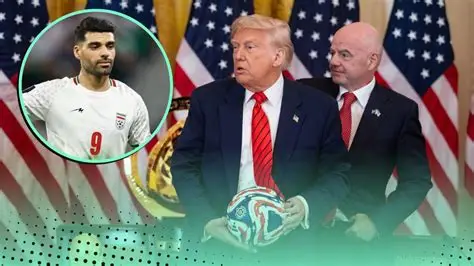
FIFA president Gianni Infantino said in March that Trump had confirmed the Iran World Cup team would be allowed to participate despite the armed conflict involving the United States, Israel and Iran. The assurance removed the most immediate fear that a qualified national team might be prevented from playing because of political hostility between its government and the principal host country.
Iran eventually faced New Zealand and Belgium in the Los Angeles area before meeting Egypt in Seattle. The results were respectable: a 2-2 draw with New Zealand, a goalless draw against Belgium and a 1-1 draw with Egypt. Those three points were not enough to place Iran among the best third-placed teams advancing to the knockout stage. The Iran World Cup team therefore left the tournament unbeaten but eliminated.
The Promise and the Reality
The original debate concerned whether the Iran World Cup team would be permitted to enter and play in the United States. Iran had qualified through football, but military escalation created uncertainty around visas, travel, security and diplomatic cooperation.
Infantino met Trump while FIFA and the three host governments prepared for a tournament spread across the United States, Canada and Mexico. After the meeting, he said the president had made clear that Iran’s players would be welcome.
That statement mattered because Iran had been absent from a major planning gathering in Atlanta. Football officials were already expressing concern that the conflict could make normal tournament preparation impossible. Trump’s intervention signalled that the host country would distinguish between the Iranian state and the athletes representing their nation.
The assurance was fulfilled in the narrowest and most important sense: the Iran World Cup team entered the country and completed its fixtures. Yet participation did not mean the delegation experienced the tournament on the same terms as every other team.
Iran’s 2026 World Cup Campaign at a Glance
| Match | Venue area | Result | Main consequence |
|---|---|---|---|
| Iran vs New Zealand | Los Angeles | 2-2 | Iran recovered a point but failed to secure an opening victory |
| Iran vs Belgium | Los Angeles | 0-0 | A disciplined performance kept qualification alive |
| Iran vs Egypt | Seattle | 1-1 | Iran remained unbeaten but awaited other group results |
| Final outcome | Group stage | Three points | Eliminated outside the best third-placed qualifiers |
The Iran World Cup team scored three goals and conceded three. It neither won nor lost. In an expanded tournament format that allowed eight third-placed teams to advance, three draws gave Iran a realistic chance of progressing.
The final disappointment came after other group results pushed Iran outside the qualification places. The team had avoided defeat against three different opponents but had not found the victory needed to control its own fate.
That outcome gave the Iran World Cup team a peculiar place in the tournament: resilient enough to remain unbeaten, but not decisive enough to reach the knockout phase.
A Dramatic Draw With New Zealand
Iran’s first match ended 2-2 against New Zealand. For a team whose preparation had been repeatedly interrupted, the opening game represented more than an ordinary group fixture.
Players had trained while receiving updates about the conflict at home. Travel routes, administrative arrangements and family concerns competed with tactical preparation. The Iran World Cup team nevertheless found a way to respond during a match that could easily have escaped from it.
The draw demonstrated character but also created immediate pressure. In a short group stage, failing to beat the lowest-ranked opponent can force a team to chase results against stronger sides.
New Zealand gained confidence from the result, while Iran moved towards its meeting with Belgium knowing that another draw might not be enough in the long term.
The Iran World Cup team had reached the field, but the practical consequences of its troubled preparation were now part of the competitive story.
Belgium Tested Iran’s Defensive Discipline
Belgium entered the tournament with greater individual quality and expectations of winning the group. Iran responded with organisation, patience and a willingness to defend for long periods.
The 0-0 result was credible. It showed that the Iran World Cup team could control space and frustrate an opponent containing players accustomed to Champions League and major European football.
Yet another draw also sharpened the qualification problem. Iran had two points from two matches and still needed a stronger result against Egypt.
There was pride in holding Belgium, but tournament football rewards victories more heavily than respectable performances. The Iran World Cup team had remained competitive without giving itself meaningful protection from results elsewhere.
The Egypt Draw and Taremi’s Frustration
Iran’s final group match against Egypt finished 1-1. That result preserved the unbeaten record but left the squad dependent on the outcome of other groups.
After the game, Mehdi Taremi spoke critically about the logistical arrangements surrounding Iran. He described the experience as deeply difficult and argued that the delegation had not felt properly welcomed despite the public assurances given before the tournament.
Reports said Iran had been based in Tijuana, Mexico, while playing its group matches in the United States. Members of the wider travelling party had experienced visa complications, and some logistical personnel were unable to operate normally with the squad.
Those restrictions did not prevent the Iran World Cup team from playing. They did affect preparation, movement and the feeling that Iran was participating as an equal member of the competition.
Taremi’s criticism revealed the gap between political language and tournament experience. A team can be officially welcome while still encountering obstacles that other nations do not face.
Why the Tijuana Base Mattered
World Cup bases are normally chosen to minimise travel, protect training routines and create stability. Players need reliable recovery facilities, medical access, transport and private preparation away from public pressure.
The Iran World Cup team had to manage cross-border logistics at a time of heightened security. Even when special arrangements allowed movement, uncertainty could affect training schedules and staff availability.
A complicated base does not automatically explain three draws. Iran still had opportunities to win matches and failed to take them. But elite tournaments are decided by small margins, and a disrupted environment can influence recovery, focus and tactical work.
The News Ink’s reporting on global travel disruption caused by the Iran conflict showed how airspace restrictions and security concerns affected far more than tourists. National teams, officials and sporting bodies faced many of the same practical problems.
For the Iran World Cup team, the conflict was not an abstract political backdrop. It shaped where the players lived, how staff travelled and how the delegation prepared.
A Welcome Is More Than Permission to Play
Trump’s promise answered one question: would the Iran World Cup team be allowed to compete?
The tournament created several others:
- Would every selected player receive a visa?
- Could coaches and support staff travel with the squad?
- Would Iranian officials be admitted for required meetings?
- Could the team train and recover without excessive border movement?
- Would security procedures remain proportionate?
- Would political hostility affect fan access?
FIFA’s responsibility did not end when the first player entered the United States. A credible global tournament required the governing body to secure workable conditions for the whole sporting delegation.
Infantino repeatedly presents the World Cup as an event capable of bringing countries together. The Iran World Cup team became a test of that message because its players represented a country involved in direct conflict with the principal host.
Football could not end the war. It could demonstrate that sporting qualification should not be cancelled by political confrontation.
FIFA’s Political Balancing Act
FIFA insists that national teams compete under sporting rules rather than the personal preferences of host governments. In practice, major tournaments depend on immigration authorities, security agencies and political leaders.
The Iran World Cup team showed how vulnerable that arrangement can become. FIFA could guarantee Iran’s place in the draw, but only governments could issue visas and permit entry.
Infantino’s relationship with Trump allowed the FIFA president to seek a direct public commitment. Supporters viewed that access as useful. Critics argued that FIFA had become too closely aligned with political power.
The concern extends beyond Iran. Any future host could use visas, border policy or diplomatic recognition to influence who attends a supposedly global competition.
The Iran World Cup team was allowed to play, but the episode demonstrated why FIFA needs transparent guarantees that apply to all qualified nations before hosting rights are awarded.
The Players Were Not the Government
One of the strongest arguments for welcoming the Iran World Cup team was also the simplest: footballers should not automatically be treated as representatives responsible for every action of their government.
The players had qualified through the Asian competition system. Many had spent their careers in European leagues. Their sporting right to enter the World Cup had been earned on the pitch.
That did not remove the political symbolism. National teams compete under flags, anthems and state identities. Some supporters inevitably interpreted Iran’s presence through the conflict.
But excluding the Iran World Cup team would have punished athletes for decisions they did not make. It might also have strengthened claims that Western institutions apply sporting principles selectively.
The News Ink’s earlier report on Iran considering its World Cup position documented how rapidly football had become entangled with the war.
Participation preserved at least one space in which Iran interacted with other countries through sport rather than weapons.
The Emotional Weight Carried by the Squad
The Iran World Cup team did not enter the tournament as if events at home could be switched off at kick-off.
Players had relatives and friends living under wartime conditions. Communication interruptions, security fears and reports of attacks followed them. Some supporters criticised participation; others viewed the team as a rare source of national relief.
International football always involves identity. Under war conditions, that identity becomes heavier.
A missed chance is still a missed chance, and a tactical error remains part of the sport. But the emotional conditions surrounding the Iran World Cup team were unlike those facing most opponents.
The squad’s unbeaten record therefore carried significance even without qualification. The players avoided collapse and remained competitive through three matches while representing a country experiencing extraordinary upheaval.
Iran’s Women Footballers Faced a Different Crisis
The men’s World Cup participation unfolded alongside a separate and more personal story involving members of Iran’s women’s football community.
Australia granted humanitarian visas to seven people connected with Iran’s women’s team amid concerns about their safety. One player initially chose to return, and later reports said several members of the group had gone back while two players remained in Australia and continued training.
The situations were different. The Iran World Cup team travelled for a global tournament under FIFA protection. The women seeking humanitarian visas faced individual decisions about safety, family and their futures.
Together, the stories showed how conflict can fragment sporting lives. One group represented Iran in packed American stadiums. Others had to decide whether returning home was safe.
Sport did not exist separately from politics for either group.
What Iran Achieved on the Pitch
The Iran World Cup team did not produce the breakthrough that supporters wanted. A first appearance in the knockout phase remained out of reach.
It nevertheless achieved several things:
- It competed after genuine uncertainty over participation.
- It remained unbeaten against New Zealand, Belgium and Egypt.
- It held a strong Belgian side without conceding.
- It continued working despite visa and base complications.
- It showed that political conflict did not automatically make sporting contact impossible.
The failure was a football failure rather than a diplomatic exclusion. Iran needed a victory and could not find one.
That distinction matters. The Iran World Cup team was eliminated by the tournament format and results, not removed by the host country.
Why Three Draws Were Not Enough
The expanded World Cup created more routes into the knockout stage, but it also produced complicated comparisons between third-placed teams.
Three points can be enough in some groups. Iran’s goal difference and results left it vulnerable to teams elsewhere securing a win or stronger statistical record.
The Iran World Cup team had opportunities to reduce that uncertainty. The New Zealand fixture was the clearest. Winning the opening match would have transformed the group and allowed Iran to approach Belgium and Egypt differently.
Instead, each draw increased the value of the next match without producing the decisive moment.
The campaign became a lesson in tournament mathematics: remaining unbeaten can feel impressive, but a victory is worth more than avoiding defeat three times.
What FIFA Should Learn
The Iran World Cup team experience should lead to clearer host commitments before future tournaments.
FIFA should require binding guarantees covering:
- Players selected by qualified associations.
- Coaches, medical staff and essential team employees.
- Officials required for competition duties.
- Accredited journalists.
- Supporters who meet standard security and immigration conditions.
- Emergency arrangements when diplomatic relations collapse.
Those guarantees should not depend on the FIFA president obtaining a personal promise from a political leader.
The World Cup’s credibility rests on universal sporting access. If entry depends on informal relationships, qualified nations may never know whether their place is secure.
The Bigger Meaning of Iran’s Campaign
The Iran World Cup team did not unite governments or end military confrontation. No football tournament could carry that burden.
It did create moments in which Iranian players competed under shared rules against nations outside the conflict. Supporters from different backgrounds occupied the same stadiums. Results were decided by goals rather than political authority.
That is a limited achievement, but not a meaningless one.
The tournament also exposed the limits of football diplomacy. Public words about unity did not remove visa disputes or logistical hardship. FIFA’s symbolism was strongest when backed by practical protection and weakest when political assurances were treated as sufficient.
The Iran World Cup team showed both sides of the idea that sport can build bridges: participation was possible, but equality remained harder.
The Bottom Line
The Iran World Cup team was allowed to compete in the United States after Donald Trump assured Gianni Infantino that the qualified players would be welcome despite the conflict.
That promise prevented a major sporting and diplomatic crisis. Iran played all three group fixtures and remained unbeaten, drawing 2-2 with New Zealand, 0-0 with Belgium and 1-1 with Egypt.
The Iran World Cup team still left the competition at the group stage because three draws were not enough to reach the knockout rounds. Its disappointment was made sharper by visa complications, a difficult cross-border base and claims from Taremi that the delegation had not felt fully welcome.
Trump’s commitment was therefore fulfilled, but only partly captured the reality. Permission to enter mattered. Equal preparation, reliable staffing and dignified treatment mattered too.
The Iran World Cup team will be remembered as an unbeaten side eliminated without a victory. Its wider legacy may be the standard it set for FIFA: global tournaments must protect qualified athletes even when governments are at war.
For more football and international-sport coverage, follow The News Ink on X or explore our football guide and reporting on life in Tehran during the conflict.