


Why Do Cricketers Wear White in Test Matches?
Watch an international cricket match and the difference between formats is immediately visible. In an ODI or T20 game, players wear brightly colored shirts displaying their national or franchise identities. But switch to an Ashes Test, an India–Australia series or a World Test Championship match, and both teams walk onto the field dressed almost entirely in white.
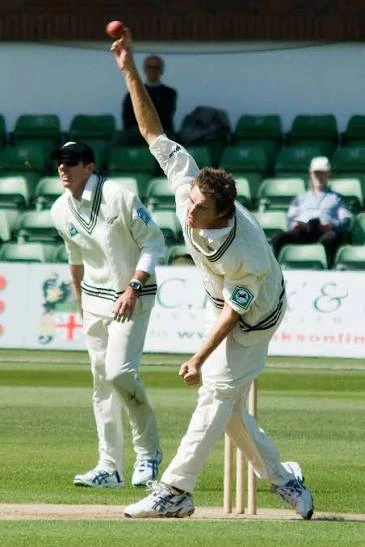
The uniforms are so familiar that commentators simply call them cricket whites. White shirts, cream trousers, traditional sweaters and team caps have become part of how fans recognize the longest format of the game.
But why do cricketers wear white in Test matches when modern sportswear manufacturers can create uniforms in practically any color?
The answer combines history, practical considerations and international rules. Cricket whites grew out of the clothing worn in England during the sport’s early development. Over time, they became a recognized uniform. Light colors can reduce solar heat absorption under some conditions, while the traditional red cricket ball is clearly distinguishable against white clothing. Today, official equipment regulations preserve the appearance of Test cricket.
However, these explanations are not all equally important historically. Cricket whites were common long before colored ODI uniforms existed, so it would be inaccurate to claim that the entire tradition was originally invented to make red balls easier to see.
The story of this uniform is also the story of how one sport developed three distinct international formats—and why its oldest format has retained an unmistakable appearance.
What Are Cricket Whites?
Cricket whites are the traditional light-colored clothes worn in Test cricket and many domestic first-class matches. The outfit usually includes a white or cream playing shirt and trousers. Depending on the weather, players may add a white or cream sweater, and they commonly wear a cap, sunhat or helmet with approved team identifiers.
The term does not mean every accessory has to be pure white. Team caps may use national colors, permitted crests and logos appear on clothing, and some parts of protective equipment follow their own rules. The primary playing uniform, however, retains a predominantly white or cream appearance.
A batter’s pads, gloves and helmet provide protection, while the clothes underneath are designed for running, bending, diving and spending long periods on the field. Modern cricket whites may use light synthetic fabrics and stretch materials rather than the heavy flannel associated with earlier generations.
For newcomers, The News Ink’s complete Cricket Guide explains how Test cricket differs from ODIs and T20s, including innings, overs, dismissals and match results.
Where Did the Tradition of Wearing White Begin?
The origins of cricket whites lie in England, where organized cricket developed during the eighteenth and nineteenth centuries. Early players did not immediately adopt one standardized uniform. They often wore clothing similar to everyday dress, including shirts, breeches, waistcoats, stockings and hats.
Pale shirts and breeches were already familiar clothing choices. During summer play, some cricketers removed outer jackets and waistcoats, leaving a largely white or cream appearance. As clubs became more organized, light clothing became increasingly common.
Historical research from Early Cricket shows that all-white dress became an established standard mainly during the second half of the nineteenth century. Its account also describes much more varied clothing in the eighteenth century, rather than a single rule imposed from the sport’s beginnings.
Neil Robinson, a researcher associated with the Marylebone Cricket Club, similarly explained in an interview reported by CricTracker that cricket’s white uniform evolved gradually as the game became more organized and professional.
In 1877, Australia and England contested what is recognized as the first Test match, in Melbourne. By the late nineteenth century, cricket whites had become closely associated with competitive cricket, though clothing customs still varied by place and level.
As cricket expanded through the British Empire and later developed strong independent national traditions in South Asia, the Caribbean, Africa and elsewhere, the recognizable white kit traveled with it. Cricket whites became international sporting dress long before ODI and T20 uniforms existed.
7 Main Reasons Cricketers Still Wear White in Test Matches
History explains where the uniform came from. Its continued use reflects several practical and cultural considerations that reinforce one another.
1. Cricket Whites Preserve More Than a Century of Tradition
The strongest reason is continuity. Test cricket is the oldest international format, and cricket whites visually connect modern players with earlier generations.
When a player takes the field in white for England, Australia, India, Pakistan or the West Indies, the scene resembles countless famous Test matches from the past. The equipment has evolved, but the recognizable dress remains.
That continuity matters in a game with historic rivalries, traditional venues and a strong appreciation of records. An old photograph of a Test match and a modern broadcast look strikingly different in quality, yet the two share the same basic clothing identity.
Tradition by itself would not justify a rule that made play unsafe or impractical. But the traditional kit has remained usable as fabric technology and match organization changed. There has therefore been less pressure to abandon the familiar appearance.
The ICC’s history of cricket shows how the sport adopted new formats and innovations without replacing every element of its traditional form.
2. Light Clothing Can Help With Sun Exposure and Heat
Test cricket is often played for several hours each day, potentially across five days. Matches in places such as Chennai, Lahore, Perth and Colombo can expose players to intense sunlight and hot conditions.
White and other light-colored surfaces generally reflect more incoming visible sunlight than dark ones. Under otherwise similar conditions, that can reduce the amount of solar energy absorbed by the clothing.
This is a practical reason cricket whites have endured in predominantly daytime cricket. A dark shirt worn in strong sun can absorb more radiation than a comparable light shirt.
However, clothing comfort is more complicated than color alone. Fabric thickness, ventilation, fit, moisture movement, humidity and wind all affect how hot a person feels. White clothing does not guarantee protection from dehydration or heat illness.
Many modern Test uniforms are designed with lightweight fabrics and moisture-management features. Those details are important during a long spell in the field, when a player may spend hours under the sun between breaks.
The sensible conclusion is that white clothing can offer a useful thermal property, but it is not a substitute for hydration, rest and appropriate heat management.
3. Cricket Whites Contrast With the Traditional Red Ball
Most daytime Test matches use a red leather cricket ball. A dark red ball generally stands out against a white shirt or light-colored trousers, which is useful when a delivery passes near a batter or fielder.
Good contrast helps players locate the ball against different backgrounds. The effect is especially noticeable when comparing red-ball cricket with white-ball cricket, where the ball can be harder to pick out against light uniforms.
But visibility involves more than clothing. A batter tracks the ball against the pitch, sky, crowd and specially prepared sightscreen behind the bowler. In conventional red-ball cricket, a light-colored sightscreen helps a batter see the dark ball. White-ball matches typically use dark sightscreens for the reverse contrast.
So the statement that cricket whites make the red ball easier to see is reasonable as one practical benefit. It is not correct to suggest that players track every delivery entirely against other players’ uniforms, or that the color was chosen solely for this reason.
The change to colored clothing and white balls in limited-overs cricket demonstrates how the colors of uniforms, balls and sightscreens must work together.
4. ICC Regulations Require the Traditional Appearance
For international Test cricket, wearing cricket whites is not merely a personal preference. It is part of the equipment framework administered by the International Cricket Council.
The ICC’s clothing and equipment regulations distinguish Test uniforms from limited-overs uniforms. The regulations describe white or cream playing clothing for Tests and control the permitted markings, designs and accessories.
This does not mean a Test player may never wear a colored cap or display a national crest. The regulations accommodate approved identification and particular accessory colors while retaining the recognizable white playing kit.
It is also useful to separate the MCC Laws of Cricket from ICC competition regulations. The Laws provide the general framework of the sport; international playing conditions and equipment rules specify requirements for particular competitions.
Today, the white kit remains the expected appearance because governing bodies have chosen to preserve it, not because players happen to bring old-fashioned clothes from home.
5. White Clothing Gives Test Cricket a Distinct Identity
Test, ODI and T20 cricket share the same basic objective, but they create different viewing experiences. Test cricket rewards patience, tactical changes and the ability to perform over long periods. A T20 match concentrates the contest into approximately three hours of play.
Cricket whites offer an immediate visual signal that viewers are watching the traditional longer format. The red ball, multiple-day structure and relatively conservative clothing create a recognizable identity.
The contrast becomes obvious when the same player moves between formats. A batter may wear a bright national shirt in a T20 international one week and return to traditional white clothing for a Test series the next.
The appearance also helps distinguish the World Test Championship from limited-overs World Cups. Championship Test matches retain ordinary Test clothing even though they contribute to an organized international title race.
Uniform color does not make a format inherently better or more demanding in every respect. It simply helps preserve a separate identity within a sport that now offers very different forms of competition.
6. Cricket Whites Create a Shared Look Without Erasing Team Identity
In many international sports, teams rely on contrasting shirt colors. Test cricket takes a different approach: both sides wear white or cream, while their badges, caps, sweaters and other approved details reveal their identity.
This gives Test cricket a visually consistent style across countries. A match between India and England can look traditional even though the teams have different histories, emblems and playing styles.
Historically, cricket whites also became associated with formal club dress and the social customs of nineteenth-century English cricket. That background is part of the game’s history, although it should not be romanticized as proof that all early cricket was socially inclusive or universally played under the same conditions.
The shared appearance is now a sporting convention rather than a claim that players belong to the same social class. They are worn by elite cricketers from many countries and backgrounds.
The News Ink’s coverage of the India–Pakistan cricket rivalry shows how two countries with distinctive national identities have a Test-match history connected by a familiar style of cricket dress.
7. Modern Cricket Whites Preserve the Look While Improving Comfort
Older cricket clothing was often made with heavier cotton or wool flannel. Traditional sweaters could be warm and bulky, and formal collars were not always ideal for intensive athletic movement.
Today’s cricket whites can be lighter, more flexible and better suited to physical activity. Manufacturers use modern weaving, stretch fabrics and designs intended to help players bowl, run and field comfortably.
The visual tradition therefore does not require keeping outdated materials. Professional cricketers can wear technically developed clothing while maintaining the white-and-cream appearance expected in Tests.
This balance is one reason the traditional outfit remains practical. Teams can update performance features behind the scenes without changing the distinctive look that fans recognize.
Ultimately, the traditional appearance survives because tradition and usefulness have continued to support each other.
Why Do ODI and T20 Players Wear Colored Uniforms Instead?
For much of cricket history, even one-day international players wore white. The first men’s ODI was played in Melbourne in January 1971, and the inaugural men’s Cricket World Cup in 1975 featured players in cricket whites using red balls.
That began changing as limited-overs cricket developed into a major television spectacle.
Australian media entrepreneur Kerry Packer’s World Series Cricket introduced a more colorful commercial presentation in the late 1970s, with floodlit matches, white balls and colored clothing.
The ICC’s retrospective Javed Miandad: The Evolution of ODIs describes how the early World Cups retained white uniforms and how World Series Cricket helped change the presentation of the shorter game.
Colored clothing made teams visually distinct and supported new broadcasting, sponsorship and merchandising opportunities. The white ball became closely associated with day-night limited-overs fixtures because it could be easier to see under artificial lights and against darker uniforms and sightscreens.
By the 1992 Cricket World Cup in Australia and New Zealand, colored uniforms and white balls made their debut at that tournament. The ICC’s 1992 kit retrospective confirms that this was the first men’s World Cup to use colored team clothing.
The crucial distinction is chronological: cricket whites were not abandoned everywhere at once. The shorter formats changed their presentation, while Test cricket kept the older identity.
| Feature | Test matches | ODIs | T20 internationals |
|---|---|---|---|
| Traditional clothing | White or cream | Colored team uniforms | Colored team uniforms |
| Usual ball | Red in daytime Tests; pink in day-night Tests and permitted daytime trials | White | White |
| Typical length | Up to five days in men’s Tests | One day, 50 overs per side | Roughly three hours, 20 overs per side |
| Sightscreen | Usually light for red balls; arrangements differ for pink balls | Dark for white balls | Dark for white balls |
| Visual identity | Heritage and continuity | National colors and broadcasting | National/franchise-style colors and broadcasting |
This table describes common international arrangements. Specific competitions and playing conditions can differ.
Our article on why T20 cricket scores are getting higher explains how modern limited-overs cricket has evolved in other ways, from batting tactics to changes in equipment and match strategy.
Why Is a Red Ball Used in Daytime Test Cricket?
The red leather ball is closely associated with cricket whites because both were part of traditional first-class cricket long before the shorter formats developed their modern appearance.
A cricket ball has a hard core surrounded by leather, with a prominent stitched seam. The color is part of its outer finish, not a different fundamental set of cricket rules.
Red balls are commonly used for daytime Tests, and white clothing remains the complementary traditional uniform. The red ball’s appearance can change as its surface wears, which is one reason players and commentators discuss shine, swing and ball condition during long innings.
In Test cricket, the ball may be used over many overs, and the fielding captain can normally request a new ball once the required number of overs has been completed, under the applicable playing conditions. Its ability to remain usable for long periods matters more than simply its color.
The pairing of red balls and cricket whites is familiar, but ball visibility is not determined by one universal rule about color. Weather, artificial lighting, sightscreens and the color of backgrounds also matter.
Why Do Cricketers Still Wear White in Pink-Ball Tests?
One of the most interesting exceptions to the traditional red-ball picture is the day-night Test. These matches use a pink ball rather than the usual red ball, but the players still wear cricket whites.
The first men’s day-night Test began on November 27, 2015, at Adelaide Oval, when Australia played New Zealand. Australia won by three wickets.
The ICC’s history of cricket innovations records the fixture as the first day-night pink-ball Test.
Why pink? A conventional red ball can become more difficult to see under some artificial lighting and twilight conditions. Ball manufacturers and cricket authorities experimented with alternatives, leading to the use of a pink ball designed to remain visible across changing light.
Rather than replacing cricket whites with colorful uniforms, administrators adapted the ball and playing conditions to preserve Test cricket’s established appearance.
An Important 2026 Rule Change: Pink Balls in Daytime Tests
The ICC announced another development on October 1, 2026. As a trial, pink balls can also be used in daytime Tests if both sides mutually agree before the match begins. The aim is to reduce play lost to poor light.
Under the ICC’s October 2026 announcement, an agreed pink ball must be used throughout the match; teams cannot switch from red to pink after play has started.
This does not eliminate the white uniform. It demonstrates that the ball’s color can change under agreed circumstances while the Test uniform remains recognizably traditional.
Is Wearing White Compulsory in Test Cricket?
Yes, in ordinary international Test matches, the ICC equipment regulations require the white or cream playing kit. Players cannot simply choose a bright colored ODI jersey for a Test because they prefer its appearance.
The ICC publishes its formal playing conditions and equipment regulations, including updates effective for matches beginning from October 2026. These should be consulted whenever the precise permitted design, logo size or accessory requirement matters.
Cricket whites do allow some regulated variation. A national badge, team cap, approved logos or traditional sweater trim does not turn the kit into a limited-overs uniform.
It would also be wrong to say the MCC Laws contain a universal rule requiring white clothing for every cricket match ever played. Domestic leagues, recreational cricket and international competitions can have different clothing requirements.
For official Tests, however, white uniforms remain part of the standardized appearance.
Why Are Some Test Uniforms Cream Instead of Bright White?
The phrase cricket whites is often used even when the clothing is slightly off-white or cream. That is normal. The ICC permits white and cream playing clothing under its Test equipment framework.
Cream tones may reflect textile choices, manufacturing finishes or a deliberate classic appearance. Different shirts and trousers also vary in brightness under stadium lighting and television cameras.
Historically, naturally pale cottons, wool and flannel did not always produce the same bright shade as modern synthetic fabrics. This helped establish a tradition in which cream is visually associated with Test cricket rather than treated as an entirely different uniform color.
The essential point is that cricket whites describe a category of light playing clothing, not a requirement that every garment exactly match one shade on a color chart.
Do White Clothes Really Keep Cricketers Cooler?
White clothing tends to reflect more sunlight than dark clothing when other characteristics are comparable. That principle is well established in basic optics and energy absorption.
However, claims that cricket whites automatically prevent heat exhaustion or dramatically lower core body temperature go too far. The human body exchanges heat through several processes, including evaporation of sweat, convection and radiation.
Loose, breathable fabric can help moisture evaporate. Heavier or poorly ventilated white clothing may be less comfortable than a well-designed outfit of another color.
For players spending long periods in the field, hydration, scheduled breaks, acclimatization, weather conditions and suitable fabric design all matter. Cricket whites may help with solar reflection, but color is only one part of heat management.
That distinction is especially important because cricket has expanded far beyond the milder conditions of some historic English summer matches.
Why Do Both Teams Wear the Same Color in Test Cricket?
In football, one team may change its uniform to avoid clashing with the other. Test cricket is different because individual players are easier to distinguish through batting positions, fielding arrangements, caps, protective equipment and team identifiers.
At any moment, two batters from one side stand at the crease while most members of the other team field. Their roles are already visually clear. Approved badges and headwear provide further identification.
That makes a common white uniform less confusing than it might be in a sport where players from both teams constantly move together in close contact.
Cricket whites are therefore compatible with the structure of the game, even though both teams share a similar overall color.
Has Modern Technology Changed Cricket Whites?
Very much so. The appearance of traditional Test clothing has remained recognizable, but the garment itself has evolved with professional sport.
Modern shirt and trouser designs can include lighter materials, stretch panels and features intended to reduce discomfort during long spells of bowling or fielding. Equipment suppliers can tailor sizes and cuts for different athletes.
Test cricket has also changed around the uniform. Video replays, ball-tracking and the Decision Review System have introduced new layers of technology to umpiring. Our DRS in Cricket guide explains how those systems work in modern international matches.
The continued presence of cricket whites is not evidence that Test cricket refuses innovation. It is an example of a sport retaining a recognizable visual tradition while changing many practical aspects of play.
Cricket Whites: Common Beliefs vs Facts
| Common belief | What is more accurate |
|---|---|
| Cricketers have always worn pure white since cricket began | Clothing varied; the white uniform developed over time |
| Whites exist only to make the red ball visible | History, heat, regulations and tradition also matter |
| All Test equipment must be entirely white | Some caps, markings and accessories have permitted exceptions |
| Day-night Tests use colored shirts | Players still wear cricket whites with the pink ball |
| Pink balls are never allowed in daytime Tests | October 2026 ICC rules allow agreed daytime pink-ball trials |
| White clothing completely prevents heat stress | Fabric, hydration, ventilation and weather still matter |
| ODIs have always used colored kits | Early ODIs and World Cups used whites; the 1992 World Cup introduced colored kits |
| Test cricket cannot modernize if it keeps white clothing | Materials, rules, technology and ball choices have changed |
Frequently Asked Questions About Cricket Whites
Why do cricketers wear white in Test matches?
Cricket whites developed as the traditional uniform during the sport’s history in England. They remain in use because they reflect some sunlight, provide useful contrast with the red ball, distinguish Test cricket from shorter formats and are required by ICC equipment regulations.
Do cricketers have to wear pure white?
Not exactly. White and cream are part of the permitted Test match appearance. Approved team caps, crests, logos and some accessories can include other colors under the applicable regulations.
Why is the red ball used with cricket whites?
Red balls and light clothing evolved together in traditional first-class cricket. Their contrast can help visibility, although players also depend on pitches, sight screens and other backgrounds to track the ball.
Why do ODI and T20 players wear colored jerseys?
Colored clothing makes teams visually distinctive and supports modern limited-overs presentation. The change developed alongside white balls, floodlit cricket and television-oriented innovations in the late 1970s and later decades.
What did players wear in the first ODI World Cup?
The 1975 men’s Cricket World Cup was played with white clothing and red balls. The men’s World Cup first used colored uniforms and white balls in 1992.
Do players wear cricket whites in day-night Tests?
Yes. Day-night Tests generally use a pink ball for visibility under changing light, while the playing clothes remain white or cream.
Can a daytime Test use a pink ball?
As of October 2026, the ICC allows a trial in which both sides may agree before a Test to use a pink ball during the daytime. The decision applies for the entire match and cannot be changed after play begins.
Why do both Test teams wear the same color?
Cricket’s roles and fielding positions make the teams distinguishable without opposite shirt colors. Caps, emblems and other approved identifiers also show which country a player represents.
Why are some cricket whites cream?
The term covers both white and cream clothing. Historical textiles, manufacturing choices and modern kit designs can create slightly different light shades that remain within the traditional Test appearance.
Will Test cricket ever adopt colored uniforms?
No rule of nature prevents it, but the current international regulations and the sport’s strong attachment to tradition favor cricket whites. Future changes would require decisions by the relevant governing bodies; there is no confirmed general plan to replace Test whites.
Why Cricketers Wear White: The Bottom Line
Cricket whites are not a random fashion choice or a rule invented for television. Their history stretches back to the early development of organized cricket in England, when light shirts and trousers gradually became the preferred playing clothes.
Over time, that habit developed into an internationally recognizable uniform. The traditional red ball contrasts with white clothing, light fabrics can reduce solar heat absorption in suitable conditions, and ICC regulations now preserve the appearance of Test cricket.
The contrast with shorter formats helps explain why cricket whites remain special. ODIs and T20s embraced colored uniforms, white balls and new styles of broadcast presentation, while Tests maintained a link with the sport’s longer history.
Even the introduction of pink-ball day-night matches—and the ICC’s 2026 daytime pink-ball trial—has not displaced the white uniform. Instead, officials have adjusted other aspects of the game while keeping its traditional clothing.
Cricketers wear white in Test matches because history, practicality and modern regulations reinforce one another. Cricket whites connect today’s players with earlier generations while remaining functional in a sport that continues to evolve.
For more research-driven explainers, sports coverage and global stories, follow The News Ink on X, Instagram, Threads, Medium, Substack, Bluesky, Pinterest, TikTok, Quora and Mastodon.