Michigan Synagogue Attack: What the FBI Found After Temple Israel Was Targeted
The Michigan synagogue attack that sent a pickup truck through the doors of Temple Israel while around 140 children were inside was not an unexplained crash or spontaneous act of violence. A later FBI investigation concluded that the March 12, 2026 assault was a deliberate act of terrorism inspired by Hezbollah ideology and intended to cause widespread harm to the Jewish community.
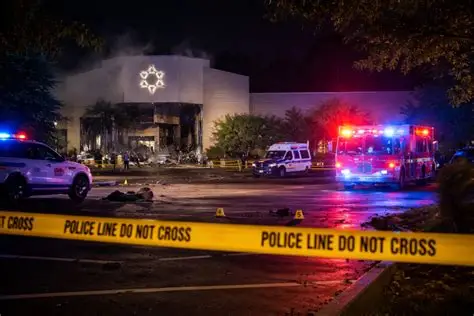
Ayman Mohamad Ghazali, a 41-year-old naturalized US citizen born in Lebanon, drove his vehicle into the Michigan synagogue in West Bloomfield Township, struck a security guard and exchanged gunfire with Temple Israel security personnel. The truck then caught fire, filling part of the building with heavy smoke.
Ghazali was the only person killed. Investigators later established that he died from a self-inflicted gunshot wound during the confrontation.
No children, teachers or worshippers were killed. The injured security officer survived, while dozens of first responders were treated for smoke inhalation.
Most importantly, the final investigation significantly changed what was known during the first hours after the Michigan synagogue attack. The FBI eventually concluded that Ghazali had deliberately selected Temple Israel, had prepared for an attack and had expressed violent intentions before arriving at the building.
What Happened at Temple Israel on March 12
Temple Israel is a major Reform Jewish congregation in West Bloomfield Township, northwest of Detroit.
Shortly after midday on March 12, Ghazali drove his pickup into an entrance of the complex and continued along an interior hallway. A member of the synagogue’s security team was struck by the vehicle and briefly knocked unconscious.
Security personnel confronted the attacker almost immediately.
Gunfire was exchanged while staff elsewhere in the Michigan synagogue followed emergency procedures designed to protect children and other people inside the complex.
The FBI later established that the vehicle had travelled roughly 200 feet into the building before becoming trapped in the hallway. Fireworks and gasoline inside the truck contributed to a major fire and heavy smoke.
The fire caused significant damage, but the attack failed to produce the mass casualties investigators say Ghazali intended.
Michigan Synagogue Attack: Key Facts
| Detail | Confirmed finding |
|---|---|
| Date | March 12, 2026 |
| Location | Temple Israel, West Bloomfield Township, Michigan |
| Attacker | Ayman Mohamad Ghazali, 41 |
| Attack methods | Vehicle ramming, firearm and incendiary materials |
| Attacker’s death | Self-inflicted gunshot wound |
| Other fatalities | None |
| Children inside | Around 140 |
| Security officer | Struck by vehicle and injured |
| First responders | Around 30 taken for smoke-inhalation treatment |
| FBI conclusion | Hezbollah-inspired act of terrorism |
| Direct Hezbollah membership | Not established |
| Co-conspirators | FBI found no evidence of any |
The distinction between an attack inspired by Hezbollah and one directly ordered by the organisation is important. The FBI said investigators found evidence that Ghazali consumed pro-Hezbollah material and was motivated by its militant ideology, but they did not establish that he was a Hezbollah member or that anyone directed him to attack the Michigan synagogue.
FBI Later Classified the Attack as Terrorism
Early reporting described the incident as a targeted act of violence against the Jewish community because investigators had not yet established a complete motive.
That changed on March 30.
After reviewing digital evidence, conducting more than 100 interviews and examining the physical evidence, FBI Detroit Special Agent in Charge Jennifer Runyan announced that investigators assessed the Michigan synagogue attack as a “Hizballah-inspired act of terrorism.”
The FBI said evidence showed that Ghazali had increasingly consumed material connected with Hezbollah and Iranian-linked militant narratives before the attack.
Investigators also recovered searches relating to Jewish institutions and Temple Israel.
Most significantly, the FBI said Ghazali communicated his intention to carry out a mass-casualty attack shortly before driving into the building.
The evidence convinced investigators that Temple Israel was deliberately selected because it was a prominent Jewish institution.
Reuters reported that federal prosecutors believed the evidence would have supported serious terrorism charges had Ghazali survived.
That final finding is substantially stronger than the uncertainty contained in initial reports about the Michigan synagogue incident.
No Evidence of a Hezbollah Order or Wider Cell
The terrorism classification requires careful interpretation.
The FBI said the attack was inspired by Hezbollah. It did not announce that Hezbollah planned the operation or communicated operational instructions to Ghazali.
Investigators found no evidence of co-conspirators.
They also said Ghazali had not previously been the subject of an FBI investigation and was not on a terrorism watchlist before the Michigan synagogue attack.
That finding is significant because it demonstrates the difficulty authorities face when an individual moves quickly from consuming extremist material to preparing violence.
The FBI said Ghazali’s serious planning began only days before the attack, although his online activity had shown interest in militant content for longer.
This appears to have been an independently executed attack inspired by extremist ideology rather than an operation organised by a broader network.
Family Deaths in Lebanon Formed Part of the Background
Reports immediately after the attack revealed that members of Ghazali’s family had recently been killed in Lebanon during Israeli military action.
His relatives included close family members whose deaths reportedly affected him deeply.
The FBI’s later investigation found that he repeatedly posted about deceased family members while also consuming and distributing Hezbollah-related material before the Michigan synagogue attack.
Those family losses help explain the personal context in which his radicalisation accelerated. They do not justify targeting Jewish civilians in Michigan.
That distinction matters particularly during periods of war.
Anger towards the actions of a government cannot be transferred to civilians who share a religion, ethnicity or perceived political association.
The News Ink has documented the wider human cost of the regional conflict in its reporting on why the US and Israel attacked Iran and on life in Tehran during the strikes.
The Michigan synagogue attack demonstrated another danger: conflicts thousands of miles away can contribute to radicalisation and retaliatory violence against communities with no role in military decision-making.
The Security Team’s Response Was Crucial
One of the clearest findings from the Michigan synagogue attack is how much preparation mattered.
Temple Israel already maintained professional security because Jewish institutions in the United States have faced elevated threats for years.
When Ghazali drove into the building, security personnel responded within seconds.
One guard was struck by the vehicle. Other members of the security team confronted the attacker and exchanged gunfire with him, helping prevent him from moving freely through the Michigan synagogue.
Oakland County Sheriff Michael Bouchard repeatedly praised their actions, saying the response stopped a far worse outcome.
The importance of that preparation became even clearer when it emerged that Temple Israel staff and clergy had participated in an FBI active-shooter preparedness course only weeks before the attack.
FBI Detroit conducted the training in late January. Preschool staff had also participated in separate emergency preparation.
Officials and synagogue leaders later said that training influenced how people reacted when the emergency became real.
Around 140 Children Were Inside
Perhaps the most disturbing fact about the Michigan synagogue attack was the presence of children.
Temple Israel operates an early childhood centre, and approximately 140 students were in the complex when the attack began.
Teachers moved quickly to protect them.
Some parts of the Michigan synagogue went into lockdown while staff followed emergency procedures. Children were later moved away from danger and reunited with their families.
Every child and staff member was accounted for.
None was physically injured.
The outcome was extraordinary considering investigators later said the attacker intended to cause substantial loss of life.
The survival of everyone in the preschool was not simply good fortune. Physical security, emergency preparation and quick decisions by staff all contributed.
Fire Created a Second Emergency
Once the vehicle was inside Temple Israel, fire and smoke became a major threat.
Initial reports did not establish exactly how the blaze started. The FBI’s later investigation provided a clearer picture.
Investigators said the truck contained a significant quantity of gasoline and fireworks and that Ghazali appeared to ignite the materials during the confrontation.
By shortly after the attack began, the hallway was filled with smoke and the vehicle was burning.
The consequences extended beyond the original confrontation.
Approximately 30 law-enforcement officers were taken to hospital for smoke inhalation after entering the building during the emergency response.
Temple Israel later released images showing severe damage to corridors and parts of the complex.
Despite that destruction, the absence of additional deaths became the defining outcome of the Michigan synagogue attack.
Why Early Reports About Explosives Needed Updating
Initial breaking-news reports referred broadly to explosives inside the truck.
The final FBI investigation provided more precision.
Investigators said they did not find additional improvised explosive devices. The vehicle contained fireworks and gasoline intended to intensify the fire.
That distinction is important in a responsible rewrite.
Calling the truck a conventional bomb without qualification would overstate the final evidence.
The FBI did conclude that Ghazali had deliberately prepared the vehicle as part of his attack, but the agency specifically clarified that investigators had not discovered separate improvised explosive devices.
Breaking-news reports often change as bomb technicians, forensic teams and investigators obtain better evidence. Updating those details prevents early assumptions from becoming permanent misinformation.
The Attack Had Been Planned
Another major change from the first-day narrative is the amount of evidence showing preparation.
The FBI reconstructed Ghazali’s activity in the days before the Michigan synagogue attack through digital records, purchases, social-media activity and communications.
Investigators said he researched Jewish institutions, looked at information about Temple Israel and obtained a firearm shortly before March 12.
The FBI also recovered messages and videos showing that he intended to attack people inside the institution.
For safety reasons, the precise preparation sequence is less important than the conclusion it supports: this was not an accidental vehicle crash followed by an improvised confrontation.
The evidence indicated purposeful planning and a deliberate choice of target.
Why Temple Israel Was Targeted
According to the FBI, Ghazali viewed Temple Israel as a major gathering place for Jewish and Israeli-associated community life in Michigan.
That perception appears to have driven his choice of target.
Temple Israel was founded in Detroit in 1941 and later moved to West Bloomfield. It is one of the largest Reform congregations in the United States and serves thousands of families.
Reuters described the congregation as having more than 12,000 members.
Its prominence made the Michigan synagogue a symbol as well as a physical location.
The FBI found evidence that Ghazali’s language blurred the distinction between Israelis, Jews and the American congregation he targeted.
That pattern is common in antisemitic violence: people are attacked because they are assumed to represent the policies of a foreign government.
Rising Antisemitism Had Already Changed Security
Temple Israel’s security precautions did not begin after March 12.
Jewish institutions throughout the United States had already increased security because of threats, vandalism and violence.
The Anti-Defamation League recorded 6,274 antisemitic incidents across the United States in 2025. That was lower than the record level seen in 2024 but remained the third-highest annual total since the organisation began tracking incidents in 1979.
More concerningly, the ADL said physical antisemitic assaults reached a record level in 2025.
The FBI’s newest national crime statistics also show that hate crime remains a substantial law-enforcement issue. Agencies reported more than 10,000 hate-crime incidents nationally for 2025.
Those figures provide important context for the Michigan synagogue attack without suggesting that every antisemitic incident is connected to international conflict or terrorism.
Different offenders have different ideologies and motives.
What they share is the decision to target people because of identity.
The Israel-Iran Conflict Increased Security Anxiety
The Michigan synagogue attack occurred during heightened tension following US and Israeli military action against Iran and an expanding regional conflict.
American law-enforcement agencies were already watching for possible retaliatory violence.
Jewish and Muslim institutions both increased security amid concerns that communities in the United States could be blamed for events overseas.
The News Ink previously examined the human response to the conflict in Mixed Emotions in Iran.
The Temple Israel case showed why domestic authorities worry about overseas conflicts creating security consequences at home.
The FBI ultimately connected Ghazali’s ideology to Hezbollah and his recent family losses to the period preceding the attack.
It did not find evidence of a wider conspiracy.
That distinction prevents a lone attacker from being inaccurately presented as proof of a coordinated campaign against every Jewish institution.
Trump, Whitmer and Officials Condemned the Attack
Political leaders across parties condemned what happened.
President Donald Trump said he had been fully briefed and expressed support for Michigan’s Jewish community.
Michigan Governor Gretchen Whitmer said Jewish residents should be able to practise their faith in peace.
Michigan Attorney General Dana Nessel similarly condemned antisemitism and called for solidarity with affected communities.
The immediate response reflected the seriousness of an armed attack on a house of worship containing children.
Once the FBI classified the Michigan synagogue attack as terrorism, the case also became part of the broader debate over domestic security, violent extremism and how authorities identify individuals moving towards violence.
Security Training Did Not Mean Authorities Knew an Attack Was Coming
The fact that the FBI had conducted active-shooter training at Temple Israel weeks earlier prompted speculation online.
There is no evidence that the training occurred because the FBI knew Ghazali intended to attack the synagogue.
The FBI regularly provides preparedness training to schools, workplaces, houses of worship and other institutions.
The bureau later stated that Ghazali had not been the subject of a previous FBI investigation and that it had no evidence he had conducted earlier physical surveillance at the Michigan synagogue.
The timing of the training was fortunate, not evidence of foreknowledge.
This is an important example of why rapidly spreading speculation after breaking news should be treated cautiously.
What Houses of Worship Can Learn From Temple Israel
The strongest lesson from the Michigan synagogue attack is not that every religious building should become a fortress.
It is that preparation can save lives when a rare but extreme incident occurs.
Temple Israel had several layers of protection:
- trained security staff;
- established emergency procedures;
- recent preparedness exercises;
- staff who understood lockdown and evacuation responsibilities;
- communication systems for families;
- relationships with local and federal law enforcement.
Those measures did not prevent the vehicle from entering the Michigan synagogue.
They limited what happened afterward.
Security planning must also remain proportionate. Houses of worship are community spaces, not military installations. Excessive barriers can undermine accessibility and make worshippers feel constantly under threat.
The challenge is creating systems that allow people to gather openly while ensuring staff know what to do during an emergency.
The Human Cost Continued After the Fire
No member of the congregation was killed, but the absence of fatalities should not minimise the impact.
Children experienced an emergency evacuation from their preschool.
Parents waited to learn whether their sons and daughters were safe.
Staff hid from gunfire and smoke.
Security personnel confronted an armed attacker.
First responders entered a burning building.
Temple Israel then faced extensive physical damage and the psychological challenge of returning to a place that had been deliberately targeted.
Executive Director Jason Plotkin later described how training and relationships within the community helped people respond.
The congregation held religious services away from the damaged site shortly afterward, emphasising continuity rather than allowing the attacker to end communal life.
Why Accurate Language Matters
Several phrases used in the earliest coverage required correction once investigators knew more.
The attacker was initially described simply as a suspect who died during a confrontation. The FBI later determined that he shot himself.
The fire initially had an unknown cause. Investigators later connected it to incendiary materials in the vehicle.
The motive was initially unclear. The FBI ultimately classified the incident as Hezbollah-inspired terrorism.
Reports of explosives required clarification because investigators found fireworks and gasoline but no additional improvised explosive devices.
And while the Michigan synagogue attack was inspired by Hezbollah ideology, the FBI did not establish that Ghazali was a Hezbollah member or acted under direct orders.
These distinctions are not minor.
Responsible crime reporting should change as evidence improves.
The Bottom Line
The Michigan synagogue attack at Temple Israel was far more serious than the first hours of reporting could establish.
On March 12, 2026, Ayman Mohamad Ghazali drove a pickup truck into Temple Israel in West Bloomfield Township while approximately 140 children were attending its early childhood centre.
A security officer was struck and injured. Other security personnel confronted Ghazali as gunfire was exchanged. The vehicle caught fire, filling the building with smoke and causing extensive damage.
Ghazali died from a self-inflicted gunshot wound.
No one else was killed.
The FBI’s final investigation concluded that the Michigan synagogue attack was a Hezbollah-inspired act of terrorism deliberately targeting the Jewish community. Investigators found evidence of extremist material, deliberate preparation and statements showing an intention to cause mass casualties.
At the same time, the FBI found no evidence that Ghazali had accomplices, no proof that he was a member of Hezbollah and no indication that the organisation directly ordered the attack.
The Michigan synagogue also demonstrated the value of preparation. Temple Israel’s professional security team, recent FBI preparedness training and rapid response by teachers helped protect around 140 children and everyone else inside.
The attack damaged a major Jewish institution and intensified existing concerns about antisemitic violence in the United States.
Yet the result was not what the attacker intended.
The Michigan synagogue community survived, the children went home to their families and the congregation continued gathering after the attack.
For more reporting on the conflict and its wider consequences, follow The News Ink on X and read our analysis of the US-Israel strikes on Iran.