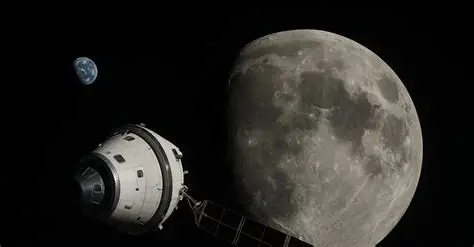
Artemis II Completes Historic 10-Day Moon Mission and Returns Safely
Artemis II is no longer an upcoming launch. NASA’s first crewed Artemis flight successfully lifted off from Kennedy Space Center on April 1, 2026, carried four astronauts around the Moon, and splashed down safely in the Pacific Ocean on April 10. The nearly 10-day mission marked humanity’s first crewed journey to the vicinity of the Moon since Apollo 17 in 1972 and became a major test of the Space Launch System rocket, Orion spacecraft, deep-space life-support systems, navigation, communications and crew operations.
The mission also went farther than the original pre-launch story could have known. NASA later confirmed that the crew travelled 252,756 miles from Earth at the mission’s farthest point and covered 695,081 miles in total. During the lunar flyby, Orion passed about 4,067 miles above the Moon’s surface. Those numbers turned Artemis II from a long-awaited test flight into a record-setting human spaceflight.
Artemis II at a Glance
| Detail | Confirmed outcome |
|---|---|
| Launch date | April 1, 2026 |
| Launch site | Launch Pad 39B, Kennedy Space Center, Florida |
| Rocket | Space Launch System (SLS) |
| Spacecraft | Orion, named Integrity by the crew |
| Crew | Reid Wiseman, Victor Glover, Christina Koch and Jeremy Hansen |
| Mission duration | Nearly 10 days |
| Lunar flyby | April 6, 2026 |
| Closest approach to Moon | About 4,067 miles |
| Farthest distance from Earth | 252,756 miles |
| Total distance flown | 695,081 miles |
| Splashdown | April 10, 2026, Pacific Ocean off California |
NASA launched Artemis II at 6:35 p.m. EDT with the SLS producing 8.8 million pounds of thrust at liftoff. Orion reached orbit accurately, beginning the first crewed flight of both the SLS and Orion systems. The launch itself was significant, but the real purpose of the mission was to determine whether the spacecraft, its support systems and the teams behind them could protect and support astronauts in deep space. NASA’s official launch report provides the detailed launch sequence.
The Pre-Launch Delay Was More Complicated Than a “Helium Leak”
The earlier version of this story described a helium leak as the problem that delayed the mission. NASA’s later technical updates allow that description to be corrected.
A wet dress rehearsal in early February encountered a liquid hydrogen leak at the tail service mast umbilical and ended before completing all planned countdown objectives. NASA then carried out additional testing and successfully completed a later wet dress rehearsal on February 21. After that successful test, engineers found a different problem: helium was not flowing properly to the SLS upper stage while teams were reconfiguring the vehicle.
The rocket returned to the Vehicle Assembly Building on February 25. Engineers determined that a seal in a quick-disconnect assembly was obstructing the helium pathway. Helium is used to maintain the proper environment and pressurise the upper stage for flight. NASA repaired that issue, refreshed several batteries, replaced another seal on the core-stage liquid-oxygen feed line and retested related hardware. The agency’s helium-flow repair update explains what engineers found.
That distinction matters. The issue that forced the rollback was not simply a helium leak. It was an interruption in helium flow caused by an obstructing seal, while an earlier wet dress rehearsal had experienced a separate liquid-hydrogen leak. Artemis II eventually launched only after engineers had worked through both types of problems and completed the required reviews.
Why NASA Did Not Need Another Full Wet Dress Rehearsal
A wet dress rehearsal is one of the most important tests before a major rocket launch. Teams load cryogenic propellants, practise countdown procedures and simulate conditions expected on launch day without actually igniting the engines.
NASA had already completed a successful rehearsal on February 21 before the helium-flow problem was discovered. Because the later work in the Vehicle Assembly Building focused on repairing and retesting the affected systems, mission managers did not require another full wet dress rehearsal before flight.
The rocket was prepared for rollout again in March. NASA initially targeted March 19, but high winds delayed the actual start of the move. Artemis II began rolling towards Launch Pad 39B at 12:20 a.m. EDT on March 20, travelling roughly four miles on the crawler-transporter. The mission still remained on track for the opening of the April launch window.
That was one of several moments when the schedule remained flexible rather than fixed. NASA repeatedly emphasised that April 1 was the earliest available opportunity, not a guarantee. The approach reflected the reality of crewed exploration: the calendar matters, but hardware readiness matters more.
The Four Astronauts Who Flew Around the Moon
Artemis II carried NASA astronauts Reid Wiseman, Victor Glover and Christina Koch, along with Canadian Space Agency astronaut Jeremy Hansen.
Wiseman served as commander and Glover as pilot. Koch and Hansen flew as mission specialists. Together, they became the first crew to fly aboard SLS and the first people to fly Orion in deep space.
The crew also represented several historic firsts. Koch became the first woman to travel on a lunar mission, Glover the first Black astronaut to do so, and Hansen the first Canadian to travel to the Moon’s vicinity. Hansen’s place on the crew reflected Canada’s role in NASA’s broader Artemis partnership.
These milestones were important, but the astronauts’ operational role mattered just as much. Artemis II was not a sightseeing flight around the Moon. The crew spent the mission testing systems, evaluating the spacecraft and collecting information that NASA intends to use for later missions.
What the Crew Tested in Deep Space
The first day focused heavily on systems checks while Orion remained in high Earth orbit. The astronauts and Mission Control evaluated spacecraft health before committing to the journey towards the Moon.
On April 2, Orion’s European-built service module conducted the translunar injection burn, an approximately six-minute engine firing that sent the crew out of Earth orbit and towards the Moon. It was the first time humans had departed Earth orbit for the Moon since the Apollo era.
During Artemis II, the astronauts evaluated Orion’s environmental control and life-support systems, spacesuits, emergency procedures and crew equipment. They also conducted manual piloting demonstrations designed to show how Orion responds when astronauts directly control the vehicle.
Those tests are important because later missions will require more complicated operations. Future crews will need to rendezvous and dock with other spacecraft, including commercially developed lunar landers. Data from the piloting exercises will help NASA refine how Orion handles those tasks.
Mission Control in Houston remained central throughout the flight. The News Ink has previously explained how NASA mission control supports lunar missions, monitors spacecraft systems and coordinates decisions around the clock.
The Lunar Flyby Became a Record-Setting Moment
The most dramatic stage came on April 6. Artemis II swung around the Moon, giving the crew views of terrain no human had seen directly for more than half a century.
NASA reported that Orion came within about 4,067 miles of the lunar surface. During the mission, the spacecraft reached a farthest distance of 252,756 miles from Earth, exceeding the human-spaceflight distance record associated with Apollo 13. NASA first confirmed the crew had passed Apollo 13’s record during the flyby and later updated the final mission distance after the flight.
The crew photographed the Moon extensively, including terrain near the day-night boundary where low-angle sunlight throws long shadows across ridges, craters and slopes. NASA later said the astronauts captured more than 7,000 images, including lunar terrain, Earth views and observations useful to future exploration.
Readers wanting broader context on the Moon and human exploration can explore The News Ink’s space and astronomy guide, which explains the lunar environment, the far side and why modern missions continue to study Earth’s nearest celestial neighbour.
Artemis II also produced unusual observations. The crew reported meteoroid impact flashes on the Moon’s night side, a reminder that the lunar surface is constantly exposed to impacts from small objects moving through space. The News Ink later examined those observations in its report on lunar impact flashes.
Why Artemis II Did Not Land on the Moon
One common misunderstanding is that every Artemis flight is supposed to put astronauts on the lunar surface. Artemis II was never designed to land.
Its job was to test the crewed transportation system in deep space. NASA needed to demonstrate that SLS could launch astronauts, Orion could sustain them beyond low Earth orbit, the spacecraft could perform key burns and navigation tasks, and the heat shield and recovery systems could bring the crew home safely.
That makes Artemis II closer in purpose to a full-system validation mission than a surface expedition. The flight tested the pieces that later crews will depend on when NASA moves towards more complex missions.
The distinction is especially important because NASA’s Artemis architecture changed in 2026. Artemis III is now planned as a crewed demonstration mission in low Earth orbit in 2027, where Orion will test rendezvous and docking operations with one or both commercial human landing systems being developed by SpaceX and Blue Origin. NASA’s updated Artemis III plan explains the revised mission profile.
The first planned Artemis lunar landing is now Artemis IV, targeted for early 2028. NASA says two astronauts are expected to descend to the lunar South Pole region while other crew members remain in lunar orbit. NASA’s Artemis IV overview describes the planned surface mission.
The Heat Shield Was One of the Biggest Safety Questions
The long delay before Artemis II was not caused only by launch-pad preparation. Orion’s heat shield became a major technical concern after the uncrewed Artemis I mission.
During Artemis I’s return in December 2022, the heat shield experienced unexpected cracking and loss of charred material. NASA spent extensive time studying why the ablative material behaved differently from predictions. The agency ultimately retained the heat-shield design for the next crewed flight while modifying the planned re-entry trajectory and conducting additional testing. NASA’s Office of Inspector General had identified the heat-shield behaviour as an important remaining risk before the crewed flight.
That background is essential because atmospheric re-entry was one of the mission’s highest-risk phases. Orion returned to Earth at roughly 25,000 miles per hour, exposing the spacecraft to extreme heating before parachutes slowed it for splashdown.
On April 10, the system performed as intended. The safe return did not make earlier concern unnecessary; it showed why NASA had spent years investigating the issue and adapting the flight plan before placing astronauts on board.
Splashdown Completed the Test
Artemis II splashed down at 5:07 p.m. PDT on April 10 in the Pacific Ocean off the coast of California. NASA and U.S. military recovery teams reached the spacecraft, helped the astronauts out in open water and transported them by helicopter to the USS John P. Murtha for initial medical checks.
The successful splashdown completed the most important requirement of the mission: returning four astronauts safely after a deep-space journey.
The News Ink later covered the historic splashdown and recovery in detail, including Orion’s descent, parachute sequence and recovery operations. That follow-up provides the natural ending that the original pre-launch article could not include.
The crew then returned to NASA’s Johnson Space Center in Houston for medical evaluations, reconditioning and science debriefs. Engineers also began analysing data from Orion and SLS to identify lessons for the next flights.
What Artemis II Proved—and What It Did Not
The success of Artemis II demonstrated several major capabilities. SLS successfully launched a crew. Orion supported four people through a nearly 10-day deep-space flight. The service module completed key propulsion events. Mission Control supported operations beyond Earth orbit. Manual piloting tests generated data for future docking missions. The spacecraft also completed high-speed re-entry and recovery.
But one successful mission does not eliminate every risk in the Artemis programme.
NASA still has to prove new systems that were not part of this flight. Commercial lunar landers must complete development and testing. Docking procedures must be demonstrated. Surface suits, lunar operations, logistics and mission cadence all remain major challenges.
Artemis II reduced uncertainty around the core crew transportation system. It did not complete the entire architecture required to place astronauts on the Moon and sustain repeated missions there.
That is why the next steps matter as much as the record-setting flight itself.
What Comes Next After Artemis II
NASA’s updated plan places Artemis III in 2027 as a low-Earth-orbit demonstration. The mission is expected to test rendezvous and docking between Orion and commercial lander systems. NASA named Andre Douglas, Luca Parmitano, Randy Bresnik and Frank Rubio as the prime crew for that flight in June 2026.
Artemis IV is targeted for early 2028 and is now planned as the first crewed lunar landing of the Artemis era. NASA says the readiness of the commercial landers will determine which provider carries astronauts down to the surface and back to Orion.
NASA is also moving hardware forward. By August 2026, the agency reported progress integrating Orion modules and preparing SLS hardware for Artemis III. That work matters because the programme’s credibility will increasingly be judged not only by whether one mission succeeds, but by whether NASA can repeat the process on a sustainable schedule.
Artemis II therefore sits at a transition point. It closed the gap between the uncrewed Artemis I test and future missions that require crews to interact with multiple spacecraft.
NASA also announced on August 21, 2026, that all four crew members are scheduled to receive the Congressional Space Medal of Honor during an August 28 ceremony at Johnson Space Center. The recognition reflects how strongly the agency views the flight as a milestone in human exploration. For Artemis II, that post-mission honour adds another layer to a flight already defined by technical testing, international cooperation and a new distance record.
Why the Mission Matters Beyond a Single Record
The distance record is easy to understand, but the broader importance of Artemis II lies in what it restored: operational human experience beyond low Earth orbit.
No astronaut had flown to the Moon since the Apollo era. Modern spacecraft use different electronics, software, communications systems, life-support equipment and international partnerships. The mission created fresh human-performance data for an environment that had not been visited by crews in more than five decades.
It also showed how much lunar exploration has changed. Apollo was primarily a national effort built around a relatively short series of landings. Artemis is designed around longer-term exploration, international participation and commercial systems.
That model introduces opportunities and complications. Partnerships can spread cost and technical expertise, but they also create dependencies. A delay in a lander, suit, rocket or spacecraft can affect an entire mission sequence.
Artemis II succeeded because the crewed flight system was ready enough to complete its objectives. The next challenge is turning that success into a reliable exploration programme.
A Historic Launch Became a Successful Return
When this story was first published, the central question was whether NASA could repair the rocket, roll it back to the pad and launch in early April. The answer is now clear.
Artemis II launched on the first day of the April window, flew four astronauts around the Moon, set a new human-spaceflight distance record and returned them safely to Earth. The pre-launch helium-flow issue was resolved, the SLS and Orion systems completed their most important crewed test to date, and the mission produced operational and scientific data for future flights.
The mission should therefore no longer be framed mainly around a possible April launch. Artemis II is now a completed chapter in NASA’s return to deep space—and a bridge to the more difficult missions still ahead.
For more explainers on the Moon, planets and human exploration, explore The News Ink’s space and astronomy coverage and follow The News Ink on X for future mission updates.