Iran Strikes: Devastating 2026 Shock and Relief After Khamenei’s Death
Iran strikes changed the country in a single violent morning, but the emotion that followed was not simple. There was shock, fear, grief, relief, anger and uncertainty all at once.
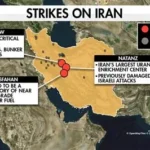
The first U.S.-Israeli attacks on 28 February killed Supreme Leader Ayatollah Ali Khamenei and hit military, leadership and infrastructure targets across Iran. For supporters of the Islamic Republic, his death was an act of foreign aggression and a call for revenge. For many opponents of the system, it opened the possibility of political change after decades of repression, economic pain and fear. For ordinary families, the immediate question was simpler: where is safe, who is alive, and what happens next?
That is why this story should not be written as celebration or mourning alone. Iran strikes produced both shock and relief because Iran itself was deeply divided before the bombs fell. Khamenei’s rule had created loyalists who saw him as the guardian of the revolution, but also millions of citizens who associated his era with sanctions, crackdowns, social controls and lost opportunities.
The strongest way to understand the Iran strikes moment is through contradiction. Some Iranians waited for a first day without Khamenei. Others wept in funeral crowds. Some tried to leave Tehran. Others stayed near damaged neighbourhoods, listening for fighter jets and searching for news through a near-total internet blackout.
For wider background on the conflict’s economic shock, The News Ink’s analysis of global markets and energy prices during the Iran war explains how the military crisis quickly moved into oil, gas, shipping and inflation.
Why the Iran strikes felt different
Iran strikes in February were not the first attacks on Iranian territory, but they were different because they hit the top of the political system. Khamenei had ruled as supreme leader since 1989. He stood above elected presidents, shaped military strategy, empowered the Revolutionary Guard and controlled the direction of the Islamic Republic through decades of internal and external pressure.
His death therefore created a psychological rupture. It did not automatically collapse the state. The Islamic Republic had institutions, security forces, clerical bodies and armed networks built to survive pressure. But the killing of the supreme leader removed the man who had embodied the system for more than a generation.
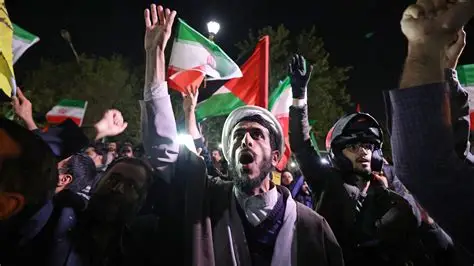
For regime supporters, the Iran strikes turned Khamenei into a martyr. State messaging framed him as a leader killed while confronting foreign enemies. Later funeral processions drew huge crowds, and hardline mourners called for revenge against the United States and Donald Trump.
For critics, the same moment carried a different meaning. Khamenei’s death came after years of anger over political repression, women’s rights, economic hardship and protest crackdowns. Some Iranians did not see the moment as national unity. They saw the sudden disappearance of the figure they blamed for a lifetime of blocked change.
That divide explains the “shock and relief” of the original story. Both reactions were real. Neither tells the whole country’s story alone.
The first hours: panic, rumours and a broken information space
In the first hours after the Iran strikes, many people did not know what had happened. Explosions were heard in several cities. Videos circulated online showing smoke, panic and confusion. State media released information slowly. Foreign leaders and news agencies reported developments before many Iranians could verify them for themselves.
The internet blackout made everything worse. Families could not easily reach relatives. People inside Iran relied on state television, word of mouth, satellite connections, VPN tools and fragments of foreign reporting. Reuters later reported that authorities had imposed a new blackout after the February 28 strikes, after a previous shutdown during January protests had only partly eased.
The result was a terrifying information vacuum. A person in Tehran might hear jets overhead, see smoke rising in the distance, lose internet access and receive no reliable explanation for hours. In that environment, rumour becomes survival. People ask neighbours. They call relatives if lines work. They queue for petrol. They buy food. They decide whether to stay or leave before knowing the full facts.
This is why the early Iran strikes story should focus as much on communication breakdown as on explosions. When a state controls information during war, fear spreads faster than facts.
Tehran’s fear was immediate
The fear in Tehran was not theoretical. Associated Press reporting from inside the capital described residents living with bombs striking without warning, fighter jets overhead, damaged buildings, closed shops and people relying on each other for news during the blackout.
Some parents rushed to collect children. Some residents stayed indoors, uncertain which neighbourhood would be hit next. Others left toward the north, hoping the Caspian region would be safer than the capital. Petrol stations and shops became part of the emergency response as families tried to prepare for a war whose direction was impossible to read.
Iran strikes also hit daily routines. Work stopped. Businesses closed. Food shopping became urgent. Sleep became difficult. Even people who had long opposed the system had to live under the same bombs as those who supported it.
That is what makes the story morally complicated. A person may feel relief that Khamenei is gone and still be terrified that their apartment block could be next. A person may hate the ruling system and still reject foreign bombing. A person may want change and still fear that war will bring chaos rather than freedom.
Relief did not mean safety
Some Iranians felt relief after Khamenei’s death because they believed his rule had closed every peaceful path to reform. For them, the Iran strikes seemed to create a break in history. A leader who had survived protest movements, sanctions, diplomatic isolation and internal dissent was suddenly gone.
But relief did not equal safety. In authoritarian systems, the removal of one figure can produce reform, but it can also produce revenge, emergency rule or a harder security state. Many Iranians understood that immediately. The Islamic Republic still had the Revolutionary Guard, intelligence services, courts, prisons, clerical institutions and loyalist media.
That is why some people spoke not only of hope, but of fear that the regime could survive and become more extreme. AP later reported that many Iranians were wrestling with the possibility of either the chaotic fall of the theocracy or its survival in a more wounded and harsher form.
That uncertainty remains central. Iran strikes opened a door, but no one knew what was behind it.
Khamenei’s death exposed an old divide
Khamenei’s death exposed a divide that had been building for decades. AP reported that his funeral brought Iran’s split into focus: huge crowds of supporters mourned him, while beneath that display lay deep discontent shaped by repression, sanctions, economic mismanagement and deadly crackdowns.
That is the most important social fact behind the Iran strikes. Iran was not unified before the war. It had already been shaken by protests, arrests, censorship, inflation and distrust. The death of Khamenei did not create that divide. It revealed it.
Older loyalists, Revolutionary Guard supporters and conservative religious networks saw the attack as proof that the West wanted to destroy Iran’s independence. Younger critics, secular citizens, women angry over compulsory controls, workers facing economic pressure and families of detainees often viewed the regime as the source of their pain.
Between those poles were millions who simply wanted safety. They may have disliked the government but feared foreign intervention. They may have respected national sovereignty but hated corruption. They may have mourned civilian deaths while refusing to mourn the political system.
A good article must leave room for all of them.
The succession question deepened uncertainty
After Khamenei’s death, attention shifted quickly to succession. Reuters reported that Mojtaba Khamenei, his son, was proclaimed supreme leader by a clerical assembly in early March, but had remained out of public view after being wounded in the same strike that killed his father.
That absence mattered. Iran’s system depends heavily on image, ritual and displays of authority. A supreme leader who cannot appear publicly creates uncertainty, even if institutions claim continuity. Written statements can show formal power, but they cannot replace the political theatre of public leadership in a system built around religious authority and revolutionary symbolism.
The succession also raised legitimacy questions. Mojtaba Khamenei did not carry the same public history as his father. Critics saw dynastic succession as another sign that a revolution against monarchy had produced its own inherited power structure. Supporters argued continuity was necessary during war.
Iran strikes therefore did more than kill a leader. They forced Iran to test whether its system could transfer supreme authority under fire.
The funeral showed power, not unity
Khamenei’s funeral processions were designed to show strength. Reuters reported mass mourning ceremonies in Iran and Iraq, with the burial in Mashhad following a week of processions. AP’s July coverage also described large crowds and hardline calls for revenge.
Those scenes mattered. They showed that the Islamic Republic still had a loyal base capable of filling streets, following state rituals and projecting ideological confidence. Anyone predicting immediate collapse had to confront that reality.
But a large funeral does not prove national unity. Authoritarian and revolutionary systems often excel at public mobilisation, especially during wartime. State media, religious networks, security institutions and social pressure can all shape turnout. Many mourners were sincere. Others may have attended for social, professional or political reasons. Some opponents stayed silent for safety.
This is why the Iran strikes aftermath should not be reduced to crowd size. The more important question is whether the state can convert mourning into legitimacy while people continue facing bombs, blackouts and economic hardship.
Internet blackout became part of the crisis
The internet blackout was not a side issue. It shaped how Iranians experienced the war. Reuters reported that international internet access began reopening only after a near-90-day shutdown, and that authorities had first imposed restrictions during January protests before restarting a blackout after the U.S.-Israeli strikes.
This meant the Iran strikes took place inside an already damaged information environment. Many people had been cut off during protests, then cut off again during war. Businesses suffered. Families abroad struggled to reach loved ones. Independent reporting became harder. State narratives gained more control over public information.
The blackout also revealed the importance of circumvention tools. Some Iranians used VPNs, satellite internet and other methods to access outside platforms. But not everyone had the knowledge, money or equipment to do that. The people most isolated were often those most in need of reliable information.
For readers interested in how digital control works during political crises, The News Ink’s cybersecurity guide explains why internet access, censorship and data control are now core parts of modern state power.
The human cost went beyond politics
The political meaning of the Iran strikes cannot be separated from the human cost. People lost relatives. Buildings were damaged. Children heard explosions. Workers lost income. Hospitals and emergency services came under pressure. Families had to make decisions with incomplete information.
The war also produced later tragedies that deepened anger over civilian harm. The News Ink’s report on the Iranian school strike in Minab shows how quickly military campaigns can raise questions about targeting, intelligence and accountability when children and civilians are killed.
That wider civilian context matters because people do not experience war as a neat geopolitical event. They experience it as broken glass, empty shops, blocked calls, unpaid wages, interrupted school and the sound of aircraft overhead.
For some Iranians, Khamenei’s death was the central event. For others, survival became the only event that mattered.
Why outside intervention divided opponents of the regime
Many Iranians oppose the Islamic Republic. That does not mean they support foreign bombing. This distinction is essential.
Some opposition voices believed the Iran strikes could weaken or end a system they considered unreformable. Others feared that U.S. and Israeli attacks would strengthen hardliners, justify repression and allow the regime to brand dissenters as foreign agents. History gives both sides reasons for caution. Foreign intervention can remove leaders, but it can also create chaos, nationalism and long-term backlash.
The dilemma was especially sharp for younger Iranians. Many grew up under restrictions on speech, dress, music, relationships, politics and digital life. They wanted freedom. But they also knew that war can destroy the very social space needed to build it.
This is why the phrase shock and relief works better than triumph. Relief existed, but so did dread.
What the strikes meant for the region
Iran strikes immediately threatened a wider regional war. AP reported that Iran warned of retribution and that the Revolutionary Guard threatened major operations targeting Israeli and American bases. The conflict later affected Gulf security, the Strait of Hormuz, oil markets and diplomacy with countries trying to prevent escalation.
The death of Khamenei also changed the region’s political psychology. Iran’s allies and partners had to adjust to new leadership. Rivals tested whether Tehran was weakened. The United States and Israel had to prepare for retaliation. Gulf states feared becoming battlefields or targets.
This is why the Iran strikes cannot be treated as an Iranian domestic story alone. The same morning that brought shock inside Tehran also sent oil traders, diplomats, military commanders and regional governments into crisis mode.
The News Ink’s coverage of global markets during the Iran war shows how quickly the conflict moved through energy prices, inflation expectations and stock markets.
Iran strikes timeline
| Date | Development | Why it mattered |
|---|---|---|
| 28 February 2026 | Iran strikes began with U.S.-Israeli attacks on leadership and military targets | Khamenei was killed and the succession crisis began |
| Early March 2026 | Iran strikes continued as Tehran and other cities reported explosions | Fear spread through daily life and state control over information tightened |
| March 2026 | Iran strikes coincided with a renewed internet blackout | Families, businesses and journalists struggled to communicate |
| July 2026 | Iran strikes aftermath moved into funeral politics | Khamenei’s burial became a display of loyalist power and national division |
What changed months later
Months later, the story looked different again. Khamenei was buried in July after extended funeral events. Mojtaba Khamenei remained largely unseen. Iran had survived the first phase of war, but at enormous cost. The United States and Iran had periods of truce and renewed conflict. The Strait of Hormuz remained a flashpoint.
Inside Iran, the emotional divide persisted. AP’s July coverage described a bitterly divided society: loyalists mourned Khamenei as a martyr, while critics remembered decades of repression and mismanagement. Reuters reported that funeral crowds called for revenge, while also noting Iran’s deep internal challenges.
That later context makes the article stronger. The original “shock and relief” moment was not just a reaction in the first 24 hours. It was the opening scene of a longer national crisis over power, memory, fear and the future.
What responsible reporting should avoid
The Iran strikes story must be handled carefully. This article must avoid three mistakes.
First, it should not present all Iranians as celebrating. That erases mourners, loyalists, nationalists and people who opposed the bombing.
Second, it should not present all Iranians as mourning. That erases dissidents, victims of repression and citizens who felt relief at the end of Khamenei’s rule.
Third, it should not treat foreign military action as a clean path to freedom. The evidence from Iran’s streets, funerals, blackouts and damaged neighbourhoods shows something far more uncertain.
A responsible version should say that Iran strikes killed Khamenei, triggered fear and displacement, produced mixed reactions among Iranians, intensified censorship and left the country facing a dangerous succession and legitimacy crisis.
That is a more accurate, more human and more durable account.
The final judgment
Iran strikes did not produce one national emotion. They produced a collision of emotions inside a country already strained by repression, sanctions, protest, economic hardship and fear.
Khamenei’s supporters saw his death as martyrdom. His opponents saw the end of a ruler they blamed for decades of closed politics. Many families saw neither liberation nor martyrdom in the first moment. They saw smoke, blackout, petrol queues, closed shops and the terror of not knowing what would happen next.
That is why the headline should hold both words: shock and relief. The shock was national, physical and immediate. The relief was real for some, but fragile, dangerous and shadowed by the possibility of harsher rule or wider war.
The Iran strikes shook the nation because they removed the figure at the centre of the Islamic Republic. But they did not answer the deeper question. Whether Iran moves toward reform, revenge, collapse or renewed authoritarian control will depend not only on bombs, but on the choices of Iranians themselves, the behaviour of the new leadership and the pressure of a region still close to wider war.
For more world politics and conflict analysis from The News Ink, follow The News Ink on X.